

Chocolate Poisoning in Cats: What You Need to Know
Last Updated on April 30, 2021 by Holly Anne Dustin
Chocolate in large enough quantities can be lethal for a cat, and there is no antidote for chocolate poisoning in cats. Kitty isn’t likely to be attracted to your chocolate treats because cats lack the ability to taste “sweet.” Chocolate milk, ice cream, or cream-based chocolate desserts are most desirable for cats, and therefore the most dangerous.
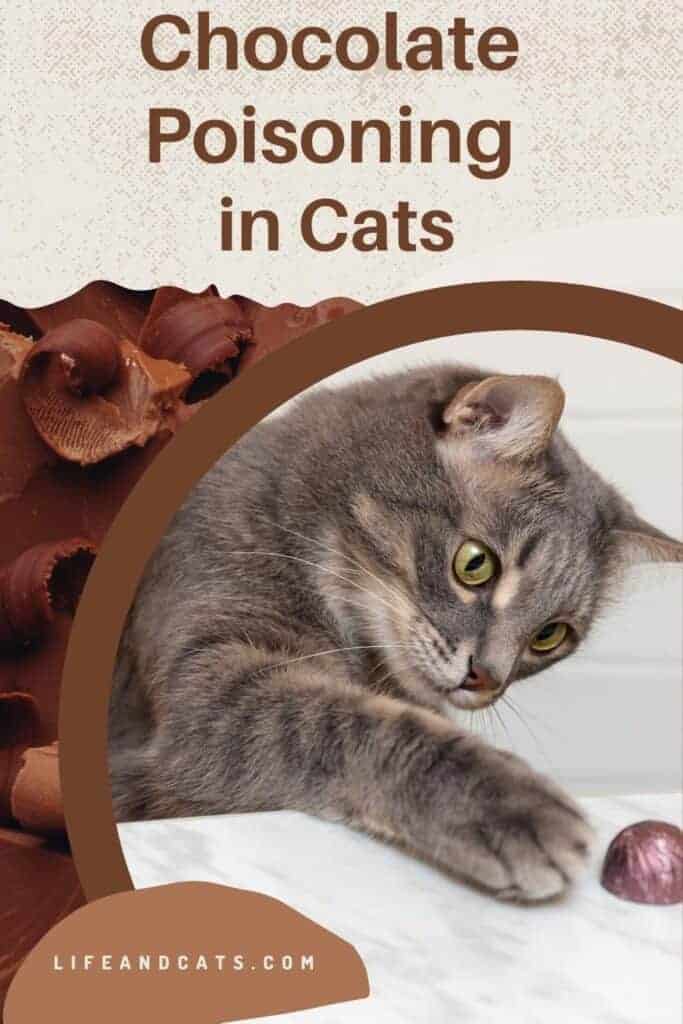
Unlike your dog, Kitty is unlikely to scarf down the chocolate bar she finds on the counter. But she might play with a chocolate chip you dropped and end up eating it. And, in her natural curiosity, she may lick a plate or nibble the cake and chocolate chip cookies you have cooling on your worktop and do herself some harm.
Contents
- 1 Why is Chocolate Toxic to Cats?
- 2 How Much Chocolate is Toxic to Cats?
- 3 What Happens if My Cat Eats Chocolate?
- 4 How Long After Eating Chocolate Will a Cat Get Sick?
- 5 What Should You Do if Your Cat Eats Chocolate?
- 6 Treatment of Chocolate Poisoning in Cats
- 7 What is the Prognosis for a Cat with Chocolate Poisoning?
- 8 Conclusion
Why is Chocolate Toxic to Cats?
Have you ever had that one cup of coffee too many? The one that left you with the jitters or jumpy heart palpitations? You could probably eat a whole bag of chocolates, or a whole cake, and not get that reaction. We’d have to work at it to get a fatal dose of caffeine. But our kitties are much smaller. Caffeine can be fatal to cats.
But the real problematic substance in chocolate is theobromine. It’s in all kinds of chocolate, and can cause heart problems, seizures, and even death in cats.
How Much Chocolate is Toxic to Cats?
The darker the chocolate, the higher the risk to your furbaby. The amount of theobromine in chocolate varies significantly with the cocoa content of the chocolate.
A toxic dose of theobromine in cats is 200 mg/kg. So for an 8-pound cat, the minimum amount of chocolate that can be toxic is:
- White Chocolate: rarely causes a problem because white chocolate contains cocoa butter instead of the cocoa solids that are in the milk chocolate or dark chocolate varieties.
- Milk Chocolate: 1.14 oz
- Dark Chocolate: 0.5 oz
- Semisweet Chocolate: 0.5 oz
- Baking Chocolate: 0.2 oz
Unlike a dog, a cat is unlike to chomp down on a big bar of chocolate. They might try a lick or two of a chocolate chip, but probably won’t like it. A nibble of a cake or some cookies are more their speed. The biggest risk to Kitty is probably chocolate milk, pudding, or other milk based chocolate treats.
What Happens if My Cat Eats Chocolate?
Eating chocolate can cause abnormal heart rhythm, tremors, seizures, and even death for cats.
The symptoms of chocolate poisoning in cats include:
- Diarrhea
- Vomiting
- Weakness
- Rapid breathing
- Elevated temperature
- Muscle rigidity
- Increased reflex response
- Seizures
- Cardiac arrest
- Coma
There are also some symptoms that you can’t see, such as low blood pressure and a rapid heartbeat.
How Long After Eating Chocolate Will a Cat Get Sick?
You will usually see the first symptoms 2-4 hours after Kitty ate the chocolate, but it can take as long as 24 hours.
The first signs of poisoning will show the body trying to get rid of the poison and include:
- Diarrhea
- Vomiting
- Drinking more than usual
- Peeing more than usual
- Being unusually restless
- Stomachache
If Kitty ate a lot of chocolate, or isn’t treated, the symptoms progress to:
- Fast breathing or panting
- Shaking or trembling
- High temperature
- Seizures
- A fast heartbeat
- In the worst cases, chocolate poisoning can lead to heart failure, coma and even death.
What Should You Do if Your Cat Eats Chocolate?
Call your vet if you discover your cat ate chocolate. If it’s after hours, call your emergency vet or the pet poison hotline at 855-213-6680.
The vet will want to know what kind of chocolate Kitty ate and how much of it she ate. You’ll also want to give the vet your cat’s age and weight. Report any vomiting, diarrhea, or changes in behavior like hyperactivity or rapid breathing. Your vet will use that information to determine if Kitty requires a visit. Don’t wait if the vet wants to see Kitty. Bring her in right away.
For more about poison risks for cats check out this post.
Treatment of Chocolate Poisoning in Cats
Once Kitty exhibits symptoms, there is no ‘cure’ other than treating the symptoms. Your vet will perform a physical, possibly conduct an EKG to check the heart rate, and a urinalysis.
Treatment of chocolate poisoning will usually include the following steps:
- The first step is to get as much of the chocolate out of your cat’s stomach as possible to prevent it from causing more damage by inducing vomiting and possibly administering activated charcoal.
- Fluid therapy will help dilute the toxic ingredients of chocolate in her system, keep Kitty hydrated, support her blood pressure, and help flush out the toxins.
- What other steps are necessary depends on what other symptoms Kitty is experiencing. Medications for seizures, heart arrhythmias, liver, or kidney disease are all possible.
- Feed Kitty a bland diet for a few days after the vet releases her to allow her system to settle down.
What is the Prognosis for a Cat with Chocolate Poisoning?
Obviously, the outcome depends on how seriously Kitty is affected by the poison. But if she is treated quickly, the outlook is good and your furbaby is likely to make a full recovery.
Conclusion
Respect your kitty’s natural curiosity. Keep your baked goods closed up away from her. Chocolate should be kept out of reach and not left out on the counters, tables, or in purses.
It is especially important to keep this in mind during the holiday seasons. Chocolate is a big part of most of our holidays, whether it is Halloween trick-or-treat bags, Easter baskets, Valentine Day candy, Christmas stockings, or Hanukkah gelt. The small-sized treats can look like toys to Kitty. Don’t panic if she takes a taste, call your vet for advice, and monitor her. She is likely to be just fine unless she ate a large amount of chocolate.