Secrets of Ragdoll Cats: Sweet, Loving, and Social
Last Updated on February 12, 2026 by Holly Anne Dustin
The Ragdoll is a large, semi-longhaired, blue-eyed, colorpoint cat known for a calm, friendly nature. Most Ragdoll cats are gentle, affectionate, and fairly easy to care for. They often do well with kids and other pets, which makes them a solid match for many households. They also crave company, so they’re happiest when they aren’t left alone for long stretches. If you work long hours get two.
The Ragdoll is also one of the most popular breeds in the cat fancy. After having the pleasure of being a Ragdoll guardian for the past two years, I can see why. My Johnny is pretty close to as perfect a feline friend as I could ask for. If you are looking for a Velcro cat that will meet you at the door, play fetch, follow you around, settle down for a grooming session, and cuddle up in bed at the end of the day; then a Ragdoll may be for you.
Contents
- 1 History of the Ragdoll Cat
- 2 Appearance of a Breed-Standard Ragdoll Cat
- 3 The Personality of Ragdoll Cats
- 4 What Health Problems Do Ragdoll Cats Have?
- 5 How Long Do Ragdoll Cats Live?
- 6 Are Ragdoll Cats Hypoallergenic?
- 7 How to Feed your Ragdoll Cat
- 8 Are Ragdoll Cats High Maintenance?
- 9 Are Ragdoll Cats Good Pets?
- 10 How Much Do Ragdoll Cats Cost?
- 11 Conclusion
History of the Ragdoll Cat
The Ragdoll breed began in California in the 1960s. The early cats were domestic cats chosen for their look and especially their easygoing temperament. Breeder Ann Baker developed the breed starting with a white, longhaired, free-roaming cat named Josephine, along with a black male named Daddy Warbucks. Baker also selected cats from nearby homes that fit the size, coat, and personality she wanted. Some of these cats introduced the colorpoint gene into the line.
Josephine’s kittens became known for being unusually relaxed and affectionate. Many would go limp when picked up, which inspired the breed name.
Over time, Baker bred for a big, gentle cat with a soft coat that resists matting and a people-focused personality. She trademarked the name Ragdoll and created her own registry instead of using major cat associations. For a period, Ragdolls were not allowed to be registered elsewhere.
In 1975, a group of breeders split from Baker and worked toward recognition with established registries. Their work helped shape the standards later used by the Cat Fanciers Association (CFA) and The International Cat Association (TICA). Cats from Baker’s original lines were blended with Tonkinese, Burmese, and Persian cats to develop the standard Ragdoll cat.
TICA accepted the breed in 1979. CFA began registration in 1993 and granted championship status in 2000. The mitted pattern was accepted in 2009. In 2025, TICA accepted the Cherubim as a member of the Ragdoll breed group. The Cherubim has the same physical standard as the traditional Ragdoll but allows the sepia, minks, and solid color cats with green, gold or aqua eyes to show. In a sense, a Ragdoll with a different paint job.
If you are planning on breeding, be aware that although TICA accepts the Cherubim as an acceptable outcross in a Ragdoll, CFA does not and many breeders won’t work with someone that has a CB in the background.
Appearance of a Breed-Standard Ragdoll Cat
The Ragdoll breed is a large, affectionate, and intelligent cat of moderate type. Your cat should appear graceful but powerful. A male Ragdoll cat weighs between 15-20 pounds. Females go from 10-15 pounds. Ragdolls don’t get their full size until they are four. They will have their full coat color at two years.
Patterns and Colors:
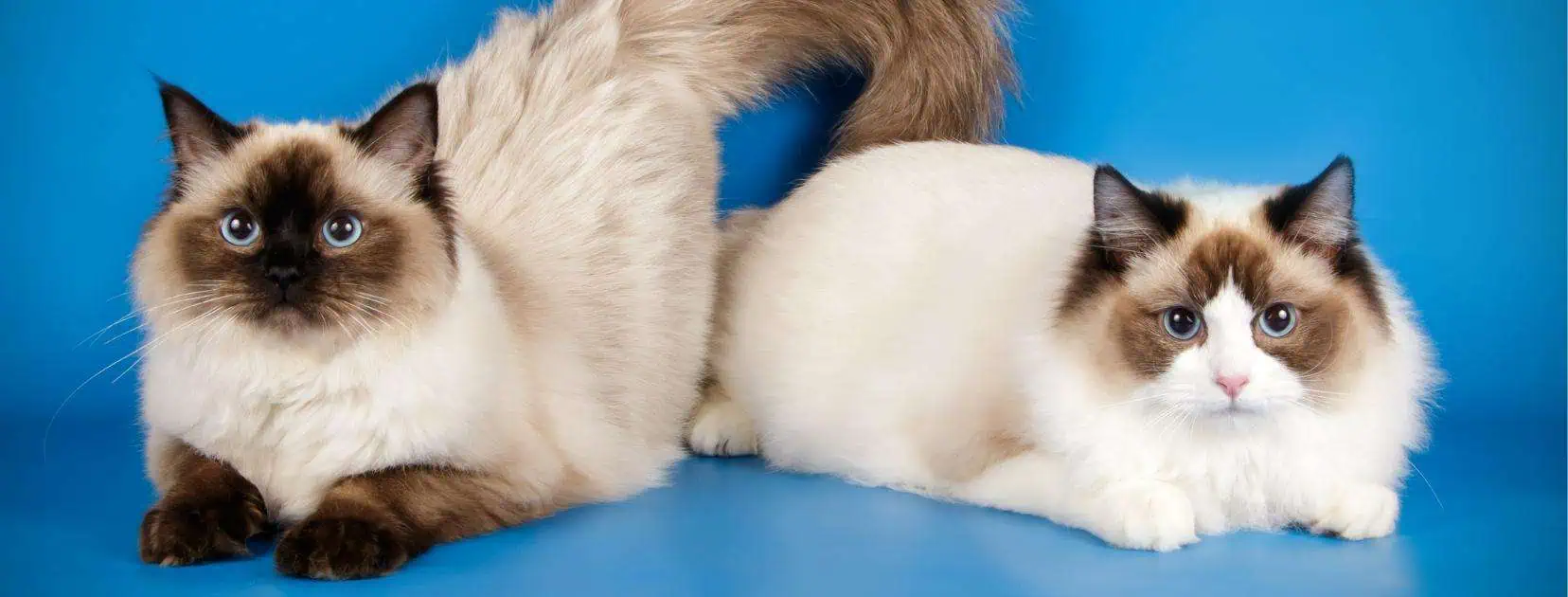
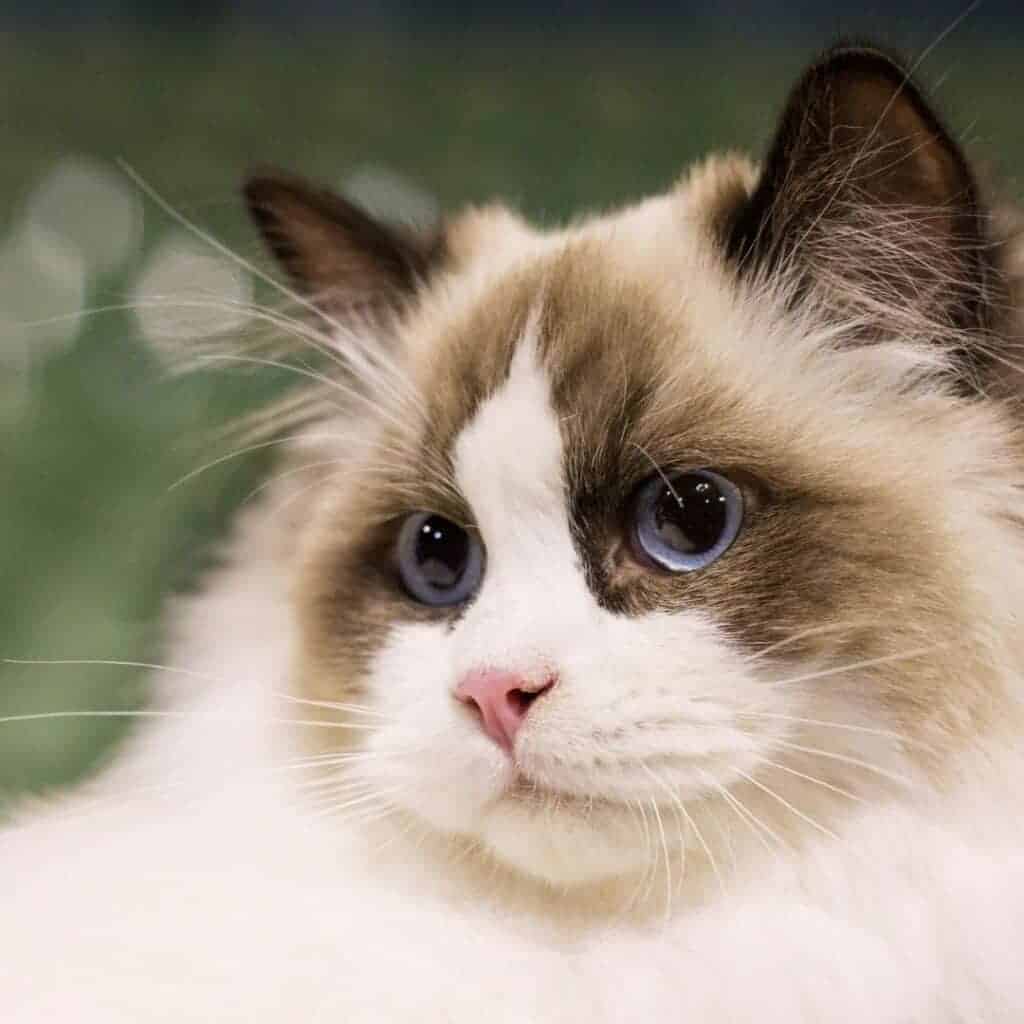
Standard Ragdolls come in colorpoint, mitted, and bicolor patterns. CFA also accepts the van pattern. In all patterns, you want a lighter body color with clear contrast between the body and the points.
Accepted point colors include seal, blue, chocolate, lilac, red, and cream. Points can be solid, tabby (also called lynx point, including tortie-lynx), or tortie point (parti-color).
Colorpoint Ragdoll cats have darker ears, mask, feet and tail with well-defined color. Nose leather and paw pads match the point color.
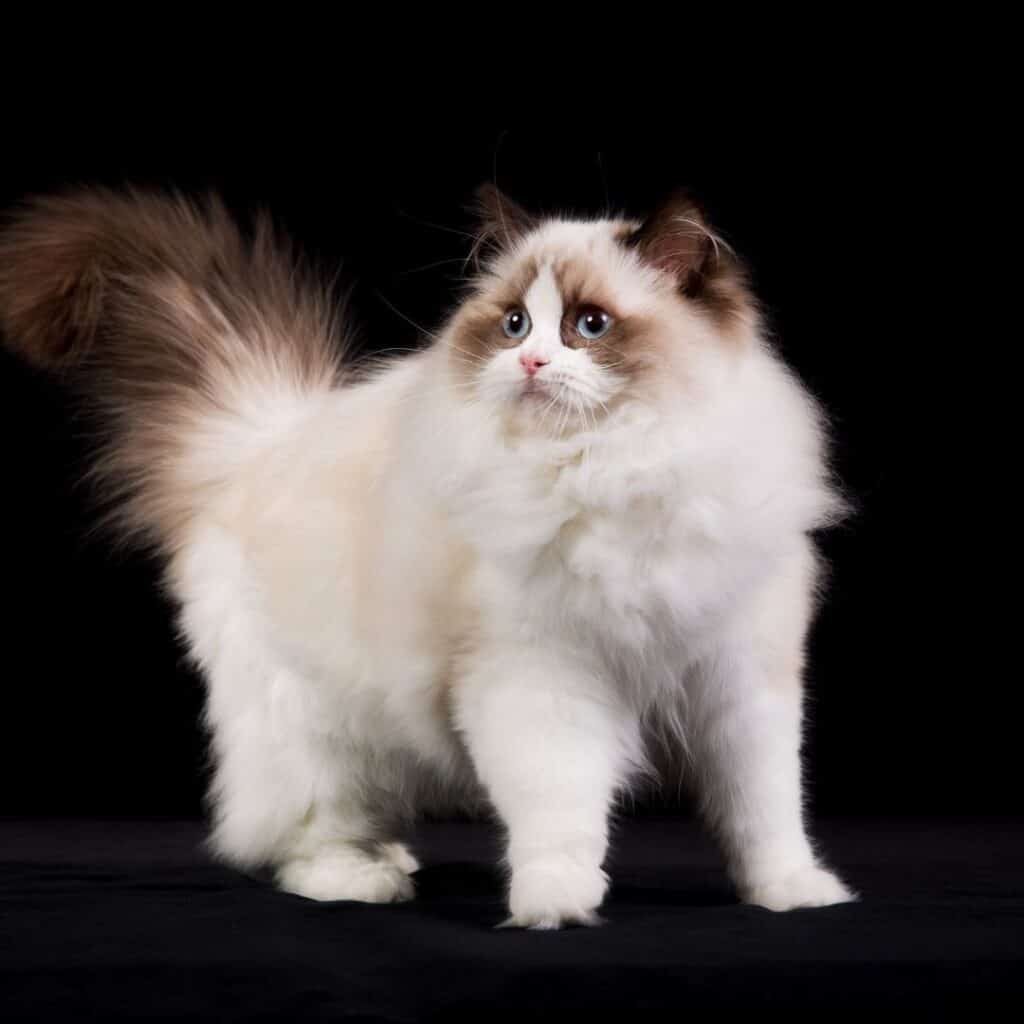
In the mitted pattern, the cat’s points are well-defined. They may have a white blaze anywhere from the top of the nose leather to the forehead. The chin must be white and extend into a white belly stripe. The white mittens must be present on both front feet, evenly matched, preferably going up to and around the wrist joint. On the back legs the white must go up to and around the hocks entirely, extending no higher than mid-thigh.
The bi-color pattern features a face mask with a white inverted V that doesn’t extend past the outer edge of the eye. The points are restricted to ears, tail, mask and shading on the ‘saddle’ area. The chin, chest, and underside are white. Legs and feet are all white. Nose leather is pink. Pink paw pads are preferred, but a mixture of colors on paw pads and fur is acceptable because of the two colors in pattern. When determining color, the point color of Kitty’s ears is the deciding factor.
The van pattern is a high white pattern where the point color is restricted to the cat’s ears, tail, and mask. Ear and tail color is dense and clearly defined. Mask may be limited to the upper part of face and show gradual fading of color. Body, legs and feet are pure white. Nose leather and paw pads: pink
Ragdolls are often confused with other breeds. Read here to see which breeds and why
Body, Legs, and Tail
Ragdolls are long, broad, and sturdy, with heavy bone. The body should feel firm and muscular, not overweight. Ideally, they are about the same width across the shoulders and hips.
Their hind legs are heavily boned and slightly longer than the front legs. Fur is shorter on the front legs, with fuller “britches” on the rear legs. Paws are large, round, and tufted. The tail is long, about the length of the body, thick at the base, and finished with a full plume that gently tapers.
Head:
The head is large with a broad, modified wedge shape. The wedge should be balanced and even when measured from the outer base of the ears to the end of the softly rounded muzzle. The profile has a gentle curve that leads into a straight, medium-length nose. Ragdolls do not have the straight Roman nose seen in the Norwegian Forest Cat, and they also don’t have the sharp break typical of Persian-type faces. The chin is strong and well-developed, lined up with the nose and upper lip.
Ears:
The Ragdoll cat’s ears are medium in size, broad at the base, and rounded at the tip. They are wide set and moderately flared, continuing the line of wedge.
Eyes:
Like all pointed cats, Ragdoll cats have blue eyes. This breed has striking, large, blue oval eyes. They are wide set and moderately slanted, complementing their wedge heads.
Coat:
Ragdolls are a semi-longhaired breed with a silky coat that typically resists matting. They have plenty of guard hairs and little undercoat. Coat length is shorter on the face, longer around the ruff, shorter over the shoulder blades, and lengthens toward the tail. The coat should feel silky, not wooly or cottony.
The Personality of Ragdoll Cats
Fanciers describe Ragdolls as “dog-like”, “cat-dogs”, and the “puppy” cat. They have a similar nature to the Persian breed. They are calm, affectionate, and gentle. Your Ragdoll will become your best friend. A “people” cat, Kitty will follow you from room to room, seeking your attention and affection. They might be the ultimate in lap cats.
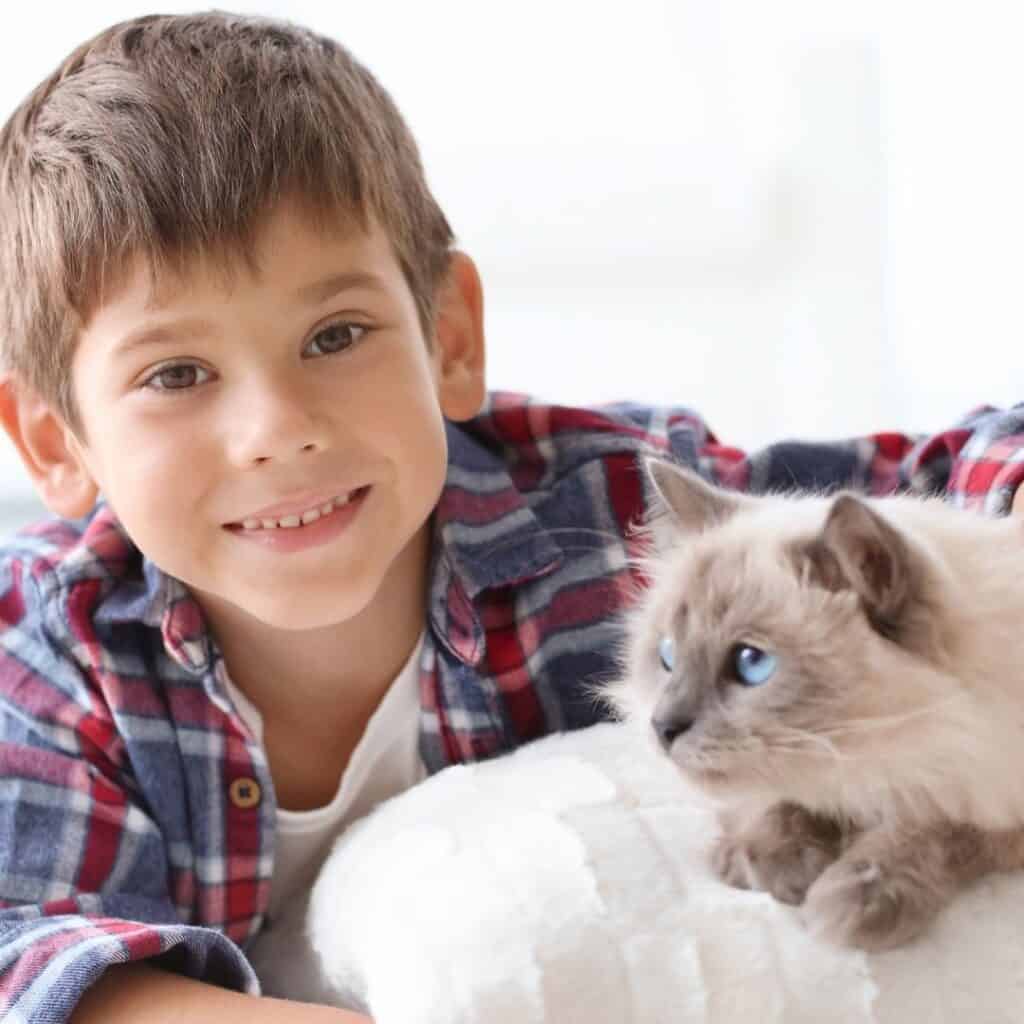
Ragdolls are easy to handle and tolerant of being handled. A Ragdoll is a great choice if you have young children in the family. Ragdolls came by their name rightfully. Not only do they have the signature “flop” when picked up, but a lot of Ragdolls are just fine with being dressed up and participating in a child’s game.
Ragdolls, like Persians, tend to be four on the floor cats, not climbers or jumpers. They love to play. Eager to please, Ragdolls train easily. Best kept as indoor cats, Ragdolls can learn to walk on a leash. They will enjoy supervised time outside if it is a game you play together.
What Health Problems Do Ragdoll Cats Have?
Obesity
Because Ragdolls tend to be calm and laid-back, they can gain weight easily. Regular play helps keep them fit and engaged. Interactive games work well, and many Ragdolls love playing fetch.
Hypertrophic Cardiomyopathy (HCM)
Hypertrophic cardiomyopathy is an inherited condition where the heart muscle thickens. It can occur in any cat, but some breeds, including Ragdolls, are more at risk. A DNA test is available for HCM in Ragdolls. Reputable breeders should provide proof of testing.
Polycystic Kidney Disease (PKD)
PKD is another inherited disease that can affect Ragdolls. It causes cysts to form in the kidneys and can lead to kidney failure. It’s well known in Persian and Exotic Shorthair cats, and it can also show up in Ragdolls. Breeders should test for PKD.
Mucopolysaccharidosis (MPS)
MPS refers to a group of genetic metabolic disorders that can cause bone disease and an enlarged liver. It affects certain Ragdoll lines. Treatment options include bone marrow transplant or enzyme replacement, and treatment tends to work best in kittens. At this time, there is no test to predict a litter’s risk of MPS.
Urinary Tract Problems
Ragdolls can be prone to urinary tract issues, including infections and bladder stones. Diet matters, and hydration is key. Water fountains, extra water bowls, and adding water or broth to food can help increase fluid intake.
How Long Do Ragdoll Cats Live?
Ragdolls live an average of 12-15 years.
This post may contain affiliate links. Life and Cats is a Chewy affiliate and a member of the Amazon Associates program and as such we earn a small commission when you shop through our our links and banners. It doesn’t change the amount you pay. You can read our full disclosure policy here.
Are Ragdoll Cats Hypoallergenic?
Ragdolls are not specifically hypoallergenic. Some people do find that they are less reactive to medium and longhaired cats. A regular bathing routine will help. Purina Pro-Plan Live Clear food helps Kitty produce less allergenic dander.
How to Feed your Ragdoll Cat
Feed your Ragdoll a high-quality diet with plenty of protein, nutrients, and moisture. Many owners choose canned food or a raw diet to boost water intake. Some aim for a species-appropriate ratio close to 60% protein, 30% fat, and under 5% carbohydrates, similar to a cat’s natural diet.
Are Ragdoll Cats High Maintenance?
Ragdolls look fancy, but their coat usually doesn’t need heavy grooming. The silky texture and low undercoat make mats less common than in breeds with wooly coats.
Groom your Ragdoll cat 1-2 times weekly. Most Ragdolls will enjoy the grooming time as one more way to spend time with their humans. Their at-home grooming routine should include combing their coat through with a good stainless steel comb. I’m a fan of Chris Christiansen brand “butter combs.” Check her ears at the same time.
Click here to see my favorite tools for grooming longhaired cats.
Don’t forget her dental health. Your tolerant Ragdoll can be trained to let you brush her teeth, especially if you start out with a kitten.
Keep your Ragdoll’s nails trimmed every 3-4 weeks. Ragdolls can be taught to tolerate, or even enjoy, a spa day with bathing and blow-drying every 4-6 weeks.
Are Ragdoll Cats Good Pets?
Ragdolls make great pets for people who want a friendly, smart cat that likes being involved in daily life. They often do well with children and can fit into multi-pet homes with proper introductions.
Ragdolls are not not very independent, and they can struggle if left alone too often. If you travel a lot or work long hours away from home, another breed may be a better fit.
How Much Do Ragdoll Cats Cost?
If you want to show your Ragdoll be sure you work with a preservation breeder to choose a kitty that will meet the show standards. Expect to pay a pretty penny for a quality cat. However, their popularity make Ragdolls more widely available than minority breeds and the price reflects that. The price varies depending on the quality of the cat, the breeding lines, and whether you are buying breeding rights. Typically a pet quality cat will cost between $500 – 1,000. A show standard cat will run you between $1,000 -$2,000+. Breeding rights would be significantly more.
Conclusion
Ragdoll cats stand out for their calm temper, soft coats, and people-first style. With gentle handling, daily play, and basic grooming, they stay happy and easy to live with. If you want a “puppy-cat” that follows you room to room, a Ragdoll can be a great fit.
Looking for a different breed? Check our list of breed profiles here.