Traveling With Cats: Litter Box Logistics
My daughter and I travel around the country with multiple cats just about every weekend to go to cat shows. The top questions we get asked are how long can a cat ride in their carrier, how do you handle the litter box, and, most often, how long can cats go without peeing when traveling?
People assume that cats are terrible travelers and it much be a headache to deal with their litter box needs. Actually, traveling with cats doesn’t have to be stressful. Cats can be good traveling companions if we properly prepare them and set them up for success. That includes a portable litter box set up and a secure carrier. Understanding how often Kitty is likely to need to pee while traveling will make your trip more enjoyable, and comfortable, for both of you.
Contents
- 1 Understanding the Importance of Bathroom Breaks for Cats
- 2 Factors That Affect How Often Cats Need to Pee
- 3 Signs That Your Cat Needs to Use the Litter Box
- 4 Tips for Managing a Cat’s Bathroom Needs While Traveling in a Car
- 5 Choosing the Right Litter Box and Litter for Road Tripping with Your Cats
- 6 How Do Cats Go to the Bathroom on a Plane?
- 7 Summary: Ensuring a Stress-free Travel Experience for Cats and Their Owners
Understanding the Importance of Bathroom Breaks for Cats
Cats are known for their cleanliness and maintaining a clean and odor-free environment is essential to their well-being. They aren’t likely to pee in their carriers if they can avoid it. They basically just hold it until they can’t help it.
Prolonged periods without access to a litter box can lead to urinary tract problems, bladder infections, or even urinary blockages. These conditions can be painful and potentially life-threatening for your cat. Therefore, it’s vital to prioritize their bathroom needs during travel.
Related Post: Road Tripping with Your Cat
How Long Can Cats Go Without Peeing?
On average, a healthy adult cat can go without peeing for 24 to 48 hours. However, this should not be considered a healthy or recommended practice. Most cats pee 2-4 times a day. Get to know your furbaby’s personal peeing frequency and schedule, so you know what to expect while you travel.
If your trip is under 6 hours it should present no problem for Kitty to just ride in his carrier. A longer road trip of 12-15 hours is completely possible if you provide him with more space like a crate or cage with litter box access. However, if Kitty resists using his box in the car, don’t stress. She’s likely to make up for it by relieving herself repeatedly when you reach your destination.
Factors That Affect How Often Cats Need to Pee
Most of my furry travelers won’t use their box in the car but my old cat will. Age is one thing that influences how often Kitty is likely to pee. Size, health conditions, and stress levels are other factors that impact how often she needs to use the litter box.
You Want to Consider These Factors When Planning a Trip With Your Feline Friend:
- Age: Kittens have smaller bladders and higher metabolic rates which causes them to urinate more frequently. As cats mature, their bladder capacity increases, allowing them to hold urine for longer periods. Older cats may experience age-related health issues that affect their bladder control.
- Size: Larger cats tend to have larger bladders, enabling them to hold more urine and go longer without peeing. Smaller cats have smaller bladders and may need more frequent bathroom breaks.
- Health conditions: Cats with urinary tract infections, kidney diseases, or diabetes may have increased urgency to urinate. These conditions can affect their bladder control and require more frequent access to litter boxes.
- Stress levels: Cats are sensitive creatures, and stress can have a significant impact on their bathroom habits. If traveling is stressful for your furbaby, it can cause increased frequency or urgency to use the litter box, but for others it makes them refuse to use the box in such unfamiliar surroundings.
Understanding these factors will help you gauge your cat’s needs and plan accordingly when traveling.
Signs That Your Cat Needs to Use the Litter Box
You should know your furbaby’s language about needing the box before hitting the road. Believe me you want to know before they need it. I learned the hard way in the show hall. Cats communicate their needs in various ways. Look out for these signs that indicate it’s time for a bathroom break:
- Restlessness: If your cat is pacing or acting agitated, it may be a sign that they need to urinate.
- Frequent licking of the genital area: Cats often groom themselves, but excessive licking around the genital area may indicate the need to relieve themselves.
- Scratching or digging: Cats have an instinctual behavior of scratching or digging before eliminating. If your cat is exhibiting this behavior, it’s a clear indication that they need to use the litter box. This is the one that is the give away with my boys.
- Crying or meowing: Vocalization can be a sign of discomfort or urgency in cats. If your cat is meowing excessively or crying, it may be a signal that they need to relieve themselves.
Observing your cat’s behavior and being attentive to these signs will help you ensure their comfort and prevent any accidents during travel.
Tips for Managing a Cat’s Bathroom Needs While Traveling in a Car
Now that we understand the importance of bathroom breaks for cats and how long they can go without peeing, let’s explore some practical tips and strategies to create a travel environment that lets Kitty meet those needs.
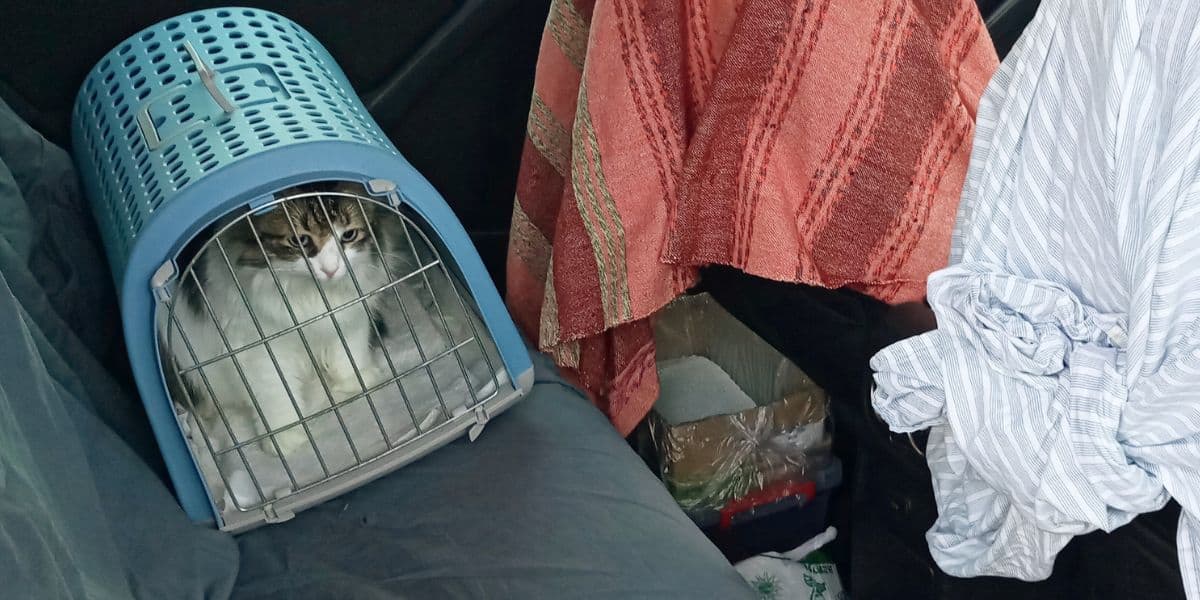
Choose the right carrier: Invest in a sturdy and well-ventilated carrier that provides enough space for your cat to stand, turn around, and lie down comfortably. Line the carrier with pee pads, absorbent bedding, or towels to manage any accidents. That will be good enough for most shorter trips.
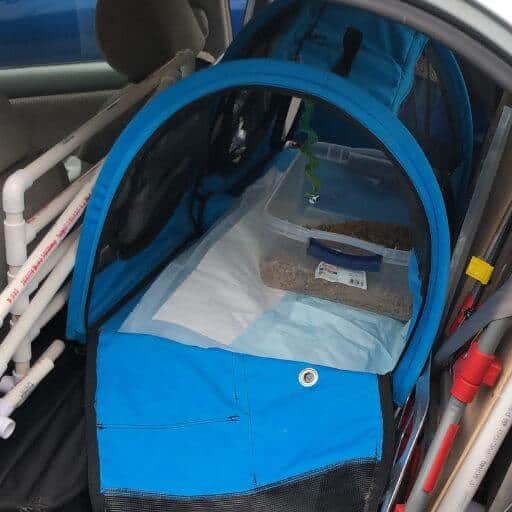
Provide a litter box in the car: Place a small litter box with your cat’s preferred litter inside a cage or enclosure. Make sure it is securely positioned to prevent spills. This allows Kitty to have access to a familiar environment and encourages them to use the litter box during the journey. Or put a litter box on the floor of the back seat area and plan stops at regular frequency when he is likely to need to pee. Give him the opportunity to access the box every time you stop for gas, food, or your own comfort.
There are several options for travel litter boxes from small portable, fold-up, litter boxes to dish pans, to disposable litter boxes.
Choosing the Right Litter Box and Litter for Road Tripping with Your Cats
Choosing the right litter box and litter are essential for Kitty’s comfort and convenience. Here are some factors to consider:
- Size and shape: Opt for a box that fits well in the enclosure without taking up too much space. A rectangular or square box is usually a practical choice. Get the biggest one you can reasonably fit without taking up all Kitty’s share of the car.
- Portability: Look for something lightweight that is easy to carry and clean during travel. Collapsible or disposable litter boxes are convenient options that save space and can be discarded after use.
- Prevent spills: To prevent litter from spilling during travel, choose a litter box with high sides or a lid. We use a small Sterilite container with a lid.
- Pee Pads: Prevent mess or accidents by putting pee pads around the box you choose.
- Litter type: Use the litter that Kitty is used to using at home. I like having something that I can just dump out at the end of the drive so it’s always clean.
Remember to pack extra litter for longer trips. Regularly clean and maintain the litter box to provide a hygienic environment for your cat. With the right litter box and litter, you can ensure your cat’s comfort and maintain a clean space throughout your journey.

How Do Cats Go to the Bathroom on a Plane?
It’s not as straightforward as you might think. Unlike dogs, cats can’t be walked outside during a flight. Instead, they have to rely on other methods to do their business, so their bathroom options are limited. Some cats will go if you put a litter box out in a private room, so take advantage of single stall family or gender-less bathrooms before you get on the plane.
Most airlines require that cats be kept in their carriers during the flight. Some cat owners opt to line their cat’s carrier with absorbent material, such as puppy pads or newspaper, in case they need to relieve themselves. However, this can be messy and uncomfortable for the cat. Put something like 2 or 3 layers of a crocheted blanket on top. The urine will fall through the crocheted blanket into the absorbent material below so your cat will not necessarily be sitting in their own pee for several hours.
Related Post: Flying with Cats
To make things easier for both you and your feline friend, it’s recommended to limit their food and water intake before the flight. This helps minimize the chances of them needing to use the bathroom during the journey.
Additionally, some carriers allow you to put a small litter tray in the carrier without restricting Kitty’s movements. This allows them to use the bathroom in a more familiar and comfortable way. However, keep in mind that not all cats will use a litter tray in a confined space like a carrier.
If your cat does relieve themselves during the flight, you might be able to take Kitty’s carrier into the plane lavatory and change the bedding if you can fit in the small space with the carrier and your supplies.
Remember, keeping your cat comfortable and stress-free during the flight is essential for their well-being.
Summary: Ensuring a Stress-free Travel Experience for Cats and Their Owners
Traveling with cats requires careful planning and consideration of their unique needs. Understanding how long cats can go without peeing is crucial to ensure their comfort and prevent any health issues. By considering factors such as age, size, health conditions, and stress levels, you can gauge your cat’s bathroom requirements and plan accordingly.
With proper planning and consideration, like prioritizing regular access to clean litter boxes, observing your cat’s behavior for signs of needing to use the litter box, and implementing practical tips for stress-free travel you can embark on an adventure together and create lasting memories with your furry friend.