The Ultimate Guide to Traveling with Cats: the Flying the Skies Edition
Last Updated on February 6, 2023 by Holly Anne Dustin
updated January 2023
Not being a fan of flying myself, I have never taken Plush on a plane. But, according to discussions I have had with other cat travelers, the key to successfully flying with cats is to prepare for it and to stay calm yourself so your cat doesn’t react to your agitation. Keep in mind that over a million pets fly in the US every year without problems(Consumer Reports.) Traveling with cats, by plane, train, or car, may seem like a daunting aspect at first but it can become routine and even fun.
Contents
Tips for Flying with Cats In-Cabin
This post may contain affiliate links. Life and Cats is a Chewy affiliate and a member of the Amazon Associates program and as such we earn a small commission when you shop through our our links and banners. It doesn’t change the amount you pay. You can read our full disclosure policy here.
Be Prepared
Review the Federal Aviation Authority FAA)’s regulations for flying with cats. Then, communicate with your airline so you know what they expect. The rules, and each airline’s policies, are changeable. This list of the major airlines can give you a starting point. If you are flying on another carrier, check their website for similar information.
- JetBlue Airlines – Traveling with Pets.
- Traveling with Pets on United Airlines.
- Frontier Airlines – Flying with Family & Pets.
- Delta Air Lines – Pet Travel.
- American Airlines – Traveling with Pets.
- Traveling with Pets on Alaska Airlines.
- Spirit Airlines – Traveling with Pets.
- Southwest Airlines – Flying with Pets.
- Allegiant Air – Traveling with Pets.
Make Sure You Have a Qualifying Carrier
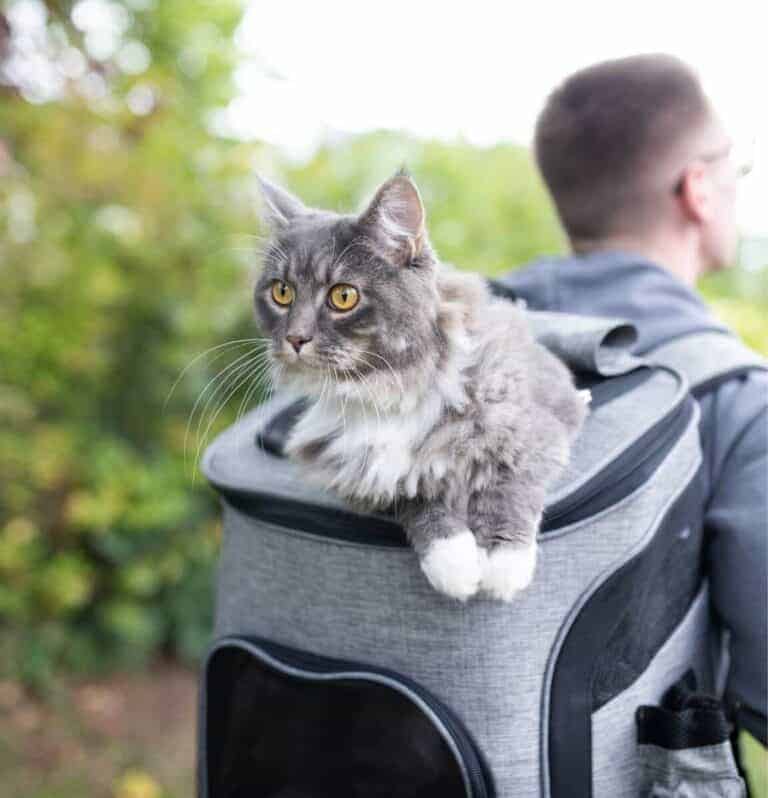
There are size requirements for your carrier. It must be able to fit under the seat. Every airline is different. Soft side carriers are more forgiving. Sherpa, Sleepypod Air, and Sturdibag are brands that fit and hold up well.
Your cat and his carrier must meet the weight limit for your airline. Most cats will be fine but if you are traveling with a full size Maine Coon, Ragdoll, or Norwegian Forest Cat or an overweight cat you will want to be sure they aren’t too heavy to fly in the cabin.

Book Your Tickets Early
There are extra fees to pay when flying with cats. It varies by airline but your kitty’s ticket will cost you an average of $250 round trip flying in the cabin, according to Consumer Reports.
There are only a limited number pets allowed per flight. Make sure you ticket your kitty on the flight as soon as possible. Book as direct a flight as you can. Drive to a bigger airport if you can get a better flight. You don’t want to get halfway to your destination and find out you can’t get Kitty on your connecting flight.
Only one pet can fly per seat. If you are transporting multiple cats, you must fly them in cargo or have someone fly with you to transport your other cat. I have heard of people purchasing a second seat so they can take two cats. I would say discuss it with your airline. Some airlines allow you to take two cats together in one carrier as long as they don’t exceed the weight limit and have enough space to sit, stand, and lie down. That reads to me that unless you are traveling with kittens, or perhaps a Devon Rex or a Singapura, you need more than one person to take more that one cat on a plane.
Have the Proper Health Paperwork
Make sure you have the correct paperwork. You will need a current health certificate, likely within 10 days of your flight, and a current rabies vaccination. Check with your airline and the rules of your destination to be sure the timing is correct.
Keep a set of paperwork in the pocket of your carrier and another copy in your own purse or carry-on. I’d take a picture on my phone too.
Be sure you label your carrier with your kitty‘s name, your name, and all your contact information. Consider including your vet’s info and the contact information for someone at your destination. Have your cat wear an id tag on her harness or collar and consider having her microchipped.
Emotional Support Animals Need Additional Paperwork
Be sure you have the appropriate paperwork if you are bringing Kitty along as an emotional support animal. In addition to Kitty’s health certificate, you will need a letter from a mental health professional certifying that you require an ESA to travel. You’ll also have to sign a liability waiver. Some airlines require a training certificate, which can be a challenge for cats. There aren’t cat trainers everywhere yet. You will need to notify your airline at least 48 hours in advance that you are traveling with an ESA.
The laws have been updated and it is no longer a requirement for the airlines to allow ESA to travel for free. Unfortunately, people attempting to claim their pets as ESAs to avoid paying the extra fees and situations with poorly behaved ESAs on board has made it more difficult for people who legitimately travel with their cat as their emotional support animal. Most airlines will no longer allow ESAs to fly free because of this. You can of course bring your ESA feline as you would any other pet cat.

Pack Properly for Yourself and Kitty
Your cat is your carry on baggage. So you get a purse, backpack, or laptop bag that will fit in the overhead compartment. Check everything else. Keep it simple, you want to focus on Kitty when you go through security.
Pack for Kitty too. Put a blanket or towel that smells like home in the carrier for her. Then line her carrier with 1 or 2 puppy pads. Bring more in case you need them. Bring small trash bags for clean up.
You can reduce the likelihood of your cat needing the litter box on the plane if you don’t feed him any closer to flight time than 5 hours. He’ll be okay to miss a meal and make up for it when you get to your destination. Bring food with you in case your flight gets cancelled or delayed.
You can try bringing along some kitty crunchies for a treat. If Kitty will eat during take-off and landing, it will help “pop” his ears like chewing gum does for you. Other than offering those treats, just cover his carrier and let him alone. He needs to stay in his carrier throughout the flight.
How to Keep Your Cat Calm on the Flight
Don’t medicate your cat. The AVMA recommends not giving sedatives to animals before flying because the altitude pressure can create a respiratory problem that could create an emergency inflight.
Offer calming treats instead, or try a Thundershirt or calming collar. Spraying the blanket in the carrier with Feliway can help. If you use rescue remedy to calm your kitty, get a bottle of the human version before flying with your cat. The pet version contains glycerin which will set off the security alarm.
Getting Through Security
Practice traveling with Kitty in advance. Get him used to getting in and out of his carrier and to wearing a harness and leash. You must take him out of his carrier to go through security. It is easier to control the situation if you have a leash and harness on your kitty. You can ask for a private room but some TSA sites won’t do it. Some won’t even allow the leash and harness. Just do the best you can if they force you into that situation.
Consider joining the pre-check program. You don’t have to take off your shoes or remove your electronics from your carry-ons. Anything that makes security easier while dealing with Kitty is a help. Stay calm, give yourself plenty of time to get to the gate and get through security, and your flight should go well.
Flying A Cat in Cargo
For international travel you must send your kitty in cargo. Animals travel in a pressurized, temperature controlled compartment. It is still best not to travel at the height of summer or depth of winter. Airlines will not fly animals if the temperatures are below 45 or over 85.
Ask your airline if it is likely your cat will spend time on the tarmac. You can also speak to the flight attendants on the flight and ask them to confirm that your cat is on the plane and the cargo area is functioning for live animals.
If you have bonded pets, some airlines with let you fly them together in one crate. A hard side crate is the only option for flying cargo. Be sure to bolt it together with metal hardware. Zip tie the corners for extra security and mark it with “live animals” stickers. Teach your cats to drink from a water bottle rather than a dish so she won’t spill and end up wet if there is turbulence. Be sure to give them a blanket or bed that smells like home. Tape a baggie containing one copy of your cat’s health paperwork to the crate.
Speak to your airline before you go to the airport. Some require pets to ship as cargo instead of as checked baggage. It doesn’t make a lot of difference, other than cost, but you may have to go to a separate area or building to check Kitty in before checking in yourself.

Can Persian Cats Fly?
Our flat-faced furbabies face more challenges than other cats.
Most airlines now forbid bracycephalic breeds like Persians, Himalayans, Exotics, and British Shorthairs to fly in cargo. Different airlines have different rules about flying them in cabin. Atlantic Airline’s website puts it bluntly: “Himalayan and Persian cats should not be transported by air as these breeds are more susceptible to breathing difficulties caused by the thin air at altitude.” Some airlines will allow your Persian cat to fly – but only if you sign a waiver that releases the airline from liability if your furbaby suffers respiratory distress in-flight.
It sounds like a broken record, but check with your airline before you pay for Kitty’s ticket. Not all airlines have the same list of restricted breeds. Persians, as the classic flat-faced breed, are everyone’s list.
Flying with Kittens
Kittens can travel by plane. The youngest age that they should be joining you in the air is 8 weeks. You want to be sure their lungs can handle the cabin pressure. Two small kittens, or one kitten and his mama cat, can share a carrier.
Each airline has it’s own restrictions on flying with kittens. All require them to be weaned and over 2 pounds. The average age required to board a plane is 8 or 10 weeks in cabin only on domestic flights. Some allow international flights, others do not.
Charter a Private Flight
Another option is to fly on a charter flight or private plane. There are several companies, such as NetJets and WheelsUP, that offer flights through chartering private jets. Large pets, exotic animals, and snub nosed breeds can travel in the cabin with their human companions or travel home alone from their breeders. You will need a flight attendant if you are flying a cat unaccompanied. AirPA is a charter attendant company that specializes in flying pets and offer special amenities for their animal travelers. This is a more expensive option but it keeps your Persian, your baby cat, or your oversized Ragdoll safely with you or your transporter instead of in the belly of the plane.
Prefer the Train?
If you’d rather stay on the ground like me, Amtrak allows pets that weigh under 20 pounds, including the weight of their carrier, in a coach class on train trips under 7 hours. Like on the airlines, the carrier needs to fit under your seat and kitty must be odorless and “not in need of attention” throughout the trip. Sadly, they don‘t allow pets in the sleeper cars which ruins my plans to take Plush to Florida.
Conclusion
Most cats will probably just nap through a flight if properly prepare for travel. What about you? Have you flown the friendly skies with your kitties? Add any tips for flying with cats I missed in the comments below.