Keep Your Cat Safe in the Summer: Hot Weather Hazards for Cats
Contents
Summary
Summer brings many joys for cats. Tips to keep your cat safe in the summer from hazards like heatstroke, parasites and poisons. Includes tips for feral cat carers.
Last Updated on May 5, 2026 by Holly Anne Dustin
There’s a lot to like about summer if you’re a cat. The sun puddles, the moths at the lights at night, the baby cardinals nesting in the tree and learning to fly past the window, and especially the chipmunk races on the deck. But there are dangers lurking, too. Besides the heat and the bugs, adventurous cats can run afoul of poisonous plants, chemicals, and wildlife. It’s essential to keep your cat comfortable, healthy, and safe in the summer. Here are some tips to keep your cat safe in the summer.
How Can I Keep My Cat Safe in Hot Weather?
Your cats will be comfortable if you are comfortable. Cats usually handle warmth better than people do. Their body temperature runs warmer than ours. So warmer temperatures are more tolerable for your cats, but hot days still take a toll.
Air conditioning is a pleasant option. But if you’re having a heat wave and don’t have AC, you can still keep your baby cool. You can design a cooling area for Kitty if you set up a fan blowing over a frozen bottle of ice.If you don’t have it during a heat wave, you can still set up cool spots around the house.
Cooling mats, cooling vests, and bandanas also help, especially for cats that travel. Raising a bed so air can move underneath it gives your cat another place to rest. Tile floors, a basement floor, or any cool, clean surface can also bring relief.
Grooming matters too. Brushing helps remove loose fur and keeps coats in better shape for summer. Keeping Kitty groomed with help keep her cool in the summer heat. That doesn’t mean shaving her. Her coat is insulation that will help her stay cool.
This post may contain affiliate links. Life and Cats is a Chewy affiliate and a member of the Amazon Associates program and as such we earn a small commission when you shop through our our links and banners. It doesn’t change the amount you pay. You can read our full disclosure policy here.

Never leave Kitty in the Car
It is never okay to leave your cat in your car. Not even for a quick stop or a few minutes unless your car can keep the AC running. A parked car heats up fast, even with cracked windows. On a mild day, the temperature inside can climb to dangerous levels in a short time. The temperature inside a car parked in the sun with the windows cracked open on a 71 degree day went up to 116 in an hour.
If you must travel in hot weather, use your AC liberally. Keep a cooling mat or a frozen water bottle in her carrier. Don’t travel during the hottest part of the day.
Another thing to consider before you head out to enjoy the beautiful scenery and fresh summer air, is the airflow and ventilation in your carrier. If you use a backpack carrier, choose one with mesh sides and good airflow for proper ventilation. Hard bubble-style carriers trap heat and can make the ride harder on your cat.
Keep Kitty Hydrated
Fresh water is one of the best ways to keep your cat safe in the summer. Put out extra water bowls in different spots so busy households have more options. Some cats drink more when the water is cool, so add ice cubes or refresh the bowls often.
A fountain can help cats that prefer moving water. You can also leave a tap dripping for cats that like that sound and motion. Older cats need special attention because dehydration can hit them harder, especially if they have trouble getting around. Make sure water is easy to reach.
Wet food can also support hydration. If your cat eats dry food, adding some wet food can improve moisture intake and offer better overall nutrition. Frozen wet food, baby food, or cat-safe creamy treats can give cats a cool snack on a hot day.
Outdoor cats need clean water and shade at all times. In a group of cats, place more than one bowl so the stronger cats don’t block the others.
Signs Your Cat May Be Overheated
Heat stroke can show up fast. Watch for rapid or noisy breathing, red or purple gums, thick drool, panting, weak movement, vomiting, diarrhea, or sweaty paws. Any of these signs needs attention right away.
If a cat overheats, move the cat to the shade, wet the fur with cool water, and offer drinking water. If the cat won’t drink, use a syringe carefully if needed. Contact a veterinarian at once.
Cats that have had heat stroke before are more likely to have it again. Flat-faced breeds, including Persians and Himalayans, are at higher risk.
Can Cats Get Sunburned?
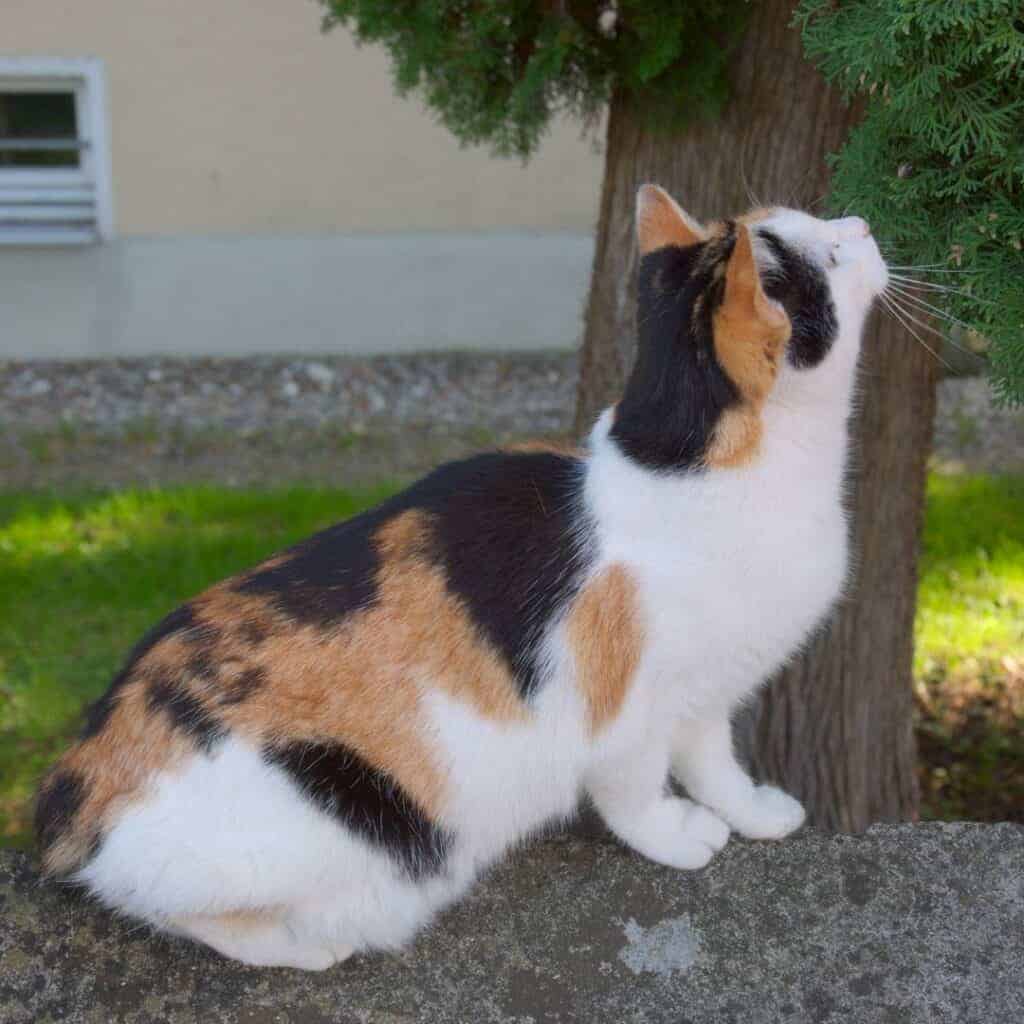
Yes, especially white or light-colored cats that spend a lot of time in the sun. The nose, ear tips, eyelids, and lips are common trouble spots. Long hours in direct sun can raise the risk of skin cancer.
The safest approach is to limit sun exposure. A few cats may tolerate hats or goggles, but most won’t. Safe sunscreen is hard to find for cats. Avoid anything with zinc oxide or salicylates. Dermoscent Sunfree is probably the safest-looking thing I’ve found on the commercial market. It might be something to ask your vet about if you have a white cat or hairless breed that can’t resist sunbathing. Even with that though, you want to avoid Kitty consuming it. RenewedPet, maker of a product line designed for hairless cats, also makes a sunscreen product that works for all pets that is available on Etsy.
Poison Prevention
Summer often brings chemicals into yards, gardens, and patios. Cats are sensitive to many lawn and garden products, and some items made for dogs are unsafe for cats. A cat can pick up residue on the paws or fur and then swallow it while grooming.
Chemical poisoning can harm the eyes, thyroid, kidneys, digestive tract, liver, and muscles. Watch for drooling, vomiting, diarrhea, nausea, dark gums, breathing trouble, or strong belly pain.
Your cats can come in contact with chemicals on a walkabout and end up ingesting it when they groom themselves. It is best to just keep Kitty inside out of the grass. But if your furball loves his outside adventures, then keep him off the lawn for 24-72 hours after using any products. And keep him to your yard, where you know what you have put on the grass.
The other big risk of poisoning is rodent poison. Don’t let your cat hunt wildlife. You might not put out rat poison or other pest repellents, but you never know what other people have done.
Ant baits are another summer risk to your kitty. If you need to put out baits, put them somewhere you are sure Kitty can’t go.
Plants
Plants pose another problem for cats. Besides nibbling on grass that might have lawn care products on it, garden plants can harm your cats. If you let your cat range about in the garden, use a list of toxic plants when planning your planting. Before filling beds and pots, check a list of toxic plants and choose safer options. Lilies are among the most serious, even brushing against a lily and ingesting some pollen can be fatal. Don’t put lilies in your garden if you have cats.
A real adventure cat has to consider the same risks that dogs do. Cats that roam near ponds or lakes have another risk to watch for, blue-green algae. It can be toxic or even fatal to cats that drink from contaminated ponds or groom themselves after being in the water.
Bugs and Wildlife
Summer brings more insects and more contact with wildlife. Keep your cat’s rabies vaccine current. If a bite happens, call your veterinarian right away.
Another way to keep your cat safe in summer is to be sure he is current on his flea, tick, and heartworm prevention. Parasites can cause your furbaby all kinds of problems. Fleas, ticks, and mosquitos thrive in summer and they very much want to feed on your kitties.
Bee nests and other stinging insects are another concern. Don’t leave sweet drinks or sugary food outside, because they draw bees. Cats like to play with bees, but the outcome is no fun!
Fireworks and Storms
Summer noise can frighten cats, especially around the Fourth of July. Many pets run off during fireworks, and cats are no exception. Keep your cat’s microchip and ID information current in case one slips out the door.
During fireworks or thunderstorms, close the shades to reduce flashing lights. Leave on a television or soft music if that helps your cats settle. Calming treats, Feliway spray, and catnip may also ease stress for some cats. A calm household helps calm cats.
Related Post: Keep Your Cat Calm During Fireworks
How Can I Keep Feral Cats Safe in Summer?
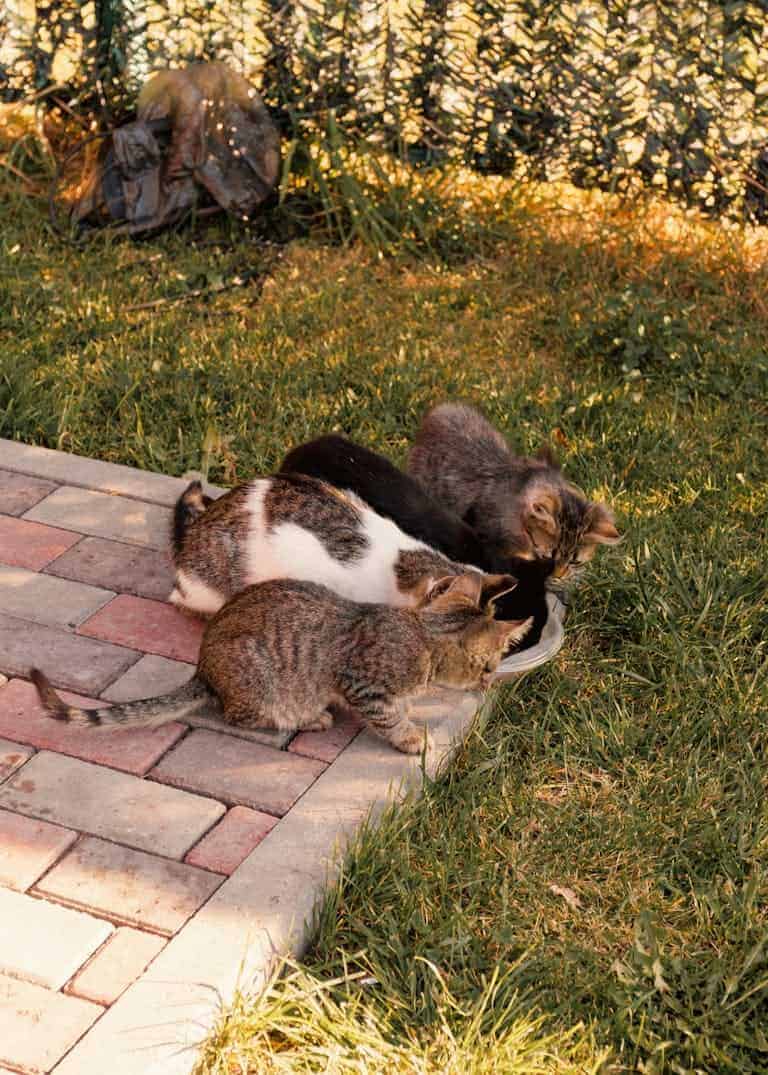
Set your colony’s feeding station out of the sun. Find a shady spot or build a raised set-up with a roof. Don’t leave food out. Food, even dry food, can spoil if left out in the heat. Feed your colony only what they can eat in 30-45 minutes.
Keeping your feral cat colony’s food and water bowls ant-free can prove a challenging task especially in the summer. There are ant-free bowls you can buy. Sprinkling the ground around the feeding station with a circle of food grade diatomaceous earth can also keep the bugs away.
Spreading diatomaceous earth around their sleeping areas can also keep fleas away. Be sure you get a food grade product. The products sold for pools and filters is highly processed and toxic.
Water evaporates faster in summer sun and heat. And kitties will drink more when it is hot. Provide more water than normal. Put out two bowls. One full of cool water and one frozen. The cats can drink the first bowl while the second one melts providing a new source of cool water.
A bowl with a deeper and narrow is not a cat’s favorite style of bowl, but it will keep the water from evaporating as quickly. Drop an ice cube in when you put out water in the morning. It will keep the water cooler longer.
Be sure they have a place to go to get out of the sun and off surfaces like concrete. A shaded shelter house, under a deck, or even put in a “dog house.” On those really hot days put a frozen gallon jug of water where the cats hang out. They can cuddle up near it and enjoy the coolness.
If you are trapping for TNR, be sure your traps aren’t set in the blazing sun and monitor them often. The kitties are at as much risk of sunstroke in the summer as they are of frostbite in the winter.
Summary
Summer can still be a good season for cats, as long as you stay ahead of the risks. Shade, clean water, safe travel, and a close eye on poisons and plants all help keep your cat safe in the summer. The best summer care for cats is consistent and practical. When you stay alert to heat, hydration, and safe spaces, you give your cat a better chance to stay healthy all season.