Recognizing the Signs Your Cat is in Pain
When we experience pain, we can easily tell someone that there is something wrong and ask for help. Our furbabies can’t do that. Recognizing signs of pain in your cat is important to keeping Kitty happy and healthy.
Cats are masters of hiding their pain and illness. I’ve learned the truth of this in the last month. My best furry friend developed a dental abscess and infection. Poor guy’s mouth is really hurting him. Looking back, he’s been in pain for longer than I knew when I took him to the vet. He’s going to feel much better after he gets those teeth pulled.
Contents
How to Tell if a Cat Has Pain
A cat with an acute injury gives it away pretty easily. For example, a cat with an injured paw has trouble walking, cries, and won’t let you touch it. A cat with a urinary blockage jumps in and out of the box without peeing and cries. It’s when your cat has a chronic issue like dental disease or arthritis that it gets bad before you realize it. These conditions start small and worsen over time.
Recent studies have been done to develop screening tools to help veterinarians assess pain in cats. One has developed a list of 25 behavioral signs that indicate Kitty is in pain, and another is called the Feline Grimace Scale.
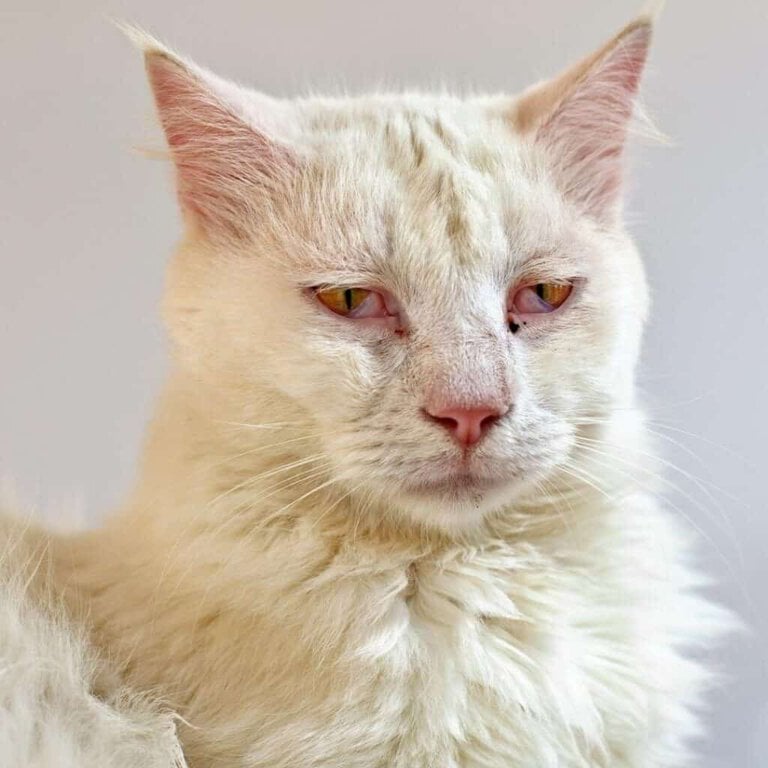
Subtle Changes in his Behavior Can Tell You if Kitty is in Pain.
- Is he grumpier?
- Sleeping more or less active?
- Less interest in playing or interaction?
- Unsettled, agitated or restless?
- Vocalizing like urgent meowing, growling, or hissing?
- Withdrawn, staying away from people, hiding?
- Sensitivity to being touched?
Identifying Pain in Cats
Has your cat stopped jumping on the bed or sleeping with you? He might have arthritis. Cats in pain will avoid activities he thinks will hurt.
Is Kitty pottying outside the box? Changes in litter box habits could mean a urinary tract infection or blockage. It could also mean kidney disease, diabetes, or something as simple as constipation.
Has Kitty lost or gained weight? Changes in eating habits can mean diabetes, hyperthyroid disease, kidney disease or rotten teeth. It was Treeno’s weight loss that was the first tip off about his abscessed tooth.
Related Post: Read more here for about cat dental disease
Has your typically cuddly cat become snappy or slappy? Aggression can be a sign that your cat is in pain. The cat that normally sleeps wrapped around your head or never leaves your lap is suddenly off by himself? That’s my Treeno. That was the day I called the vet.
Is Kitty’s pretty coat suddenly dull, rough, and greasy? Has he developed mats in a certain area? Did he groom all the fur off a part of his body? Changes in grooming habits can indicate a cat in pain.

Body Position and Facial Expressions as Signs of Pain
A cat that “loafs” with his paws all tucked underneath his body, spine arched, and stomach pulled in is probably in pain. If Kitty avoids putting weight on some part of his body, it’s probably because it hurts.
Squinty eyes, flattened ears, tension in his muzzle where the mouth, nose, and cheeks are tense and more compressed all show a cat in pain.
More Serious Signs that Your Cat is in Pain
These symptoms are signs of severe pain in cats. Call your vet or go to the emergency vet if your kitty exhibits these symptoms:
- Trembling
- Fast heart rate
- Breathing shallowly or fast
- Dilated eyes
- Hunched up, lowered head, crouched body positions
- Lethargic

Tably: Monitor Your Cat’s Well-Being
There’s an interesting new artificial intelligence phone app called Tably that analyzes a cat’s facial expression and judges whether the cat is happy or distressed based on the veterinary approved cat pain scales.
I think it’s exciting that research is being done on pain in cats because it is so hard to see the subtle signs if you’re with your cat all the time. This could be a way for cat guardians to have more information to share with a vet as part of a telemedicine consult, for example. Or to know its time to book Kitty in for a vet appointment. I’m trying to use it to monitor Treeno’s medication.
Related Post: Read more about why cats need to see the vet
The app is currently in beta and will benefit from more usage inputs. You need a really clear, face front, picture if you upload a photo. If the size of the picture is off, the app can’t process it. If you try to capture a live shot of Kitty’s face, he has to stay still and look at the camera centered in the photo box. Getting Treeno to do that wasn’t easy. The app did accurately judge him to be distressed. But it did not know what to do with my black, squishy-faced Persian.
Other reviewers say it improves as you continue to use it. If you’re interested in trying Tably, it’s available on for iPhone and Android.
Warning About Treating Pain in Cats
If you think your furbaby is experiencing pain, call your vet. Don’t treat your cats’ pain at home. There are no over-the-counter pain relievers that are safe to use in cats. NSAIDs that we routinely choose to treat our own pain are extremely toxic and can be fatal for your furbaby. Let your vet prescribe something.