

Meet the Elegant Russian Blue Cat: Personality, Care, and History
If you’re in search of a feline companion that embodies grace and elegance, the Russian Blue cat is a perfect choice. With their captivating beauty and charming personality, these cats have captured the hearts of many since their introduction in the 19th century. Their loyalty is expressed through unwavering love and companionship, making them wonderful additions to any home. Let’s discover the allure of Russian Blue cats, explore their fascinating history, unique personality traits, care requirements, and much more.
Contents
- 1 History of the Russian Blue
- 2 Breed Standard of the Russian Blue
- 3 Personality, Traits, and Temperament of the Russian Blue Breed
- 4 Common Health Issues Found in Russian Blue Cats
- 5 Obesity
- 6 Care and Grooming Needs of the Russian Blue
- 7 Lifespan of the Russian Blue Breed
- 8 Do Russian Blue Make Good Pets?
- 9 How Much Do Russian Blue Cats Cost?
- 10 Summary
History of the Russian Blue
The Russian Blue cat is native to Russia, along with the Siberian, the Kurilian Bobtail, the Toybob, and the Peterbald. The Russian Blue is a native breed, traceable back to the port of Arkhangelsk in Northern Russia. They were originally known as the Archangel cat.
It is believed that these cats made their way to Britain aboard trading ships. As the cats traveled to other countries, their distinct features and amiable nature caught the attention of cat enthusiasts around the world.
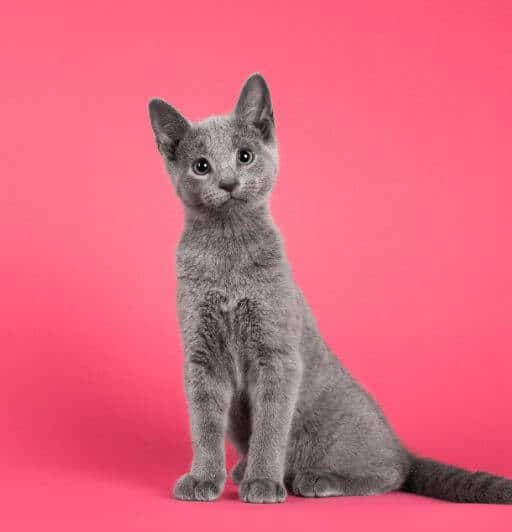
The Russian Blue cat gained recognition by the Cat Fanciers Association and exhibited in cat shows across Europe by the late 19th century. Their elegance and unique coat color fascinated many, leading to their eventual popularity as a desirable breed. Despite facing the near extinction suffered by many breeds during and after the World Wars, dedicated breeders worked to ensure its survival and preserve the breed’s distinct traits.
Breed Standard of the Russian Blue
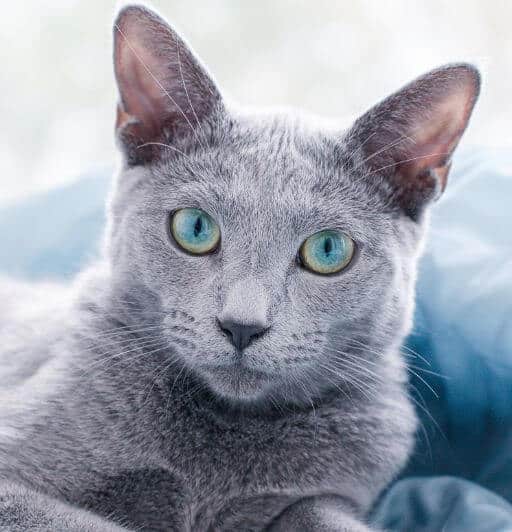
The Russian Blue breed has a distinct set of characteristics that define its standard. Russian Blue cats are medium-sized, fine-boned, long and muscular cats. Their head is a medium wedge with a straight nose. Their ears are set toward the side of the head. The Russian Blue’s eyes are large, round, wide-set and need to be a vibrant green,
The defining feature of the Russian Blue cat is the coat. Their coat is short, silky, dense, and plush. Fur is an even shiny blue. Their guard hairs are almost silvery giving Kitty a lustrous appearance.
Personality, Traits, and Temperament of the Russian Blue Breed
Russian Blue cats are known for their gentle and affectionate nature. They form deep bonds with their human companions and enjoy being involved in their daily activities. While they may initially appear reserved, these cats are incredibly loyal and will shower their loved ones with unwavering devotion.
Russian Blues are smart and curious, excellent problem solvers, and love interactive play. They are an athletic breed that loves to play fetch and run agility. Despite their playful nature, they are a quiet breed. They are ideal companions for those looking for a peaceful home.
Common Health Issues Found in Russian Blue Cats
The Russian Blue is a natural, healthy breed without a lot of genetic health concerns.
Hypertrophic Cardiomyopathy
Hypertrophic cardiomyopathy (HCM) is a common genetic heart disease that affects many cat breeds, including the Russian Blue. This disease causes the walls of the heart to thicken, making it harder for the heart to pump blood effectively. Symptoms of HCM may include shortness of breath, lethargy, and fainting. Unfortunately, there is no cure for HCM. Early detection and treatment can help manage the symptoms and prolong the cat’s life. Breeders typically test for HCM. You should be able to see the tests for your kitten’s parents.
Pyruvate Kinase Deficiency
Another health concern that can affect Russian Blues is PKD. Pyruvate Kinase Deficiency is a hereditary condition that affects the red blood cells, causing them to break down more quickly than normal. This can lead to anemia, lethargy, and jaundice. There is no cure for pyruvate kinase deficiency, but treatment may include blood transfusions and medication to manage the symptoms.
Progressive Retinal Atrophy
Progressive retinal atrophy (PRA) is a hereditary eye disease that many breeds of cats, including the Russian Blue. PRA affects the retina, causing it to degenerate over time. This can lead to blindness. Symptoms of PRA may include night blindness, dilated pupils, and a general reluctance to move around in low light. Unfortunately, there is no cure for PRA, but early detection can help slow the progression of the disease.
Obesity
Obesity is a problem for this breed. These cats have a hearty appetite, and without proper portion control and exercise, they become overweight. Maintaining a balanced diet and engaging in interactive play sessions can help keep them fit and prevent obesity-related complications.
Care and Grooming Needs of the Russian Blue
The Russian Blue cat’s short, dense coat requires minimal grooming. This breed does not shed as much as other breeds. Weekly brushing with a soft bristle brush is usually sufficient to keep their coat in pristine condition. Keeping their nails trimmed, ears cleaned, and being diligent with their dental hygiene should keep your Russian Blue looking her best.
A Russian Blue might be a good choice if you are allergic to cats but still want a furry friend. Not only do they shed less than most, but they are one of the breeds that produces a lower level of the allergen responsible for all our sneezing and itchy eyes.
Related Post: Hypoallergenic Breeds
Lifespan of the Russian Blue Breed
On average, Russian Blue cats have a lifespan of 15 to 20 years. With proper care, a nutritious diet, regular exercise, and routine veterinary visits, these felines live long and healthy lives, providing their human companions with years of love and joy.
Do Russian Blue Make Good Pets?
Absolutely! Renowned for their gentle and loving nature, Russian Blue cats make exceptional companions. They are well-suited for various living situations, adapting equally well to small apartments or spacious homes. Their calm demeanor and compatibility with other pets make them an excellent choice for multi-pet households.
How Much Do Russian Blue Cats Cost?
The cost of a Russian Blue cat can vary depending on factors such as the cat’s pedigree, age, and breeder reputation. On average, you can expect to pay anywhere from $800 to $1,500 for a purebred Russian Blue kitten. It’s essential to find a reputable breeder who prioritizes the health and well-being of their cats.
Want to learn more about cat breeds? Visit our Breed Profiles Page
Summary
The Russian Blue cat is a captivating breed known for its elegance, unique personality, and unwavering loyalty. With a fascinating history, enchanting physical features, and a gentle temperament, these felines have rightly earned their place in the hearts of cat lovers worldwide. By understanding their care requirements and providing them with a nurturing environment, Russian Blue cats can thrive and bring immense joy to their human companions. If you’re ready to welcome a devoted and elegant companion into your life, the Russian Blue may just be the perfect match for you.


