The Cats of Royalty
Last Updated on April 17, 2024 by Holly Anne Dustin
Cats have had an association with royalty since ancient times. Several of the breeds we recognize today are throwbacks to those honored cats of the past; though our breeding has changed them dramatically. These seven breeds have roots in royalty.
Contents
Turkish Angora
The Turkish Angora has rich association with royalty. It is an ancient, natural breed from the Ankara region in Turkey. Turkish Angoras are considered a national treasure, long prized by Turkish Sultans. Legend has it that when the last great sultan returned it would be as a deaf, all white, Turkish Angora.
According to folklore, the cat that prompted Mohammed to cut off his sleeve rather than disturb his feline was an Angora.
Marie Antoinette owned several Angora cats. She convinced a ship’s captain to smuggle them out to Canada where she hoped to join them if she survived the revolution. It is quite possible that the North American longhaired cats are descendants of those Angora cats.
Turkish Angoras are fun, social, outgoing cats that can be quite stubborn. They want to be in charge of their family. They are often described as “dog-like.” Originally only the white cats were accepted but breeders have worked to develop other colors. Currently, the Turk is accepted in all colors and patterns except pointed patterns, lilac and chocolate colors.
The breed is preserved by a special conservation project at the Ankara zoo. They have been protected since 1917 over concern that what makes the breed unique was getting lost in cross breeding to create many of the other longhaired breeds we know today.
Persians
Modern Persians are one of the breeds that have roots in the Angora. All longhaired cats were called Angoras until the 1800s when they were called Persian Longhairs.
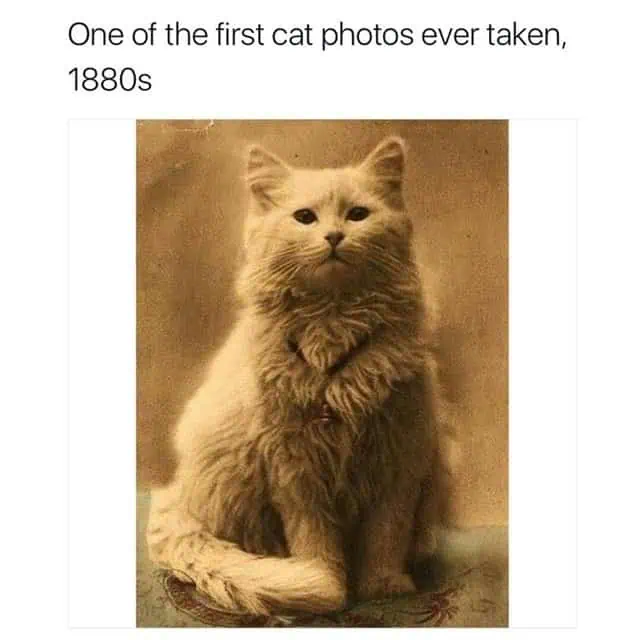
Cats appear in hieroglyphics as early as 1684 BC. European explorers smuggled cats out of Persia into Italy in the 1600s. They didn’t look anything like what we know as Persians today.
Florence Nightingale, Louis VX, and Queen Victoria were fans of the Persian breed. Louis XV had a white Persian he was most fond of while Queen Victoria favored the blues. Her daughter, Princess Victoria, was an active breeder and exhibitor of Chinchilla Persians.
Queen Victoria was fascinated by mathematics and geometry. She began the breeding program that resulted in the square body type and round head that we recognize as the Persian standard today. Continued selective breeding created the flat faced look popular in the show hall. Other breeders maintain the more traditional look with a noticeable muzzle, though they are not competitive.
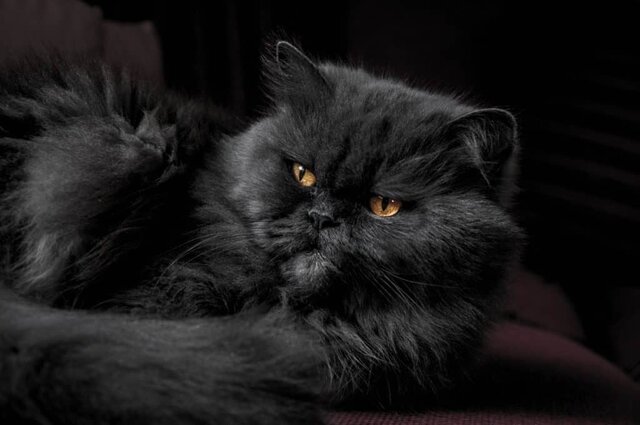
Persians are sweet, docile cats with gorgeous long coats. They are quiet kitties that bond to their humans. They fit into almost any family that can handle their grooming needs. Persians are one of the most popular breeds of pedigreed cats.
Siamese
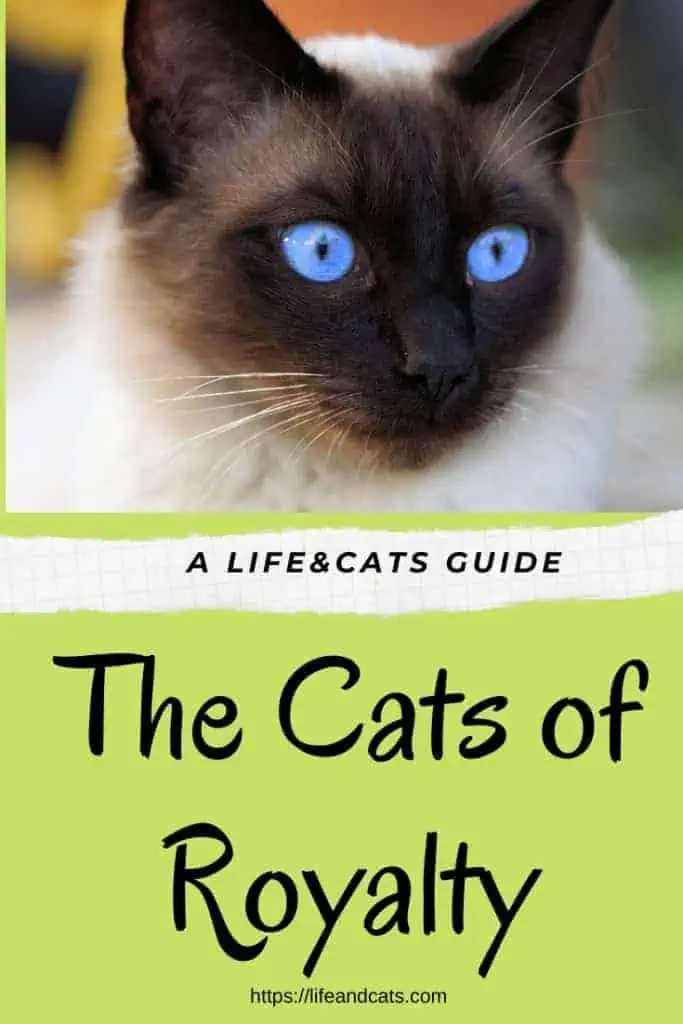
Did you know that there used to be a Siamese kingdom? Present day Thailand is home to one of the other most popular breeds: the Siamese.
The Siamese is a natural breed. They are the original pointed cat. If your favorite breed, or your domestic cat, is a pointed cat you know that somewhere in their history is a Siamese.
Also, like the Persian, today’s version of the Siamese don’t entirely resemble the original. The current standard calls for a long, angular body with a wedge head. The original Siamese cat had a round head and a more muscular, solid body.
Some breeders retain more of the original look under such names as Applehead, Classic, or Old-fashioned Siamese. CFA doesn’t recognize these cats, but TICA recognizes the traditional look under the name of the Thai Cat.
Monks of the medieval Ayutthaya Kingdom wrote a book about their love of their temple cats. The King even included a cat in his coronation ceremony in 1926.
Siamese cats were only kept by royalty. They believed that when a member of the Royal Family passed away they would be reincarnated as a cat. A Siamese cat would be put in the tomb with the deceased. When it escaped through the special hole in the roof, it took the soul of the departed with it. The cat would then move into a temple to live in luxury for the rest of its life.
Siamese cats most striking feature are their ice blue eyes. But they are most known for their voice. They are playful, curious, and intelligent cats that love their people. You’ll have lots of fun and good conversation if you share your life with a Siamese.
Khao Manee
Thailand is also home to one of the other cats of royal lineage: the Khao Manee. CFA’s newest breed is one of the world’s oldest breeds, also dating back to the ancient temple cats.
Of the 16 cats pictured in the book of temple cats, only 3 remain as distinct natural breeds today: the Siamese, the Korat, and the Khao Manee. Khao Manee cats were so highly valued by royalty that the penalty for stealing one was death. It is probably not surprising then that the breed was exclusive to Thailand for at least 650 years.
The Khao Manee is called the White Gem. They are a pure white cat with an athletic build and beautiful eyes. Like the Siamese and the Turkish Angora, they are curious and busy cats. The Khao Manee has a penchant for trouble.

Birman
We find another cat with royal lineage in East Asia: the Birman, sacred cat of Burma. According to legend, the breed dates back to before the time of Christ.
The legends say that the original Birmans lived at the Temple of Lao-Tsun. They held the high priests’ souls until they were reincarnated. Invaders from Siam entered the temple and killed the worshipping priest. His cat continued worshipping in his place. As he gazed on the goddess, his fur turned to gold mist, his eyes sapphire blue, and his paws pure white.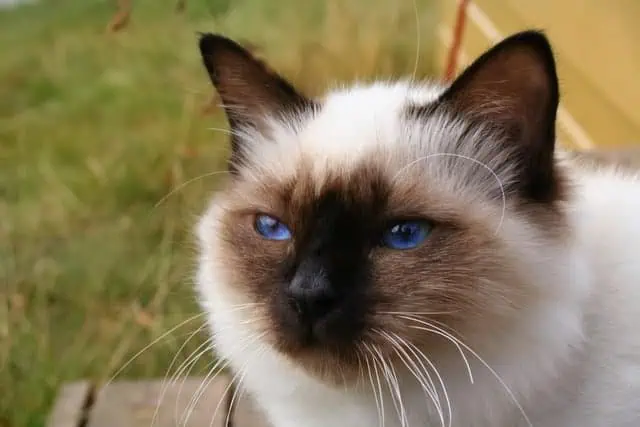
Birman cats still come in that color pattern today. The Birman is a medium-sized cat, with a round face, and a Roman-shaped nose.
If you are looking for a gentle, quiet, cat that loves to be with his people then the Birman might be for you.
Japanese Bobtail
The land of geishas and emperors considered cats so valuable that in the 10th-century only the nobles could own cats. They lived in pagodas as the guards. Eventually they were used as rat control for the silk industry.
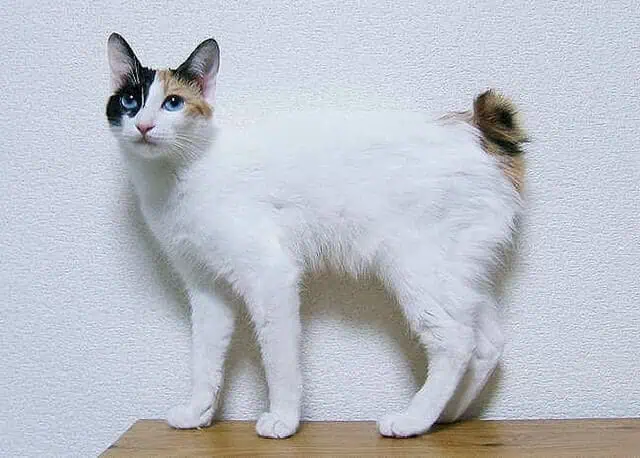
The Japanese Bobtail is a natural breed, likely brought from Korea or China by traveling monks. It is a very active cat that will charm you with silly antics. They are very active cats, good with kids, and natural stars of the agility ring.
The J-Bob is supposed to be lucky, a source of prosperity and happiness. The legend is celebrated in the Maneki Neko, or Beckoning Cat, statues. You might see one in an Asian restaurant or market.
The legend says the Beckoning Cat raises its paw to a lord passing the doors or a temple. He followed the cat into the temple. The cat earned its reputation for bringing luck when a lightning bolt struck the very spot the lord had been standing.
Choosing a J-Bob as your feline friend will certainly be a lucky choice for you and the cat.
Russian Blue
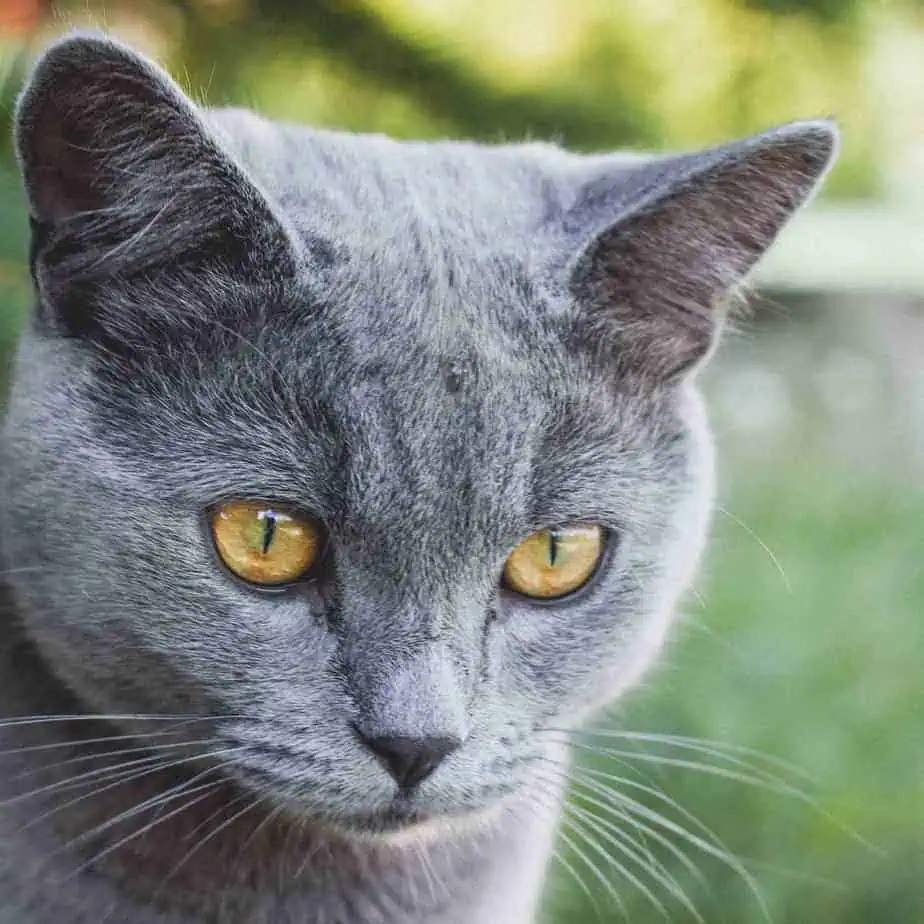
Though Russia sports a natural native breed, the Siberian, it is the Russian Blue that has royal connections. According to legend, the breed originated in the Archangel Islands. Catherine the Great is said to have favored them as pets.
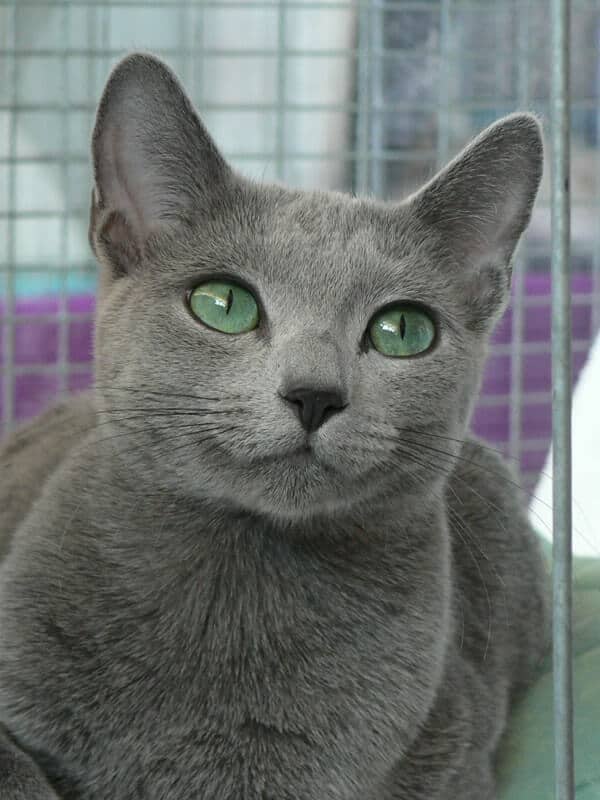
Russian Blues are silvery blue cats with green eyes and a dense shorthair coat. They are affectionate, gentle, and very playful.
Russian Blues are one of the smartest breeds of cats, easily bored, and a great solver of puzzles. If you, like Catherine, favor the breed be sure to do a good job of kitten proofing your home.
Cats of Royalty
These seven breeds have specific associations with royalty. But all cats have found favor since they choose to live alongside humans thousands of years ago.
They were worshipped in Egypt, with the goddess Bastet taking a feline form. Norwegian Forest Cats were the companions of Norse goddess Freya. The ancient Welsh king outlawed killing cats.
Today we don’t have to have royal blood to enjoy the companionship of a special cat. No matter which of these cats of royalty you choose, your cat is sure to bring you luck, joy and happiness.
Read More About Different Breeds of Cats? Check Out Our Directory Here.