Understanding Feline Behavior: Why Do Cats Hate Closed Doors?
Cats are notorious for their love of open spaces and their disdain for closed doors. Whether it’s a bedroom door or a bathroom door, cats seem to take it as a personal affront when they’re not allowed access to every nook and cranny of their home. But why do cats hate closed doors so much?
According to experts, there are a few reasons why cats might react so strongly to closed doors. For one, cats are territorial creatures, and they like to have access to all areas of their domain. Closed doors can be seen as a threat to their territory, which can cause them to become agitated and vocal. Additionally, cats are naturally curious animals, and they may feel frustrated and fear they are missing out on something when they’re not able to explore a new area of their home.
Contents
- 1 Territorial Instincts
- 2 Territorial Stress Management
- 3 Curiosity Makes Cats Hate Closed Doors
- 4 The Fear of Missing Out and Cats
- 5 Your Cat Hates Closed Doors Because He Wants to be With You
- 6 Socialization and Closed Door Aversion
- 7 How to Handle Kitty’s Closed Door Aversion
- 8 Managing Your Cats’ Hatred of Closed Doors
- 9 Summary
Territorial Instincts
Cats are territorial animals by nature. Both a tiger and your pampered Persian have a territory to patrol. In the wild, a cat’s survival depends on claiming and keeping its own territory. It is an area that includes a safe place for them to sleep and find food. They patrol their land on a regular schedule and leave their scent in strategic places to warn off intruders. If their boundaries aren’t respected, they’re willing to fight for what they believe is theirs.
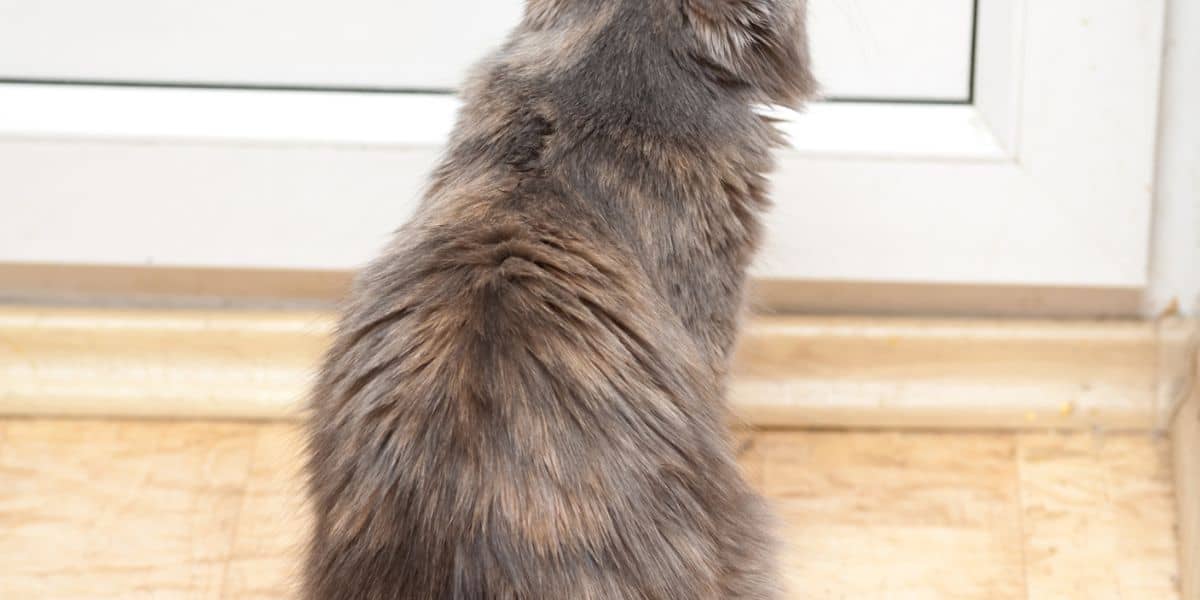
If Kitty enjoys free access to all of our house she sees all within the walls of the house as her rightly claimed homeland. When Kitty encounters a closed door, she can become distressed. That impenetrable barrier blocks her from a piece of territory she sees as her own. It stops her from patrolling and defending her space. The closed door to your kid’s room or, oh no, the bathroom will cause great consternation for Kitty.
It’s important to understand a cat’s territorial instincts and provide him with a designated area in the house with his bed, toys, and food that he can call his own.
Territorial Stress Management
It’s also important to respect his boundaries and avoid disrupting his territory if possible. To a cat, a closed door represents an intrusion into his domain. He may interpret it as an attempt to take his territory or exclude him from an area he feels entitled to. After all, he’s the boss here in his mind.
This can lead to feelings of anxiety and stress, and behaviors like scratching or crying at the door. If you have a room that you don’t want Kitty to enter, use positive reinforcement techniques and redirect his attention until he accepts the new situation.
By understanding and respecting a cat’s territorial instincts, cat guardians can provide a safe and comfortable home for their feline friends.
Curiosity Makes Cats Hate Closed Doors
Cats want to be involved in everything that happens around them. They are always keen to explore their surroundings and investigate anything that piques their interest. A closed door is a source of frustration and annoyance for them.
To a curious cat, a closed door is an obstacle that prevents her from satisfying her curiosity. She wants to know what is happening on the other side, and the closed door stops her from doing so. Curious Kitty must investigate that closed door. Even if nothing very interesting is behind it. If the closed door keeps her from being involved in whatever you are doing, like Plush and me writing this blog post, it is the worst.
Cats have keen senses of hearing and smell; they can detect even the slightest sounds or scents from the other side of a closed door. This can make them even more determined to find out what is happening beyond the barricade. They may scratch at the door, meow loudly, or even try to push it open in an attempt to satisfy their curiosity.
The Fear of Missing Out and Cats
Cats may also experience a fear of missing out (FOMO) when faced with a closed door. If there is something happening on the other side of a closed door, perhaps the presence of a new feline family member? Kitty can become anxious and agitated. She doesn’t want to miss out on any potential sources of excitement or social interaction, and a closed door prevents her from fully engaging with her environment.
To help alleviate their FOMO, consider providing your cat with alternative sources of entertainment and social interaction. Enrich her environment with scratching posts, climbing trees, and perches where she can observe her surroundings. By providing a stimulating environment, you can help reduce Kitty’s FOMO and less likely to fixate on the closed door.
Related Post: Separation Anxiety in Cats
Your Cat Hates Closed Doors Because He Wants to be With You
Cats are independent creatures, but they also crave social interaction and affection from their humans. Even if your furbaby doesn’t jump in your lap or demand attention every second, he still wants to know that you’re nearby. When you close the door to the bathroom or your bedroom, it upsets Kitty. He doesn’t understand privacy. He just doesn’t want to be separated from you.
Closing the door to the bathroom or bedroom may seem like a small inconvenience, but it can have a big impact on your cat’s happiness and well-being. He may feel abandoned or neglected, and this can lead to behavioral issues like excessive meowing or scratching.
To keep Kitty happy and content, try to include him in your daily activities as much as possible. If you’re working on the computer or watching TV, invite your cat to sit nearby or on your lap. If you’re cooking or doing chores, let your cat explore the area and supervise from a safe distance.
Remember, your cat wants to be with you, even if they don’t always show it in obvious ways. By making an effort to include your cat in your daily routine, you can strengthen your bond and ensure that your furry friend feels loved and valued.
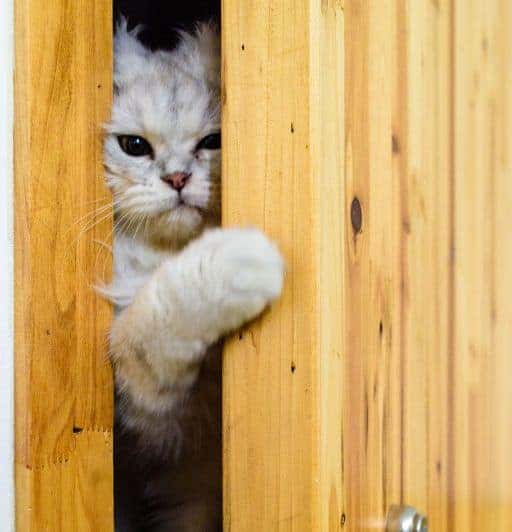
Socialization and Closed Door Aversion
Kitty’s early experiences and socialization influences the way she reacts to a closed door. Cats that have had limited exposure to closed doors during their critical socialization period may be more prone to hating to them. Likewise, if Kitty has a negative experience with closed doors, such as being trapped in a closet, she may develop a fear or aversion towards closed doors.
If your cat hates closed doors due to her early experiences, it’s important to approach her door-related frustrations with patience and understanding. Gradually introducing them to the closed door in a positive and controlled manner can help desensitize them to the trigger and reduce their anxiety.
How to Handle Kitty’s Closed Door Aversion
If your cat hates closed doors, there are a few options available to you. One option is to remove all doors from your house; but this isn’t a realistic option as most people would like some privacy. Another option is to invest in cat doors. These can give your cats the freedom to roam around the house as they please. If you prefer to keep certain doors closed, you need to teach Kitty that the closed door means that the space is off-limits.
If the reason your cat hates closed doors is territorial, remove the space behind the closed door from his territory. This approach requires a commitment to keeping the door closed at all times. Kitty may initially throw a fit about it, he will eventually accept that the room is off-limits and move on.
I had this happen when I turned my office into a nursery. My cats had had free reign in my office but weren’t allowed in the baby’s room. They were not happy. For awhile it felt like all they wanted to do was dash into that room every time I opened it. But they did get over it.

Managing Your Cats’ Hatred of Closed Doors
Managing your cat’s hate of closed doors requires a combination of understanding their behavior and providing them with appropriate outlets for their natural instincts. Here are some tips to help you manage their door-related frustrations:
- Provide environmental enrichment: Create a stimulating environment for your cat with toys, scratching posts, and perches. This can help redirect their energy and prevent them from fixating on closed doors.
- Use positive reinforcement techniques: Reward your cat for exhibiting calm behavior around closed doors. This can help them associate closed doors with positive experiences and reduce their anxiety. Try tossing treats away from the closed door before entering.
- If you are introducing a new cat, use scent swapping techniques to familiarize them with each other’s scent. This can help reduce their territorial instincts and aggression toward the cat behind the closed door.
- Provide alternative sources of stimulation: Ensure your cat has access to interactive toys, window perches, and other forms of entertainment. This can help keep them mentally and physically stimulated, reducing their desire to constantly seek access to closed-off areas.
Remember, it’s important to approach your cat’s door-related frustrations with patience and understanding. By understanding the reasons cats hate closed doors and providing them with appropriate outlets for their natural instincts, you can help create a harmonious living environment for both you and your feline friend.
Summary
Cats have a natural instinct to explore and roam their environment. Cats perceive closed doors as a barrier to their curiosity and freedom, which can cause anxiety and stress in cats. This can lead to behavioral issues such as scratching, meowing, and even aggression. It is important for cat guardians to provide their feline friends with enough space to explore and play. Providing enrichment activities such as toys and scratching posts can also help reduce stress and prevent destructive behavior.