Meet the Beautiful Birman Cat: From Temple Legend to Show Ring
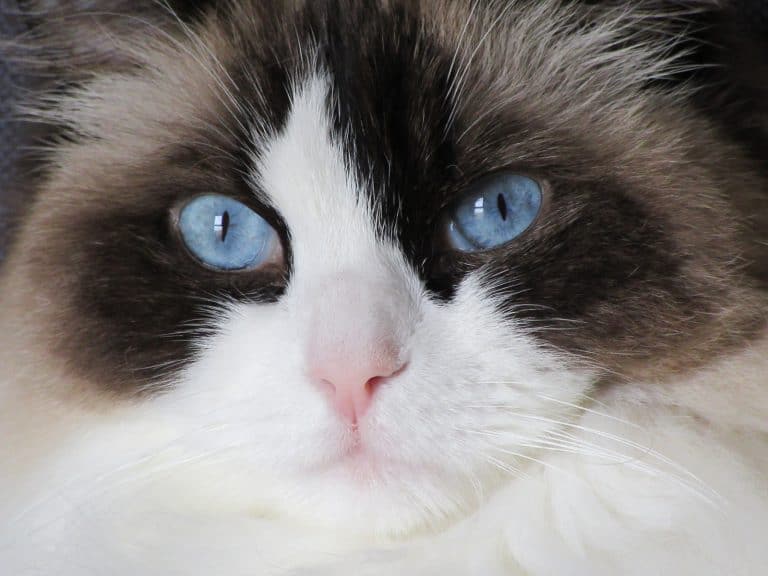
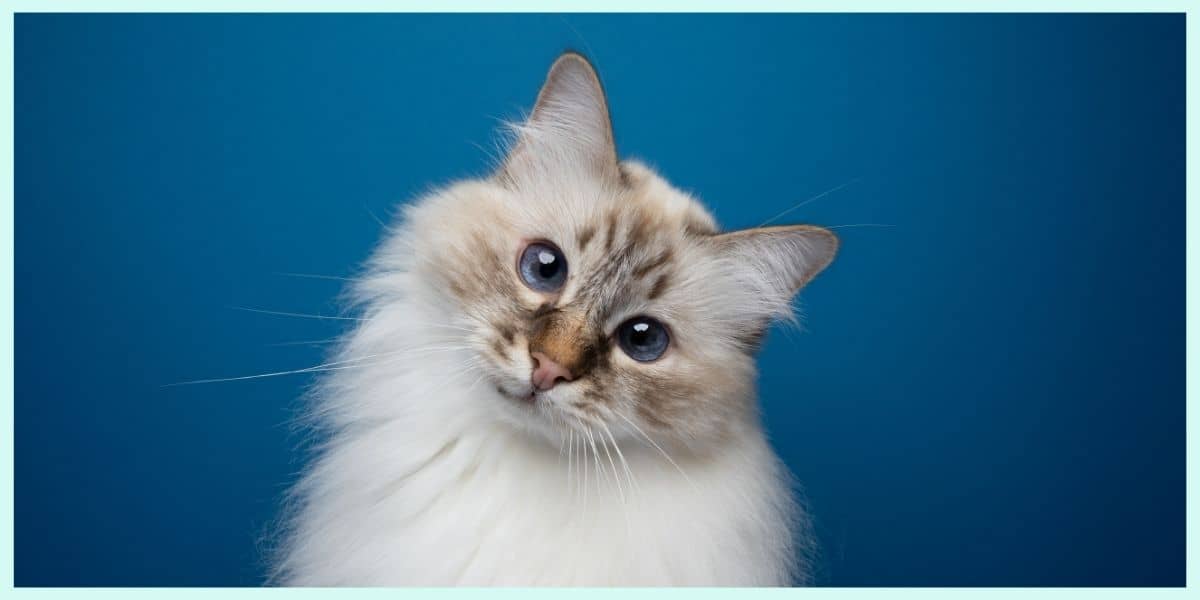
Picture a Birman cat with deep blue eyes, soft color points, and little white gloves that look like they were dipped in cream. Now add a calm, people-focused personality that wants to be near you without acting needy every second. That’s daily life with a Birman cat.
Birmans tend to fit best in homes that want a friendly indoor companion, not a standoffish “roommate cat.” They usually do well with gentle kids, respectful dogs, and other cats, as long as they get attention and a steady routine.
This guide is here to help you decide if a Birman is the right match, and what to watch for when buying or adopting Birman kittens, so you end up with a healthy cat and the temperament you’re hoping for.
Contents
History of the Birman Breed
The Birman cat is often called the “Sacred Cat of Burma,” and are considered sacred companions to the priests of the temple in the Mount of Lugh. You’ll see legends of the temple cat tied to the breed’s look, especially the blue eyes and white feet.
The stories are romantic, but the practical history most buyers care about is simpler: the modern Birman breed was developed in Europe with early lines established in France in the early 1900s from a pair of these temple cats smuggled out of the country.
World events also shaped the breed. Like many pedigreed cats, Birman lines were affected by World War II. Only two pure Birman cats were alive in Europe at the end of the war, They had to be heavily outcrossed with breeds such as the Persian and Siamese to rebuild the Birman breed.
The Birman cat was recognized by the Cat Fanciers Association in 1967 and The International Cat Association in 1979.
Related Post: For more about the legend of the Birman and other Cats of Royalty, click here.
The Birman Breed Standard
Breed standards can sound like cat show paperwork, but they’re useful even if you never plan to show. They explain what makes a Birman cat a Birman, and they help you spot look-alikes being sold under the name.
A good starting point for buyers is the registry description, like the TICA Birman breed profile, which summarizes the desired type and temperament.
Head
A Birman’s head is rounded and balanced, not extreme. The face should look sweet and open, with medium ears and a gentle profile featuring a Roman nose. The eyes are a huge part of the expression: they should be clearly blue, with a bright, alert look that’s hard to miss across a room.
Body
The Birman cat is typically medium to large with a stocky build and sturdy feel. They’re not supposed to look ultra-slim or overly compact. Many adults land around 10 to 12 pounds, with some larger males, but what you’re aiming for is solid muscle and a “comfortable heft,” not excess weight.
Coat and Color
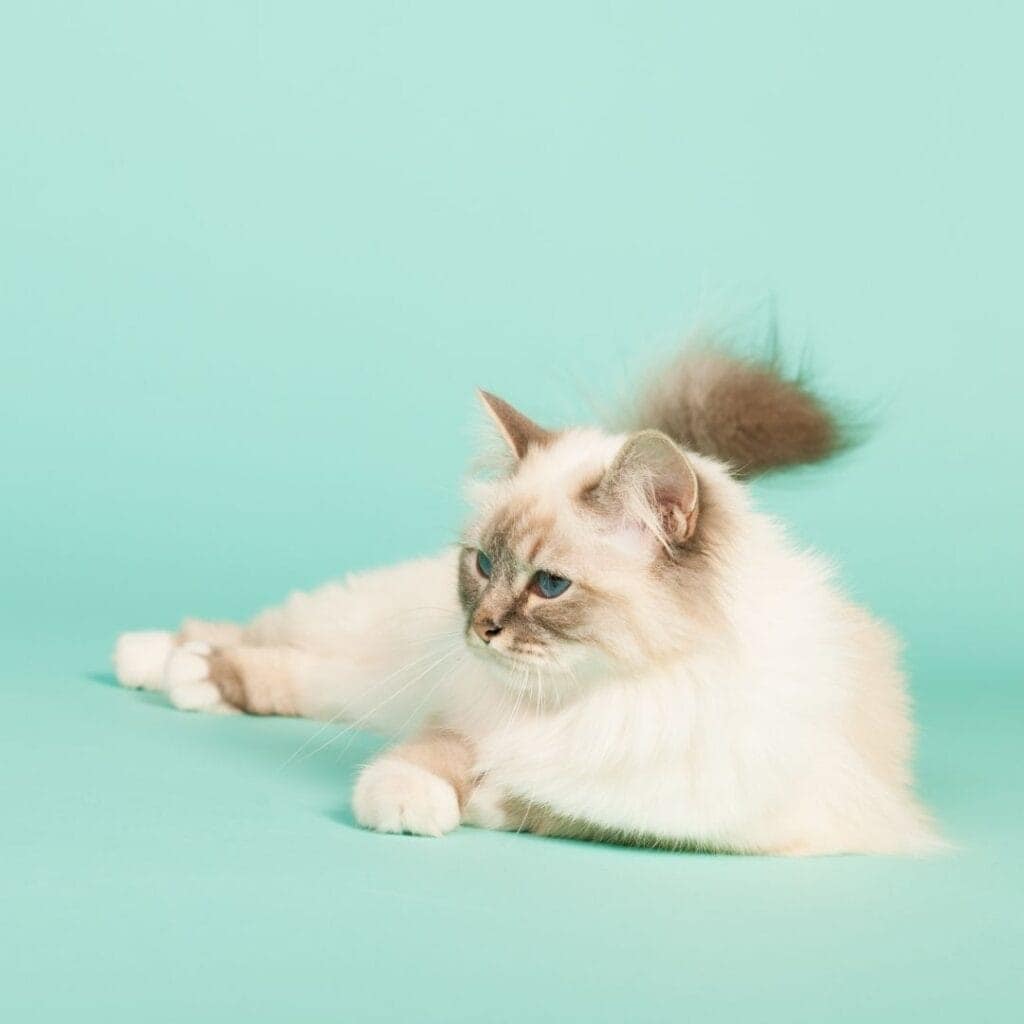
The coat is semi-long and silky with a heavy ruff, usually with less undercoat than some other fluffy breeds. Color is point-based, meaning the face, ears, legs, and tail are darker than the body. The signature detail is the white paws: neat “gloves” on the front paws, and white paws extending up the back legs in a defined pattern (often called laces).
CFA accepts only the traditional colors of seal, chocolate, blue, lilac; red and cream; as well as tabby point and tortie point. TICA accepts all point colors, tabby point, tortie point, smoke and silver.
If you’re comparing standards side by side, the Cat Fanciers’ Association Birman standard PDF shows how strongly the evenly matched gloves and laces are weighted in judging.
The Birman Cat: A Specific Look
From across the room, people sometimes confuse Birmans with other fluffy cats like Ragdolls, Himalayans, and other color-pointed, long-coated cats. Up close though, the Birman cat has a specific combo that’s tough to copy: color points, white gloves, and vivid blue eyes.
The “Sacred Cat of Burma” nickname sticks because it matches the vibe. Birmans often carry themselves with a calm, observant presence, like they’re quietly supervising your whole day. At the same time, the modern breed history is European-bred and carefully standardized, which explains why consistent glove markings are such a big deal in pedigreed lines.
Most Birmans have a medium-large frame and a plush tail, with a semi-long silky coat that tends to fall in a smooth way. Many owners like that the coat often resists heavy matting compared with thicker, undercoat-heavy breeds (you still have to brush, just not constantly).
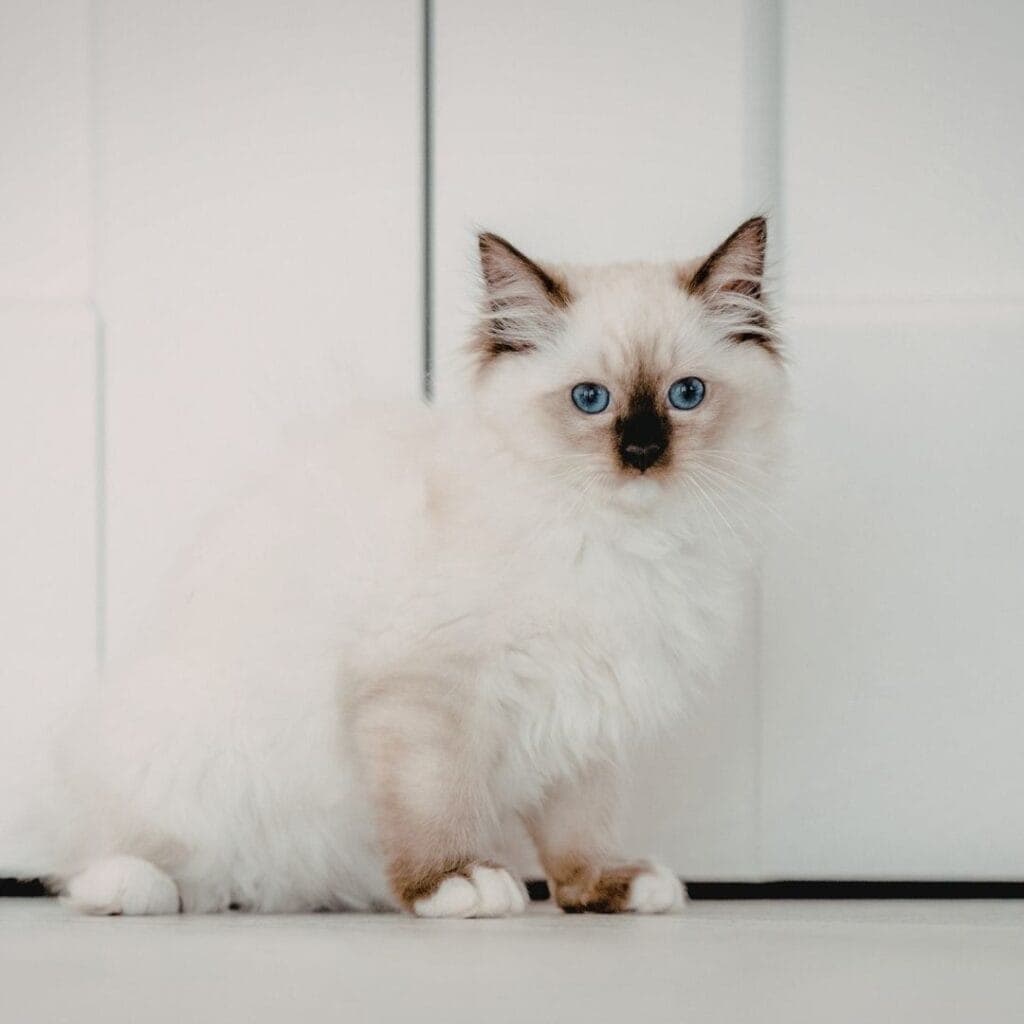
One of the most fun Birman facts happens early: kittens are born white, then their points slowly develop over the first weeks. The full depth of color can take a long time to settle, often up to about 2 years, so a pale baby can grow into a much richer adult.
Birmans are known for being affectionate and people dependent. Many will follow you from room to room, not demanding attention every minute, but clearly preferring to be where you are, making them true velcro cats. If you work from home, a Birman is the kind of cat that may settle nearby and “help” by napping within arm’s reach.
They tend to be intelligent and playful without being chaotic. Think short bursts of curiosity, then a return to lounging and watching the household. Many are also softly vocal, more of a polite commentator than a yowling singer.
The one warning that surprises first-time Birman buyers is boredom. A Birman that’s regularly ignored may become clingy, moody, or more vocal. They do best with companionship, either from their people, another friendly pet, or both.
Daily care, grooming, and home setup for a happy Birman
Owning a Birman cat is not high-maintenance in the way some long-haired breeds can be, but it’s not “set and forget,” either. Plan for a weekly grooming routine, daily play, and an indoor setup that keeps indoor cats safe and engaged.
Indoor living is the safer choice for Birman cats in the US. Their friendly nature can make them too trusting outdoors, and their coat and color points don’t protect them from cars, predators, parasites, or theft. They don’t have the hunting instinct or street smarts to make it outside. If you want fresh air time, a secure catio or harness training is a smarter path than free roaming.
Cost-wise, day-to-day care is similar to other medium-large cats. Budget for quality food, litter, routine vet visits, and a few durable tools (comb, brush, nail trimmers). The goal is consistency, not fancy gear.
Grooming and shedding: what “low-matting” really means
“Low-matting” doesn’t mean “no mats.” It means the silky coat, with its single coat, often tangles less than dense undercoat breeds, so a simple routine usually works:
- Brush once a week with a stainless steel comb first, then a slicker brush for loose hair.
- Check friction spots, especially behind the legs and around the collar area.
- Trim nails every couple of weeks.
- Clean ears once a week
- Add basic dental care, even if it’s just brushing a few times a week or using vet-approved dental products.
Most Birmans don’t need baths unless they get into something messy. Show cats, of course, get bathed before each show,
Food, play, and enrichment for a breed that likes company
Choose a high-quality cat food that matches your cat’s life stage (kitten, adult, senior). Keep fresh water available at all times, and consider a fountain if your cat seems picky about drinking.
Portion control matters because Birmans can gain weight if treats and free-feeding stack up. Measured meals also help you notice appetite changes early, which is a big deal for health.
For exercise, aim for a couple of short play sessions each day. Birmans often prefer interactive play over being handed a toy and ignored. Wand toys, gentle chase games, and puzzle feeders are a great mix. Add a sturdy cat tree near a window, and you’ve created a “home base” that meets their need for social interaction and calm observation.
Do Birman Cats Make Good Pets
For many households, yes, a Birman cat makes an excellent pet. They’re often affectionate without being overwhelming, and they tend to adapt well to routines. If you want an intelligent and playful Birman cat that sits near you while you read, watches dinner prep like a curious assistant, and still plays like a kitten when the mood hits, the Birman fits that picture.
They also tend to do well in multi-pet homes when introductions are handled with care, thriving on social interaction. A social Birman often enjoys having a buddy, especially if the household is empty during the workday.
The biggest mismatch is lifestyle. If you travel often, work long hours away from home, or want a cat that’s intensely independent, a Birman may leave you feeling guilty, and leave the cat feeling lonely. Their sweetness comes with a simple request: be part of the family, not an afterthought.
Health, lifespan, and what to ask before you buy or adopt
The Birman cat is generally considered a healthy breed, and many live long, comfortable lives with routine veterinary care. Still, every cat is an individual, and genetics, diet, and environment matter more than a breed label on a listing.
Before you commit, plan for both normal costs (vaccines, annual exams, dental care) and the unexpected. It’s smart to set up pet insurance early or keep a dedicated savings fund for vet bills.
How long do Birman Cats Live?
A typical Birman cat lifespan is often 12 to 16 years, and some live longer with good care and luck. Longevity is closely tied to keeping your cat at a healthy weight, staying current on preventive care, and not ignoring subtle changes in behavior.

Health problems to Watch for With Birman Cats
If you’re buying a Birman kitten, ask what health screening the breeder does in their lines, what the vet record shows, and what support they offer after you bring the kitten home.
The Birman breed has several breed-connected health concerns:
- Feline hypertrophic cardiomyopathy (HCM). This is the most common form of heart disease seen in cats. Any cat, pedigreed or random breed, can get it. Like several other pedigreed breeds, the Birman has a predisposition for it. HCM causes a thickening of the heart wall and as it progresses, it can cause heart failure and even sudden death.
- Hemophilia. Blood clotting disorders that lead to your cat bleeding too much. You may not realize your cat is affected until Kitty needs surgery. At that point, the bleeding can become fatal. Because this breed is at-risk, your veterinarian should test before attempting any procedures.
- Polycystic kidney disease: Cysts develop in the kidneys, leading to permanent damage and decreased function. While most common in Persians, Birmans are susceptible due to related ancestry. Genetic testing is available and crucial for breeding,
- Feline infectious peritonitis (FIP) susceptibility. FIP is an infection that all cats can carry dormant. It only becomes problematic in certain cases, and that rate seems to be higher in Birmans than in other breeds.
- Eye problems. Birman cats are prone to specific eye issues, including Corneal Sequestrum (painful, black, dead tissue on the cornea), cataracts, and conjunctivitis. Regular cleaning of eye discharge is necessary, as they may suffer from chronic, stubborn “eye boogies”. Have your veterinarian regularly examine your cat’s eyes for signs of problems.
Choosing a responsible breeder or rescue, and what a Birman costs in 2026
In 2026 in the US, Birman kittens from reputable breeders commonly fall around $800 to $2,500, with higher prices possible for show lines, seal point, rare colors, or high-demand regions. Adoption is usually far less, when you can find a Birman cat or Birman mix through shelters or breed-focused rescues.
A responsible breeder should welcome questions and have questions for you. Look for clear proof of veterinary care, a written contract, and a health guarantee. It’s also a good sign when Birman kittens are raised in the home, handled daily, and sent home only when age-appropriate.
Red flags are usually obvious once you know what to look for: no vet records, pressure to pay fast, refusal to show living conditions, always having multiple litters available, or pushing shipping with minimal contact. Meet the cat when possible, or at least do a live video call that shows the kittens interacting in their real space.
How Much Do Birman Kittens Cost?
Expect most well-bred pet-quality kittens to land in the $800 to $2,500 range in 2026. Price should never be the only deciding factor. A healthy, well-socialized Birman kitten from a careful breeder is usually cheaper in the long run than a “deal” that comes with vet bills and behavior problems. If price is a factor, consider asking your chosen breeders about a retiree. An adult who has finished their breeding career are ready to have a great life as a beloved pet.

Conclusion
A Birman cat is a great match if you want a sweet, social indoor cat with a soft coat, striking blue eyes, and a calm presence. You may want to reconsider if you’re rarely home or you prefer a very independent cat that doesn’t care where you are.
Before you commit, mentally score this simple list: time for daily attention, budget for vet care, willingness to brush weekly, and an indoor setup that keeps your cat safe. If those are easy yeses, a Birman cat can be a deeply rewarding companion for years. Choose health and temperament over perfect markings like white gloves (unless you plan to show your new friend.) Meet adult Birmans if you can, because the personality you fall in love with is what you’ll live with every day.