
Cat Food Puzzles:
Last Updated on January 4, 2026 by Holly Anne Dustin
Cat food puzzles are a great way to keep your feline friends entertained and mentally stimulated. These puzzles have multiple uses and purposes, and can be used for both physical and mental stimulation. These puzzles engage your cat’s brain and get them moving.
Food puzzles are designed to challenge cats to work for their food. It mimics the hunting behavior that comes naturally to them. These puzzles come in a variety of shapes and sizes. Choose from simple treat balls and snuffle mats to more complex puzzle feeders.
Contents
What Are Cat Food Puzzles?
Cat food puzzles are interactive toys that hold cat food or treats and release it as the cat interacts with the toy. There are different types of food puzzles for cats, including stationary puzzles, mobile puzzle toys, and DIY puzzle toys.
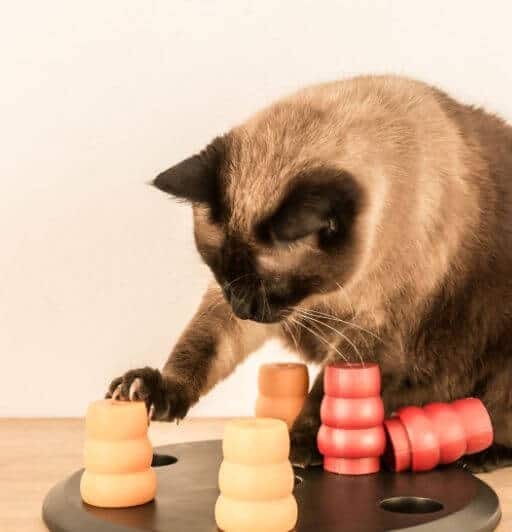
Stationary puzzles: puzzles that sit flat on the floor. These puzzles have obstacles that Kitty has to figure out how to solve. They need to move pieces, lift lids, open drawers, or get kibble out a maze or obstacle with her paws. These puzzles can be used with dry food but some can be adapted to wet food as well.
Mobile puzzle toys add a play element to the treat dispenser. These toys have holes where the treats or kibbles fall out as Kitty pushes or rolls it around. Changing the size of the holes or amount of food inside changes the difficulty of the puzzle.
DIY puzzle toys are an option if you’d rather make your own cat food puzzles instead of buying something. This makes sense if you aren’t sure how Kitty will take to the idea of working for her food. Common items used to make DIY puzzles include paper rolls, bottles, egg cartons, muffin tins, and small plastic containers.
Overall, cat food puzzles provide mental stimulation and can help prevent boredom and overeating in cats. By using these toys, cats can engage in natural behaviors like hunting and foraging for food. Supervise cats while using food puzzles. Choose appropriate puzzles based on the cat’s age and skill level and adjust as he gets better at solving them.
Related Post: Cheap, Free and DIY Puzzles for Cats
Why Use Puzzle Toys for Cats?
Puzzle toys offer a fun and engaging way to provide mental and physical stimulation for your feline friends. As natural predators, cats have an innate hunting instinct that can be fulfilled by working for their food.
Puzzle feeders can help reduce stress, boredom, destructive behaviors, and even aid in weight loss by increasing activity levels. Additionally, they can help regulate eating habits for cats that tend to eat too quickly.
Adding puzzle toys into Kitty’s routine gives her a fun and fulfilling way to stay mentally and physically active. Cat food puzzles provide Kitty with a sense of satisfaction and accomplishment, boosting her confidence and self-esteem.

How to Use Cat Treat Puzzles
Cat treat puzzles are a great way to provide your furry friend with mental stimulation and keep them entertained. They can also be used as a primary means of feeding your cat. However, it is important to introduce the puzzles gradually and make it easy for your cat to understand.
To start, use a clear or open food puzzle so that your cat can see the food inside. You can sprinkle a few treats or kibble on the floor beside the puzzle to encourage your cat to investigate. The puzzle should be almost as easy as eating straight from their bowl. Fill the puzzle almost to the top with treats or kibble. Make sure the toy rolls easily or that any cups are overflowing.
As your cat becomes more familiar with the puzzle, you can experiment with different types and increase the difficulty level. It is important not to give your cat a puzzle that is too difficult. You don’t want to frustrate and discourage Kitty from using it. With patience and practice, your cat will become a pro at using treat puzzles. Cats enjoy the mental and physical stimulation they provide.
Tips for Making Your Cat Food Puzzles Harder
Kitty will get just as bored with a puzzle feeder as she did with her bowl if you present her the same puzzle and same food every day. To keep your cat engaged and entertained, it’s important to switch up their food puzzles every once in a while. Offer a new puzzle she hasn’t seen before, or add a twist to one she’s mastered.
Here are some simple tips to make your cat food puzzles harder:
- Adjust the openings of the puzzle to be smaller than usual. Add obstacles like ping pong balls or cat toys to the block part of the mazes on a stationary puzzle.
- Tape up some of the holes or add less food in a rolling puzzle to make it more challenging.
- Switch to a more advanced level of puzzle feeder.
- Put the food puzzle in a new location or in a box. Make your cat work harder to find it.
By following these tips, you can keep your cat mentally stimulated and prevent them from getting bored with their food puzzles. Remember to always supervise your cat while they play with their food puzzles to ensure their safety.

Challenges When Using Food Puzzles with Cats
Multiple Cat Families
This can be a real challenge, especially if you are using the treat puzzles for feeding meals instead of just for treats and fun. When using food puzzles with multiple cats, it is important to ensure that each cat has access to their own puzzle. You want to make sure all your cats are getting the food they need and not more than they need.
In some cases, one cat may dominate the puzzle and prevent the other cats from accessing it. Some cats are better at solving the puzzles or more willing to work for their food. This can lead to stress and aggression between the cats.
Provide multiple puzzles in different locations. Monitor the cats to ensure they are all able to access them. Offer different puzzles to each cat based on their ability, play style, age, and desire.
Dogs in the Home
If there are dogs in the home, it is important to ensure that the food puzzles are placed in areas that are inaccessible to the dogs. Some dogs try to steal food from the cat food puzzles. Small cat food puzzles present a choking hazard to larger dogs.
Use gates, play pens, or screens to give Kitty a dog-free zone to enjoy her puzzles. Offer Fido his own puzzle somewhere Kitty can’t go. You want to prevent any resource guarding or aggression should Kitty try to share.
My Cat Isn’t Food Motivated
Not all cats are motivated by food, which can make using food puzzles challenging. In these cases, it may be necessary to try different types of food or high value treats to find something that the cat enjoys.
Additionally, it may be helpful to start with easier treat toys like a snuffle rug or lickimat and gradually increase the difficulty as Kitty becomes more comfortable with the concept.
My Cat Gets Frustrated or Just Walks Away
This usually happens if the puzzle is too difficult for that cat or she’s too stubborn to give up on the never ending bowl of food. You can work her into it by dropping accessible food around the toy or overfilling a puzzle to make it so easy Kitty can’t lose. Easy success will let her be more willing to try the puzzle again as you remove the accessible stuff.
Choose the right puzzle for your cat’s personality and eating habits to keep them happy, healthy, and entertained, not frustrated and hungry
Easy Puzzles: Great Starters for Foraging and Hunting
- Treat balls: These are balls with holes in them that allow treats to fall out as your cat plays with them.
- Puzzle feeders: These are puzzles with small compartments that require your cat to work to get the food out.
- Snuffle mats: These are mats with small pockets that hide treats, encouraging your cat to use their sense of smell to find them.
- Lickimats: This version of a food puzzle allows you to spread out the cat food or treat on the mat surface for Kitty to lick off. Great for moist treats like Churu or baby food, canned or raw diets.
Some More Difficult Puzzles to Try Include:
- Interactive feeders: These puzzles require your cat to move pieces around to get to the food.
- Maze feeders: These are puzzles with a maze-like design that requires your cat to navigate to get to the food.
- Puzzle boxes: These are boxes with hidden compartments that require your cat to open them to get to the food.
Overall, while food puzzles can provide many benefits for cats, there are some challenges that may arise. By being aware of these challenges and taking steps to address them, cat owners can help ensure that their cats are able to enjoy the benefits of food puzzles in a safe and stress-free manner.
Summary
Puzzle feeders are a great way to provide mental stimulation and physical activity for cats. By offering food in a more challenging and engaging way, puzzle feeders can help prevent boredom, reduce stress, and promote healthy eating habits. From simple DIY options to more complex and interactive designs, there are many puzzle feeders available on the market that can suit different cats’ needs and preferences. Whether you have a curious kitten or a senior cat, incorporating puzzle feeders into their daily routine can be a fun and rewarding experience for both you and your feline companion. So why not give it a try and see how your cat responds to this new form of mealtime entertainment?