Fascinating Facts: Cat Fur Colors and Patterns
Last Updated on April 17, 2024 by Holly Anne Dustin
One of my favorite parts of cat shows is listening to the information the judges share as they evaluate the cats. I think it is exceptionally interesting in the household pet class where I show.
I show a solid black long-haired cat, his classmates this weekend included a flame point, a seal lynx point, a ticked tabby with a warm ground color, and a brown mackerel tabby and white. We could have had bi-colors, tri-colors, torbies, vans, harlequins, smokes, and mitted. So how did nature develop all this delightful variation in cat fur colors and patterns? It was fun listening as the judges explained.
Contents
Tabbies:
The original cat that came slinking out of the Savanah 9,000 years ago to join up with humans likely had a ticked coat. Some people refer to it as an Abyssinian coat but tabbies can be ticked too. Each strand of fur is striped to form the pattern in a ticked coat. The stripes are muted and blended in a ticked tabby’s coat.
Cats developed the mackerel tabby pattern as they moved into the coniferous forests. If you look at a mackerel tabby, the stripes on their sides look something like fishbones, thus the name. The mackerel pattern is easy to see even in a long-haired kitty.
The classic, also called marbled or blotched, tabby pattern developed as cats moved into areas with deciduous forests. A classic tabby has swirls or “bullseye” patterns on their sides and a butterfly shape across their shoulders. The classic pattern isn’t as easy to see in longhairs.
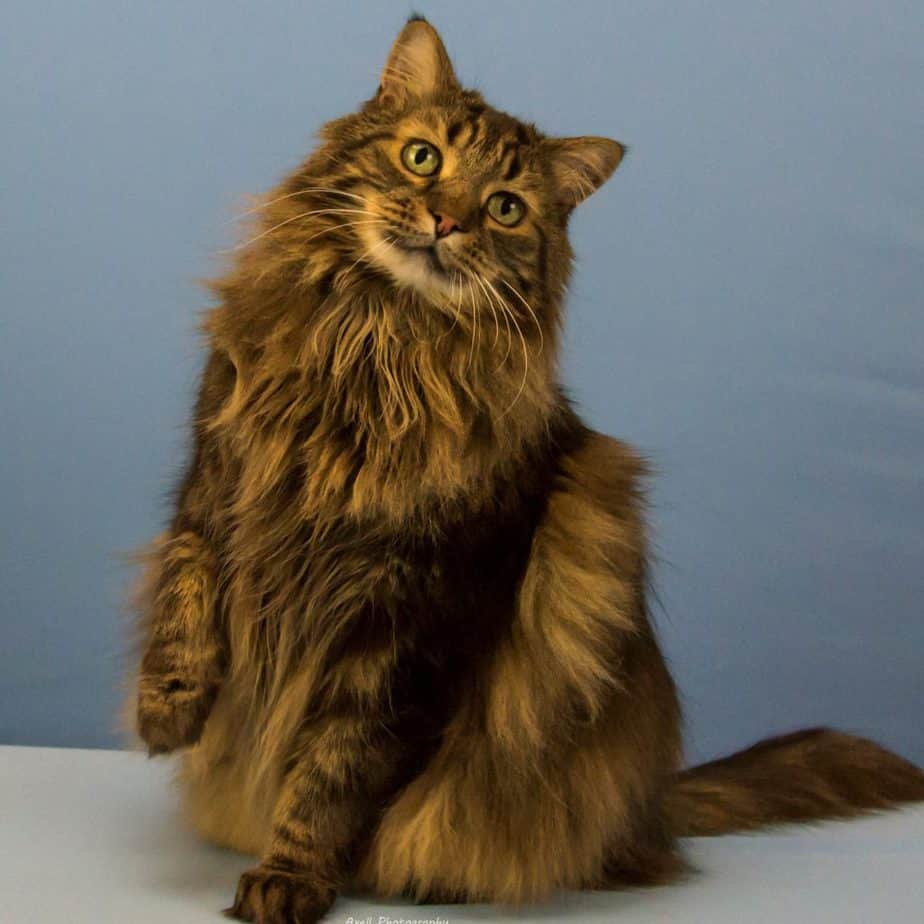
My Treeno has been the source of many discussions at shows, is he a classic or a mackerel? (photo by Billy Axel)
Spotted tabbies are rare in random-bred cats. Ocicat and Bengal breeders work hard to develop the spotted coats on their babies. Egyptian Maus are the only natural breed that has a spotted coat. Besides the Ocicat, Bengal, and Mau, TICA recognizes 3 spotted breeds not recognized by CFA: the Savannah, the Serengeti, and the Pixiebob.
Patched tabbies (or torbies) come in all tabby patterns. Their twist on the pattern is the addition of patches of red. Their dark patches are where these cats show their tabby patterns. If you are not sure whether your kitty is a patch tabby check the paw pads and nose leather. Patch tabby kitties will have multiple colors on their paw pads and nose. Just like the tortoiseshell cats, patch tabby cats are females.
Related Post: Learn More About Tabby Patterns in this post here.
The original tabby cat colors were black and brown. The flashier colors and patterns appeared as cats became further domesticated. Today tabby cats come in a variety of colors and patterns with and without white.
Fun Facts About Tabbies:
Did you know that all cats are tabbies? You might not see it because of other genetic factors that mask it, but there’s a pattern there somewhere. My Midnight, a solid black shorthair, shows his classic tabby pattern if he lies in bright sunlight.
All red cats, even solid reds/creams, will show some faint tabby patterns.
That “M”. I hear “my cat is a Maine Coon, she has an M on her forehead.” all the time. It doesn’t mean that at all. It means she has a tabby pattern. All breeds that carry a tabby coat have the M.
Pointed Cats:
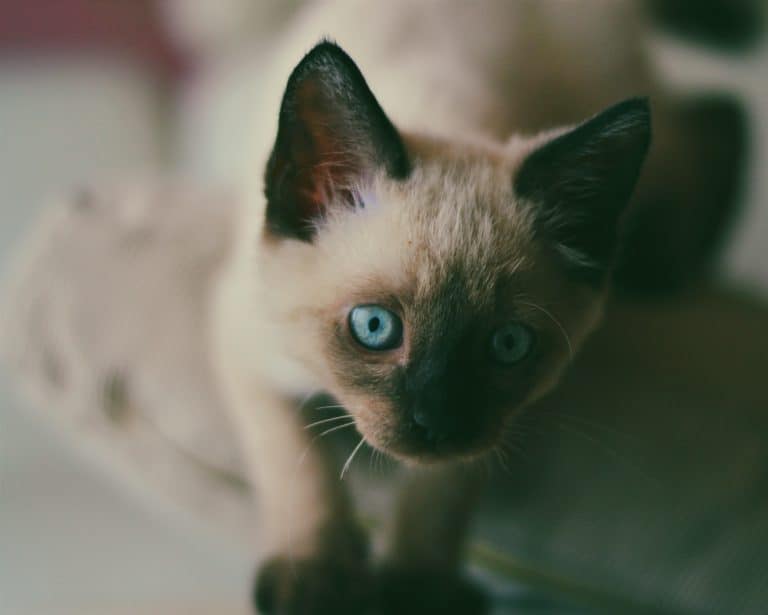
Pointed cats got their start in the mountains of Southeast Asia. All the breeds recognized in a pointed pattern trace their history back to the seal-point Siamese cat. The original seal-point color, like the tabby, is now seen in just about every cat pattern, including tabby (lynx) points and tortie-points.
Pointed cats are “thermal albinos.” The face, ears, legs, and tail are dark, showing the color and pattern. The body is cream-colored. Most pointed random-bred cats will have a shading of their coloring on their back. The cooler their body temperature, the more color will appear.
Pointed cats darken as they age.

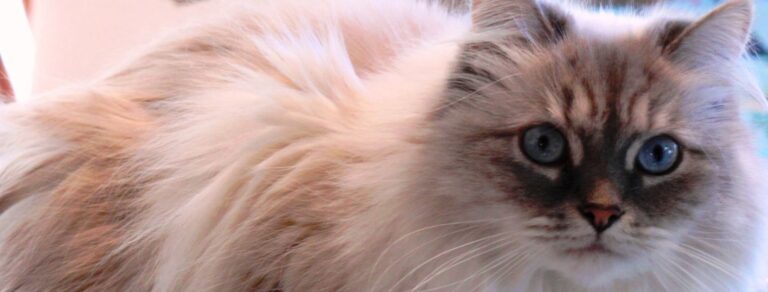
A litter of kittens can show the fun variety of cat fur colors and patterns. Mocha Latte is a seal lynx point. Her sister Caramel Macchiato is a mackerel tabby. The third littermate is a solid black.
Related Post: Click Here for More About Colorpoint Cats
Solids and Dilutes:
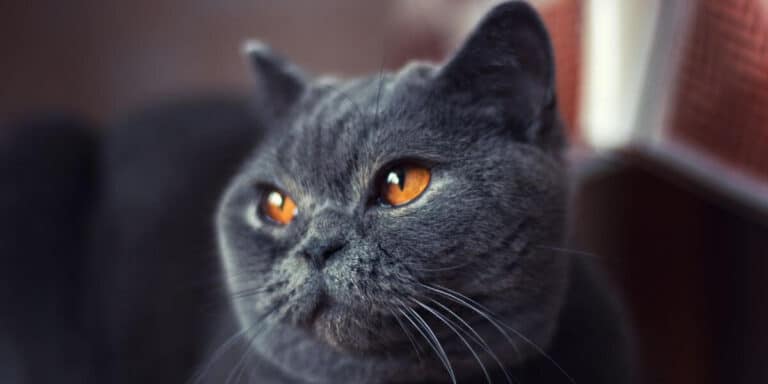
The solid cat coat is just that. One color. The foundation colors are black and red and the white masking color. Various genetic factors affect the variety of colors develop depending on the breed. Each breed standard specifies what colors and patterns they accept in the show ring.
Dilute coats are light versions of solid coats caused by a recessive gene.
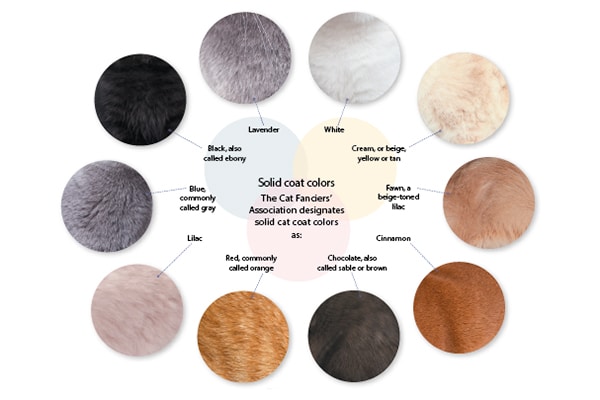
Solid coat colors in cats. Photography ©Thinkstock Images.
The polygene that enhances or diminish color tones are called “rufous” genes. The amount of rufousing in a coat can change a light coat to a deep red or a blue to light lilac. It reduces the amount of “tarnish” in a silver coat.

Plush’s classmate Bob shows the high amount of rufousing in his brown ticked tabby coat.
Particolored Cats:
The particolored cat fur colors and patterns include bi-colors, tortoiseshells, and tri-colors or calicoes. Several genes affect how the white coloration shows up in a cat’s pattern.
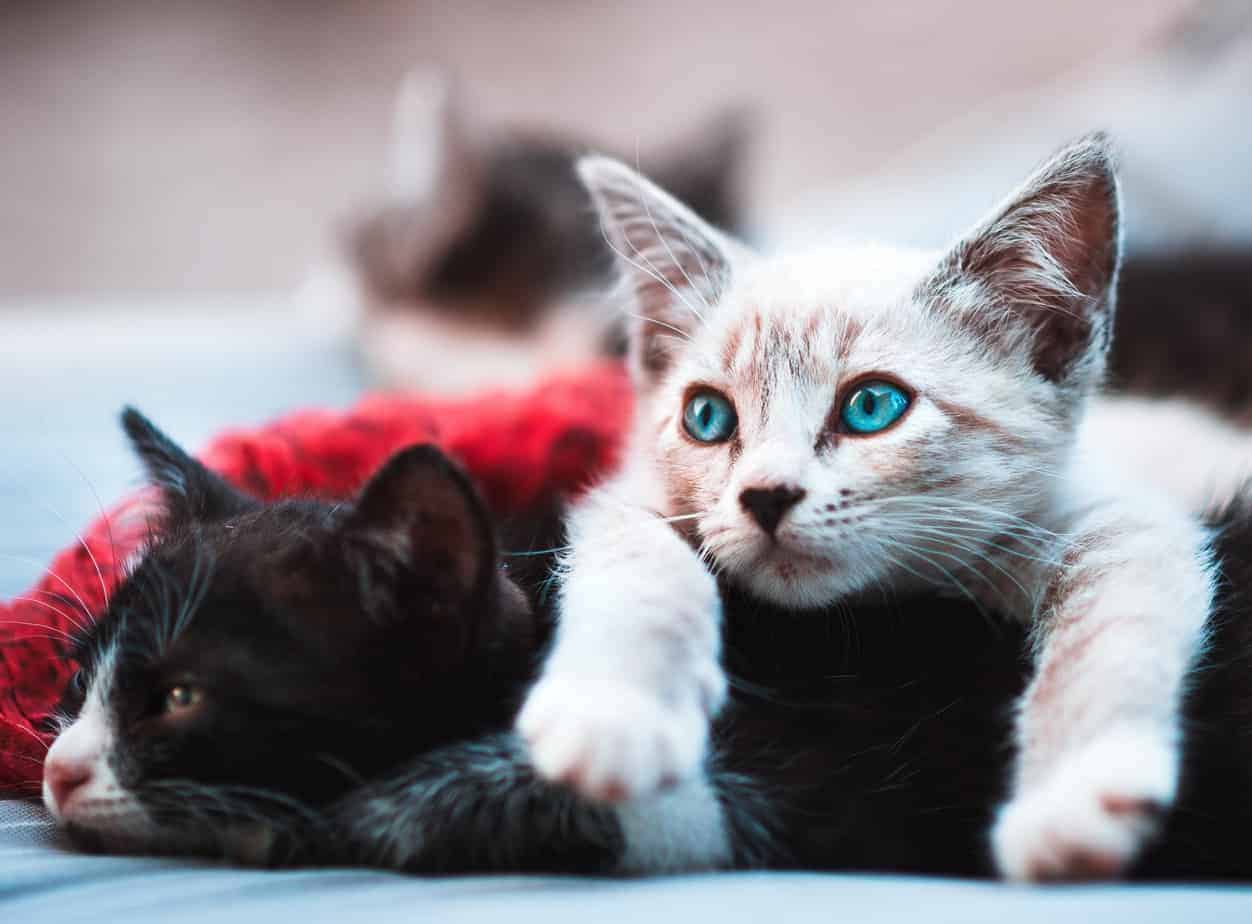
Bi-colors (piebald) are the “and white” cats. Specific patterns of bi-color cats include:
- The tuxedo pattern
- A harlequin pattern where random patches of color adorn a predominately white cat. We often refer black and white cats of this pattern to as “cow cats.”
- Van cats with colored head and tail but very limited color on the body
- Mitted cats with white coloring limited to Kitty’s paws.
Tri-colors are classic calicoes, the tortoiseshell with white, and the torbie and white.
There are at least 4 different genes that affect white/not white fur on your favorite felines. It isn’t possible to breed for specific white patterns, it is a random chance to some extent. You can do the best you can. For example, it isn’t possible to get a high white cat from two low white parents.
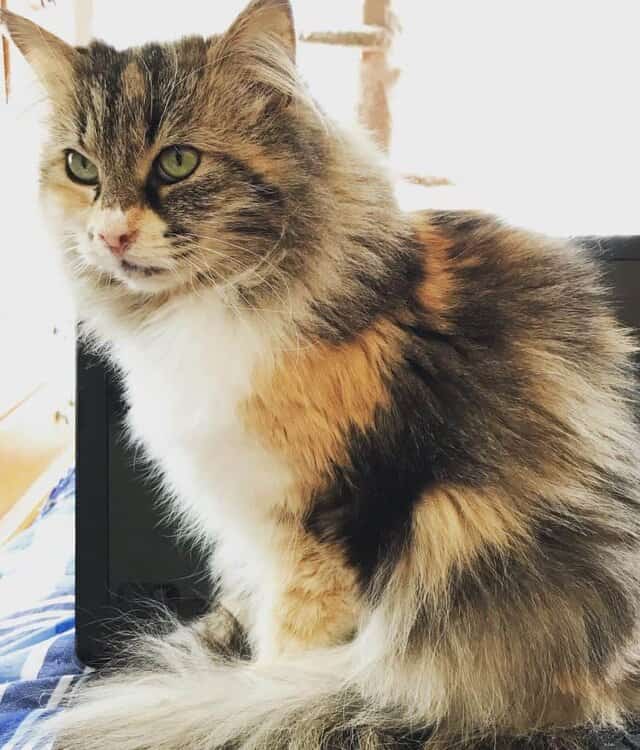
O Katie Baby is a long-haired brown patch tabby and white cat.
Shaded and Smokes:
When you talk about a shaded cat, most people think of Persians, but other breeds also come with shaded coats.
It is important to keep in mind that silver isn’t a color when talking about cat coats, it is a pattern. The bottom portion of the hair strand is white (silver) and the rest is colored.
There are three types of shaded coats:
- Chinchilla or shell pattern where the top 1/8th of the hair strand is colored and the rest white or creamy. The cameo is a red-silver shell.
- Shaded cats, the shaded silvers or goldens, have color on the top ¼ of the hair. Silvers have more coloring than the shell pattern. Goldens are harder to produce with a cream undercoat and black tips.
- Smokes. Cats with smoke coats look solid at rest. The color covers the top ¾ of the hair. The bottom third is white or cream. You see the white when the cat moves or you ruffle his fur.

A silver chinchilla Persian, one of the shaded cat fur colors and patterns.
New Colors:
A mutation in the coats of Norwegian Forest Cats has led to an amber color. Even more interesting, the gene is a color-changing gene. The kittens are born black or blue and then develop the reddish color and become amber or light amber. If the kittens are silver, the amber becomes apricot or cinnamon. You can still see the original colors on the tail and back.
Siberians and Kurilian Bobtails produced a similar mutation called bi-metallic or “sunshine.” Another extension mutation has caused a “russet” color in Burmese. You want to make sure these newer colors are acceptable if you plan to show your cat.
Other Coat Factors:
Coat length adds another dimension to all the different appearances in the breeds in the show hall (and the kitty sleeping on your couch.) The original cat had a short coat. The long coat is recessive. The curly or “rexed” coated breeds are a more recent mutation.
Go to a cat show if there’s one in your area, it is fun. The variations of coat and color you can see today is amazing, considering the ticked coated African wildcat that started it all 9000 years ago. Enter your household pet and you’ll learn a lot about his background.
Resources:
If you want to learn more about the very complicated world of cat coat genetics, these pages have a lot of scientific detail.
Cat Colors and Coat Patterns
Color Charts
Hints for Determining Colors
Feline Genetics

Similar Posts
Unraveling the Charms of the American Wirehair Cat
The rarest breed in the Cat Fanciers’ Association, the American Wirehair Cat is a medium-to-large cat with a sweet expression,…
The Alluring Abyssinian Cat
Get ready to meet the Abyssinian cat. The Abyssinian is a medium-sized cat with a long, nicely muscled body, and…
15 Best Breeds of Cats for Families
Last Updated on May 12, 2021 by Holly Anne Dustin Cats teach kids important social skills like empathy, patience, and…
The Ragamuffin Cat: A Friendly and Lovable Feline Breed
Last Updated on April 17, 2024 by Holly Anne Dustin Like their cousins, the Ragdoll, the Ragamuffin cat is a…
Banning Bengals? Hybrid Cats and Breed Specific Legislation
Last Updated on May 11, 2021 by Holly Anne Dustin When you hear Breed Specific Legislation (BSL) you probably think…
The British Shorthair Cat: A Beloved and Adaptable Breed
The British Shorthair is a pedigree breed of domestic cat that has been around for centuries. The breed is known…