
How Cats Show Affection: Signs Your Cat Loves You
Contents
Summary
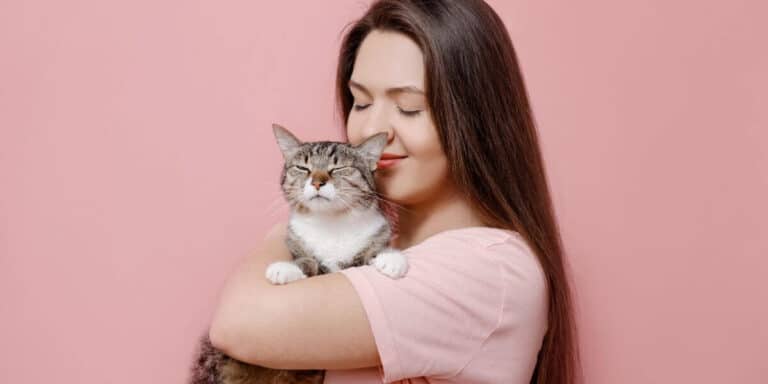
Cats are not necessarily effusive in demonstrating their love for you. But that doesn't mean they don't. Understanding how cats show affection can help you build a close bond with your cat. Slow blinks, head bumps, purring with a relaxed body, and choosing to nap near you are strong signs your cat feels safe with you. Her body language will tell you how much she loves you.
Cats don’t usually “love” out loud. Feline behavior is more like a friend who sits close on the couch, nudges your shoulder, and quietly sticks around when you’ve had a rough day.
If you’ve ever wondered whether your cat actually likes you (or just likes dinner), you’re not alone. The good news is that the best signs are often simple, repeatable, and easy to spot once you know what to look for.
This guide breaks down how cats show affection to people, plus the bonding signs cats use to show affection to each other, key to building trust, so you can read your cat’s signals with more confidence.
How Cats Show Affection to Humans
A lot of cat love is based on choice. Cats tend to prefer low-key affection, and the strongest “I love you” moments are the ones they start on their own.
It also helps to remember consent. A cat can love you and still not want physical affection like being held, kissed, or hugged. When you respect that line, Kitty knows she can trust you. Most cats become more cuddly over time if they are confident their boundaries will be respected.
Every day signs your cat loves you include slow blinking, relaxed body language, showing you their belly, making biscuits, and head butting.
Slow blinks, soft eyes, and relaxed body language
The classic slow blinking, sometimes known as a cat kiss, is one of the clearest trust signals a cat can offer. It’s like your cat is saying, “I’m safe with you,” and they’re comfortable enough to drop their guard.
Look at the whole face and body, not just the eyes:
- Soft eyes (not wide or staring)
- Ears in a neutral position (not pinned back, no airplane ears)
- Tail loose and still (or gently resting)
- Body looks “melted,” not tense
Quick tip: slow blink back, then look slightly away. That small turn of your gaze can feel polite in cat body language, like giving them space while staying friendly.
Head bumps, cheek rubs, and scent marking
When a cat headbutts or bumps their head into you (often called bunting) or rubs their cheeks along your legs, hands, or face, it’s usually not dominance. It’s social scent sharing.
Cats have scent glands around the cheeks, chin, and forehead. When your cat rubs you, they’re mixing their scent with yours through scent marking, which can mean, “You’re my safe person,” or “You belong in my home group.”
Pay attention to how they do it:
- A quick cheek rub as you walk by can be a casual hello.
- A slow, full-body rub (cheek, shoulder, side) often shows comfort and familiarity.
- Pushing their head into your hand is commonly a request for gentle pets, usually on their terms and in their favorite spot.
Purring, kneading, and lap time
Purring is famous for a reason, but it’s not a single-meaning sound. Purring is one way cats show affection to humans but it is more than that. Cats can purr when they’re content, but also when they’re nervous, in pain, or trying to calm themselves.
So don’t translate purring as “happy” automatically. Read it with the rest of the picture. A relaxed cat who’s purring with soft eyes and a loose body is likely enjoying the moment. A tense cat with wide pupils who purrs while crouched might be self-soothing.
Kneading, “making biscuits”, is another comfort behavior that often traces back to kittenhood. Kittens knead to stimulate milk flow while nursing. Adult cats may knead blankets, beds, or your lap when they feel safe and cozy.
Showing their belly or rolling over is a major trust indicator too, as it exposes their vulnerable underside only to those they feel secure with.
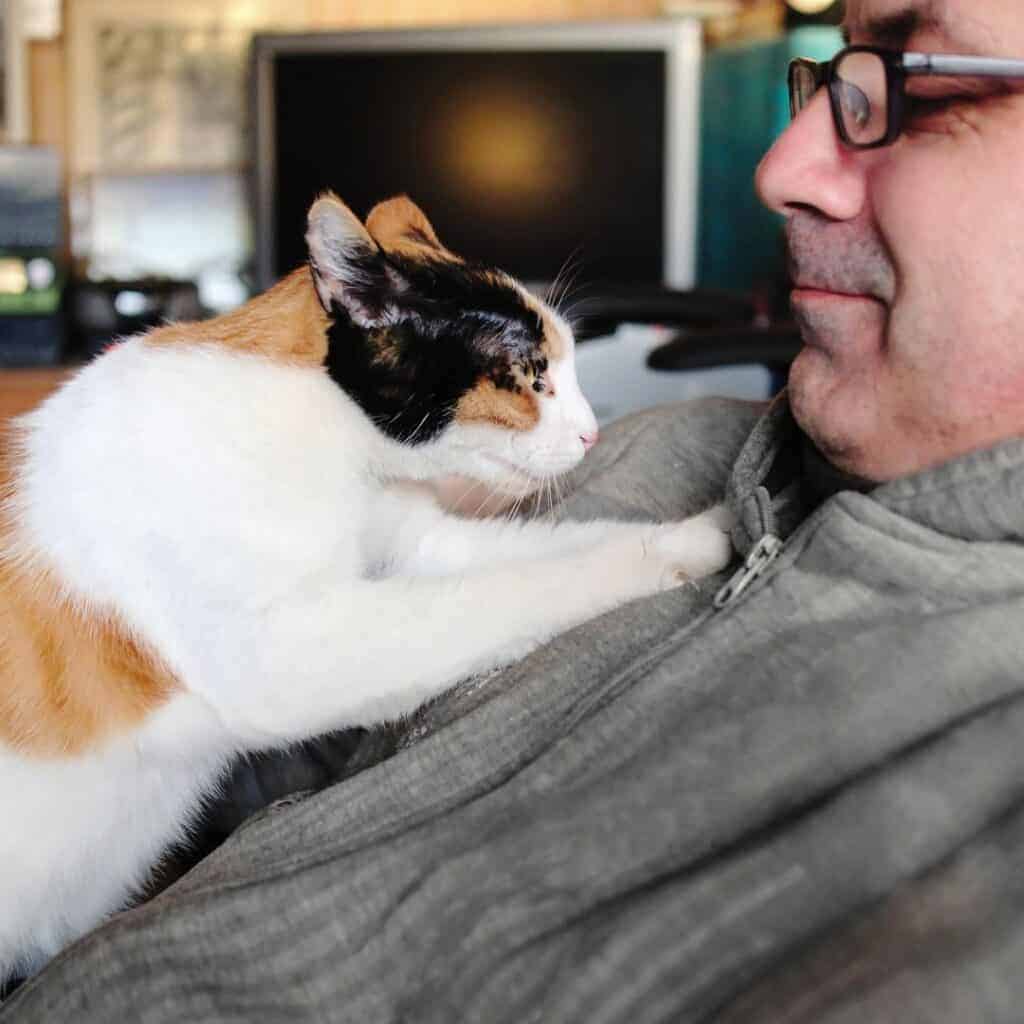
Lap time (or even “near-lap time”) can be a huge sign of affection because it’s a choice. Some cats don’t want to sit on you, but they’ll sit pressed against your thigh, or curl up on the same couch cushion. That still counts.
Following you, checking on you, and sleeping near you
Some cats, like my Johnny, are little shadows. They don’t need to be held, but they want to be in the same room, keeping tabs on your routine like a quiet roommate to their favorite person.
You might notice this as:
- Following you from room to room
- Sitting nearby while you cook or fold laundry
- Sleeping near you at night, as if they were “on duty”
Grooming you, gentle nibbles, and bringing “gifts”
When your cat licks your hand, your hair, or your arm, it can be social grooming. Cats groom family members and close friends to reinforce bonds. It’s not always pleasant (cat tongues feel like sandpaper), but it’s often affectionate. Some cats also vocalize more with their favorite human, meowing or trilling to say hello or check in.
Then there are gentle nibbles, sometimes called love bites. These can mean two very different things:
- Affectionate, playful nibbling, paired with relaxed body language
- “I’m done now,” nibbling, paired with tail flicks, skin twitching, or sudden stillness
If the nibble comes after a long petting session, it may be petting overload (more on that below).
Gift-giving is another common one. Some cats bring toys or bringing presents to you as a form of sharing or a “look what I did” moment. Outdoor cats may bring prey through gifting prey, which can be unsettling, but it can still reflect social sharing and hunting display.
Safety note: if your cat brings home prey, avoid bare-hand contact. Use gloves or a bag, and clean the area. Prey can carry parasites and bacteria, and your vet can advise you on parasite prevention that fits your cat’s lifestyle.
For a science-based look at how cat bonding works, including signals cats reserve for trusted companions, this piece is worth your time: How to Tell if Your Cat Loves You, According to Science.
How Cats Show Affection to Each Other
Cat relationships don’t always look cuddly. Some bonded cats barely touch, but they “hang out” together all day as a form of social interaction. Others act like a matched set, grooming and napping in a heap.
What matters is whether the contact looks voluntary and relaxed, or tense and one-sided. In multi-cat homes, watching the small moments tells you more than the loud ones.
Allogrooming, face rubbing, and head bumps between cats
Allogrooming means one cat grooming another. It’s usually focused on hard-to-reach spots like the head, neck, and ears. It can be a strong sign of trust, especially when it goes both ways over time.
You’ll also see cats rub cheeks, heads, and bodies together. That’s group scent sharing, which helps create a “we belong together” smell in the home.
One catch: grooming can also reduce tension. A cat may groom another to calm things down, or to smooth over a conflict. Watch for warning signs that say, “This isn’t friendly”:
- Stiff posture during grooming
- Growling, ears back, or a tense tail
- One cat trying to leave, and the other holding them in place
If you want more context on why cats groom each other (and when it’s not purely affection), this overview is clear and practical: Why Do Cats Lick & Groom Each Other?.
Sleeping together, touching tails, and “paired” behavior
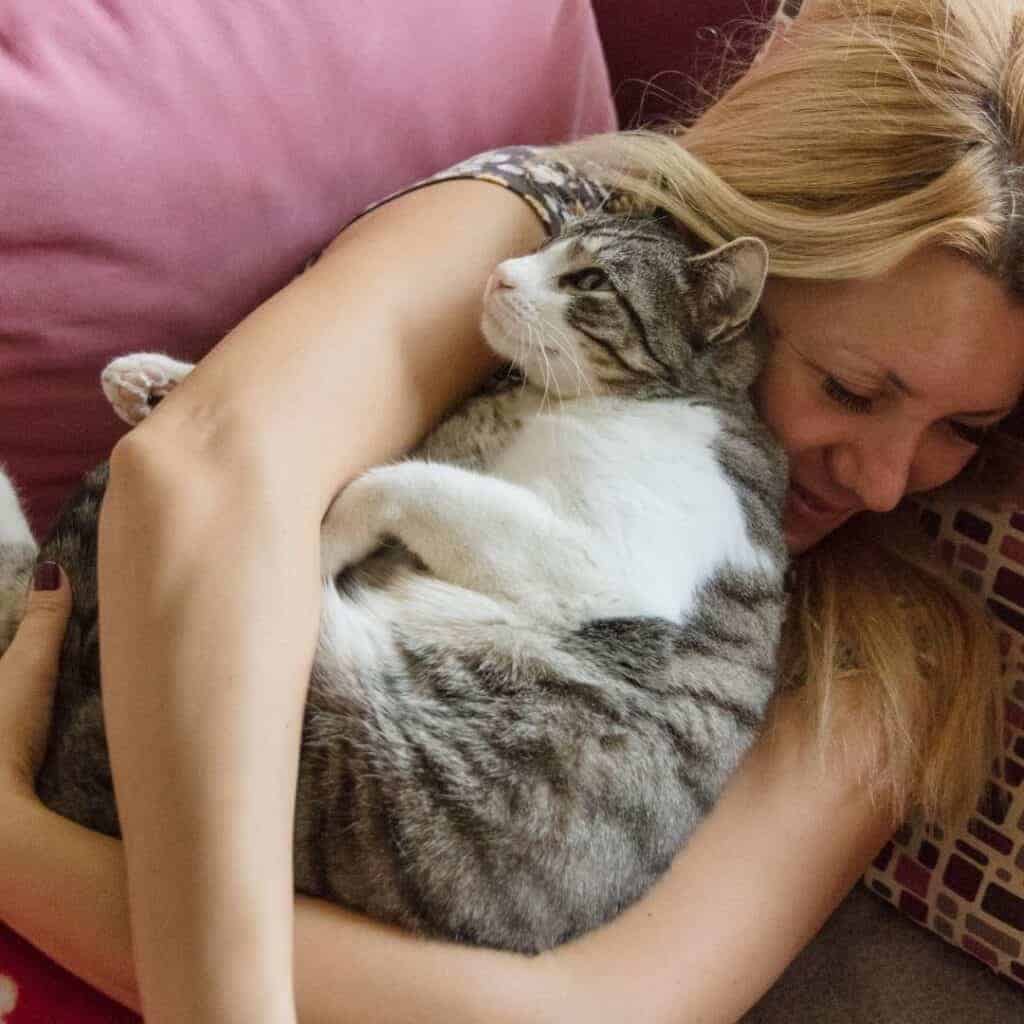
When cats choose to sleep together, it’s one of the strongest bonding signs you’ll see. Cats don’t pile up for warmth the way some animals do, they pile up because they feel safe.
Bonded cat pairs often show quiet “together” habits, like:
- Resting close enough that bodies touch
- Tail touching or gentle tail wraps with relaxed tail posture
- Walking into a room together, then settling within a few feet
- Mirroring behaviors (both grooming, both watching a window)
Cats who choose closeness are usually comfortable in each other’s space. If you’re trying to figure out whether your cats are truly bonded (or just tolerating each other) and how to bond with your cat, this guide breaks down the difference well: Are Your Cats Bonded? Here’s How to Tell.

Love or stress? How to read cat body language the right way
Affection and stress can look similar at first glance. A cat who follows you everywhere might be deeply attached, or they might be suffering from separation anxiety. A cat who purrs might be relaxed, or they might be trying to cope.
Instead of focusing on one cat behavior, look for clusters: relaxed posture, voluntary closeness, and easy “stop” signals (they can walk away without drama).
Signs your cat needs space (even if they love you)
Cats can enjoy affection and still hit a limit fast. Petting overload is real, and it’s a common reason cats bite “out of the blue.” Kitty isn’t being mean, he’s saying the sensation has crossed a line.
Clear “please stop” signals include:
- Tail flicking or thumping
- Skin twitching along the back
- Ears turned to the side or pinned back
- Sudden stillness (a big one)
- Dilated pupils
- Turning his head toward your hand
- Moving away, crouching, or hiding
When you see these, pause. Let Kitty choose the next move. If he comes back and rubs you again, that’s your green light to continue the interactions. Building trust this way will improve your relationship with your cat and you will be able to see your furbaby show you affection.
When to worry: sudden clinginess, hiding, or behavior changes
A cat’s love style can shift over time, especially as they age, but sudden changes in feline behavior deserve attention.
Contact your vet if you notice big shifts like:
- A social cat starts hiding all day
- A cat who loved pets suddenly avoids touch
- Appetite changes, litter box changes, or a drop in grooming
- A cat stops purring when they usually do or is purring much more than normal without all the other relaxed cat signs
- Sudden aggression, especially when picked up
- New clinginess paired with restlessness or vocalizing
Cats are experts at masking pain. Behavior is often the first clue something feels off, even if the cat looks “fine.”
Conclusion
Understanding how cats show affection reveals their quiet ways of love: trust, choice, and steady closeness. Slow blinks, head bumps, purring with a relaxed body, and choosing to nap near you are strong signs your cat feels safe with you. Between cats, mutual grooming and choosing to sleep close often point to a real bond.
Your best next step to bond with your cat is simple: watch their feline behavior, reward friendly approaches like purring, and let your cat set the pace. When you respect their “no,” the yes tends to show up more often.