How to Tell if Cats are Bonded or Just Friendly? 5 Signs You Can Trust
Contents
Summary
Bonded cats or just friendly? Learn 5 clear signs, from grooming to shared naps, so you can tell if your cats truly trust each other at home. In this post, we’ll break down what “bonded” really means, the key signs of a true bond, how that differs from friendly coexistence, and simple tips to encourage stronger cat-to-cat relationships.
You watch your two cats share a sunny spot, swap slow blinks, and wonder if they’re best friends or just on good terms. Short answer, friendly cats get along, bonded cats act like family. A bonded pair builds trust, depends on each other, and shows it every day. Cats in bonded pairs are often happier, healthier and more well-behaved than the stereotypical cat that walks by himself..
Here’s how to tell if cats are bonded or just friendly: casual friendliness looks like peaceful coexistence, the odd play session, and the occasional nap near each other while true bonding shows up as mirrored routines, shared comfort, and real stress when they’re apart.
Spotting the signs of bonding helps you care for them better. Bonded cats often groom each other, sleep curled up together, eat side by side without tension, and seek each other out for comfort after a scare. They really suffer when separated. Friendly roommates can be sweet, but they usually keep more personal space and bounce back fine when separated.
Fun fact – in cat groups, close companions often sync their sleep cycles and grooming times, a bit like best friends who finish each other’s sentences. Some related females even share kitten care in the same nest, which shows how social bonds can run deep.
In this post, we’ll break down what “bonded” really means, the key signs of a true bond, how that differs from friendly coexistence, and simple tips to encourage stronger cat-to-cat relationships. You’ll know how to tell if your cats are bonded, what to watch for, when to step in, and how to set up a home that supports a healthy pair.
What Makes Cats Bonded Partners?
Bonded cats share a strong, affectionate relationship. They see each other as companions, not just housemates. Bonds often form in kittenhood or after steady, positive time together. I’ve noticed my cats that travel together tend to develop bonded relationships. You will notice shared routines, easy comfort, and a preference to be near each other.
Bonded pairs tend to thrive. Stress drops, sleep improves, and play looks smoother. Guardians often report fewer spats, more grooming, and calmer meals. Age, careful introductions, and a stable environment all shape how well a bond forms and holds. We all do better with friends.
A quick picture from multi-cat homes helps. Young cats raised together often nap in a heap, swap slow blinks, and follow each other to the window. I encourage people to adopt kittens in pairs for this reason. Adult cats can bond too, especially after a patient, scent-first introduction. Some pairs don’t get past the friends phase, while others act like littermates for life, even if they are not really related.

The Science Behind Feline Friendships
Cats are flexible. They evolved as solitary hunters, yet they can build social ties when it feels safe and rewarding. That mix explains why some cats become close partners while others keep more space.
- Scent is the glue: Cats share a group scent developed through cheek rubs, head bunts, and co-grooming. Think of it like a shared team jersey, it signals who belongs. Building that shared scent is the important part of the process when you introduce cats to your household.
- Pheromones build trust: Facial pheromones calm and mark familiarity. You will see more face rubbing and tail twining as comfort grows.
- Positive interactions stack: Short, calm wins add up. Jackson Galaxy and behavior teams at the ASPCA stress slow, low-pressure steps that let trust grow over time.
- Not every cat wants a BFF: Personality matters. Some cats prefer polite distance, even in a friendly home.
- Shared routines sync up: Studies on cat groups show bonded pairs groom each other more and tend to synchronize sleep and wake times.
Related Post: The Magic of Bonded Pairs
Here is what shapes bonding, and why it pays off:
- Age and history: Littermates or kittens raised together often bond fast. Adult cats can bond, but they may need more time and structure.
- Introduction method: Scent swapping, feeding on each side of a door, and short visual sessions reduce tension. Rushing contact can stall trust.
- Environment: Plenty of resources lowers stress. Offer multiple litter boxes (one more box than you have cats minimum), several feeding spots, beds, and high perches so no one has to compete.
- Health and temperament: Pain, illness, or fear can block bonding. A vet check and a stress-aware setup make friendship easier.
Benefits show up in daily life:
- Lower stress, better health: Relaxed cats groom more, sleep deeper, maintain their weight more easily, and show fewer stress behaviors.
- Prevents boredom and anxiety: Bonded cats have a built-in playmate to keep them busy. Boredom and loneliness leads to destructive behavior. Bonded pairs entertain each other instead of tearing up your house. Cats who have a best friend are less likely to suffer from loneliness and separation anxiety when their guardians aren’t at home.
- Mutual Learning: cats learn life and social skills from their mother and their littermates as young kittens. Bonded cats continue to learn from their built-in companion and playmate. Through hunting, socializing, playing together, and observation, bonded cats learn how to behave and the consequences of their actions.
- Smoother play, less conflict: Bonded pairs read each other well, so play stays gentle and spats end fast.
- Mutual comfort: After a scare, bonded cats seek each other for security, then return to normal sooner.
- Easier transitions in times of change: Bonded pairs offer each other reassurance and comfort during transitions like rehoming, moving house, travel or changes in the family structure.
Spotting True Bonding: 5 Clear Signs Your Cats Are Inseparable
Friendly cats are comfortable roommates. Bonded cats are BFF’s. They share routines, comfort each other, and show clear affection. Watch quietly during normal days, like meals and naps. You will see patterns that repeat. These five signs point to a deep bond, not just polite peace.
- Mutual grooming, also called allogrooming: Grooming works like a hug. When one cat licks the other’s head or cheeks, it lowers heart rates and builds trust. You may hear soft purrs and see half-closed eyes. When one cat grooms the other’s head, ears, or neck, it shows trust. These are spots a cat cannot clean well alone, so it is an intimate act. You will see soft eyes, loose bodies, and slow, steady licks. Sessions may swap roles. Short butt swats or gentle head bunts often follow. Daily or near-daily grooming means strong social glue.
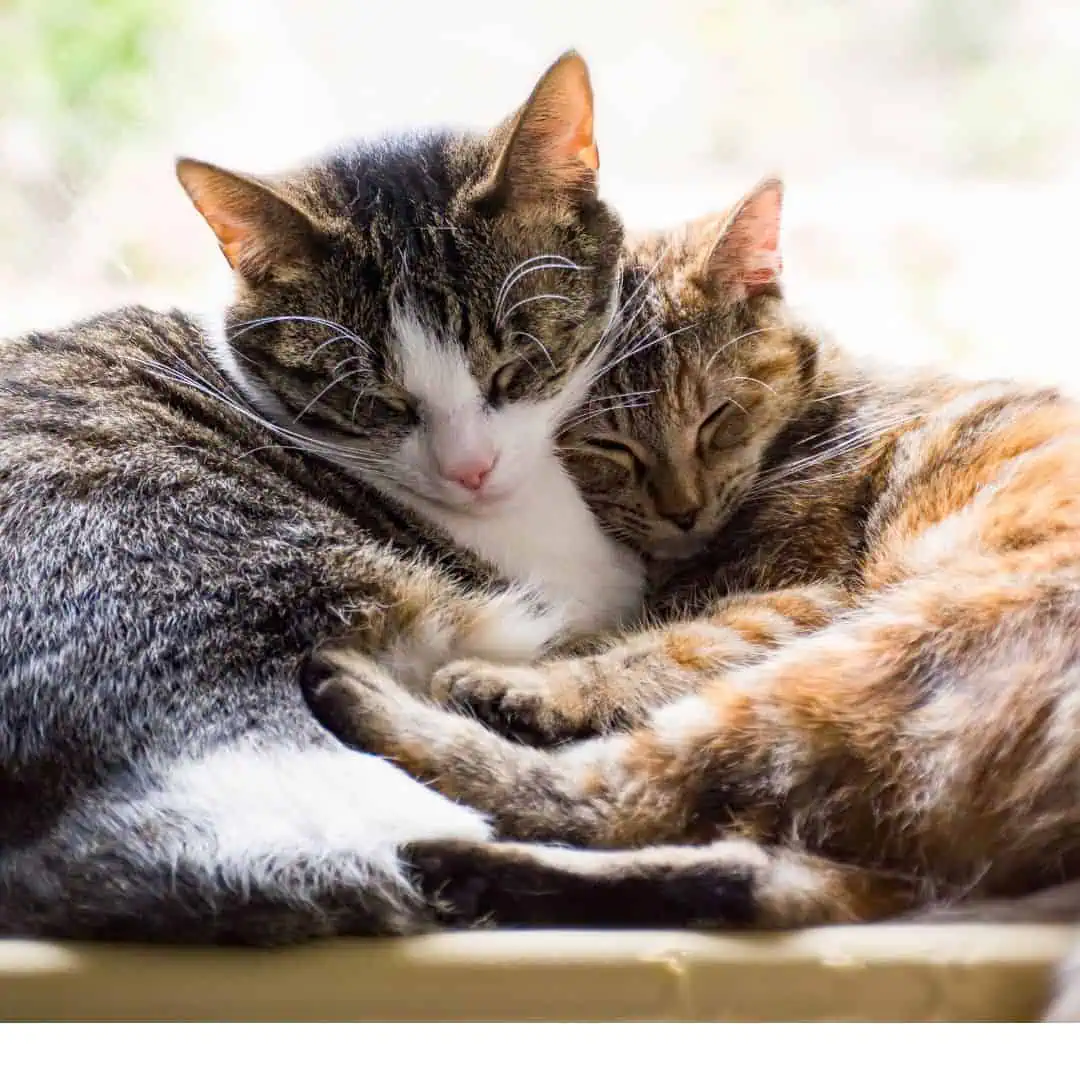
- Sleeping curled up together: Bonded cats nap in contact, often belly to back or face to face. Touch calms the nervous system, reduces anxiety, and deepens ties. Touch reduces stress and keeps body heat steady, which is extra soothing. Look for repeated choices to share beds, blankets, or a window perch. If the pair seeks each other after a scare, then falls asleep together, you are seeing comfort that goes beyond casual friendship.
- Rubbing heads to share scents: Cats have scent glands all over their bodies, including their face and paws. Rubbing against each other mixes their scent into one shared profile. This creates a group smell that says, you belong here. The pair will also rub the same furniture, then each other. Another sign your cats are exchanging scent is by intertwining their tails. Consistent scent sharing marks a bonded partnership, not simple tolerance.
- Shared territory: Sharing territory without conflict or aggression is one way you can tell if cats are bonded. Bonded cats enjoy each other’s presence, so they feel safe occupying the same spaces. They might even join up and defend their territory together when challenged by another cat or a dog.
- Defending each other from threats: A bonded cat often checks on their partner during a scare. You might see one step between a strange dog at the window and the other cat. They may flank each other, raise tails, or call out with a short trill. After the stress passes, they regroup and relax together. This protective stance shows emotional safety and shared trust. I’ve definitely seen that between mine. Norman went after one of my elderly cats soon after I brought him home. Betsy stepped in to protect her. Now we have to watch Norman and Betsy around each other.
- Mirroring daily behaviors: Bonded pairs sync up. They eat at the same time, move rooms together, and pause play together. You will notice matched routines, like both choosing the same window right after breakfast. Play roles switch back and forth without friction. These mirrored patterns show the cats are tuned to each other, which is a hallmark of a strong bond.
For example, a bonded pair will share a window perch, trade some ear cleaning, nap with their tails wrapped around each other, spring apart when you run the vacuum but regroup back in their favorite spot after you finish. Friendly roommates, on the other hand, might nap in the same room, play sometimes, and eat without trouble, but they keep more space and split up often.
Want to try a quick bonding test with your cats? Separate the cats into separate rooms for 15 to 20 minutes, then reunite. Bonded cats greet, rub, or settle together soon after. Friendly roommates rejoin the space but drift apart or go back to their solo routines.

Signs Your Cats Are Not Bonded
Bonding is not necessarily the goal for every multi-cat situation. After all, we are not friends with everyone we meet either. In some cases you want friendly tolerance but not close bonding, especially if you have visiting cats, foster cats, or breeding cats where the population in your home is fluid and changing. But you want tolerance, not conflict and lack of any bond.
Clear red flags of a lack of bonding:
- Arched backs, stiff tails, flat ears, and piloerection: Fur stands up, spine lifts, posture gets big, and Kitty fluffs out his tail. That is defensive.
- Hissing, growling, excessive vocalization:
- Aggressive behavior: Even brief angry spats show the relationship needs work.
- Blocking access or resource guarding: One cat guards a hallway, litter box, or perch and refuses to allow another cat access. Kitty may attack their roommate when they enter a room and find him on the favored cat shelf or chase them away from the food bowl.
- Spraying, urine marking:
Subtle Body Language That Reveals Mere Tolerance
Cats often keep the peace by avoiding conflict, not by sharing affection. These quiet cues point to tolerance, not a bond. but it give you a place to work from to improve their relationship.
- Side-eye or no eye contact: Soft eyes with frequent slow blinks signal trust. In a tolerant pair, you see brief glances, fewer blinks, and quick look-aways.
- Parallel play without engagement: They chase the same toy but ignore each other. No role swapping, no chases that turn into gentle wrestling.
- Stiff bodies and offset angles: Bodies stay slightly angled, tails low or twitching. Relaxed cats show loose shoulders and upright tails with a hook at the tip.
- Ears flicking back: Rapid ear flicks or one ear pivoted back means low-level stress.
- Tail swishes that cut play short: One swish, a freeze, then walk-off. Bonded pairs reset and continue.
- Slow blinks only sometimes: In bonded pairs you see a steady blink exchange. Sporadic blinks suggest basic comfort, not deep trust.
If your cats are friendly but not bonded, you can nudge them toward trust without forcing closeness:
- Joint feeding at a safe distance. Begin bowls 6 to 8 feet apart, then inch closer only if both stay relaxed.
- Puzzle toys they can use in the same room. Food builds positive associations.
- Use distance toys: Wand toys and ping-pong balls keep play shared but not crowded.
- Reward calm proximity: Toss small treats when both cats relax within sight of each other.
- Scent bridge: Swap bedding or use a soft cloth to cheek-rub each cat, then trade scents.
- Parallel play sessions: One or two sessions a day, 5 to 10 minutes, end with a snack. Two identical toys, one handler per cat. Stop while things are still fun. Keep sessions short, daily, and positive. Think of it like stacking small wins.
- Create escape routes: Add high perches and double exits so no one feels trapped.
- Provide adequate resources: Adding additional litterboxes, feeding stations, scratching posts, vertical spaces, and sleeping spots prevents resource guarding behavior and adds feelings of security.
Do not force contact or cuddles. Let the pair choose closeness at their own pace. Let them choose contact; do not hold one cat while the other sniffs them. Don’t punish your cats for hissing at one another. Punishment links the other cat to stress and physical pressure can turn a neutral relationship sour fast.
For many pairs, steady structure, more resources, and calm shared routines help a friendly truce grow into a real bond.
Conclusion
You now know how to tell if cats are bonded. Friendly pairs keep more space, play in short bursts, and recover alone after stress. Bonded cats touch often, trade grooming, sync routines, and seek each other for comfort.
Every pair is its own story. Many cats move from polite roommates to true partners with time, steady structure, and small daily wins. Watch their choices, reward calm moments together, and add resources so no one has to compete. If mutual grooming or cuddling behavior shifts suddenly or tensions rise, call your vet or a qualified behavior pro to rule out illness or pain and guide next steps to re-establish the relationship.
Pick one tip to try with your cats this week, like scent swapping, feeding in sight of each other, or short parallel play. Keep sessions brief, end on a good note, and let them set the pace. I’m trying to move Johnny and Norman to more than an armed stand-off, and convince Johnny that Ginni is only going to be here for a little while, he can just ignore her.
Share your cats’ story in the comments, what signs are you seeing at home? With patience and kind routines, even friendly cats can grow a bond that feels like family.