Keep Your Cat Calm During Fireworks
Contents
Summary
Fireworks can turn a calm home tight and uneasy, especially when several cats are feeding off each other's stress. The best way to keep cats calmer is to prepare early, offer separate safe spaces, and let each cat cope in its own way. Calming products can help. Your own calm energy can be the most important way to offer your cats security.
Last Updated on May 6, 2026 by Holly Anne Dustin
The house can feel normal at sunset, bowls clink in the kitchen, one cat claims the sofa, another stalks a toy mouse down the hall. Then the first firework cracks outside, and the whole mood changes. Bodies flatten, eyes go wide, and even the bold cat may vanish under the bed.
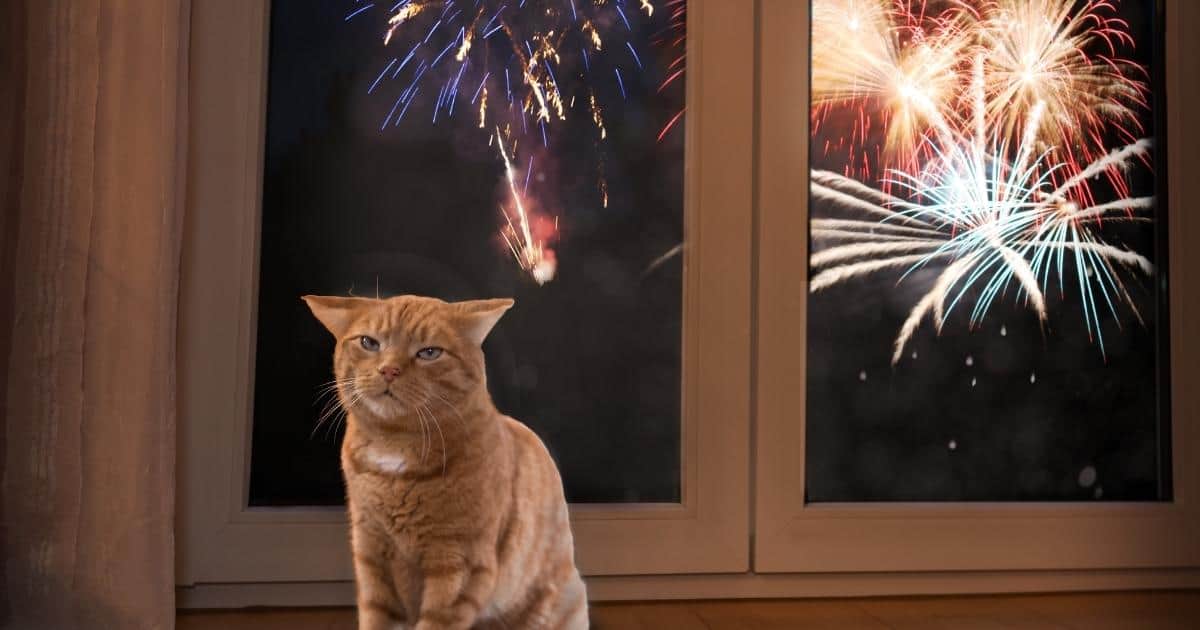
Fireworks may add excitement to your holiday celebrations but the sudden loud noises can stress out your cats making them anxious and uncomfortable. Some cats will hide their fear, others really don’t care, and others will truly panic when the fireworks or thunderstorms start booming. If your cat, like many, is terrified by the noise and chaos use these tips to help keep your cat calm during fireworks.
Cats react hard to fireworks because the noise is sharp, the flashes are sudden, and the floor itself can seem to tremble. In a home with several cats, one frightened animal can turn the whole group tense within minutes. If you want to keep your cat calm during fireworks, the best help starts before the noise does.
If your cat, like many, is terrified by the noise and chaos use these tips to help keep your cat calm during fireworks.
This post may contain affiliate links. Life and Cats is a Chewy affiliate and a member of the Amazon Associates program and as such we earn a small commission when you shop through our our links and banners. It doesn’t change the amount you pay. You can read our full disclosure policy here.
Why Fireworks Feel So Overwhelming to Cats
Fireworks hit cats from every angle at once. The booms arrive without warning, the light flares through windows, and smoke can drift in with a strange scent. Cats like patterns and control, so a loud sky full of surprises can feel like danger moving in around them.
“The loud noises and bright lights can really startle your cat, causing her to run and hide,” says Dr. David Beilinson, a veterinarian at BluePearl Veterinary Partners in New York City. “Many of these cats will go back to normal once everything is quiet.”
Kitty has much more sensitive hearing that you and I. Cat ears are physically designed to draw sound in. He can hear things we can’t.This make him a great predator, but makes fireworks painful and threatening. Cats associate loud noises with danger.
That matters even more in a multi-cat home. When one cat startles and bolts, the others notice. If you wait and hope they’ll settle on their own, stress can pile up fast. A simple plan gives each cat a place to cope before fear spills over.
Signs of stress in cats
Loud noise like fireworks and thunderstorms create a stressful situation for your cat. You will notice the level of fear and stress in your furbaby may vary depending on the event and the confidence level of your cat. Most cats will survive an evening of fireworks just fine with a little extra TLC and safe place to hang out. But a skittish or overly sensitive cat may even become ill.
The signs your cat is getting stressed
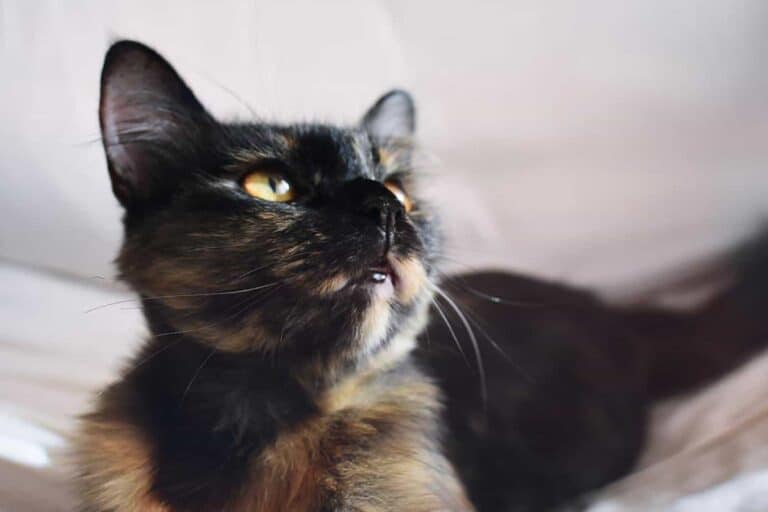
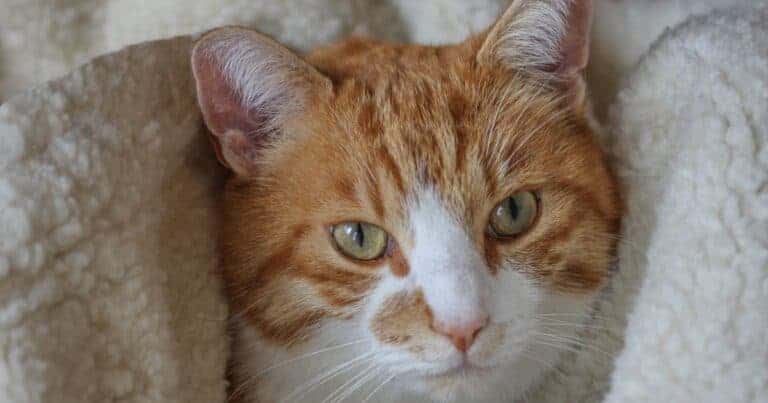
Some cats announce their fear. They yowl, pace, scratch at doors, or race from room to room. Others go still. They crouch low, flatten their ears, hold their tail tight, and stare with huge pupils. A cat may also stop eating, skip the litter box, or refuse a favorite treat. You might notice overgrooming, panting, agressive or destructive behavior or peeing outside the box.
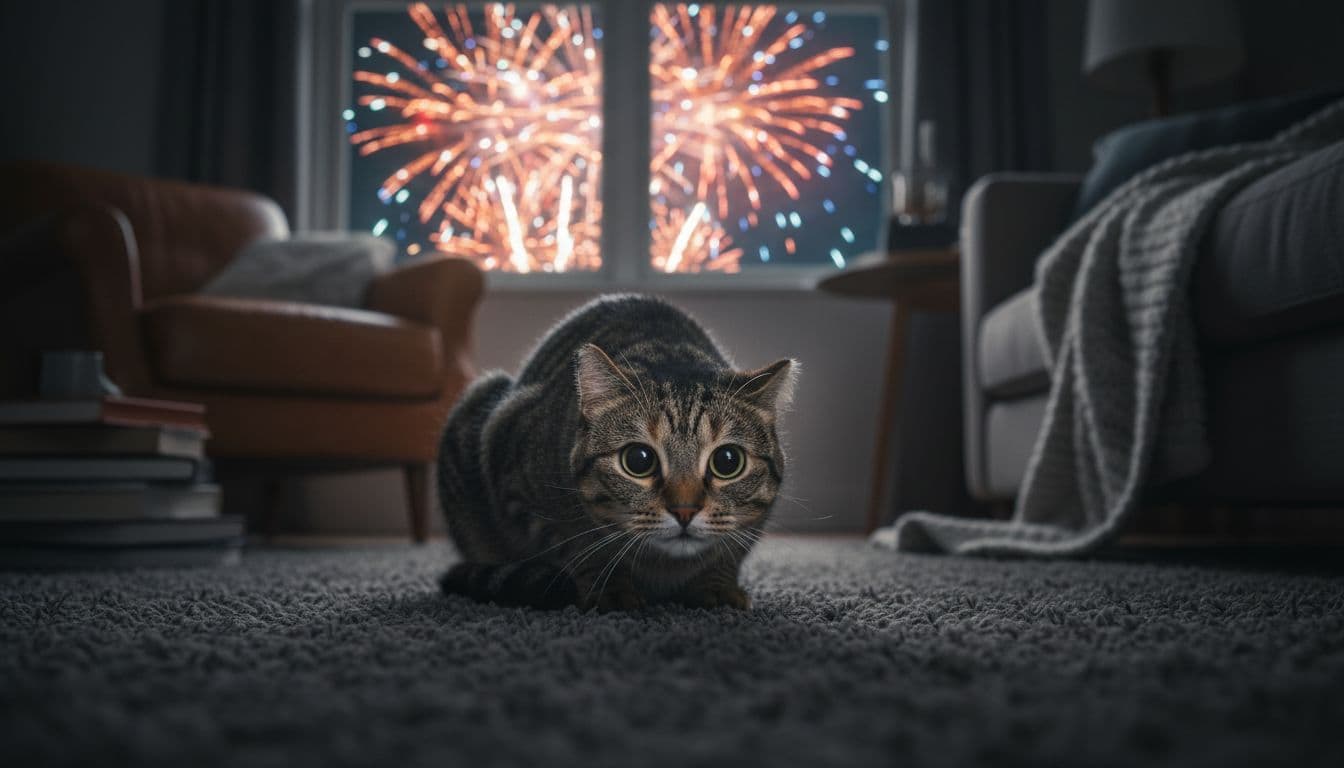
A quiet cat can be easy to miss, especially in a large, multi-cat families. Yet silence doesn’t mean comfort. PetMD’s fireworks safety guide for cats notes that fear can lead cats to hide for long stretches or try to escape.
A silent cat isn’t always a calm cat.
Watch for changes in the whole household. If one cat suddenly blocks a hallway, hisses at a housemate, or guards a hiding place, fear may already be building.
Why one scared cat can upset the whole group
Cats read each other fast. One thump outside, one cat dashes under the table, and the others go on alert. A relaxed room can turn stiff in seconds. That shift is easy to picture in a large cat family, because everyone shares paths, windows, litter boxes, and favorite corners.
Stress also changes how cats use space. A shy cat may avoid the litter box if a nervous housemate camps near it. A confident cat may become defensive because the whole house feels wrong. When every cat has a separate retreat, you cut down on crowding and the small standoffs that follow.
Set Up a Home That Feels Safe Before the First Boom
The best prep often happens in the afternoon, or even a few days early. You don’t need to remake the house. You do need to make it softer, darker, and easier for each cat to manage.
In a busy home, shared comfort isn’t enough. Each cat needs choices, because frightened cats rarely want to negotiate for space.
Build more than one hiding spot
Give your cats several places to tuck away. A cardboard box on its side, a covered bed, an open carrier with a blanket inside, a tunnel, or a quiet bedroom all work well. If a cat already loves a certain closet or the space under your bed, leave that option open if it’s safe.
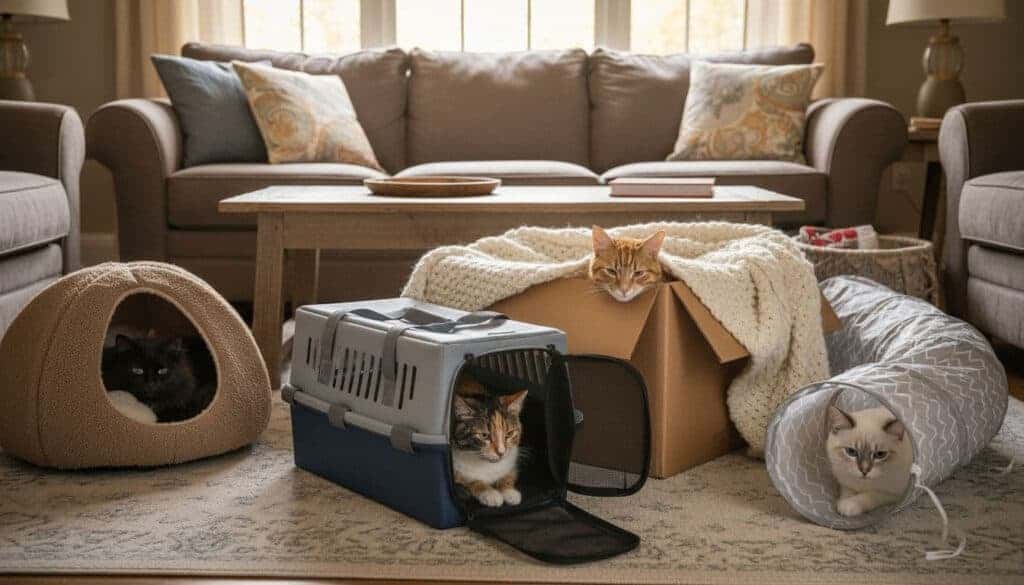
The goal is choice, not togetherness. Don’t place two anxious cats in one room and hope they comfort each other, especially if their relationship isn’t solid to begin with. Kinship recommends one safe retreat per cat, plus one extra, and that advice fits crowded homes especially well.
If you can, put water and a litter box near the quieter zones. That way a scared cat doesn’t have to cross open ground just to meet a basic need.
Block noise, dim the flashes, and soften the room
Close curtains before dark. Pull blinds, shut windows, and leave interior lights on at a low, steady level. Those small changes blur the bright flashes and make the room feel less exposed.
Sound matters too. A fan, white noise machine, calm music, or a television at normal volume can take the edge off the booms. Keep that background sound steady. If you blast music louder and louder, the room can feel tense for a different reason. For more holiday prep ideas, these July 4th safety tips for cats pair well with a quiet-room setup.
Keep exits and dangerous spots secure
A frightened cat can turn into an escape artist. Keep kitty out of eaves, crawl spaces, behind appliances, any place that she could get into the wall or outside. Check window latches, screens, doors, garage access, and any pet door before dusk. In homes with kids, guests, or party traffic, remind everyone that the cats stay indoors all night.
This step matters even for cats that seem fearless. Panic changes behavior fast. If your cat wears a collar, make sure it fits well. If your cat is microchipped, check that your contact details are current before a holiday weekend.
More cats are lost during fireworks than any other time. I’m sure you take tons of a pictures of your cat but make sure you have a clear set of photos showing his patterns and his face in case you have to identify him at a shelter should he escape.
Calming Tools That Can Help Without Adding More Stress
Calming products can help, but only if they match the cat in front of you. Some cats relax with a little extra support. Others hate new gear and do better with fewer changes. Try calming tools before the holiday so you know what your cats will tolerate.
The goal is comfort, not a perfect performance. A cat that hides and stays settled is coping better than a cat forced into the middle of the room.
Pheromone diffusers and sprays
Pheromone products can make a room feel more familiar. They mimic the facial scent cats use when they rub their cheeks on furniture and mark a place as safe. For many homes, that makes them a good first step.
Start a few days early, especially if your cats spread out across several rooms. One plug-in may not cover a large home well. Hill’s explains how pheromone diffusers and sprays can relieve stress, and that can be useful when fireworks are expected.
Pressure wraps, treats, and vet-approved supplements
A snug wrap or a Happy Hoodie helps some cats, but not all. If a cat freezes, flops over, or tries to rip it off, skip it. You want a tool that lowers tension, not one that starts a wrestling match. A calming collar is another option. Again, if your cat is not used to wearing a collar start before the the fireworks are expected to begin. Avoid those with lavendar and chamomile, as those herbs are listed as toxic by the ASPCA.
You can get calming treats at any pet supply store. Offer them near a chosen hiding spot, not in the middle of a room where the cat feels exposed. Some guardians also use vet-approved calming supplements, such as Zylkene or L-theanine products. Test them ahead of time, because fireworks night is the worst time for surprises.
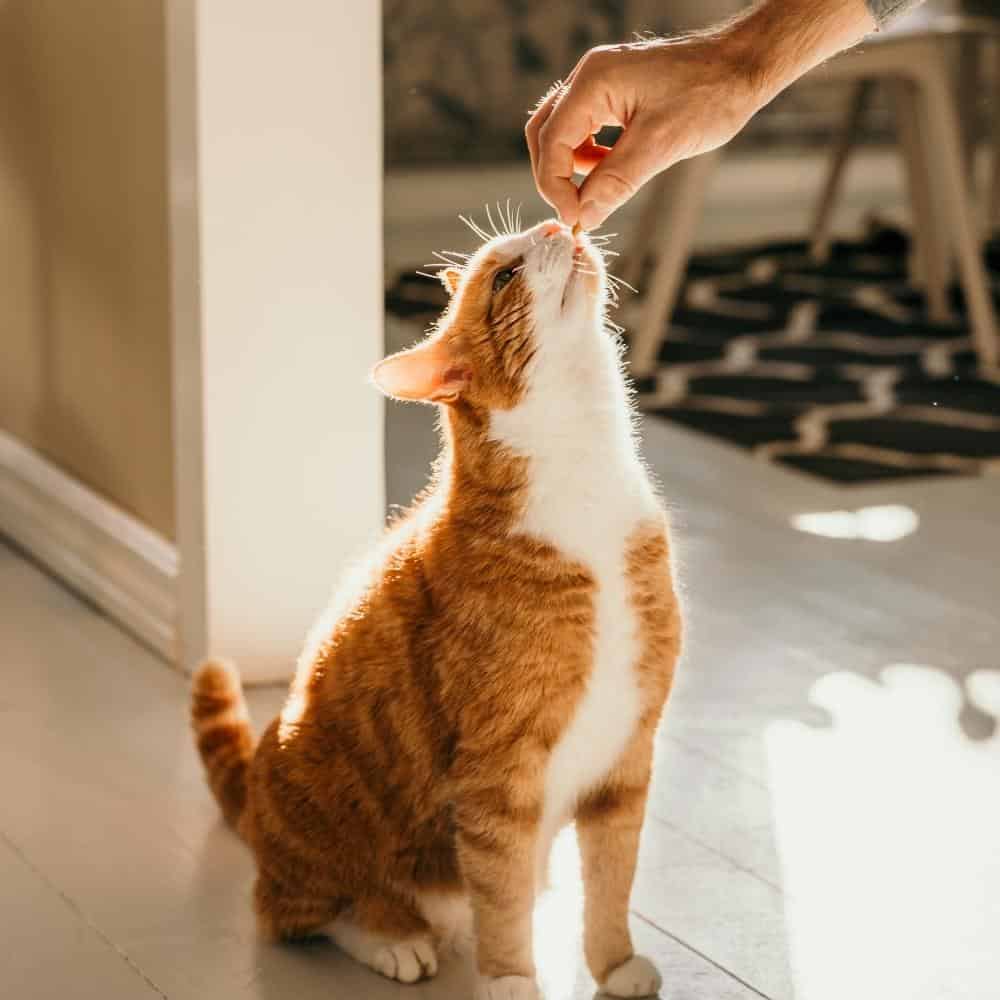
Herbal products, such as Rescue Remedy, which I have had great success with, or Hemp, which you can get in a variety of forms including oil and treats, can support a calm attitude in your cats. Catnip can be calming for some cats. If you cat enjoys it, sprinkle some catnip around in her safe space.
When a vet may suggest medication
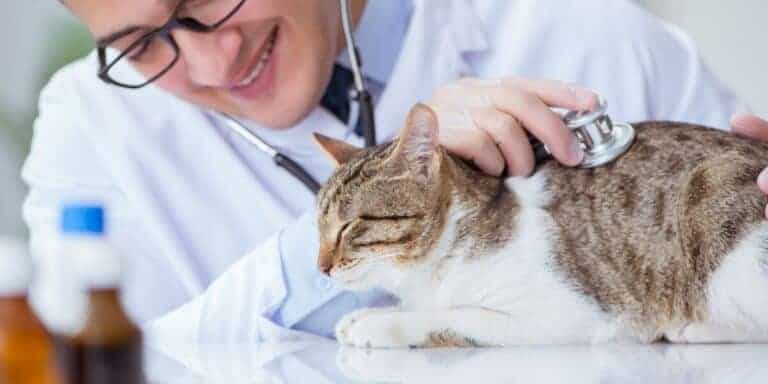
Some cats don’t cope with home changes alone. They tremble for hours, stop eating, lash out at housemates, or stay hidden long after the noise ends. In those cases, a veterinarian may suggest short-term medication, including gabapentin for some cats.
Plan that conversation early. Medication needs the right dose, timing, and health review. Guessing on the day of the event can leave you stressed and your cat unprotected.
To Keep Your Cat Calm During Fireworks, Lower the Fear Before the Big Night Arrives
If fireworks happen every year in your area, start before the holiday season. Small training sessions work better than one intense effort, and they fit real life better too.
Cats don’t need to love fireworks. They need a chance to learn that distant firework sounds don’t always predict danger.
Use sound training in small steps
Play fireworks audio at a low volume while your cats get something they love, such as treats, wet food, or a short play session. Keep the volume low enough that bodies stay loose and interest stays normal. If a cat crouches, stops eating, or stares at the speaker, the sound is too loud.
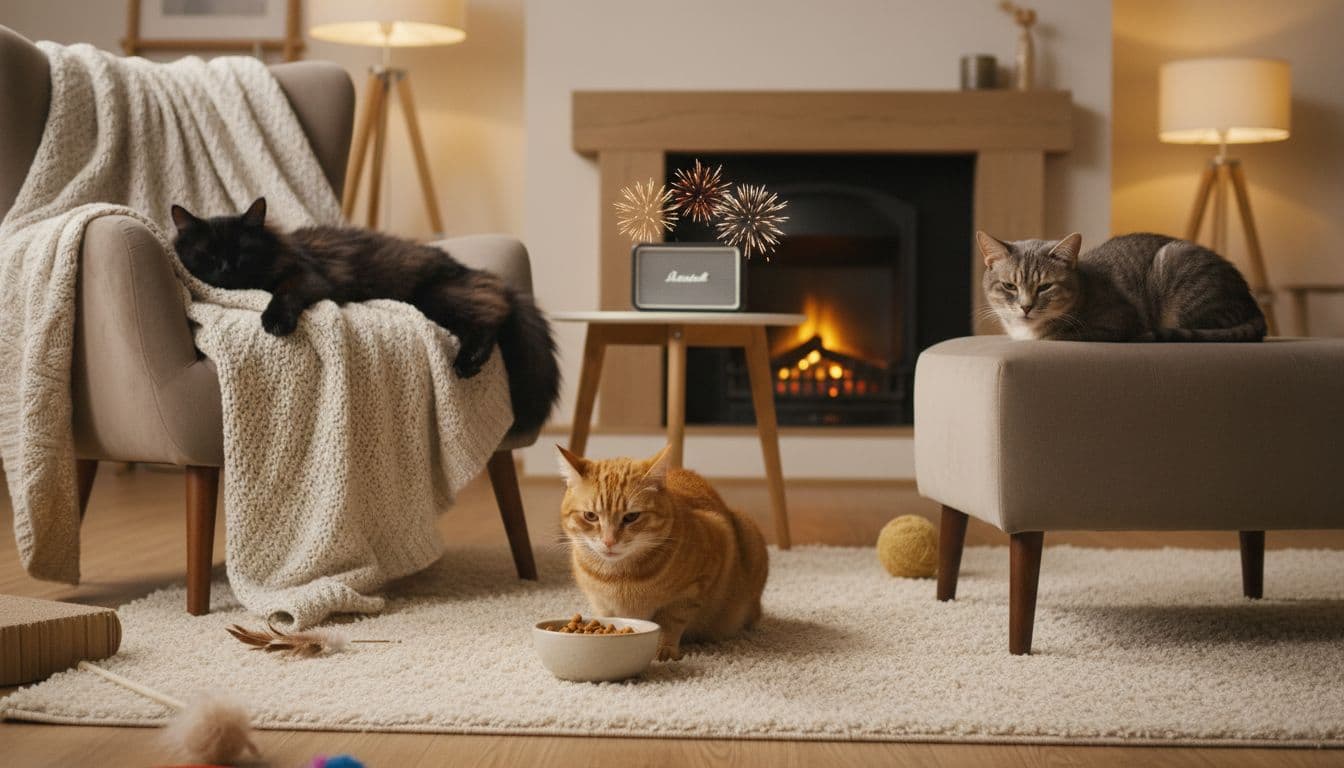
A simple plan works best:
- Start with very quiet sound for a minute or two.
- Pair it with treats or dinner.
- Stop while the cats are still relaxed.
- Raise the volume only a little, and only on another day.
That slow pace matters. Flooding cats with loud practice sounds won’t teach calm. It teaches that bad noise arrives even inside the house.
Keep dinner, play, and bedtime predictable
Routine steadies anxious cats because it tells them the house is still normal. Feed dinner on time. Play with your cat during the day before the fireworks show. Hopefully, the activity will help tire him out in hopes he sleeps through the fireworks show.Then let the evening settle instead of filling it with guests, loud music, or lots of handling.
Your own mood matters too. Your calm reaction to the noise of the fireworks can help Kitty get over her fear.Move around the house as usual. Speak in a normal voice.
Don’t force your attention on your cats. Restraining a scared cat can be more stressful for them. But speaking to them calmly and reassuring can be helpful. If your cat likes petting and cuddles when she’s stressed then by all means do so. If one cat wants to hide, let that cat hide. If another stays near you on the couch, that’s fine too.
In multi-cat homes, the best support often looks simple: familiar meals, familiar rooms, familiar people. This is especially appointment when fireworks are unpredictable. My neighbors like to set them off randomly all summer in addition to the regular expected holidays. Like with storms, I can’t do much more than still calm and show my kitties that it isn’t a big deal and have hiding spots available when they want them. Rescue Remedy does help in this type of situation because it takes effect quickly.
Final Thoughts
Fireworks can turn a calm home tight and uneasy, especially when several cats are feeding off each other’s stress. The best way to keep your cat calm during fireworks is to prepare early, offer separate safe spaces, and let each cat cope in its own way.
Most cats do better when the house feels predictable, dim, and secure. If fear is severe, lasts for days, or sparks fights between housemates, bring your vet into the plan before the next noisy night.
If you have any other tips on keeping your cat calm during fireworks, definitely let us know in the comments!