
Cat Safety Tips to Keep Kitty Safe Indoors and Out
Last Updated on December 4, 2022 by Holly Anne Dustin
Raising cats is a lot like raising toddlers. It’s all about anticipating the potential disasters and preventing them that will keep Kitty safe. They don’t always make positive choices in what they do and where they go, so Kitty’s safety is our responsibility.
Contents
Prevent Kitty from Injuring Herself:
The proverb curiosity killed the cat isn’t wrong. Cats can reach higher spaces, lower spaces, and squeeze into smaller spaces than you would ever think possible. They access things we thought safe from their marauding paws. Try these cat safety tips to prevent accidents.
- Move things Kitty could knock over and break. Secure heavy objects that could fall and land on her.
- Keep her nails trimmed so she doesn’t get her claws stuck in the carpet or the sofa and injure herself trying to get free.
- Tie up or cut the cords on window blinds. Cats can get tangled in the cords and strangle themselves or chew them.
- Speaking of cords, chomping on chargers or other electrical wires can put Kitty at risk not only of problems from eating linear foreign bodies, but of electrocution. Luckily, with persistence you can prevent that. Put your cords into a cord chase or pipe. Or treat them with a repellent product like Phooey Spray.
- Make sure you take care before shutting a closet door or a dresser drawer. Double and triple check the fridge, dishwasher, and the clothes dryer before closing the door and running the appliance. Cats love to hide in small spaces.
- Recliners and exercise equipment can put Kitty at risk of injury too.
Falls:
- Cats like to get up high. Make sure any perches or play gyms you hang on the wall are secured to the studs and meant to hold the weight and force of Kitty jumping and landing on them.
- Secure the screens in your windows so Kitty can’t push them out chasing a bug or fall out napping against them.
- Consider things like stairwells, banisters, loft railings and beams she might decide to play on. Falls from a two story loft are more likely to result in severe injury than a fall from a higher floor.
Drowning:
Like a child, Kitty can drown in an unattended water source if she falls in and can’t get out. If you have a pool, a hot tub, a garden pond, or an aquarium, cover it securely to keep Kitty out.
Hot tubs have a solid cover. You can buy a cover for your pool and netting for your aquarium. But how many people pull a pool cover over when they aren’t in it? And what about the koi ponds and garden ponds?
Cats can swim. But they need a safety ramp or stairs or a solid area that Kitty can use to exit. You won’t just help save Kitty in an accident but your local wildlife too. And yourself from a heartbreaking situation.
A full bathtub might not be a problem for a full-grown cat, but it presents a drowning hazard for a small kitten. Mop buckets and basins do too. Keep the toilet seat down.
Fire:
- Beware around candles and open flames and also with space heaters. National Fire Protection Association (NFPA) says pets are responsible for over 1,000 house fires every year.
- Cats are drawn to the flickering flames of lit candles and flames. Everyone with cats and a working fireplace should have a safety barrier and train Kitty to stay away from it.
- Opt for flameless candles, or use your candles in a cat-free room. Never leave a lit candle unattended.
- Take the knobs off or cover them with child proof knob covers if the stove fascinates Kitty. Especially if the knobs are in her reach.
Click on this link to read our post and learn more about how to keep your cat safe in a fire.
Poisoning Risks
Cats can get ill from toxins quickly because of their small size, the inability to process phenols, and their grooming habits. Poisons can be inhaled or absorbed through the skin, but most poisonings happen because of something a cat has ingested.
Medications for dogs and over-the-counter pain relievers for people are the top poisoning risks for cats. Human foods that damage Kitty’s system, like raisins, onions, fruit pits, and chocolate are the major risks.
Getting flowers might be a lovely gesture to you, but many flowers can be deadly to Kitty. Especially lilies where even grooming off a few grains of pollen can cause a rush visit to the vet.
Related Post: Click here to read more about Lily Poisoning in Cats.
Poisonous plants are one of the top poisoning risks for cats. It is important we as cat guardians do our research and protect our furbabies when planning our gardens or decorating our homes.
Don’t leave anything toxic out where Kitty can get into it. Just as you would with your human children, keep cleaners locked up where Kitty can’t get to them. Consider a child lock because cats can be very determined. Bleach can attract them like catnip.
Keep Kitty away from cleaners when you are using them too. Put her in another room until everything is clean and dry. Better yet, choose safer cleaning products that are safe around your furbaby.
Other household chemicals that threaten Kitty’s well-being include pest repellents containing permethrin, painting supplies, and automotive chemicals especially antifreeze.
Ingesting Foreign Bodies
Monitor his toys and take extra care with things like dental floss, and sewing thread, if Kitty likes to play with string. Linear foreign bodies cause bowel obstructions. Floss and string can wrap around teeth and tongue and choke her.
Kitties with a thing for foreign bodies love hair elastics, plastic bags, milk bottle rings, and parts of toys. Some even eat fuzz off the floor. If you live with a cat with PICA, or that just loves to play with certain types of objects, you have to stay on top of cleaning and putting away.
Kitty’s love for string can ruin your holiday if she takes to eating the tinsel from the tree.
Holiday Cat Safety Tips
- Holidays combine a lot of threats to Kitty’s safety.
- Rich food containing things she shouldn’t eat: bones, onion and garlic, sweets, chocolate.
- Decorations that could injure your cat. Broken ornaments could cut your cat‘s paws. The wire hangers are a choking hazard. Tinsel, ribbons and bows, strings and thread on ornaments cause obstructions.
- Her desire to climb the tree could cause a crush injury if the tree falls over on her.
- Candles start fires.
Click on this link for more tips on how to keep your cat safe during the holidays
Outdoor Cat Safety Tips
Cars, dogs, predators, and more. Unrestricted access to the outside puts Kitty’s safety at risk. Besides these risks, she faces fights with other animals, disease, parasites and injury.
People aren’t necessarily her friend either. People who dislike free roaming cats have harassed them, injured them, and poisoned them. Other neighbors might “adopt” Kitty, assuming she is a stray without realizing they are stealing your furbaby.
Keeping Kitty inside, in an enriched environment, keeps her safe from being stolen or getting lost.
Click here to find out how to get Kitty home if she gets lost
Extreme Weather Risks to Kitty’s Safety
The weather is another threat to Kitty if she is outside. Hot or cold, there are risks she will have to contend with. Every area of the country has some kind of extreme weather: hurricanes, tornados, earthquakes or floods. It is important we prepare to deal with the threats in our area and know how to evacuate with our furbabies.
How to Keep Cats Cool in Summer
We should not leave cats outside out for long periods of time in the summer heat, even if they are normally outside cats. They can suffer heat stroke and dehydration as the temperature rises. Light colored cats can suffer sunburns and sun cancer too. If you can’t keep Kitty safe inside in the air conditioning, make sure she has extra water, shade, and a place to get out of the sun.
Read more in this linked post about how to keep Kitty safe in the summer heat.
Keep Kitty Safe in Cold Weather
Generally, if you’re cold then they’re cold. But cats get colder quicker. Their normal body temperature is around 102 F and hypothermia can happen if their temperature falls below 100F. Kitty can develop frostbite if she is outdoors in temperatures under 32F for too long. Rock salt, ice melt, and antifreeze also pose a serious risk to Kitty’s health in the winter. Inside is safer, but if she refuses to stay in, be sure Kitty has a warm shelter to retreat to when the cold is too much for her. Bring her in if the temperature is going to get really cold for any length of time even if she objects.
Related Post: Keep Your Indoor Cat Warm in the Winter
Cat Safety Tips in Extreme Weather and Natural Disasters
It is critical that you have a disaster plan to evacuate with your cat in case of an emergency. You should have a go-bag for both you and Kitty long before you end up in an emergency.
If you don’t have an emergency plan and evacuation kit, learn how to create one in this post.
- Always bring pets indoors at the first sign of a storm or disaster.
- Put Kitty in her carrier or secure her in a bathroom until the danger is over or you are ready to leave.
- Keep your go-bag with her.
- Evacuate your family and pets as early as you can.
- Take your cats with you if the authorities ever ask you to leave your home. If it isn’t safe for you, it isn’t safe for Kitty either!
Traveling Cat Safety Tips
Car rides for kitties are no longer just that stress-filled trip to the vet. Kitties are part of the traveling public now. Wherever you take your dog, you can bet there’s someone taking their cat there. If we’re going to travel with our furbabies we need to know how to do it safely.
- Keep Kitty buckled up in her well-ventilated, safe, carrier that gives her room to sit, stand, and turn around. Unsafe driving behavior doubles when a pet is free roaming in the car. An accident can also throw Kitty through the windshield or out a window if she is not properly secured.
- Buckle her carrier in the back seat just like you would with your toddler’s car seat unless you can turn off the front seat airbag.
- Don’t leave your cat unattended in the car in the heat or the cold. Your car becomes an oven in the summer or a refrigerator in the winter.
- If you travel in hot weather put a cooling mat or a frozen water bottle in his carrier.
- Winter travel safety means being prepared for breaking down in freezing cold. Cover his carrier with a fleece. Keep Hot Hands packs in your car to slip in his carrier if he’s still cold.
- Make sure her tags are current.
First Aid and CPR for Cats
Do you know the basics of first aid for cats? If you don’t, and you have a cat, you need to learn. My favorite source for a class is Arden Moore’s Petfirstaid4u.
There is so much to know about first aid for cats that you do need a manual, and a class, but we have a post with some tips on basic feline first aid here.
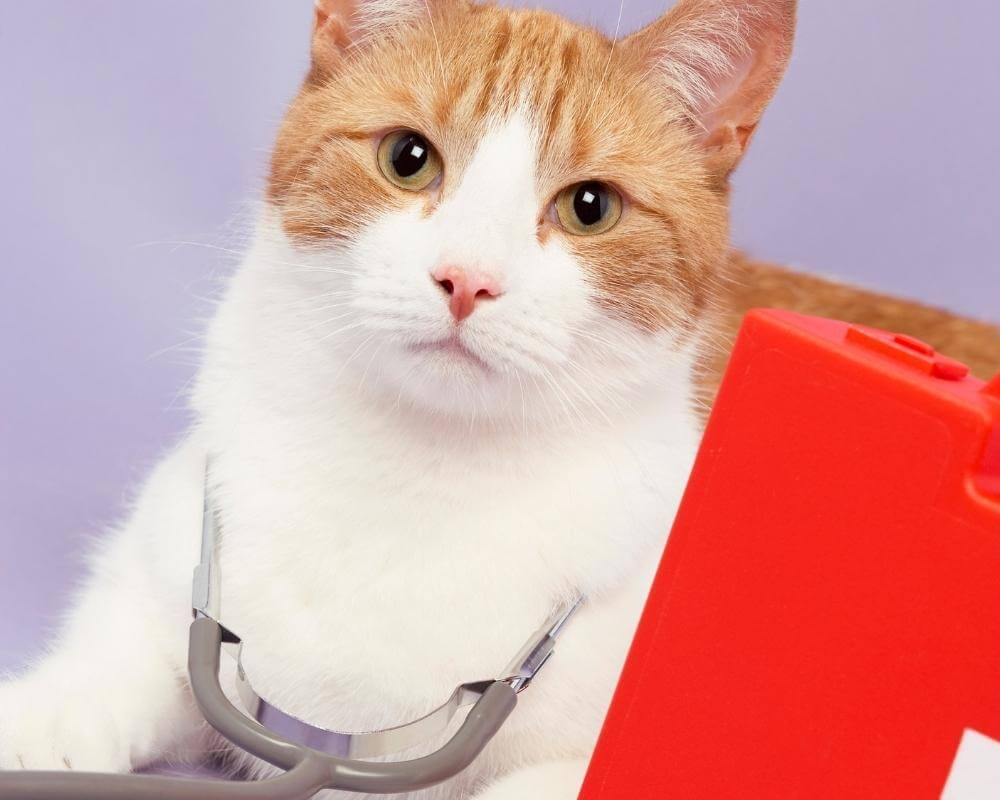
The number one tip of course, is that you need a well-stocked first aid kit designed for cats. You can purchase a pet first aid kit, but you’ll still need to add to it to make it complete for cats. I just made my own in a shoebox size storage container from the dollar store.
Our cats are going to get into trouble and emergencies. We need to be prepared to help keep them safe. Hopefully these cat safety tips and the related posts linked in this post will help your Kitty have a long, healthy life.