Best Ways of Keeping Cats Hydrated in a Multi-Cat Home: Smart Tips That Work
Contents
- 1 Summary
- 2 Why hydration matters more than many cat guardians realize
- 3 Spot the early signs that a cat may be getting dehydrated
- 4 Build a water setup that works for several cats at once
- 5 Easy ways to help picky cats drink more
- 6 Simple daily habits that keep water fresh and inviting to keep cats hydrated
- 7 Common hydration myths that can lead cat owners astray
- 8 Final thoughts
Summary
Keeping cats hydrated in a multi-cat home gets easier when water is calm, clean, and easy to reach in more than one place. In a multi-cat home, the goal is not only giving water, it is giving every cat a fair chance to drink. An abundance of drinking stations, a higher moisture diet, and your careful monitoring to make sure every cat is consuming sufficient liquid will assure you have a well-hydrated multiple cat household.
Water bowls are easy to overlook when you share your home with several cats. One bowl looks half full, another looks fine, and meanwhile the shy cat in the back bedroom may not be drinking much at all.
Relationships can be hard to read in homes with several cats. Overt fights are easy to spot, but resource competition is a bigger problem that often goes unnoticed. Resource guarding can leave less dominant cats without enough water for long periods, which raises the risk of dehydration and urinary tract disease. Keeping cats hydrated in a multi-cat home means giving every cat safe, easy, and low-stress access to fresh water.
That is why keeping cats hydrated in a group home comes down to small, repeatable habits. When water is easy to find, fresh, and free from social pressure, more cats drink enough without a struggle.
This post may contain affiliate links. Life and Cats is a Chewy affiliate and a member of the Amazon Associates program and as such we earn a small commission when you shop through our our links and banners. It doesn’t change the amount you pay. You can read our full disclosure policy here.
Why hydration matters more than many cat guardians realize
Water keeps nearly every system moving. Your cat’s body cannot function the way it’s supposed to without enough water. She needs water even more than you do. A cat’s body comprises 80% water, compared to the 60% that makes up your body!
Water helps the kidneys filter waste, supports the bladder, keeps digestion on track, and helps a cat hold a normal body temperature. Proper hydration helps with blood circulation, prevents infection, speeds recovery from illness, surgery, or injury. It also affects energy. A cat that is low on fluids may seem dull, sleepy, or less interested in food.
When a cat doesn’t get enough water, its urine becomes highly concentrated which can lead to crystals and stones in the bladder. According to the American Veterinary Medical Association (AVMA), this is a primary factor in Feline Lower Urinary Tract Disease (FLUTD), a painful and potentially life-threatening condition.
Why cats don’t naturally drink much water
Cats come from desert-dwelling hunters, so their thirst drive is often weaker than ours. They are built to get a good share of their water from their prey. Indoors, that old instinct can work against them. If meals are dry and the water station is crowded, some cats won’t make up the difference on their own.
Our furry friends are inefficient drinkers. They only lap up 3/100 of a teaspoon per lick. A healthy 10-pound cat needs about a cup of water a day in total, counting both the moisture in food and whatever they drink. That takes a lot of licks!
In a large multi-cat household, tracking that total gets harder because one bold cat may visit every bowl while another avoids the busy areas. That matters even more when there’s tension between cats. A lower-ranking cat may skip the water fountain if another cat is lounging nearby.
How water intake changes with wet food and dry food
Food moisture changes the whole picture. Wet food can carry a large share of the day’s fluid, while dry food leaves more work for the water bowl.
This quick comparison helps:
| Food type | Typical moisture | What it means for hydration |
|---|---|---|
| Wet food | 75% to 80% | Adds water with every meal |
| Mixed feeding | Varies | Lowers pressure on bowls alone |
| Dry food | About 10% | Cats must drink much more on their own |
If your cats eat mostly kibble, separate drinking stations matter more. In homes with many cats, food choice and water setup work together, not apart.
Spot the early signs that a cat may be getting dehydrated
Small changes slip past fast in a busy household. One cat naps longer. Another leaves a smaller litter clump. A third stops visiting the fountain when the house gets active. Those clues are easy to miss when you’re caring for several cats at once.
Common dehydration signs you can see or feel
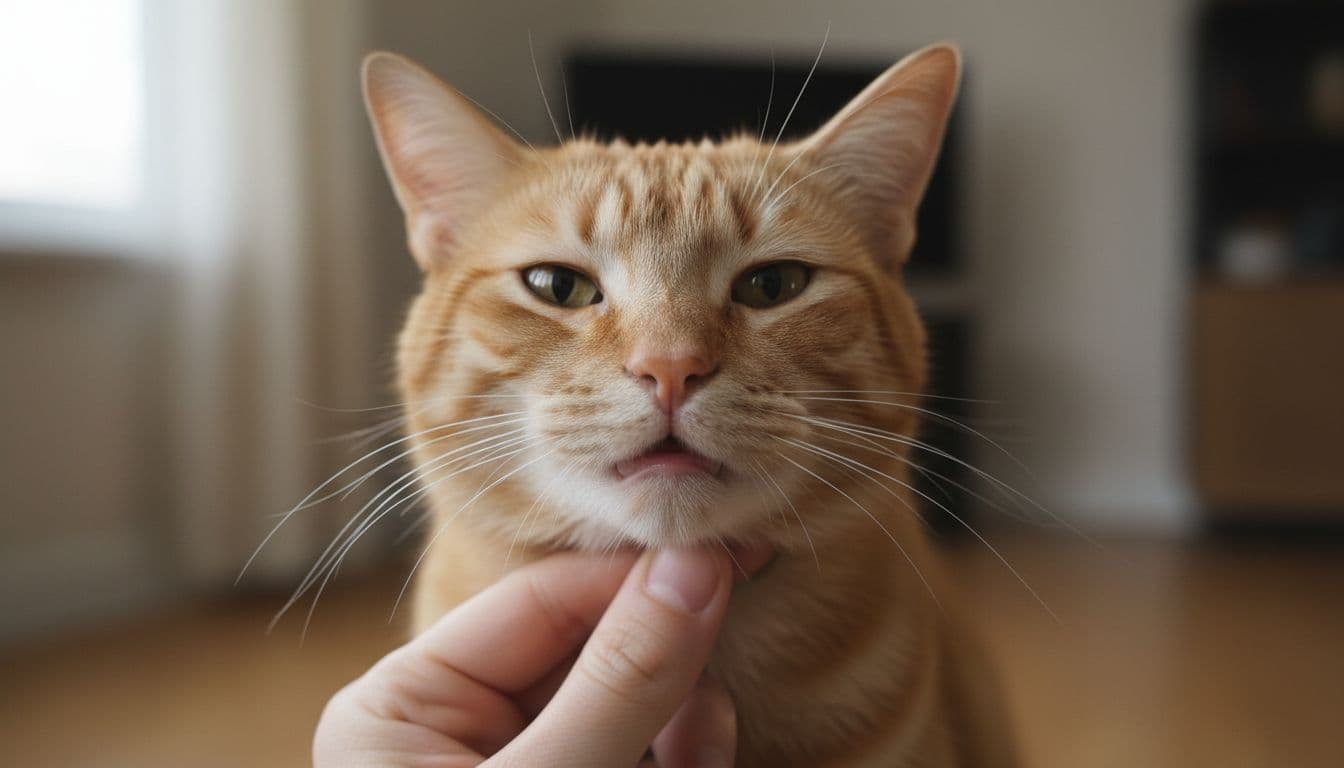
Start with the mouth. Healthy gums should feel slick and moist. If they seem dry or tacky, pay attention. You may also notice lower energy, sunken-looking eyes, darker urine, or fewer trips to the litter box. In a multi-cat home, smaller or less frequent urine clumps can be one of the first hints that something is off.
Some people use a skin check by gently lifting the skin at the scruff and watching how fast it settles. Slow return can point to dehydration, though this test is not perfect in every cat, especially seniors. PetMD has a useful overview of cat dehydration symptoms if you want a quick reference.
When dehydration is urgent
Call your vet promptly if your cat seems weak, pants, has a fast heartbeat, vomits more than once, or cannot keep water down. Trouble peeing is another red flag. Straining, crying in the litter box, or producing little to no urine should never wait.
If a cat is trying to urinate and little comes out, treat it as urgent.
Cats can worsen fast, and urinary problems can turn serious within hours.
Build a water setup that works for several cats at once
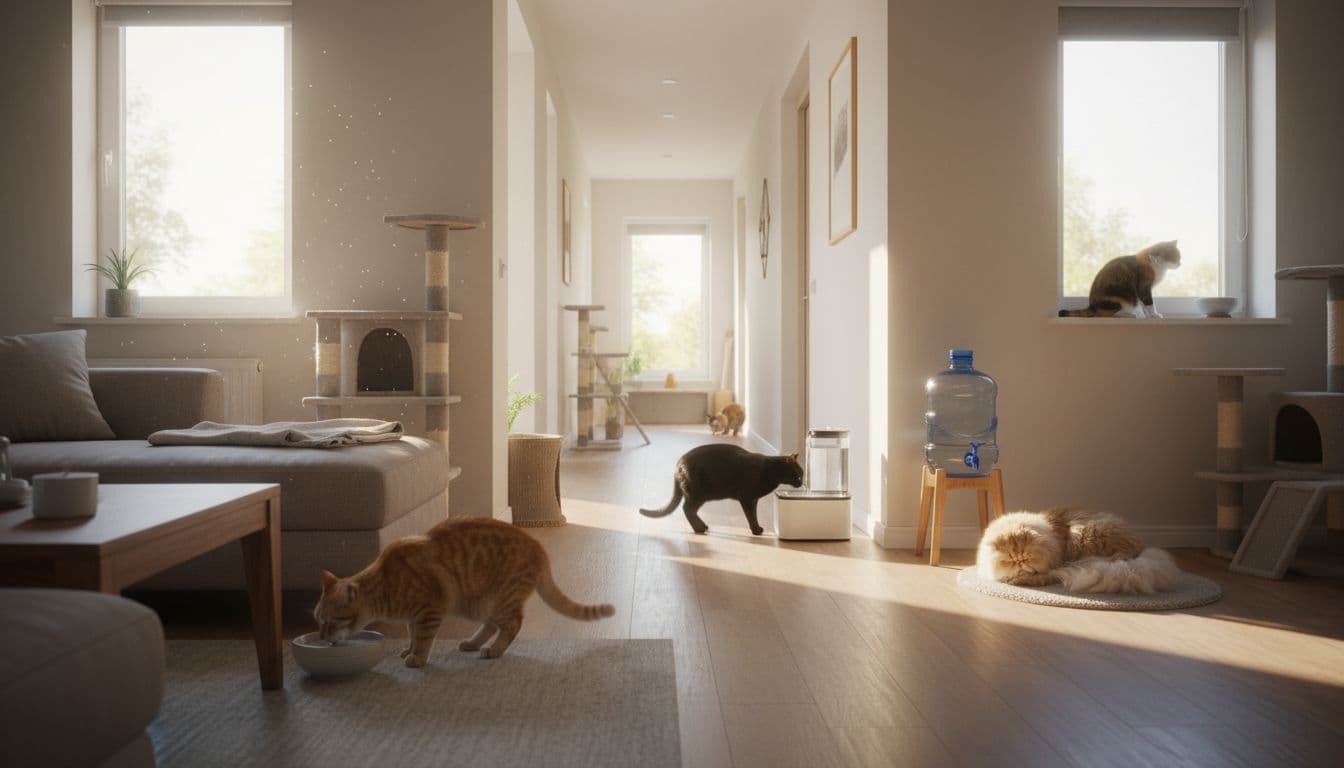
Keeping cats hydrated in a multi-cat home is partly about water and partly about traffic flow. Cats do best when drinking feels easy and low-stress. A simple rule helps: set up one more water station than the number of cats. Five cats need at least six distinct places to drink.
That word “distinct” matters. Three bowls lined up in one kitchen corner still feel like one social zone. A stronger setup spreads choices through the home, with escape routes and quiet spaces.
Multiple water stations with fresh, moving water can increase your cat’s intake by 50% or more.
Where to place water bowls so cats actually use them
Placement often matters more than the bowl itself. Put water in quiet areas, away from litter boxes and not jammed beside food. Many cats like a bit of distance between eating and drinking. Spread stations across rooms and floors so one nervous cat does not have to cross a busy hallway for every sip. Consider adding water sources near a shy kitty’s favorite napping place or a popular sun bathing spot.
Also watch the room itself. A dead-end corner can feel risky if another cat can block the exit. Open spots with more than one path work better for shy cats.
Which water bowls and fountains tend to work best
Material makes a difference. Stainless steel, ceramic, and glass are easy to clean and usually hold fewer odors and bacteria than plastic. Wide, shallow bowls let your cats drink comfortably without their whiskers touching the sides. This reduces whisker stress and encourages more frequent drinking. In large households, bigger bowls and large-capacity fountains reduce the chance of an empty station halfway through the day.
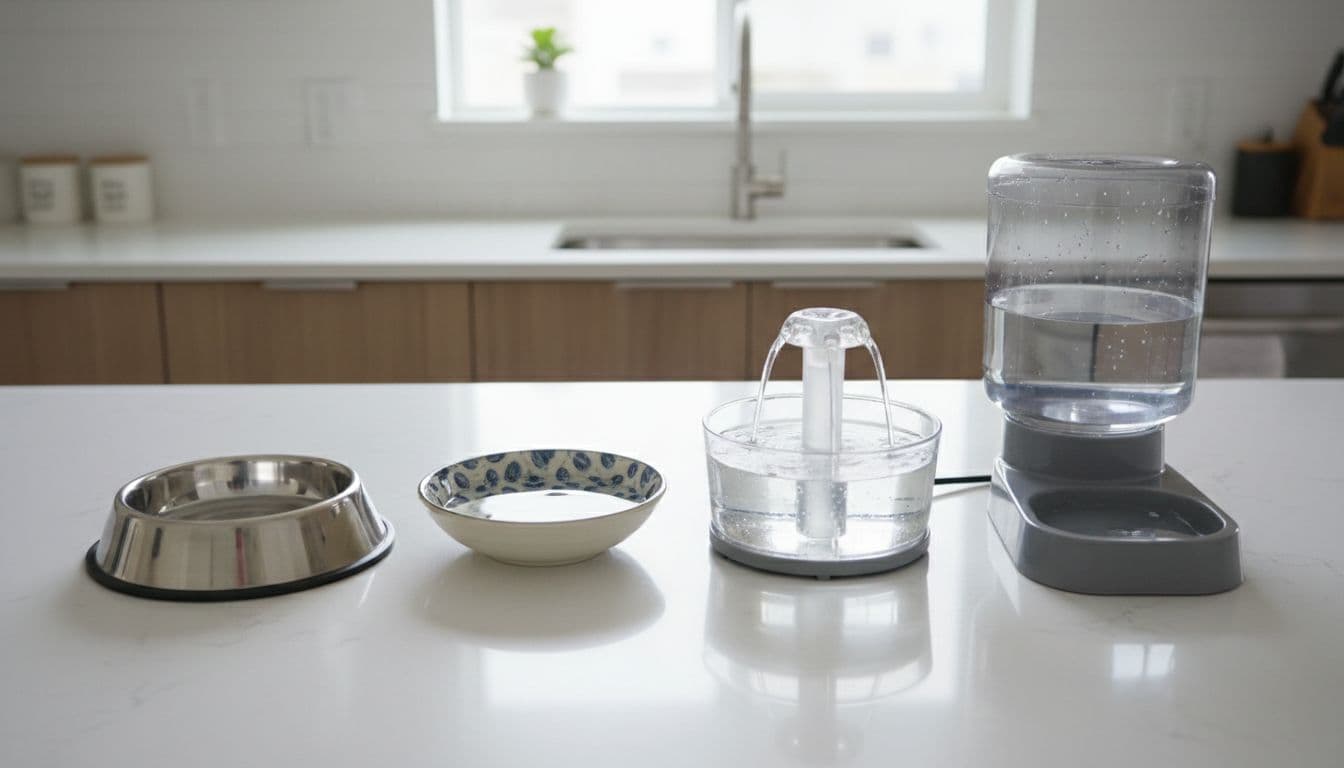
Fountains help many cats because moving water smells fresher and often tastes better. Still, the best fountain is the one you will clean often. Quiet pumps, simple parts, and visible water levels matter more than fancy extras.
How to stop one cat from hogging the water
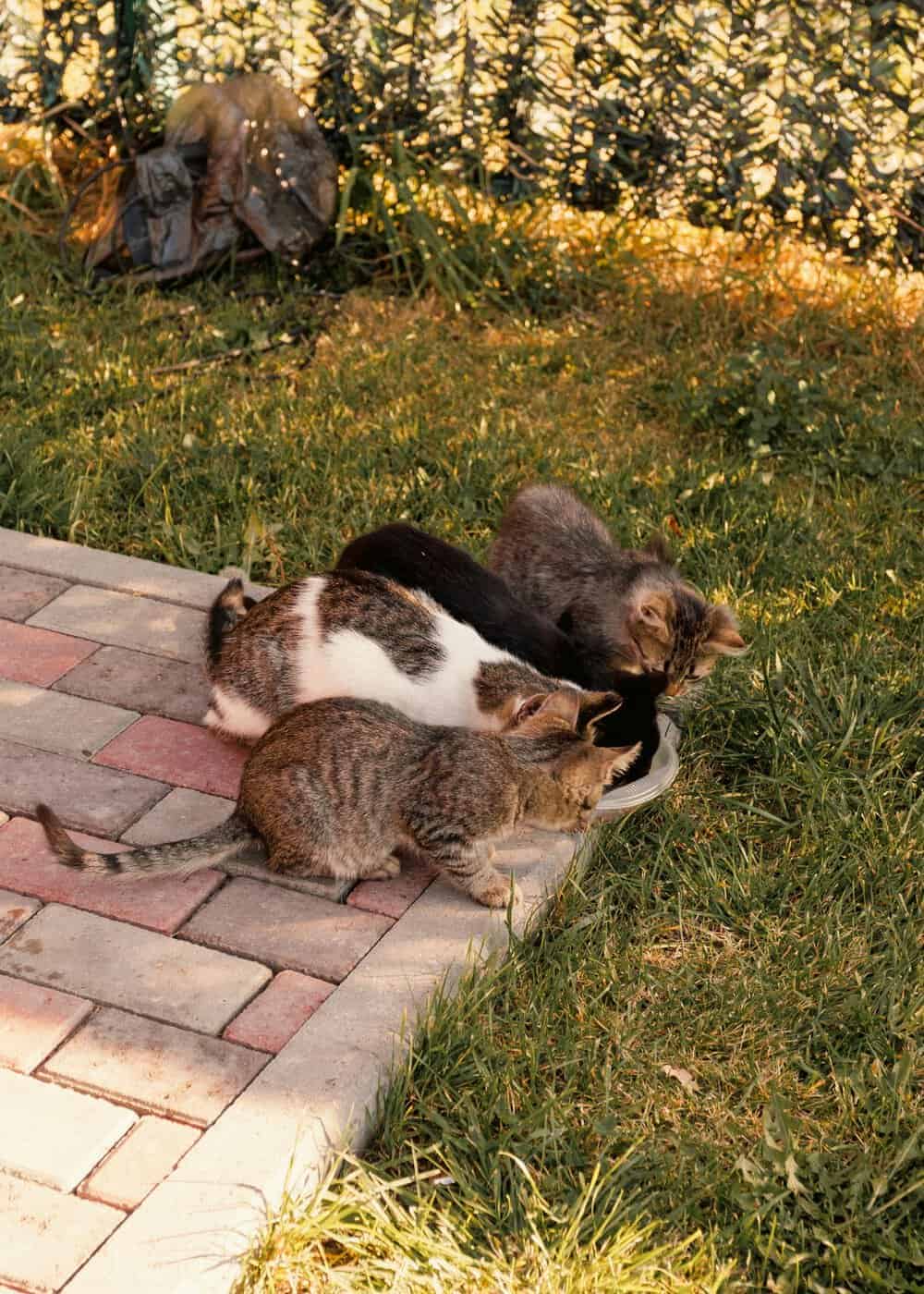
Resource guarding is common, even in homes that seem peaceful. Use several stations in different traffic zones so one bold cat cannot control them all. Wider bowls or fountains with multiple streams also help because two cats can drink near each other without bumping whiskers or shoulders.
If one cat blocks a fountain, add a plain bowl elsewhere. Some cats prefer still water anyway, and choice lowers tension.
Easy ways to help picky cats drink more
Some cats need a little encouragement, but the best tricks still feel natural. You want habits you can keep up on ordinary weekdays, not only on the days you have extra patience.
Make food do part of the work
Wet food is the easiest hydration booster because it adds fluid without asking a cat to change behavior. If your cats eat mostly dry food, try mixing in some canned food or adding a spoonful of warm water to meals. Go slowly so sensitive stomachs have time to adjust.
Broth-topped meals can help too. Use plain, pet-safe broth with no onion, garlic, or heavy salt. In many homes, a little extra moisture in meals does more than swapping bowls again and again.
Supplements like Hydra-Care, Kitty-Rade or Petalyte can help add hydration support for a kibble fed cat struggling to get in enough liquid or a cat that needs flavor enhancement to drink.
Use small flavor and texture tricks
A splash of plain tuna water, used now and then, can make water more inviting. Some cats like a single ice cube, especially in warm weather. Others prefer water that is slightly warmed because cold water has less smell.
Recent advice in 2026 still points to the same simple methods first. Wet food, extra stations, and mild flavor boosts work better than gimmicks. If you want more ideas, these vet-approved tips to help cats drink more water are a useful starting point.
Make drinking feel calm and rewarding
Fresh water matters. So does privacy. Refill often, clean bowls well, and pay attention to each cat’s taste in water sources. One may love a fountain. Another may only use a glass bowl on a windowsill. Leave those preferences alone once you spot them.
Cats also drink more when the area feels safe. Keep stations away from loud machines, rough play zones, and narrow choke points where ambushes could happen.
Simple daily habits that keep water fresh and inviting to keep cats hydrated
Hydration care works best as a small routine. Change water at least once a day, and sooner if you see crumbs, hair, or dust. Wash bowls daily with mild soap and hot water. Fountains need fresh water every day, plus regular scrubbing of the basin, pump, and filter parts on a set schedule.
Stale water turns cats away fast. Slimy film does too. If a bowl feels slick, your cats noticed before you did.
How often to change water and clean bowls
Pick times you can repeat, such as morning refill and evening check. In large households, missed refills affect more than one cat, so routine beats memory. If you use fountains, follow the filter change schedule and inspect the pump often because trapped fur can slow the flow.
How to notice which cat is drinking less
Watch patterns, not only bowls. Check litter box output, notice who visits which station, and pay attention to the quiet cat who hangs back. Some newer fountains track water levels or use, but your own notes may tell you more. A cat that starts hiding, eating less, or leaving tiny urine clumps needs a closer look.
Common hydration myths that can lead cat owners astray
Good intentions can still miss the mark, especially in a full house where one simple fix sounds tempting.
Why one bowl for the whole house is rarely enough
One large bowl may look generous, yet access is not the same as comfort. Competition, stress, and poor placement keep some cats away. In multi-cat homes, enough water means enough separate chances to drink without being watched, blocked, or crowded.
Why milk is not a good hydration fix
Most adult cats do not handle milk well. It can upset the stomach and lead to loose stool, which is the last thing a dehydrated cat needs. Plain fresh water is the best base, with moisture from wet food or pet-safe broth when needed.
Why fountains help, but they are not a magic fix
Fountains can encourage drinking, but they do not solve every problem. A single fountain in a loud kitchen will not help the timid cat upstairs. Dirty filters and noisy pumps can also drive cats away.
Many homes do best with both, fountains for the cats who love moving water and a few quiet bowls for the cats who don’t.
Final thoughts
Keeping cats hydrated in a multi-cat home gets easier when water is calm, clean, and easy to reach in more than one place. In a multi-cat home, the goal is not only giving water, it is giving every cat a fair chance to drink. An abundance of drinking stations, a higher moisture diet, and your careful monitoring to make sure every cat is consuming sufficient liquid will assure you have a well-hydrated multiple cat household.
The bold, social cat may do fine on almost any setup. The shy, picky, or lower-ranking cat needs more protection from crowding and stress. If you think a cat may be dehydrated, or you notice changes in urination, call your vet without waiting.