Spring Safety for Cats in Busy Multi-Cat Homes
Contents
Summary
Spring can be a wonderful time of year, but it’s important to take precautions to keep your cat safe. Tips for a safe and happy spring season.
Spring feels harmless until a window cracks open, a bag of mulch lands by the door, and one cat bolts while another hides under the couch. In a home with several cats, small seasonal changes can turn messy fast.
The good news is that Spring Safety for Cats is mostly about prevention. A few smart habits, done early, can help you avoid escapes, poison risks, parasite trouble, and stress between housemates.
This post may contain affiliate links. Life and Cats is a Chewy affiliate and a member of the Amazon Associates program and as such we earn a small commission when you shop through our our links and banners. It doesn’t change the amount you pay. You can read our full disclosure policy here.
Make Your Home Safer Before You Open the Windows
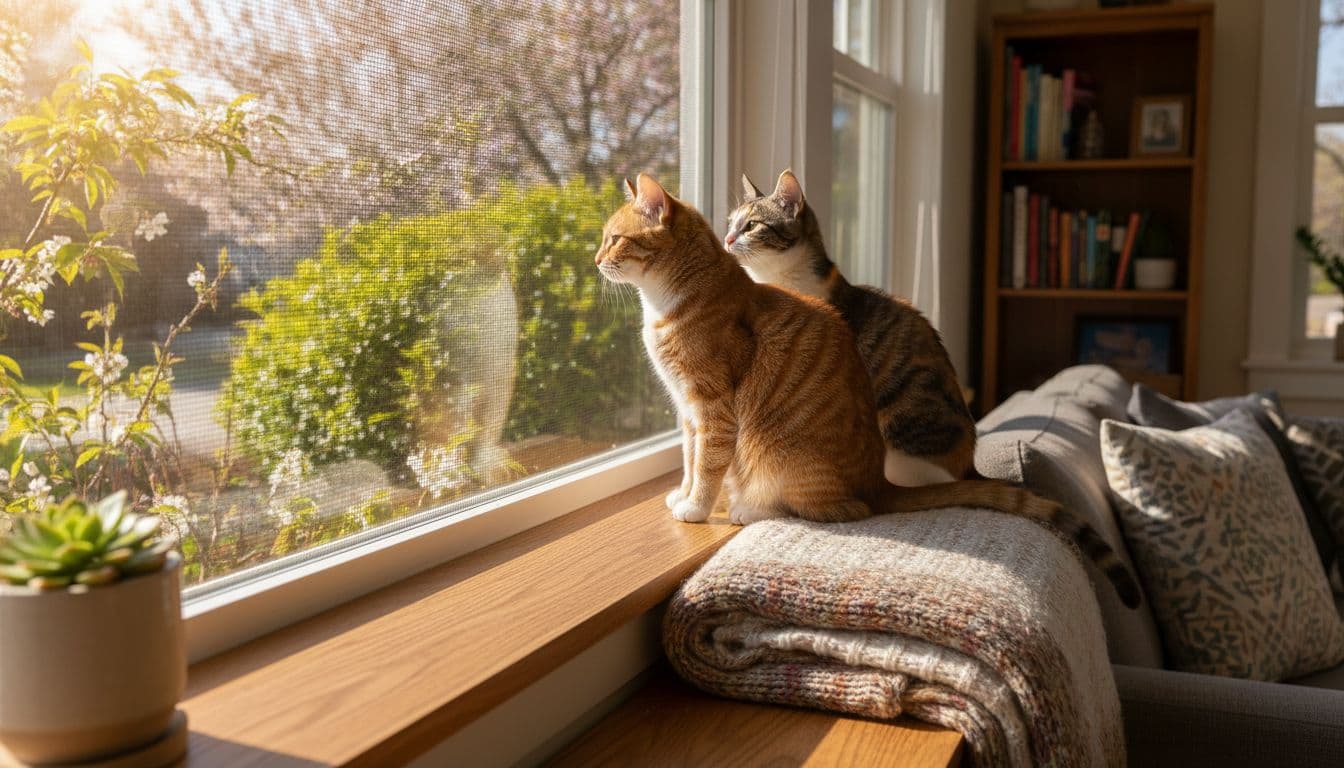
Fresh air is great and windows provide needed enrichment as the spring flowers bloom, insects buzz and birds and wildlife appear after winter. But many cats see a springtime open window as an invitation for a jaunt outside in the yard or beyond. In a multi-cat home, one cat may lounge by the breeze while another tests the screen. That mix can cause trouble quickly.
Secure screens, window locks, and balcony access are vital for spring safety for cats
Before you open anything, press on every screen and check every latch. A loose corner is enough for a determined cat like our Rocky. Screens are not barriers if the frame is weak, the mesh is old, or the window opens wider than expected.
Window locks help, especially in homes where different people open windows throughout the day. Gates made for baby safety can keep Kitty safe too.
If you have balconies, upper ledges, or railings, block access or allow it only with close supervision. Cats can squeeze through gaps that look too small, and a startled cat can lose footing in seconds.
Related Post: Cats Don’t Always Land on their Paws
Keep cleaning supplies and repair tools out of reach
Spring cleaning and home projects present new threats to the seasonal safety of your kitty. Cleaners, bleach, paint, solvents, glue, and floor treatments can all irritate a cat’s skin, lungs, or stomach. Nails, staples, razor blades, string, and zip ties are also a problem because cats bat at them, chew them, or swallow them.
When you’re deep cleaning or fixing a room, place cats in another well-ventilated, calm, secure area first. That matters even more if you use strong products or power tools. Fumes travel, cords dangle, and a scared cat can sprint into the wrong place.
Consider choosing safer, non-toxic, products when doing your spring cleaning. Ammonia, bleach, lye, and essential oils can cause harm to Kitty ranging from skin and eye irritations, to coughing, wheezing, vomiting and diarrhea, and long-term organ damage.
Related Post: Safer Cleaning Products
Set up safe indoor spaces when the house gets busy
Large cat families do better when each cat has a place to retreat. A quiet bedroom, a spare bathroom, or a gated office can work well during chores, guest visits, or repair work. Add water, a litter box, and a bed or hiding spot so the room feels safe, not like a timeout.
Also spread resources around the house. More than one food station and more than one resting area reduce crowding. When cats don’t feel trapped or pushed aside, they make fewer bad decisions.
Protect Cats From the Outdoor Dangers That Come With Spring
Spring yards look inviting, but they hide some of the season’s biggest risks. Plants bloom, wildlife gets active, and doors open more often. Those of us with leash trained cats head back outside after the cold and snow of winter. Remember outdoor safety matters even for cats that only visit catios or enclosed spaces or take leashed walks.
Yard and garden safety
Lilies are the plant to fear most. True lilies and daylilies can cause life-threatening kidney injury in cats, and even brushing against pollen or vase water can be dangerous. Purdue University’s warning on lily exposure explains why any contact should be treated as urgent.
If you think a cat touched, chewed, or groomed off lily pollen, call a veterinarian right away. Don’t wait for symptoms.
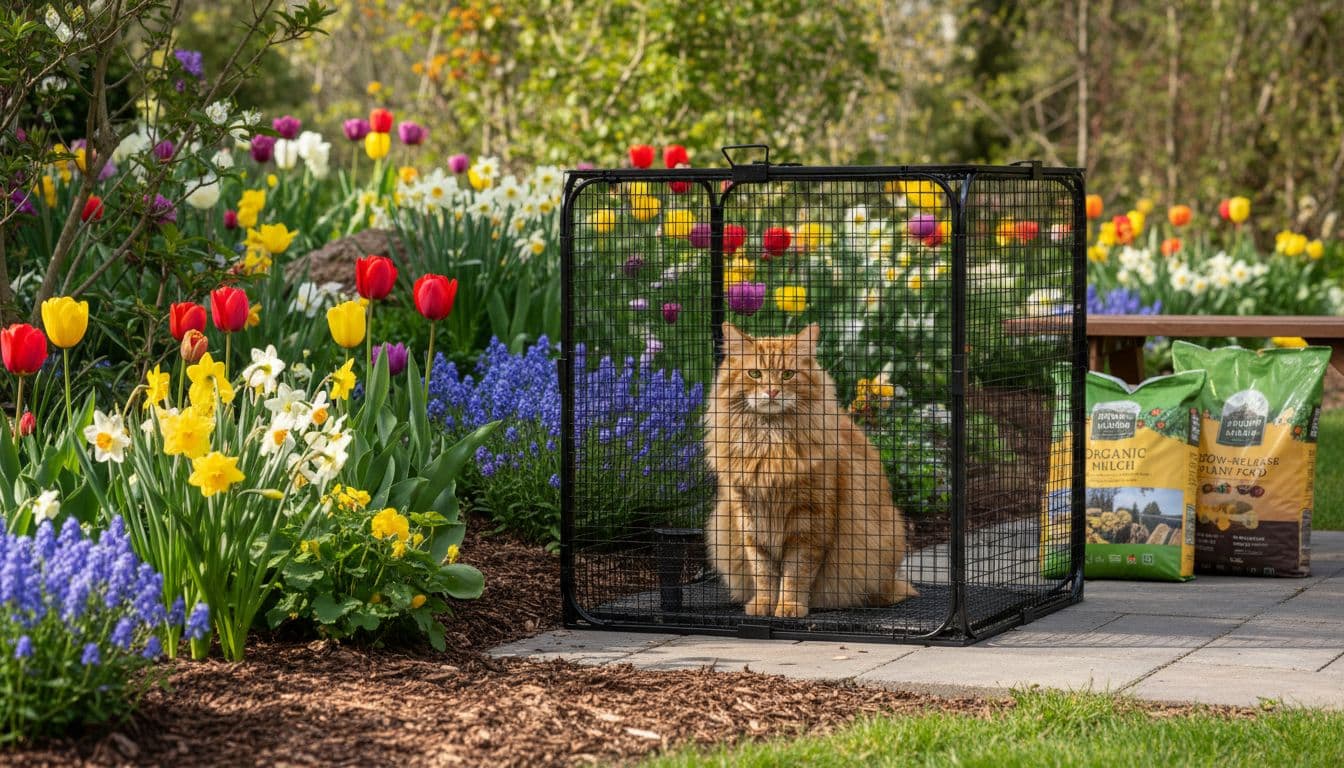
Tulips, daffodils, hyacinths, and azaleas can also make cats sick. Bulbs are often the most concentrated part, so store them where cats can’t reach them. The same goes for mulch, especially cocoa mulch, fertilizer, herbicides, insecticides, slug bait, and rodent poison. Keep treated areas off-limits until products are fully dry and safe if you must use such products.
Encounters with wildlife
Spring is mating season for many wild animals, and it’s also the time when they protect nests or babies. That means more movement and more aggression near homes. Birds, raccoons, skunks, snakes, foxes, coyotes, owls, hawks, and even some toads can injure a cat.
A screened patio or catio is safer than free roaming, but you still need to check the area. Look under decks, behind planters, and near sheds before letting cats out. Catwatch’s overview of wildlife threats is a good reminder that fencing alone doesn’t remove every risk. Make sure Kitty’s vaccinations are up-to-date before allowing any access to the outside, however controlled that access is.
Prevent escapes and reduce street risks
Spring also means open doors, deliveries, yard crews, and guests. Indoor cats slip out most often when households get busy, not because they suddenly want a new life outside. In homes with several cats, counting heads becomes harder.
Update ID tags now, and make sure microchip contact details are current. Use a “door pause” routine with family members, especially during parties or weekend projects. It helps to confine the boldest escape artists before anyone carries in groceries.
Related Post: Contain Your Door Dashers
Rising temperatures
Early heat catches people off guard because the air doesn’t feel like summer yet. A sunny room can heat up fast before the AC is running, and crowded cat groups may share the warmest windows.
Keep water in several rooms, pull shades in hot afternoon sun, and make sure cats can reach cooler floors or shaded beds.
Watch for these signs to prevent heatstroke or dehydration:
- Agitation and restlessness
- Bright red tongue
- Red or pale gums
- Increased heart rate
- Difficulty breathing
- Vomiting
- Diarrhea (with or without blood)
- Weakness
- Incoordination or stumbling
- Sudden collapse
- Seizures
If you suspect your cat is suffering from heat stroke, call your veterinarian right away.
Never leave cats unsecured in cars or trucks
A parked car can become dangerous in minutes, even on a mild spring day. Cracked windows don’t make it safe.
An unsecured cat is also at risk during motion. Cats can climb under pedals, leap onto the dashboard, or get thrown in a sudden stop. Use a sturdy carrier and secure it with a seat belt whenever you travel.
Stay Ahead of Fleas, Ticks, Pollen, and Other Spring Health Triggers
Warmer weather wakes up more than flowers. Fleas, ticks, and mosquitoes return, and pollen settles on fur, paws, and bedding. Even indoor-only cats aren’t fully protected if pests hitch a ride inside on shoes, clothes, or other pets.
Start or refresh parasite prevention early
Don’t wait until you see scratching. Flea and tick control works best before pests settle in. Cats with yard time or access to a catio need protection, but indoor cats may need it too, especially in warm regions or homes with dogs, screened porches, or frequent visitors.
Mosquitoes matter because they can spread heartworms, and ticks can bring serious disease. Ask your vet which product fits each cat’s age, weight, and health history. Never use a dog product on a cat. Some ingredients made for dogs can poison cats.
Look for allergy signs and skin irritation
Spring pollen, grass, insect bites, and contact with plants can trigger itchy skin, ear irritation, watery eyes, sneezing, or swollen paws. Some cats also cough or breathe harder when something in the air bothers them.
After patio time or supervised outdoor visits, check paws, ears, belly fur, and whiskers. Remove debris gently with a damp cloth. If you see facial swelling, wheezing, repeated vomiting, or trouble breathing, get veterinary help fast.
Brush and clean cats more often during shedding season
Spring shedding creates its own problems. Loose fur traps pollen, dust, and tiny bits of yard debris, then those particles spread across beds, cat trees, and shared sleeping spots.
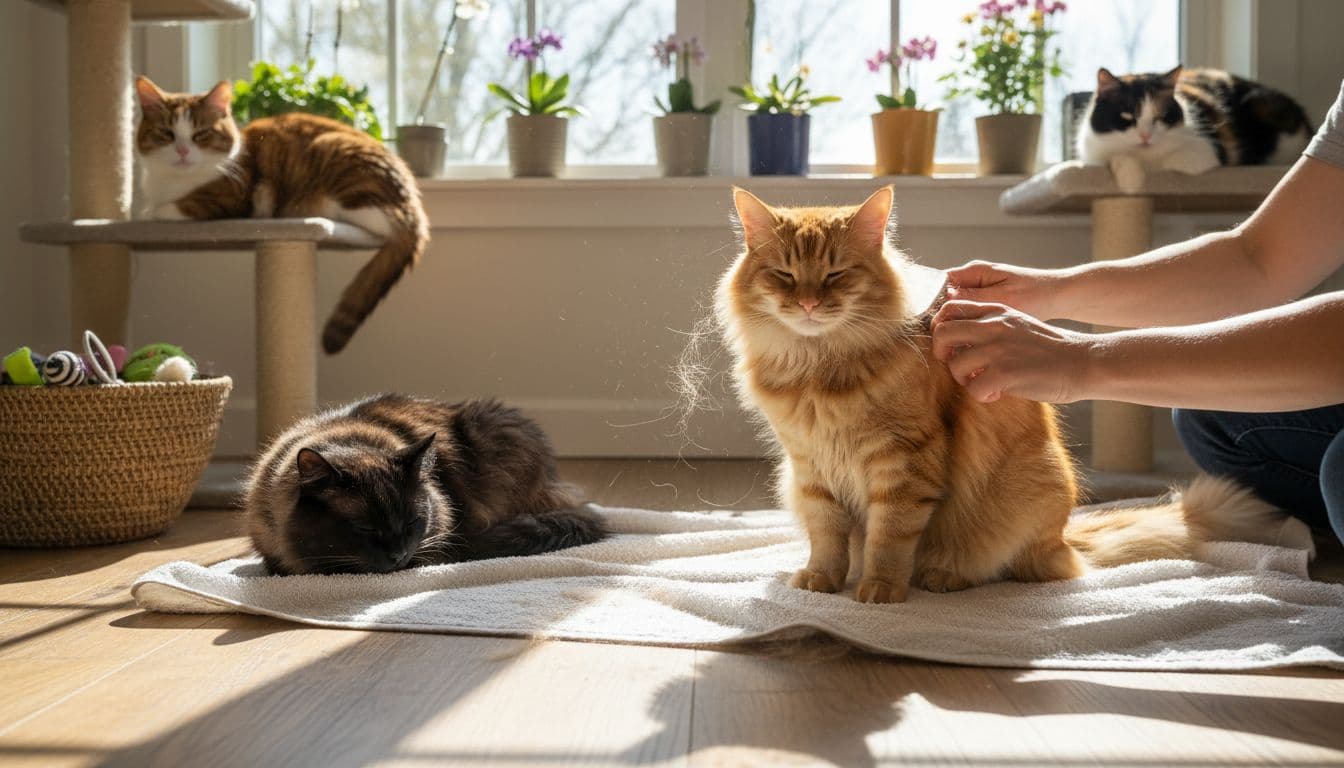
Regular brushing cuts down on hairballs and helps you spot scabs, fleas, or skin changes early. A pet-safe wipe of the paws and coat after outdoor time can help. Grooming one cat at a time also gives you a chance to notice who is losing weight, scratching more, or acting off.
Keep Mealtimes, Litter Boxes, and Routines Calm in Multi-Cat Homes
Spring doesn’t only change the weather. It changes the rhythm of the house. Windows open, people come and go, and routines get sloppy. Cats notice that right away.
Use enough litter boxes and place them in quiet spots
The simple rule is one box per cat, plus one extra. In a four-cat home, that means five boxes. Spread them out so one confident cat can’t guard access to all of them.
Skip noisy zones. Consider how the spring might change a spot that was previously ideal. A litter box beside an open window, a slamming back door, or an air conditioner that clicks on and off can make a nervous cat avoid it. Choose calm, easy-to-reach spots with clear entry and exit paths.
Prevent food stealing and treat mix-ups
Spring gatherings often bring table scraps, candy, rich leftovers, and distracted guests. That’s bad enough for one cat. In a multi-cat home, food stealing makes it worse because you may not know who ate what.
Put unsafe foods away right after meals, including fatty meat, bones, onions, garlic, chocolate, and anything sweetened with xylitol.
Increase enrichment opportunities as the daylight hours increase.
As the daylight hours increase and the nice weather arrives, Kitty might have more energy. My Ryder and Norman have been indulging in late night zoomies the last few nights.
Provide them with opportunities for mental and physical stimulation.
- Interactive play: Engage in regular play sessions with toys like wand toys, laser pointers, and clicker training.
- Window watching: Ensure your cat has access to windows where they can observe the outside world. Provide a comfortable perch for them to enjoy the view.
- Introduce new toys: Rotate your cat’s toys to keep things interesting and prevent boredom.
- Take Kitty out on leash or stroller walks: Let Kitty enjoy the fresh air in her fur.
Conclusion
Spring safety for cats comes down to small daily habits. Secure the windows, remove toxic plants, stay ahead of parasites, and give each cat enough space to eat, rest, and use the litter box without tension.
In a busy multi-cat home, the safest season is the one you prepare for. A quick home check now, plus close attention to any odd symptom, can keep every cat more comfortable all spring long.