Kitten Teething: Timeline, Signs, Safe Relief, and When to Call the Vet
Have you ever raised a very young kitten? They’re adorable and sweet right? Then suddenly your kitten turns into a tiny, determined chewing machine and your fingers and toes aren’t safe anymore. Your baby kitty has started teething. Kitten teething is a normal stage, but it can look dramatic, drool, nibbled fingers, cranky moods, and a sudden obsession with cords.
The good news is that most teething discomfort is mild and temporary. The tricky part is knowing what’s normal, what helps, and what’s unsafe.
This guide covers a simple timeline of kitten teething age, common signs (and lookalikes), easy ways to soothe sore gums, what not to give, and clear red flags that should prompt a vet call.
This post may contain affiliate links. Life and Cats is a Chewy affiliate and a member of the Amazon Associates program and as such we earn a small commission when you shop through our our links and banners. It doesn’t change the amount you pay. You can read our full disclosure policy here.
Contents
When kittens get teeth: a simple timeline from baby teeth to adult teeth
Much like human infants, kittens experience two teething phases. They grow 26 baby teeth (also called deciduous teeth). After that, those baby teeth fall out and 30 adult teeth come in.
Most of the “why are you chewing everything?” behavior happens during the switch to adult teeth. It also explains why teething often comes in waves, your kitten feels fine for a week, then acts sore again.
Here’s the big picture timeline, with typical age ranges (individual kittens can vary a bit).
| Stage | Typical age | What you might notice |
|---|---|---|
| Born | 0 weeks | No teeth |
| Baby incisors start | 2 to 4 weeks | Mild fussiness, often unnoticed |
| Baby canines and premolars follow | 3 to 6 weeks | More mouthing, light chewing |
| Full baby set (26 teeth) | 6 to 8 weeks | Most kittens eat well |
| Adult teeth start replacing baby teeth | 11 to 14 weeks | Chewing ramps up, gums may look pinker |
| Most adult teeth in (30 teeth) | 6 to 7 months (sometimes up to 9) | Teething fades, chewing calms down |
You might never find a single baby tooth. Kittens often swallow baby teeth, and that’s usually fine. Sometimes you’ll spot a tiny tooth on a blanket or near the food bowl, like a little grain of rice with a point.
Baby teeth erupting: what to expect in the first 2 months
Baby teeth usually arrive quietly. The order is simple: incisors (the tiny front teeth) tend to show first, then the longer canines, then premolars along the sides.
At this stage, many owners barely notice. Your kitten may mouth toys more or chew softly during play, but they often keep eating normally. If your kitten came home after 8 to 10 weeks, their baby teeth may already be in, which is why the first teething phase can feel like it never happened.
Still, it’s a good time to start gentle handling. A quick peek at the mouth once in a while (only if your kitten is relaxed) makes later tooth checks and dental care much easier.
Adult teeth coming in: why 3 to 7 months is the chewy, cranky phase
The second kitten teething phase is the one most people remember. Adult teeth start pushing out baby teeth around 11 to 14 weeks, and many kittens hit peak chewing between about 4 and 6 months.
Discomfort often comes and goes. One week your kitten chomps everything, the next week they act normal. That’s because different teeth erupt at different times, and the gum pressure shifts.
Molars (the back teeth) come in later, and some kittens get extra mouthy again when those arrive. During this window, it helps to think of your kitten’s mouth like a construction zone, noisy, messy, and temporarily uncomfortable, but moving toward a finished result.
Related Post: Teach Your Kitten Not to Bite
Signs your kitten is teething (and how to tell it from something else)
Kitten teething symptoms can be subtle or obvious. In many kittens, you’ll see a mix of chewing, drool, and a “don’t touch my face right now” attitude.
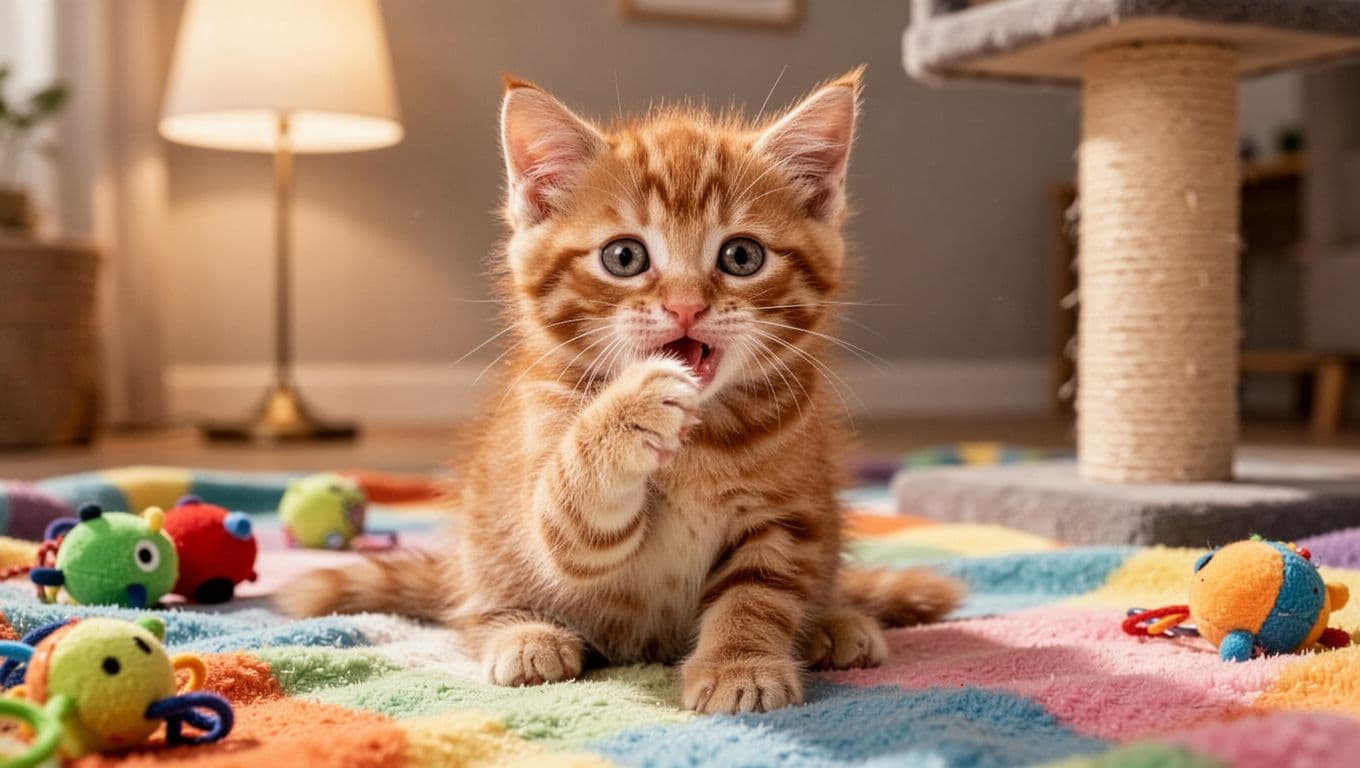 An example of a kitten showing mild mouth-pawing during teething, created with AI.
Common, usually normal signs include:
- More chewing than usual (toys, blankets, cardboard corners)
- Mild drooling (often clear and thin)
- Pawing at the mouth, rubbing the face on furniture
- Mild gum redness, especially near a tooth coming in
- Finding a tiny baby tooth (or noticing a small gap)
- Slight eating changes (slower eating, dropping kibble)
- Mild, short-lived “teething breath”
A few things can look like teething but are not. Hunger can make kittens cranky. Stress from a new home can cause extra mouthing and meowing. Tummy upset can reduce appetite. Mouth injuries can also trigger drool and pawing, especially if something sharp was chewed.
If you’re seeing mild chewing and mild moodiness, and your kitten otherwise acts normal, teething is a reasonable guess. If your kitten seems sick, treat it as something else until a vet says it isn’t.
Normal teething behaviors you can manage at home
Some kittens get clingy during teething. Others want space. Both can be normal.
You might notice softer chewing, like gnawing on a fleece blanket rather than shredding it. Eating can change too. Kittens may pause mid-meal, switch sides, or prefer wet food for a few days.
Hands often become the “best chew toy,” especially during play. That doesn’t mean your kitten is aggressive. They’re learning, and their gums feel weird.
A gentle weekly mouth check can help you spot changes early. Pick a calm moment. Lift the lip for one second, then reward and stop. If your kitten resists, don’t push it. Forced mouth handling creates stress fast.
Clues it may not be kitten teething
Teething should not make your kitten look truly unwell. Call your vet if you notice signs like these, especially if they worsen over a day or two:
- Strong or worsening bad breath
- Thick, ropey drool (or drool with blood)
- Swollen gums, pus, or sores
- Heavy bleeding from the mouth
- One-sided facial swelling
- Repeated yowling that sounds like pain
- Hiding, feverish behavior, or very low energy
Those signs can point to infection, an injury, or something stuck in the mouth.
How to soothe a teething kitten safely (and what to avoid)
Safe relief is mostly about two things: making eating easier and giving your kitten a better option to chew than your stuff (or your fingers.)
Safe chew toys for kitten teething
A good teething toy is soft enough to compress, big enough not to swallow, and tough enough not to shred into chunks. Many kittens like chew toys with a rubbery textures, fabric “kicker” toys, and small plush mice.
Tempting though it may be to buy a hard nylon toy, you risk damaging Kitty’s shiny new teeth. Pick chew toys that have a little bend or give to them or that you can cause an indentation with your fingernail.
Throw away any toy that Kitty has chewed enough that it is breaking apart or missing pieces. Eating pieces of her toys can cause Kitty bigger problems than teething.
A chilled chewing item reduces gum inflammation for short bursts, like a cold pack on a sore wrist. You can freeze toys and treats to help alleviate inflammation and discomfort, similar to how people freeze teething toys for babies.
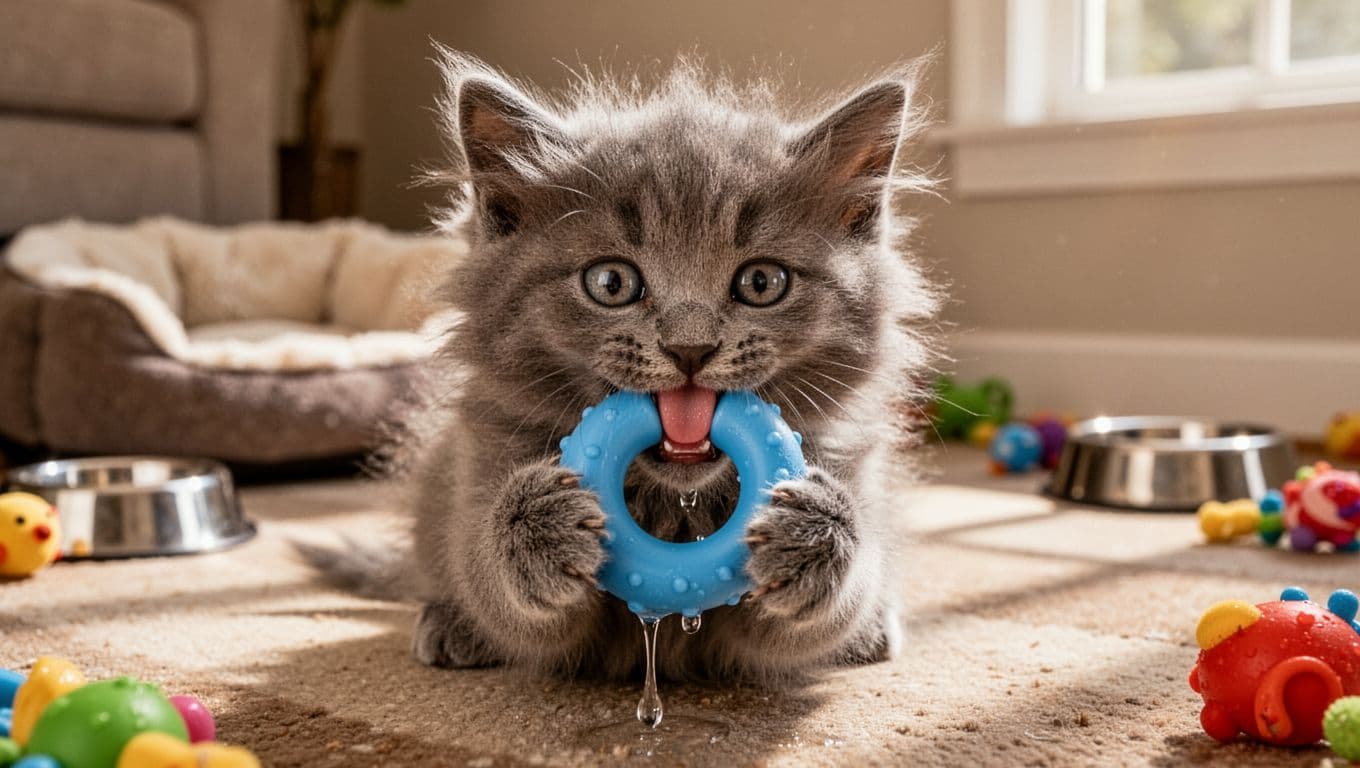 A kitten using an appropriate chew toy to ease sore gums, created with AI.
Eating can be challenging for some kittens during teething. Their gums are sore and loose teeth can interfere with chewing. Offer wet food, or soften up Baby’s kibble with warm water for a few minutes. Keep fresh water available, since drooly kittens sometimes drink less.
Just as important, skip risky “quick fixes.” Never give human pain meds (even tiny doses). Don’t use human teething gels, and avoid essential oils near the mouth. Cats can be very sensitive to many ingredients.
Quick comfort ideas that usually work in minutes
Small tweaks can calm a teething flare-up fast.
First, try a chilled damp washcloth. Wet a clean cloth, twist it, fold it, and chill it in the freezer for a short time (so it’s cold, not rock-solid). Offer it for supervised chewing, then put it away.
Next, rotate chew toys. Kittens get bored, and a “new” toy often pulls their focus away from cords or hands.
If eating seems slower, offer smaller meals more often for a few days. That keeps calories up without forcing long, sore chewing sessions.
Keep water extra appealing. Refresh the bowl, or add a second bowl in a quiet spot. Some kittens drink more when the bowl is away from the food dish.
Finally, use wand toys to redirect biting away from hands. Drag the toy along the floor, let your kitten “catch” it, then pause. That “hunt, catch, rest” rhythm helps release energy without mouth wrestling.
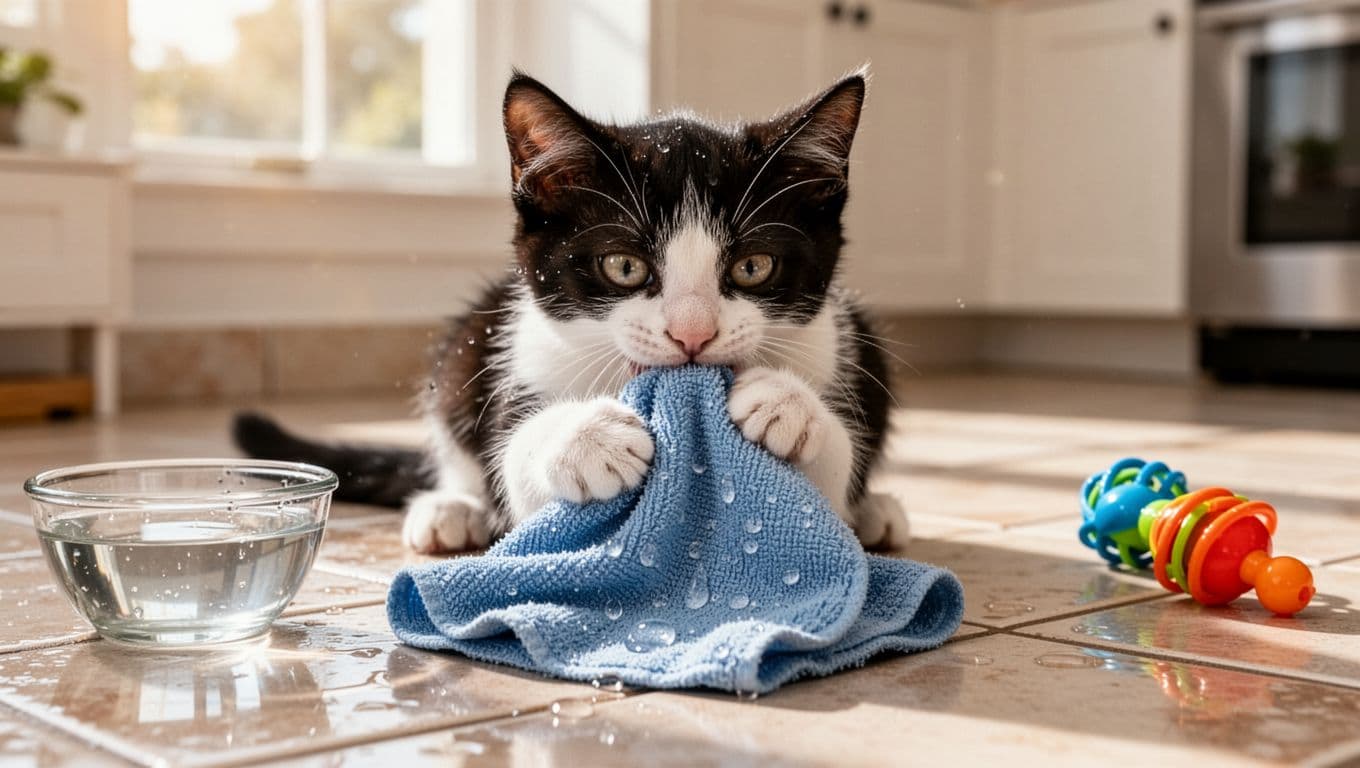 A supervised cold washcloth chew can soothe gums briefly, created with AI.
Common hazards during kitten teething (cords, strings, and too hard chews)
Teething kittens don’t judge danger well. If it fits in the mouth, it’s “worth a try.”
Cords are the big one. I have a few cats that are inveterate cord chewers. There’s something about the texture that they just love. Phone chargers, laptop cables, blind cords, and headphone wires can cause burns, choking, or intestinal blockage. Tuck cords away, use covers, and unplug when you can.
String is another frequent problem. Yarn, dental floss, ribbon, hair ties, and wand toys left out can be swallowed. String can get stuck and cause serious harm, even if your kitten seems fine at first.
As a quick safety sweep, scan the floor at kitten level. Look for dropped earbuds, craft bits, and small toy parts that could disappear with one gulp.
Some kittens also like cat grass to nibble, which can satisfy the urge to chew without risking cords, but don’t let it grow too long.
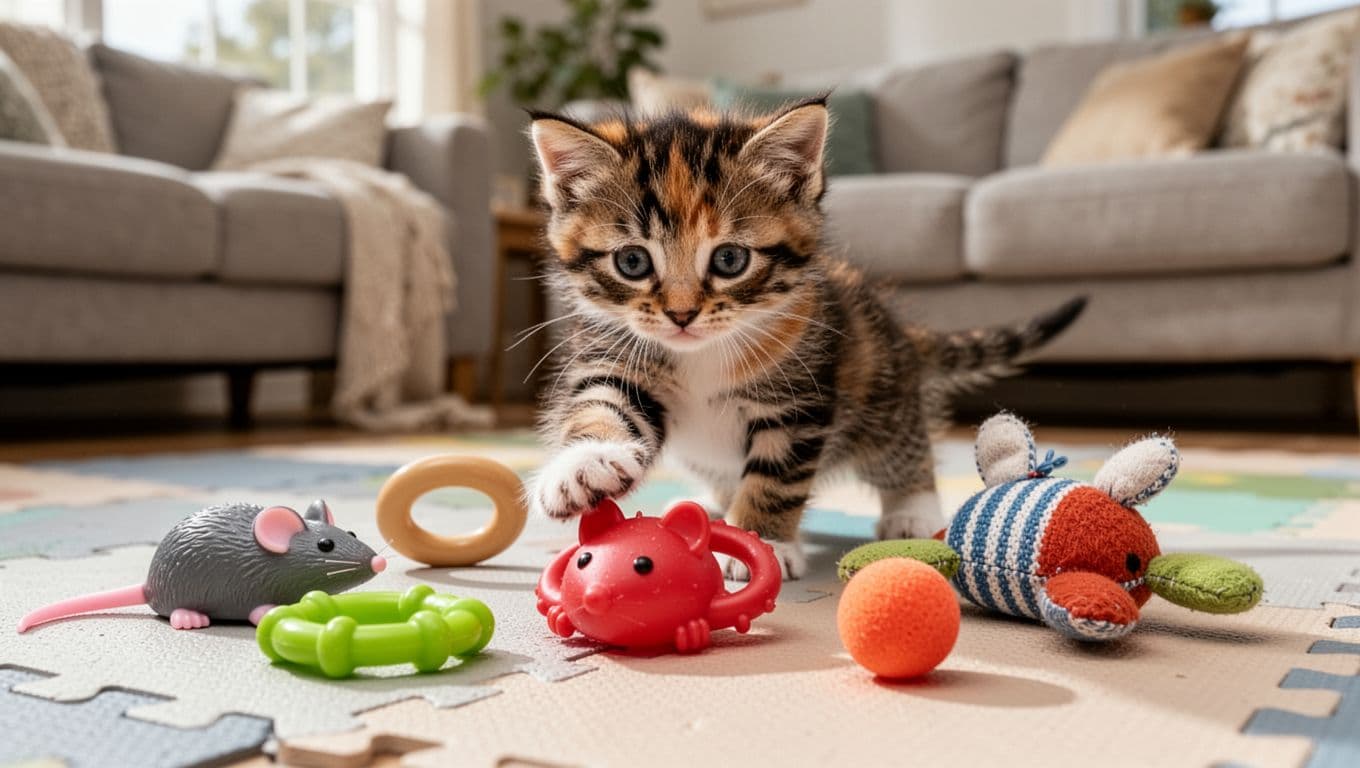 Examples of soft, kitten-appropriate chew toys that can redirect biting, created with AI.
Supervision matters, even with “safe” toys. When in doubt, choose fewer toys and better ones, and swap them out to keep interest high.
Now that your kitten has her adult teeth, keep them healthy so they last her through life. Click here for a guide to dental care.
When to call the vet about kitten teething
Most teething can be managed at home. Still, kittens are small, and mouth problems can turn into eating problems quickly. Call your vet if your kitten won’t eat for 24 hours, seems to lose weight, or acts painful enough that they can’t settle.
Other reasons to call include heavy drooling, ongoing bleeding, teeth grinding, or bad breath that doesn’t fade. Those signs can point to infection, stomatitis, a mouth injury, or something stuck under the tongue.
Also ask about retained baby teeth. Sometimes a baby tooth doesn’t fall out, and the adult tooth comes in beside it. That can trap food and irritate gums. If baby teeth are still clearly present past about 7 months, a vet should take a look.
If you’re unsure what you’re seeing, snap a quick photo (if your kitten allows it) and note which side seems sore. A simple detail like “chews only on the left” can help your vet.
Red flags that need help sooner rather than later
Contact a vet promptly if you notice:
- Trouble breathing or open-mouth breathing
- Sudden swelling of the face or jaw
- Something stuck in the mouth that you can’t safely remove
- Thick drool, pus, or a strong infected smell
- Your kitten cries out when trying to eat
- Bleeding that doesn’t stop within a short time
When it comes to mouths, it’s better to call early than wait. Pain can hide behind “sleeping more.”
Conclusion
Kitten teething is usually normal, even when the chewing looks intense. It often peaks between 3 and 7 months, then improves once adult teeth settle in. Offer soft food when needed, provide safe chew options, and kitten-proof anything stringy or electric.
If something feels off, trust that instinct and call your vet. If you haven’t booked a routine kitten checkup yet, schedule one, and ask when to start simple dental habits once the adult teeth are in.