

Stop Kitten Biting: Train Your Kitty to be Gentle
Last Updated on February 25, 2026 by Holly Anne Dustin
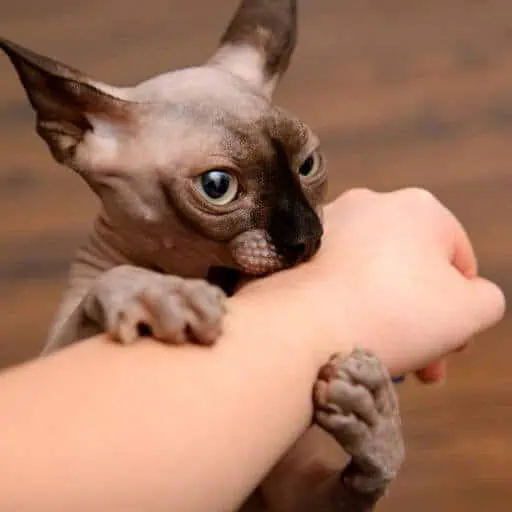
Kittens are known for a playful and curious nature, which often includes nipping and biting. One minute your kitten’s purring in your lap, the next they’re latched onto your hand like it’s prey. This playful behavior is pretty cute when they’re small, but it is undesirable when they get bigger. Those tiny teeth feel like needles. An adult cat that bites, playful or not, is not cute and doesn’t make for a good pet. Treeno was a biter when I adopted him at age 3. Training him out of it took time. I highly recommend curing Kitty of the habit early.
If you’re trying to stop kitten biting, the first thing to know is this: most kitten biting is normal. It’s usually play practice, teething, or a kitten learning where the boundaries are. Understanding why kittens bite is the first step towards preventing this negative behavior.
Kittens bite for a variety of reasons, such as teething, playfulness, or learning to hunt. Like toddlers, they explore the world around them with their mouths. Teaching your furbaby bite inhibition—the understanding of how to control the force of her bite—is important for the safety of Kitty, her littermates, and her humans.
Cat guardians should learn effective, humane methods to stop kitten biting. These include redirecting their attention to toys, using positive reinforcement, and establishing boundaries. Consistency and patience are key factors in the success of any approach to modifying a kitten’s behavior.
This post may contain affiliate links. Life and Cats is a Chewy affiliate and a member of the Amazon Associates program and as such we earn a small commission when you shop through our our links and banners. It doesn’t change the amount you pay. You can read our full disclosure policy here.
Contents
Figure out why your kitten is biting so you can fix the right problem
Kittens don’t bite for one reason. Many have two or three triggers layered together. A kitten might be teething and under-played. Or they might love petting until their body hits a “too much” point.
Start by watching patterns for two days. You’re not trying to judge the behavior. You’re collecting clues.
Here’s a quick, practical “when does it happen?” check:
- During play: hands, ankles, hoodie strings, and hair become targets.
- During petting: bites show up after a minute or two, often “out of nowhere.”
- When picked up: your kitten bites as they squirm to get free.
- At night: zoomies turn into ankle ambushes in the hallway.
- Around food: they get grabby, impatient, or bitey before meals.
- When startled: a loud sound, fast approach, or cornering leads to a quick bite.
Once you can label the situation, you can choose the right response. If you treat teething like aggression, you’ll overcorrect. If you treat fear like play, you’ll get hurt.
The bite is information. The faster you spot the “why,” the faster the biting drops.
Understanding Kitten Behavior
Kittens use biting as a way to communicate and to hone their predatory skills. It’s how they learn, play, and explore their environment. They go through various developmental stages where biting behavior is common and often has specific purposes.
Biting During the Stages of Kitten Development
As kittens grow, their behavior changes alongside their physical development. How much your kitten bites depends on what stage of development he or she is in.
- 0-2 Weeks: Neonatal stage. Biting is non-existent as their teeth haven’t developed.
- 2-7 Weeks: Socialization stage. Biting begins as a way to interact with littermates.
- 7-14 Weeks: Most active play stage. Biting peaks as kittens practice hunting behaviors.
- 4-6 Months: Teething stage. Kittens may bite more frequently to alleviate discomfort.
Biting as Communication
Playful biting is often seen during play with siblings or housemates. It helps them learn to regulate bite strength and how rough is too rough when playing together. It is a form of communication among littermates, indicating a range of feelings from playful to annoyed. It’s their way of figuring out social hierarchies and boundaries.
Play biting and hunting practice, the most common reason
Play biting is kitten school. They’re learning timing, force, and how to “catch” moving things. In a kitten’s brain, your wiggling fingers look like a mouse. Your walking feet look like a rabbit.
This is why hand wrestling backfires. It teaches a simple rule: skin is a toy. Later, when the kitten is bigger and stronger, the habit stays.
Play biting has a different feel than fear or pain. You’ll often see signs like:
- A bouncy body, sideways hops, or a little butt wiggle
- Stalking from behind furniture, then a pounce
- Bright eyes, forward posture, and quick re-engagement
- No hiding afterward, they want the game to continue
Solo kittens don’t learn those lessons. They haven’t had a littermate bite them so hard it really hurts. They haven’t gotten the bite inhibition skill down so we have to teach them. Kitty will play with you the same way she does with her kitten friends. It’s on us humans to let kittens know how rough we are willing to tolerate.
If this sounds familiar, you’re in luck. Play biting is one of the easiest types to fix, because you can replace it with better play.

Teething and sore gums, especially in young kittens
Some kittens bite because their mouth hurts. Teething usually ramps up roughly from 2 to 6 months, when baby teeth fall out and adult teeth come in. During this window, many kittens chew more, clamp down harder, and seek pressure on their gums.
Common teething clues include:
- Chewing furniture edges, cords, or cardboard
- “Mouthy” play that seems constant for a few weeks
- Wanting to gnaw even when they’re tired
- A sudden jump in bite sharpness (those new teeth are pointy)
Teething doesn’t mean your kitten is mean. It means they need safe chew outlets and structured play breaks. If you want a focused timeline and comfort ideas, use this kitten teething timeline and comfort tips.
Attention-Seeking Biting:
When kittens want food or interaction, they bite to get noticed. If your kitten is coming up to you and nipping an ankle or elbow, she is probably looking for some playtime or cuddles. If she’s biting your nose in the morning to get you up, it’s her hunger driving her.
The best way to stop attention-seeking biting is to try and meet Kitty’s needs before she asks or redirect her to a better way of asking instead of biting you. I haven’t been able to cure Cara of nibbling on my hair in the morning, but I was able to train Matisse to bring me a toy rather than trying to bite me when he wants to play.
Overstimulation Biting:
The cat who has been held for longer than she’s happy with might bite as a last resort to escape. Learn to read your kitten’s body language and let her get down, stop petting her, chill out on super active play if she’s getting tired or overwhelmed. End any activity while she is still having fun and let her be in charge. Then she won’t feel the need to bite you to tell you to back off.
Related Post: Why Cats Bite Their Owners
Correcting Unwanted Biting
Stopping kitten biting involves implementing preventive training strategies and redirecting their attention to appropriate activities. These methods teach kittens acceptable behaviors and provide safe outlets for their natural instincts. Addressing this behavior early on is crucial for proper socialization and preventing future biting issues.
A good in-the-moment response should be easy to repeat, even when you’re annoyed. It should also teach one clear lesson: biting makes fun stop.
Expect progress in stages. With daily practice, many homes see improvement in 1 to 4 weeks. Some kittens change faster, especially under 4 months. Others need longer if the family keeps “sometimes” letting biting slide.
Here’s what NOT to do, even if it worked on a dog years ago:
- Don’t yell or clap in their face
- Don’t hit, scruff, or flick the nose
- Don’t spray water at them
- Don’t push fingers deeper into the mouth (it can excite some kittens)
- Don’t jerk your hand away fast (it triggers chase)
Consistent Training Routines
Establishing a consistent training routine is essential. When a kitten uses their teeth inappropriately, you calmly say “no”, replace your hand with a chew toy, and put him on the floor. Stuffed catnip kickers work really well for this.
It’s important they learn that human skin is not for biting. Which means we tell them no EVERY time. We don’t decide it is okay to let them jump at our feet or wrestle with our hand just this one time. Everyone in the household should respond to biting in the same manner to avoid confusing the kitten. Consistency is key.
Use the calm “ouch, stop, and walk away” method
Use the same script every time. Think of it like teaching a toddler not to grab hair. You don’t lecture. You remove access.
- Make a quick “ouch!” sound. Keep it short and high-pitched, not angry.
- Freeze your hand and body. No pulling, no pushing, no flapping.
- End the fun immediately. Stop the game or stop petting.
- Stand up and walk away for 60 to 120 seconds. Close a door if needed.
- Return and offer a toy to restart play the right way.
Why this works: kittens repeat what pays off. If biting reliably makes you vanish, biting loses its value.
Ankle attacks need one extra move. When your kitten ambushes your feet, stop moving like prey. Plant your feet, look away, then toss a toy down the hallway. Your kitten learns to chase the toy, not your legs.
Positive Reinforcement
Do not punish your kitten. If he does bite you, immediately stop your interaction. ignore him. You want him to get no payoff for the bad behavior. Learn the signs that indicate Kitty is working up to the bite. Distract her and reward Kitty when she doesn’t bite. This can be with a high value treat, positive attention, and affection. Again, be consistent.
Related Post: How to Discipline a Cat
How to protect kids and guests while you work on training
Management keeps everyone safe while training takes effect. It also prevents your kitten from practicing the biting habit.
Start simple:
- Supervise all kid and kitten time, every time
- Teach kids to play with toys, not fingers or feet
- Use a baby gate or a calm room during high-energy times
- Trim kitten nails weekly to reduce scratch damage
- Keep a small toy basket in each main room
For visitors, skip forced greetings. Let your kitten choose contact. You can toss treats away from hands to build a positive association without crowding them.
Safety isn’t “giving up.” It’s a temporary guardrail while your kitten learns new habits.
Prevent biting by meeting your kitten’s needs every day
Training works best when you also lower the pressure that causes biting. A bored kitten is like a shaken soda can. The bite is the spray.
Prevention usually comes down to three things: enough play, predictable handling, and a home setup that doesn’t force unwanted contact.
Providing Appropriate Toys
Play biting is a sign you need to step up playtime. Kittens need appropriate outlets for chewing. They need wand toys to work out that playful energy and predatory behavior. Offer a variety of toys that cater to hunting and biting instincts but are safe and designed for kittens. Give Kitty different textures and regularly rotate the toys to keep them interesting. Kittens get bored easily.

Ensuring Enough Play Time
Kittens have abundant energy. Ensuring enough playtime each day allows them to expend that energy positively. Aim for multiple 10-15 minute interactive play sessions throughout the day. If your kitten has peak chaos times, plan around them. Most kittens rev up in the morning and evening. Many also get wild right before meals.
If you have multiple cats in similar age ranges, they’ll play together as well. Johnny and Bailey can give each other the best workouts because they have similar play styles and energy levels. But they also want me to play with them. Ryder prefers to play alone unless I’m willing to play rattle ball soccer. He doesn’t have the same energy or style as the younger cats. But at the end of the day they all sleep well and don’t feel the need to attack and bite my feet in the middle of the night.
Increase Enrichment
Cat trees to climb, forage boxes or puzzle toys to solve, posts to scratch. Clicker training. The more things your kitten has to do, the less likely he is to be spending his time playing rough and biting you. Think of all the ways you can use his 5 senses to stimulate his mind and exercise his body.
Handle and pet in ways that do not trigger overstimulation
Some kittens bite because petting flips from “nice” to “too much” in seconds. Think of it like tickling. Fun at first, then suddenly irritating.
Watch for early warning signs:
- Tail twitching or thumping
- Skin rippling along the back
- Ears turning sideways or back
- A sudden head turn toward your hand
- Tensing, then a quick bite
When you notice these signs, stop petting before the bite. Give your kitten a few feet of space. Later, offer a toy or a treat, so the pause doesn’t feel like rejection.
Where you pet matters. Many kittens tolerate gentle touch best on the cheeks, chin, and behind the ears. Long strokes down the back can be overstimulating for some cats, especially young ones.
One more tip that helps fast: avoid grabbing a kitten when they’re zooming. Wait until they’re calmer, then pick them up briefly and support their body. If they squirm, set them down before they panic-bite.
Professional Guidance
You might need to consult a professional if your kitten is continuing to bite after implementing a consistent training plan and increasing his playtime and enrichment. If your furbaby is actually aggressive, hissing, growling, and scratching as well as biting it is time to take him to the vet first to rule out any underlying medical issues that might cause pain or discomfort. Then consult with a behaviorist that can provide more specialized strategies tailored to you and your kitten’s specific needs.
Summary
Training a kitten to stop biting is a process that requires patience and consistency. By understanding the reasons behind their behavior and implementing positive reinforcement techniques, you can teach your kitten to use their teeth appropriately. Stay calm and never punish them for biting, as this will only reinforce negative behaviors. With time and love, your furry friend will learn to be gentle and loving with their interactions.