
Most Annoying Behavior Problems in Cats and How to Fix Them
Jumping onto the kitchen counters, destructive behavior like scratching the furniture, aggressive play, nighttime zoomies, excessive vocalizing that keep owners awake, and attention seeking are common annoying behavior problems in cats that drive their guardians crazy. So they yell at Kitty or spray him with water, or shake penny cans.
The thing is, punishment does nothing to teach Kitty anything other than to be afraid of their guardians. Your job is to determine why Kitty is acting in these annoying ways and resolve it effectively with love not fear.
What we find annoying cat behaviors our furbabies see as a natural way to get their physical or emotional needs met. If Kitty is annoying you ask yourself the following questions:
- What is Kitty doing that’s annoying you?
- What situation is leading to that behavior?
- What is Kitty getting out of the behavior?
- How can you provide a better alternative way to meet her needs?
This post may contain affiliate links. Life and Cats is a Chewy affiliate and a member of the Amazon Associates program and as such we earn a small commission when you shop through our our links and banners. It doesn’t change the amount you pay. You can read our full disclosure policy here.
Related: Drop Your Spray Bottle! Punishment and Cats
Contents
Demanding Attention:
Winding around our feet, sitting on our work, getting in the middle of what we’re doing. Following us into the bathroom. Rubbing their faces on us while we try to sleep. Crying or purring as they do it. Howling in the middle of the night. Begging while you eat. Your cat isn’t really trying to drive you crazy although it can seem like it.
Ask yourself if your expectations of a cat are reasonable? Are you falling for the low maintenance pet myth? Are you expecting your cat to act like a dog? Cats love you and want to be with you and part of your life. They crave structure and a daily routine. Both dogs and cats need an enriched environment.
Some cats are just going to be more prone to attention seeking than others. Oriental breeds are talkative. Sphynx and Devon Rex are clingy. Cats that have been neglected or abused may be demanding. Medical needs, insecurity, and anxiety can cause attention seeking.
To fix these annoying cat behaviors, play with your cat daily. Just 5-10 minutes of play 2-3 times a day followed by food at predictable times can make a difference in the bond you have with your cat and decrease the attention seeking behaviors. Modify Kitty’s environment with things to climb, places to hide, lots of things to play with and soft beds. Don’t reinforce behavior you don’t like. Remember that even negative attention is attention and is reinforcing Kitty’s behaviors.

Scratching
Kitty is not trying to be destructive. Scratching is a natural behavior. There are a few ways to stop this annoying behavior in cats and all of them have to do with changing the environment rather than with punishment.
Scratching is like going to the gym. It works off stress, gives Kitty a work out, and smooths her claws. She has scent glands in her paws and scratching helps her mark her territory. Cats like to scratch on tall, sturdy places where they can really sink in their nails. To keep them from choosing a table leg or the side of the couch, we have to give them better options.
Offer Kitty a variety of surfaces, orientations, and locations to scratch on. Some cats prefer horizontal scratchers, and others like the traditional vertical post. Be generous in giving your furbaby choices to scratch and she won’t need to use your furniture.
You can deter her from the couch with a double stick tape or covers while you train her to use her own furniture. Increased exercise and playtime can reduce extra energy. Keeping her claws trimmed or applying nail caps can reduce damage she can cause.
Related: Stop Destructive Scratching
Chewing
This is generally more of a dog problem than a cat problem; but some cats are chewers. Mouthy cats need acceptable things to chew on and need to know your phone charger and earphones are off limits.
Other than normal teething in kittens, boredom is the usual reason for excessive chewing. Working out stress or aggression is another reason cats chew. Or Kitty might just be playing or like the texture or taste of the item they chew. It’s worth a vet visit to check Kitty for dental problems or Pica.
Cat proofing the house and picking up whatever your baby likes to check is step one. If your furball is prone to eating his toys – or your hair ties – be sure you put them away when you can’t supervise. Hair ties are a common cause of intestinal blockages and will require expensive surgery to correct to save Kitty’s life.
- Cord covers really help by removing the temptation to go after your computer cables or light cords.
- Chewy toys or silvervine sticks give Kitty an acceptable alternative to chew on.
- Calming treats might help if she’s chewing as a stress response.
My Mocha just loved to chew on charger cables. It was a lot of trial and error to get her to stop. Nothing worked until I tried a bitter deterrent spray. She bit her favorite cord and looked so betrayed. She hasn’t chewed things since. I think it was a habit left over from her kittenhood. Her sister chews the edges of cardboard boxes. Since she is only making a mess and not ingesting anything I choose not to fight it.
House Soiling
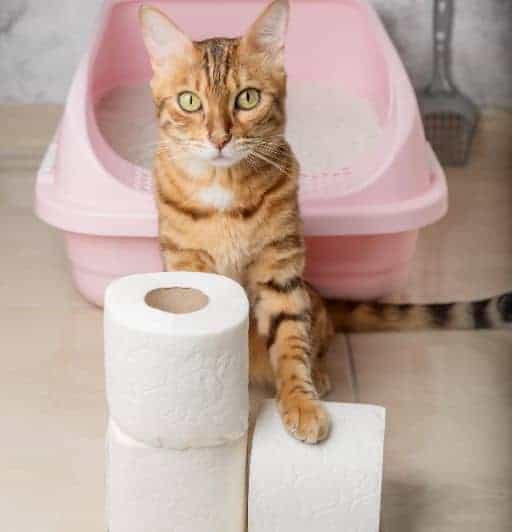
Why has your litter trained kitty suddenly decided that your bathroom rug or couch or god forbid, your bed, is a more desirable place to relieve himself. What do you do? First, don’t get mad. Even though this is one of the most frustrating and annoying behavior problems in cats, your baby isn’t trying to upset you. Cats don’t have the mental or emotional wherewithal to plan vindictive actions.
Kitty is trying to tell you something when he pees outside the box. It is up to us to help him solve his problem. Here are some important questions to ask yourself to assess the situation:
- Does Kitty not feel well? Because urinary tract disease can become an emergency situation, visiting the vet to rule out a medical problem first.
- Second, assess the litter box. Is it big enough? Clean enough? Conveniently located? Is the litter comfortable on Kitty’s paws? Are there enough boxes to support the number of cats in the family?
- Is there subtle – or not so subtle – bullying going on among the cats in the family? Kitty isn’t going to want to use the box if he fears going in there because another cat is prone to attacking him when he comes out.
- Is Kitty feeling stressed? It could be even simple changes in the house or family or something as big as moving.
Is he peeing or marking? Marking is a much more difficult issue to suss out.
Related Post: Why is Kitty Peeing Outside the Box
Spraying
Marking is a form of communication, not a case of Kitty relieving himself inappropriately. You can tell the difference because your cat will spray on a vertical surface like a wall or a door frame or the edge of a piece of furniture. There won’t be as much urine as you would see in a litter box deposit, and it smells much more strongly.
Although this behavior is much more common in intact males, any cat can spray. Dealing with marking isn’t easy. Spaying and neutering all your cats is the important first step. Intact cats spray to attract a mate.
Marking their territory is a way that Kitty tells others he’s in charge. It is usually a result of stress or anxiety. Changes in a cat’s routine or environment can contribute to stress. Stress may be caused by changes in their daily routine, new pets or people in the home, or things like remodeling or construction. Calming supplements can help reduce the frequency.
If Kitty feels insecure in his place within the inter-cat politics in the home he may spray. Pheromone diffusers and an abundance of resources are a good first step.
If he’s spraying against a door to the outside it’s likely a stress reaction to the presence of other animals in the yard. He’s warning them away. It might stop if you block the windows where Kitty is seeing the invaders. Repellents and deterrents like motion detecting sprinklers may help.
Related Post: Cats Are Not Low Maintenance Pets

Aggression
This is more than just an annoying cat behavior problem. Aggression is a serious problem whether the aggression toward you or the other animals in your family. But there are still things you can do to attempt a solution
- First, get everyone checked out by the vet to make sure there isn’t a medical problem causing a problem.
- Make sure there are enough resources to go around. Having 1 litter box, 1 food bowl, 1 water dish, 1 scratching post per cat, can prevent resource guarding and bullying.
- Barriers around food and litter boxes or separating at meal times
- Boredom. Up the enrichment and play.
- Does a single kitten need to be taught proper manners so he doesn’t attack your feet?
- Do you need to separate and re-introduce some warring cats?
- Teach proper handling and play methods to all members of the household, even your children. Make sure Kitty isn’t being disrespected.
- Pheromones, calming treats, and even medication can help if necessary.
Related: How to Get Your Cat to Let You Sleep at Night
Nighttime activity
Cats are crepuscular. They are naturally more active when we want to sleep. They tend to wind up when we are ready for bed and get up for the day way before we want to get up. It could look like the zoomies, jumping on the counters, running over you while you slept, or howling at night.
Some cats are more social than others, some cats, like our ocicat, are louder than others. Kittens are going to be way more active than an older cat. If your senior cat is howling at night, start by seeing the vet as many illnesses can cause this behavior.
Keep Kitty busy during the day. The less energy she has to burn at night, the better the chance you are going to get a good night’s sleep. Give her a good play session before you go to bed. Then give her a snack and she should be ready for bed.
Automatic toys and puzzle feeders are your friends in the quest for a good night’s sleep. A heated bed can help in certain situations. Night lights, music, or maybe the TV can be left on low to keep Kitty from getting lonely or anxious.

Jumping on Counters
This is one battle I opt not to fight. It takes seconds to wipe the counter off before I make food. They’re going to be up there when we’re not looking.
Kitty’s desire to be up there comes from her hunter-climber instinct desire to be up high and her natural curiosity. After all, you spend a lot of time in the kitchen and it’s full of interesting smells. She wants to be a part of it. The more social your cats the more they will have a harder time leaving you alone in the kitchen.
This is a hard one, but you can try stopping this annoying cat behavior by providing other high surfaces that are more appealing to your cat and meet the same needs. Invest in some wall shelves for cats or a stool just for her in the kitchen so she can still be with you. Don’t leave food or anything else appealing out in the open.
Alternatively, you can try some deterrents like aluminum foil, a ssscat air sprayer, something that will fall over and make a lot of noise when Kitty jumps up, or a spiky mat. I haven’t found most of them to be super effective though.
Don’t spray her or yell at her. It won’t solve the problem and it will harm your relationship.
Knocking Everything Over
Boredom and attention seeking are the root of most of the annoying behavior problems in cats. Cats are smart. If they are not provided with sufficient mental stimulation then they get bored.
A cat’s hunting instinct is the root of their play. Without enough enrichment of their own, even household objects are treated as “prey.” Our stuff becomes their toys. After all, if it is important to us, it must be valuable. Your cat might be trying to encourage you to interact or play with them.
The best solution to this problem is to cat proof your house and put anything truly valuable out of Kitty’s reach. Then ignore your furbaby’s attention-getting behaviors.
Enrich Kitty’s environment. Give them alternative places to get to the window to look out. Put out a variety of toys. Place fuzzy mice on different parts of their cat tree. Add some automated toys she can bat at when you aren’t around. And most importantly, play with her with a wand or fetch toys.
Related: Enrichment for Cats
Wrecking Your Houseplants
Plants attract our furbabies by touching many of their senses. Movement of a plant with dangling vines will encourage them to attack it. The taste of the plant might be appealing. Boredom is the biggest reason that your feline friend is wrecking your plants. There are a few things you can try if your cat just won’t leave the plants alone.
First, don’t keep anything toxic in your house. No matter how pretty the plant, no matter how much you love it, if you have cats that aren’t good at leaving plants alone then keeping the plants out of the house is the only truly safe solution.
You can try to deter your feline friend from digging in your houseplants by placing rocks, aquarium gravel, pine cones, citrus peels, or vinegar-soaked cotton balls in the soil around your plants to make digging less appealing to Kitty. Forks with the tines pointing up is another deterrent to Kitty walking around in your planters.
A citrus spritz might discourage her from nibbling. If that’s not strong enough, bitter spray might be. Give Kitty a garden of her own. Plant some valerian, cat grass, or catnip of course, and make it more accessible than your plants. Distracting her with play and an enriched environment and plants hung in high places with nothing around for your cat to climb on to reach them will eliminate the problem.
Related Post: Safe Plants for Cats
Summary
Overall, cats are wonderful companions. But they can also have annoying cat behavior problems such as peeing outside the litter box, scratching furniture, or meowing too much. Thankfully, there are ways to help your cat overcome these issues. With a little patience and some understanding of why your cat may be exhibiting these behaviors in the first place, you’ll be able to overcome even the most annoying behavior problems in cats. Creating an enriched environment, sufficient mental stimulation, and positive reinforcement training methods will create an environment where everyone is happy.