Drop Your Spray Bottle! How to Discipline a Cat
If you are a cat owner, then chances are that you have faced some behavioral issues with your furry companion. While it can be challenging to teach cats the rules you want them to follow, it is possible with consistency and patience. This post will explore how to discipline a cat without resorting to punishments like spraying them with water. Instead, we will focus on positive reinforcement, deterrents, and understanding the needs your cat is trying to meet in order to give them direction. With the right methods, disciplining your cat can be done effectively without ruining your relationship.
Contents
Are Cats Really Untrainable?
You’re not “the boss” of your cat. Or the Alpha. Or any other “power” type standing. Cats won’t obey you just because you are the human and bigger than they are.
Cats are trainable. But you have to think like a cat to do it effectively. Cats do not have a moral compass. They don’t understand “good” behavior from “bad” behavior. They just do what they need to do. Your Kitty doesn’t act out of spite or do things to make you mad.
A cat’s motivations are fairly limited. They want what they want now, they know what they don’t want, and they have natural instinctive behaviors. When you think about those motivators you can use them to discipline your cat. Give Kitty a better option to accomplish his goal. If you take something away; you need to replace it with an alternative way for.Kitty to meet the same need.
Don’t think about disciplining a cat in the same way you do about training a dog. Cats aren’t as easy to motivate as dogs, but they do want to have a good relationship with you. Training a cat requires some creativity and patience and really good treats. Once Kitty realizes that you provide rewards in the forms of praise, treats and attention, they’ll become more and more trainable.
Related Post: Training a Cat
Punishment is not a Good Way to Discipline a Cat
Avoid punishment when working to change your kitty’s behavior. Cats do not understand “No”, or punishment. Punishment creates an unhealthy relationship between Kitty and his guardian.
A negative cycle results where Kitty does something you find unacceptable, like climbing on the counters or begging for food. You react by yelling, or spraying Kitty with a water bottle, or other negative response. Kitty associates the negative experience with you, not with her behavior. Kitty begins to fear and distrust you. She still does the unacceptable behavior, just not when you’ll see her. She gets more stressed. Stress and anxiety puts her in a position to act out in other ways to soothe herself.
Since your cat doesn’t make the connection between the spray bottle and her behavior, she just sees you as mean or unpredictable. Kitty may start to jump off the counter when she sees you coming, but it’s just a fear response to your presence, not a real behavior change. Kitty may also run when you approach her when she isn’t doing the behavior you are trying to correct. It isn’t a good feeling when you reach for her to snuggle or play and she runs away. Punishments break your cat’s trust and does not reduce your cat’s need to express their natural instincts.
Instead of punishing Kitty, try positive reinforcement through reward-based training. Show her what behaviors you want to see more of and reward her with treats or affection when she acts appropriately. This will help her build trust and strengthen the bond between you.
Use Positive Reinforcement
Positive reinforcement is an effective way to shape your cat’s behavior. Using rewards like treats, extra play time, or verbal praise can encourage Kitty to repeat desirable behaviors. Instead of disciplining your cat with a spray bottle for doing something you don’t like; reward her when she does something you do like.
The positive approach will help build your bond and trust with your furbaby. With patience and consistency, positive reinforcement is a great alternative to disciplining your cat. The more consistent you are, the more likely Kitty will learn and repeat the positive behavior you want.
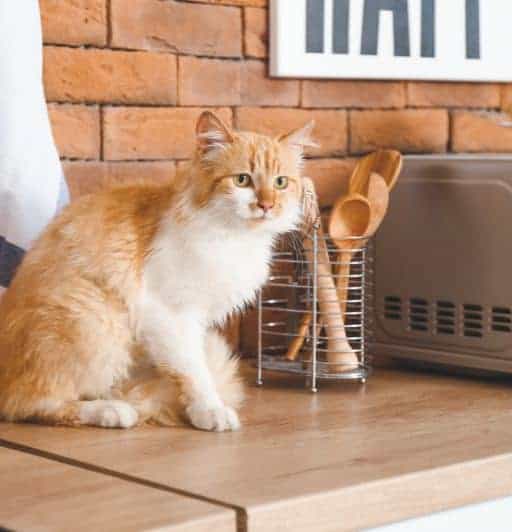
Keep in mind that you can’t change a biological need. Things like scratching, climbing, using the bathroom, exercise, and play are instinctive needs. If Kitty can’t express her needs appropriately she’ll find a way to do it anyway, you just won’t like it. In those cases, discipline, even positive rewards, won’t work. You have to give her a way to meet her needs.
You’ll need to find the key to Kitty’s motivation. Is she food/treat motivated? Affection and sweet talk? Perhaps playing with her favorite toy would be her best reward? When she jumps up on the counter or starts scratching the couch, redirect her to an acceptable alternative. When she switches to using her scratching post or sits on her stool then give her a treat or other preferred reward.
Related Post: Help! My Cat is Scratching the Furniture.
Use Deterrents To Discourage Unwanted Behaviors
This post may contain affiliate links. Life and Cats is a Chewy affiliate and a member of the Amazon Associates program and as such we earn a small commission when you shop through our our links and banners. It doesn’t change the amount you pay. You can read our full disclosure policy here.
Using deterrents is a good way to discourage unwanted behaviors from your cat without resorting to punishment that breaks her trust with you. This type of discouragement is called remote correction.
Remote correction lets the environment do the correcting without your direct intervention. It uses things like textures, smells, tastes, or sounds to make something less desirable for Kitty. Sort of like the natural consequences of their actions for children. Things like putting Sticky Paws on the couch or spraying a bitter spray on cords Kitty wants to chew fall into this category. While I’m not entirely a fan of the booby trap method, the SSScat deterrent is motion activated and does take you out of the equation.
Make Changes to the Environment
Ask yourself what need is your cat trying to meet? Your cat’s behavior is an attempt to meet a need that she has. She could be seeking attention, trying to relieve stress or boredom, protecting her territory, defending herself against perceived threats, or exploring her environment.
Related Post: Enrichment Ideas for Indoor Cats
Understanding what need Kitty is trying to meet will help you to provide enrichment and outlets for meeting that need. Does she have enough places to scratch? Hiding places? Places to get up high? Does she get enough playtime with you?
Is she climbing on the counters or the dinner table? Looking for your attention? Train her to sit on a bar stool or a shelf nearby.
By meeting Kitty’s needs through positive reinforcement, and training techniques such as clicker training, you can effectively change her behavior without using methods like spray bottles or coin cans.
Conclusion
In conclusion, it is a challenge to discipline a cat but it is a rewarding process in developing your relationship. It’s important to remember that cats are intelligent creatures and need positive reinforcement to shape their behavior. Removing your attention may be one of the most effective consequences you have to work with.
By using rewards-based training methods, avoiding punishment such as spritzing with water or hitting, and setting rules and boundaries for your cat’s behaviors, you can help ensure that both you and your cat have a happy home life together.