
Best Litter Box Solutions for Multiple Cats
Last Updated on May 8, 2026 by Holly Anne Dustin
Living with a large cat family in a smaller space can feel like a careful balancing act, especially when litter box placement comes into play. For cat guardians looking for litter box solutions for multiple cats, the wrong setup can lead to stress, territory problems, and messy cleanup, all of which affect both your cats’ comfort and your home’s daily rhythm.
The most common mistakes cat guardians make include choosing a box that is too small or not changing up the box as Kitty grows up, not having enough boxes per cat, and placing them in noisy areas. Infrequent scooping, using scented litters, and keeping plastic boxes for too long after they’re scratched up can also cause litter box avoidance and related health problems.
You have to balance priorities like cost, litter maintenance, odor control, mess containment, and cat comfort. Your cat may not share your opinion on what makes the perfect litter box setup. It’s important to understand how your cat thinks about his box and meet his underlying needs. The litter box you choose, and where you place it, needs to be about your cats more than about you. A lot of litter box issues are the result of trying to bend our cats’ instinctive behavior to our will. It might work in the short term but it won’t work forever. And the more cats involved the less likely it is to work.
You don’t want to be dealing with “inappropriate elimination,” where Kitty’s litter box stresses him enough that he pees or poops somewhere else. If one cat in a multi-cat family starts that, there is a very good chance the others will do it too. The following litter box solutions for multiple cats should help you keep your kitties happy:
Related Post: Why Cats Pee Outside the Litter Box and What to Do About it
Contents
The Best Litter Box Set Up for Multiple Cats:
Your cats might have preferences about covered boxes and the litter you use. Multiple boxes allow you to accommodate everyone’s desires.
One Box Per Cat Plus One:
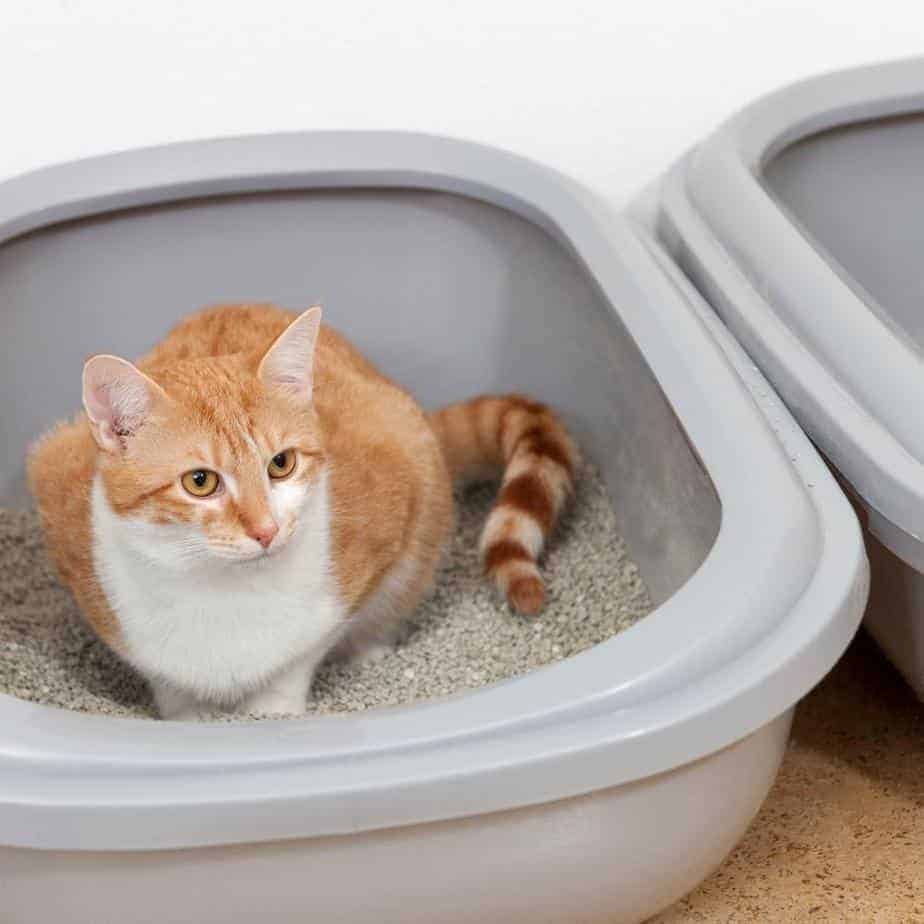
The general rule for litter box solutions for multiple cats is 1 box per cat plus 1. While this is especially important in multiple cat homes, even a single cat likes choices. Some cats like one box to pee in and one to poop in. In nature, cats don’t do their business in the same place.
Litter boxes can also be a source of multiple cat politics. A territorial cat can decide the litter box is his private property and not allow his roommates to share. Getting pounced on in the box might mean his friend will never use it again. The 1 box per cat plus 1 gives everyone options.
Think Big:
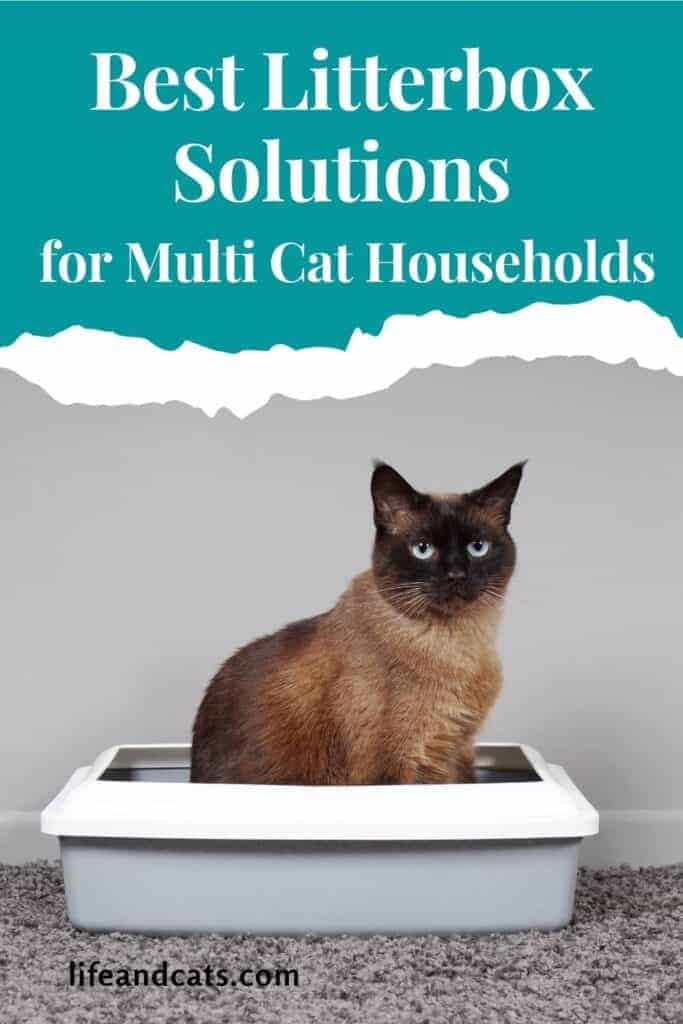
The litter box should be 1 ½ times longer than your biggest cat. They need to have room to exercise their natural behaviors and turn about and dig and “assume the position” for eliminating. Bigger is better. Look for a box that has 8-12″ high side walls. Higher is better for cats that are “high pee-er” or sprayers.
You need to keep thinking about your cats and their boxes as they age. Consider any special needs your cat might have. Your new kitten will need a smaller box than your adults. A senior cat or a declawed cat may have a hard time climbing into the box or holding the position on the substrate if it shifts. The same boxes might not be the best solution for your multiple cat family at all ages and stages.
Cover Up?
Most cats dislike covered litter trays, especially in a multiple cat family. You can always put in a covered box and an uncovered box to see what your cats think.
Survival and safety take priority over privacy any day. Cats that aren’t getting along well can develop stalking routines around the litter box. It is hard for your kitty to do his business if he is afraid his fellow felines will be waiting around the corner or sitting on top of the box waiting to jump on him when he comes out.
A covered box also makes it too easy for the humans in the family to skip the cleaning routine as they can’t see it. Covers trap the odors in. It is like the cat version of a port-a-potty.
Location, Location:
“Putting the litter box in the household equivalent of Siberia will often backfire on you,” says CatWise author Pam Johnson-Bennett. Especially with kittens or seniors, you do not want Kitty to have to find his way to the basement to go to the bathroom. Ideally, you’ll have a box on every level of your home, in a room you go in daily. Kitty will never have to go far to potty and you won’t neglect cleaning the boxes daily.
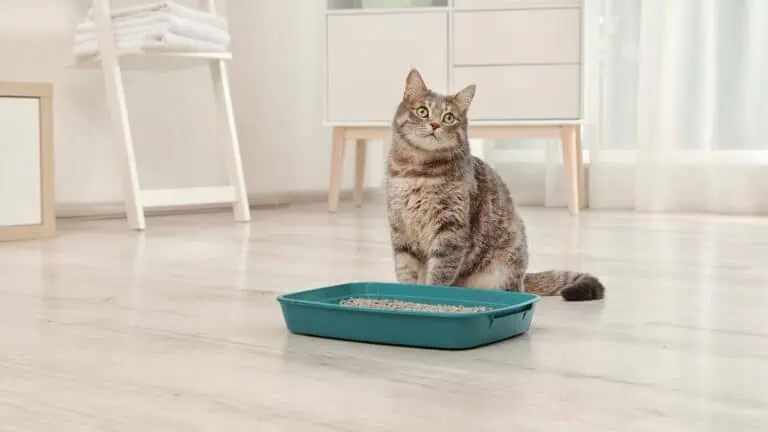
Kitty’s box should be away from his food and water in an accessible space. In nature, cats do not potty where they eat. Would you want to do that?
Put the box against the wall in a large room, not stuffed in a cabinet or closet. Kitty should be able to see the whole room so he knows who is coming around. Don’t place litter boxes together in one location. Two boxes side-by-side count as one box in Kitty’s head. You shouldn’t have a “litter box room.”
Consider the litter box location from your cat’s point of view:
- Is the washer or dryer going to start up and startle him? How about the furnace?
- Are people running in and out of the mudroom all the time?
- Is the dog barking outside the door?
- Are there other animals outside the porch window?
- Is there a high cat perch or bookshelf that one cat could leap down on another in the litter box?
If you have multiple cats, make sure you have a box in each cat’s favorite areas to hang out so one cat doesn’t have to cross through another cat’s territory to pee.
Keep it Clean:
The most important part of successful multiple cat litter box maintenance is to keep the boxes clean. Scoop at least once or twice daily. Change the litter out once a week. Wash the box with detergent at least once a month. The more cats use the box, the shorter the time should be between resets.
When you fill the box, use 2-4 inches of an unscented litter. Cats have a sensitive nose and object to highly scented litter. Skip the air “fresheners” and litter box additives too.
A dirty box will discourage Kitty from using the box and lead to housesoiling and inappropriate elimination. It can also threaten the health of our cats themselves and their human guardians.
A dirty litter box can put your cat at risk for urinary tract infections (UTIs), bladder inflammation, kidney infections, bladder stones, feline lower urinary tract disease (FLUTD), and cystitis from bacteria in the dirty litter box. Humans risk salmonellosis, toxoplasmosis, cat scratch disease, fungal infections, and mold exposure. Mold can grow in a dirty litterbox within 24-48 hours.
Be a Detective:
Cats are not “being jerks” or acting out of revenge when they pee outside the box. They are trying to tell us something. The message is “I’m not happy.” It is up to us to be a detective to figure out why. Start with a vet visit to make sure Kitty is healthy. After that, work through the tips in this post to see if a litter box upgrade might be in order. He might need a bigger box, an additional box, a different litter, or a box in a different location.
Summary
With the right litter box solutions for multiple cats, your home stays calmer and cleaner. Separate, well-placed, boxes give each cat room to use the litter box without stress, which helps cut down on tension and supports better habits. For large cat families, that extra space matters. A simple setup can reduce mess, protect each cat’s privacy, and make daily care easier for you and more comfortable for every cat.

Buying Guide: Best Litter Box Solutions for Multiple Cats
For multiple cat families, the best litter box is the one that keeps traffic moving and lets each cat have space to breathe, scratch, and leave without a standoff. Consider the age, size, and privacy preferences of your cats when choosing a box. A roomy open box often works well because it gives shy cats room to turn around, while a low-entry design helps kittens, seniors, and cats with sore joints; covered boxes can help with privacy, but only if your cats don’t feel trapped.
If you want a simple way to compare sizes, styles, and cleaning needs, the following list gives you a clear starting point. The smartest pick is the one your cat likes; placed where no other cat can to guard the doorway. For a more detailed buying guide, click here.
This post may contain affiliate links. Life and Cats is a Chewy affiliate and a member of the Amazon Associates program and as such we earn a small commission when you shop through our our links and banners. It doesn’t change the amount you pay. You can read our full disclosure policy here.
Here are my recommendations for top choices for litter boxes.
Standard Litter Boxes:
- Budget price
- Ideal for multiple cat households or large cats that like to dig
- High polished finish that is odor and stain resistant
- Replace at least once a year
- Easy to clean
- Multiple sizes
XL Stainless Steel Litter Box with Lid
- Stainless steel
- Extra large size to fit large breed cats
- Durable, no scratching.
- Doesn’t hold bacteria or odors
- Non-stick, easier to clean
- High sides lid to prevent litter kicking
- Comes with a scoop and mat
Low Entry Litter Boxes
Kitty Go Here Low Entry Litter Box
- Opening is only 3″ from the floor.
- Senior cats and kittens can enter and exit the pan easily.
- Very large size gives cats more room to move around
- Use with small amounts of litter or line with a litter pad
Covered Litter Box
- Enclosed for privacy and odor control
- with handle and scoop included
- Flip front door. (I highly recommend if you must use a covered box at least take the door off.)
- Best for small and medium cats
Stainless Steel Enclosed Litter Box
- Stainless steel pan with ABS cover.
- Front and top openings
- Non-stick, easy to clean
- XL size for big cats
- Can hold 26 liters of litter
- Durable
Self-Cleaning, Automatic Litter Boxes for Multiple Cats
I don’t recommend automatic litter boxes. These are really engineered for people not cats. Technology is not always the answer.
Most of them are too small for average to large cats. The noise and vibrations can scare timid cats. The rake parts can rust. Soft stool can get stuck and leave you with a bigger mess to clean. An automatic box does not change the one box per cat plus one rule so this could get expensive.
Best Disposable Litter Boxes for Traveling with Your Cat
- Made from recycled paper and land-fill safe
- Can be easily disposed of
- Great for short term traveling or show halls
- Can be used as a lining for a traditional litter box
Hopefully these litter box tips and suggestions will prevent any housesoiling problems with appropriate litter box solutions for multiple cats.