
Tasty or Toxic? Can Cats Eat Olives Safely?
Do you have a cat with a fascination for a food that seems really weird for an obligate carnivore? Broccoli and green beans seem popular. Treeno is obsessed with cantaloupe. My childhood cat loved toasted marshmallows. Katie steals olives off pizza (which I’m okay with because I don’t like them.) It’s actually not as bizarre as it sounds. Marshmallows are gelatin-based and the scent of cantaloupe apparently reminds them of meat too. I can’t account for the broccoli or beans, but olive seems to trigger cats the same way catnip does. However, while cats can eat olives and it is safe to indulge their curiosity now and then, olives don’t offer any real nutritional value for our furry friends and do carry some risks.
Contents
Why Do Cats Love Olives?
Let’s explore the reasons why some cats are obsessed with the olive.
The Nepetalactone Connection
Olives contain a compound known as nepetalactone, which happens to be the same aromatic compound found in catnip. This compound plays a pivotal role in triggering a euphoric response in cats when they come into contact with olives. Moreover, different varieties of olives boast varying levels of nepetalactone, potentially influencing the intensity of your cat’s reaction. The closer the fruit comes to its natural state, the more nepetalactone it has. So straight off the tree is going to be more effective than a dark, black olive.
The Pheromone Factor
Another interesting aspect is the presence of oleic acid in olives. Oleic acid is a key component in the facial pheromones Kitty spreads about when she rubs on things. Cats are naturally drawn to scents that are familiar to them. The oleic acid in olives could explain why cats display such keen interest in sniffing and inspecting these small, flavorful fruits.
The Novelty Appeal
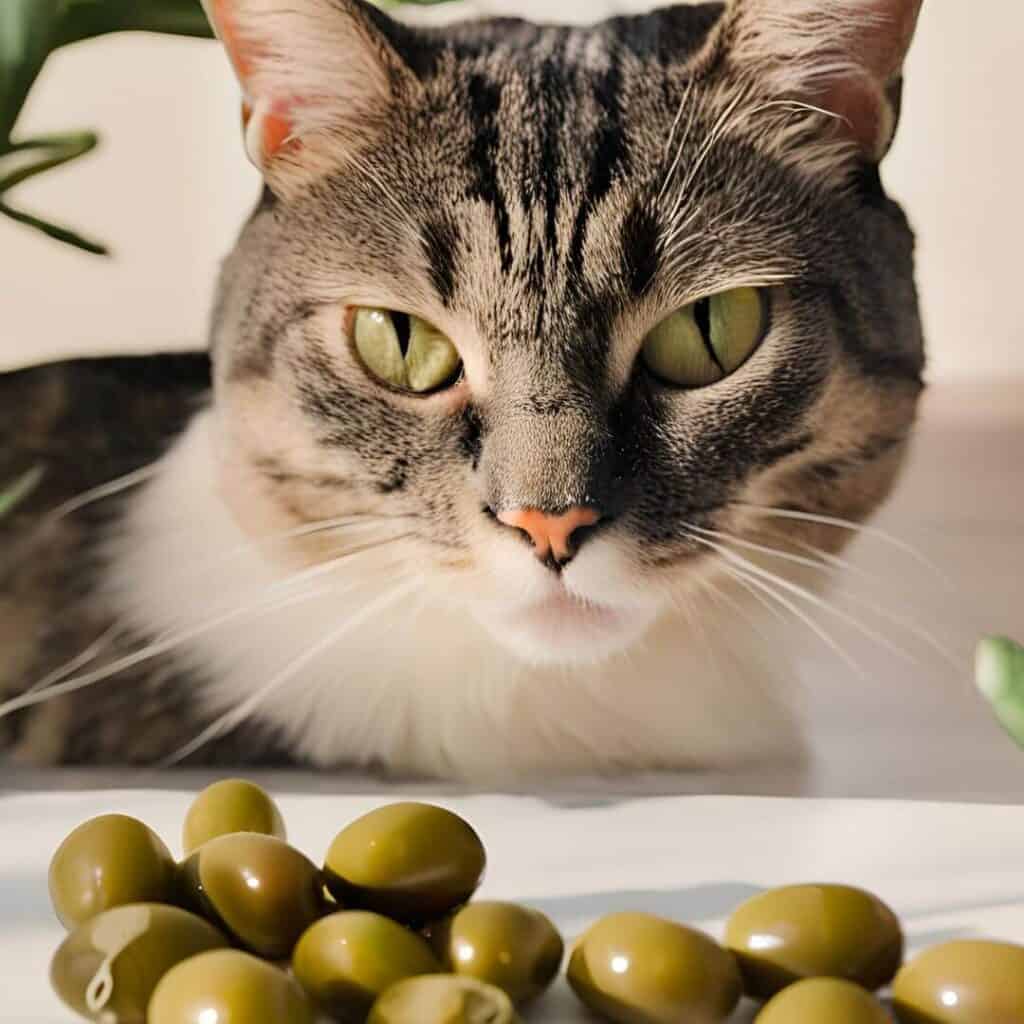
Cats are inherently curious creatures, ever intrigued by scents and flavors in their environment. Olives possess a distinct aroma and taste that deviates from their usual fare, sparking curiosity and exploration in our feline friends. The novelty of olives may serve as a source of excitement and intrigue for cats seeking sensory stimulation.
And if you happen to drop one on the floor it makes a great toy!
Do All Cats React To Olives The Same Way?
While some cats exhibit exuberant behaviors in response to olives, others are completely unaffected. Genetic factors and past experiences can influence how a cat responds to olives, just like to catnip. Just like humans have varying preferences, cats have individual tastes and reactions to different stimuli.
Related Post: Catnip and Cats
Are Olives Safe For Cats To Eat?
Olives are not toxic to cats; however, they do not offer any significant nutritional value. So safe, but kind of pointless. Still, it won’t hurt Kitty to have a nibble now and then.
It is important to consider the following aspects when it comes to feeding olives to your feline friend:
Non-Toxic But Not Necessarily Nutritious
Olives are generally safe for cats to consume. The olives themselves do not contain any toxic elements that could harm your cat. But, olives have to be “cured” for us humans to like them. They are highly processed, brined, marinated, or stuffed with things like garlic that are toxic. If you want to share an olive with your furbaby, go as natural as you can.
Potential Hazards of Olives for Cats
When offering olives to your cat, be cautious of potential hazards.
- Olive pits pose a choking risk and should always be removed before feeding olives to your cat
- Excessive consumption of olives can lead to digestive issues such as upset stomach or diarrhea because of the excess fat and fiber in olives.
- Some diabetic cats can suffer from insulin sensitivity when consuming olives.
- The high sodium content in olives can be harmful if consumed in large quantities, potentially leading to salt poisoning, kidney disease, and even death. Symptoms of salt poisoning include loss of appetite, tremors, digestive distress, extreme thirst, dehydration, excessive urination and seizures.
Monitor your cat for signs of gastrointestinal distress after consuming olives. If she shows any symptoms such as vomiting or lethargy, it is best to consult with a veterinarian promptly to ensure their well-being.
Moderation Is Key
While olives are not harmful in small amounts, moderation is crucial. Feeding olives to Kitty as an occasional treat is acceptable, but in very small amounts. As in, less than one olive at a time and no more often than once a week or so.
Are Green Olives Or Black Olives Better For Cats?
Olives are a staple in the Mediterranean Diet for humans. They are high in antioxidants, vitamins like Vitamin C, A, and E, iron and calcium. They are also considered to be anti-inflammatory. But cats are obligate carnivores. Felines have different dietary needs and process food differently. Your kitty won’t get the same benefits from eating olives that you do. There are better ways of meeting her needs for vitamins and minerals in a meat-based diet.
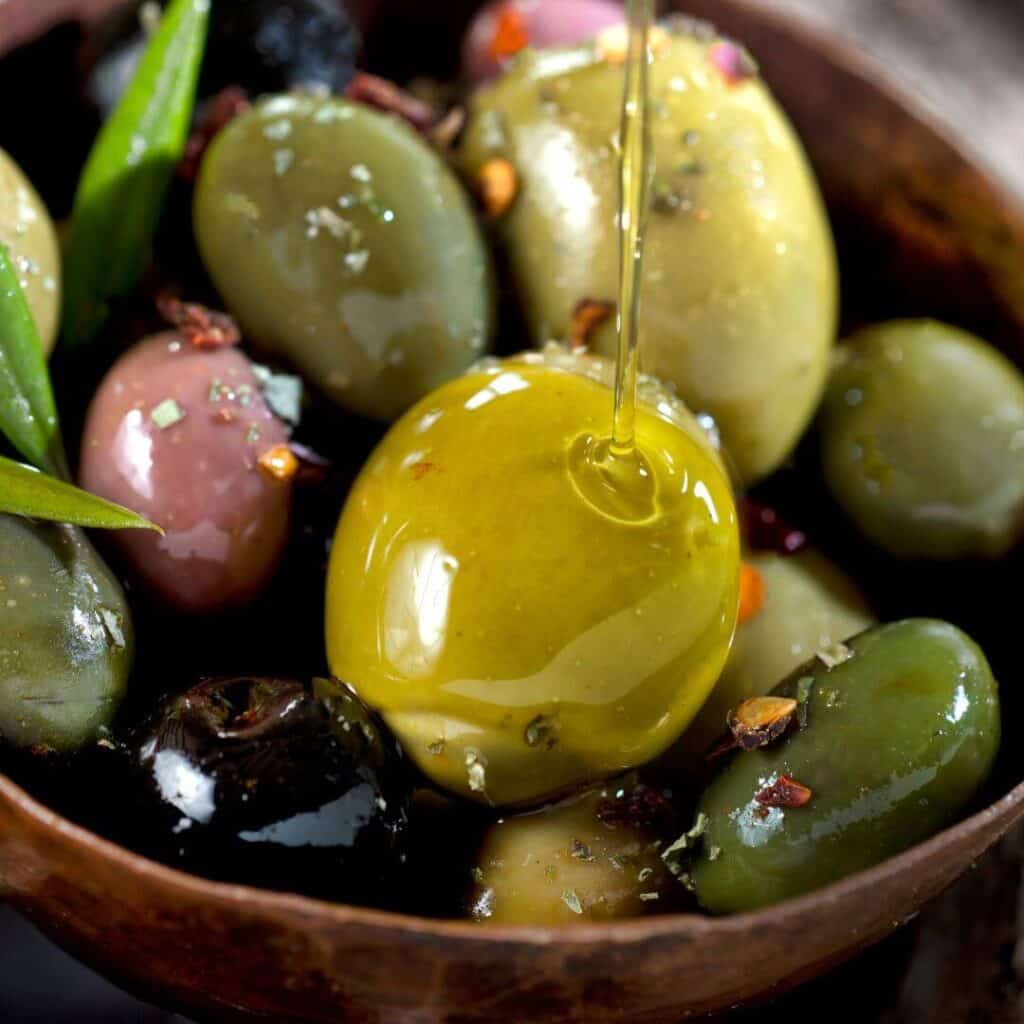
Nutritionally speaking, neither green or black olives are necessary for cats. But if Kitty likes olives and you want to offer her a little fun treat, it helps to understand the differences between green and black olives. Green olives are harvested before they are completely ripe while the black ones are left to ripen so they are softer and have a richer, meatier taste. The green olives are more firm to touch and bitter.
Green Olives And Their Appeal To Cats
Green olives contain higher levels of the nepetalactone isoprenoid. This similarity to catnip could explain why cats often display excitement and playfulness when exposed to green olives. You double Kitty’s joy if you choose a pimento-stuffed olive because pimentos also have nepetalactone.
Black Olives And Their Characteristics
While black olives might not share the same isoprenoid content as green olives, they are also safe for cats to consume in moderation. Black olives offer a different taste and texture profile compared to green olives, providing variety for cats that enjoy exploring different flavors. The slightly different chemical composition in black olives may result in a different response from your cats compared to green olives. I know my Katie prefers black olives.
Determining The Better Option For Your Cat
Both green and black olives are non-toxic to cats, but individual preferences and reactions can vary. Some cats may show a stronger affinity for green olives due to the presence of isoprenoids resembling catnip, while others might prefer the taste or texture of black olives. As with any treat, it’s crucial to offer olives in small quantities and observe your cat’s response to ensure they enjoy the experience without any adverse effects.
Can Cats Have Olive Oil?
Olive oil is probably the most popular choice for oils in human kitchens but does it also have benefits for our feline friends? When it comes to incorporating olive oil into a cat’s diet – or not – understanding the advantages, amounts, and type is crucial for their well-being.
Benefits Of Olive Oil For Cats?
Fans of olive oil for cats suggest it offers several health benefits for our cats. These include:
- Rich in Healthy Fats and Antioxidants: Olive oil contains unsaturated fats that can contribute to a healthy diet for cats. These healthy fats play a role in skin health and may support a shiny coat.
- Promotes Skin and Coat Health: The omega-3 and omega-6 fatty acids in olive oil can aid in maintaining healthy skin and a lustrous coat in cats.
- Helps Relieve Hairballs in Cats: When ingested, olive oil can help lubricate the digestive system, making it easier for fur to pass through Kitty’s digestive tract.
- Prevent Constipation: Mild symptoms can be cured by adding a few drops of olive oil to your constipated kitty’s food bowl
- Anti-Inflammatory Properties: Olive oil is known for its anti-inflammatory effects, which might benefit cats with certain health conditions.
However, as we discussed above, cats are obligate carnivores and don’t get the benefit from olive oil that we humans do. They run on protein, and olive oil has no protein.
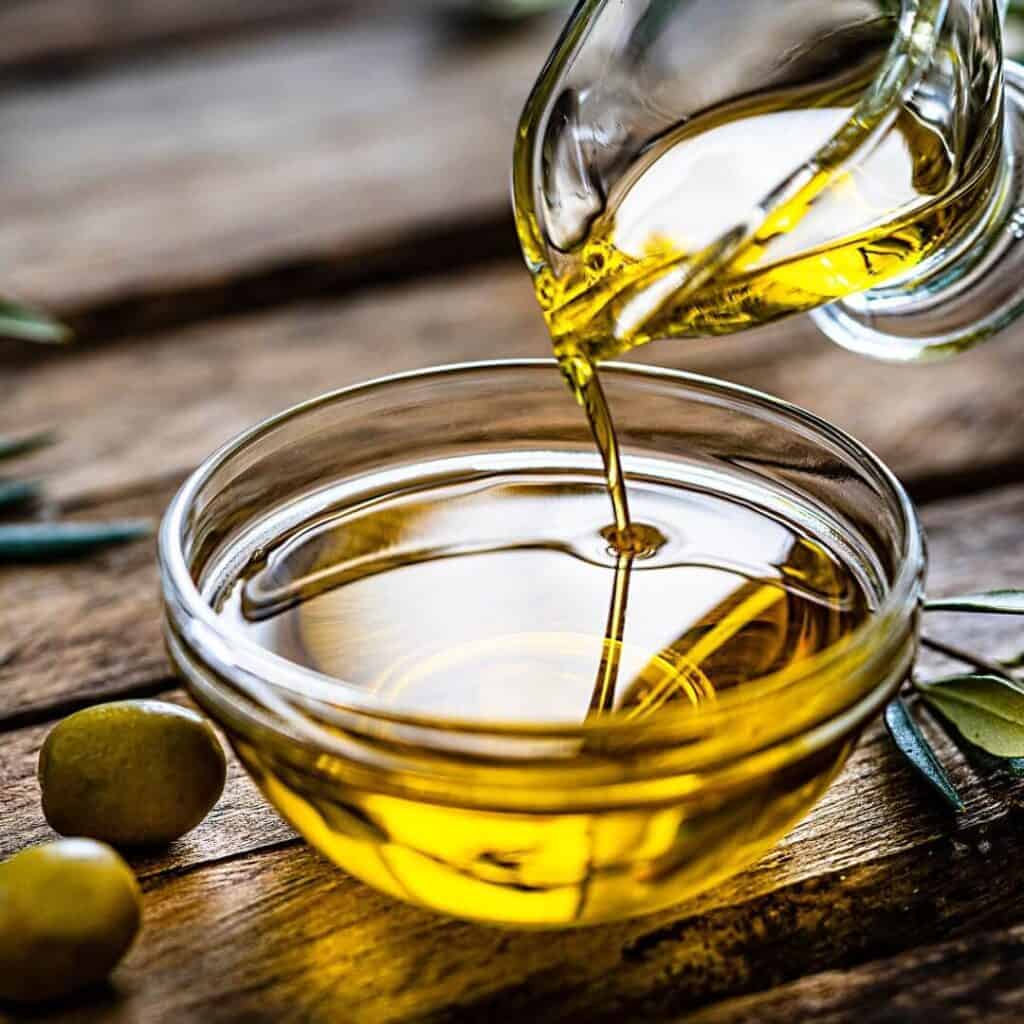
The other downside of olive oil for cats is the caloric hit they take. A teaspoon of olive is 124 calories, and 14 grams of fat. That is about 65% of Kitty’s daily caloric requirements with virtually no nutritional value. Considering the epidemic of obesity in cats, we don’t want to add that kind of fuel to the fire.
Related Post: Epidemic of Obesity in Cats
Proper Usage of Olive Oil for Cats
If you feel that your cat would benefit from a little bit of olive oil supplementation, follow these guidelines:
- Start with small amounts and gradually increase: Introduce olive oil to your cat’s diet in small quantities and observe their reaction before adjusting the dosage. One teaspoon of extra virgin olive oil, mixed into your cat’s regular meal twice a week is enough.
- Mix with wet food or use as a supplement: Olive oil can be added to your cat’s wet food or given as a supplement to ensure they consume it comfortably.
- Consult a veterinarian for appropriate serving sizes: It’s essential to seek guidance from a veterinarian to determine the correct amount of olive oil for your cat based on their individual needs.
- Opt for high-quality, extra-virgin olive oil: Selecting high-quality olive oil ensures that your cat receives the most nutritional benefits.
- Avoid flavored or seasoned varieties: Stick to plain, extra-virgin olive oil without any added flavors or seasonings to prevent any potential digestive issues.
As with any supplementation, consultation with your vet is important.
Summary
Cats can eat olives, but it’s best to do so with caution. They offer little nutritional benefit and can be high in fat and salt. Always remove the pits to prevent choking hazards and avoid any stuffing or marinade that would be toxic.
Moderation is key—olives should be an occasional treat, not a regular part of your cat’s diet. Pay attention to how your cat reacts, as some may love the treat while others might not be interested.
For personalized advice, always consult your veterinarian. They can provide guidance tailored to your cat’s specific health needs and dietary requirements.