
How to Keep Your Cat Safe in a Fire
There was a house fire in my neighborhood yesterday. Thankfully, no one was home, but the house was completely destroyed. The family’s two cats are now missing. That’s a devastating idea, isn’t it? According to the California Animal Response Emergency System, over 30,000 pets die every year in house fires. July 15th is designated as Pet Fire Safety Day. Read on to learn more about how to keep your cat safe in a fire.
This post may contain affiliate links. Life and Cats is a Chewy affiliate and a member of the Amazon Associates program and as such we earn a small commission when you shop through our our links and banners. It doesn’t change the amount you pay. You can read our full disclosure policy here.
Contents
How Do I Protect My Cat In Case of Fire?
As cat guardians we have to remember how curious our kitties can be. Prevention, and some serious cat proofing, is the best way to keep your cat safe in a house fire. Cats start fires accidentally started when cat guardians leave their cats in a dangerous situation. Likely without realizing how serious the risk is to their home and to their cat.
According to the National Fire Prevention Association, the most frequent cause of fires started by pets involve the stovetop or range. Others are candles and space heaters. We can reduce the risk to our cats when we know the ways they are most likely to cause a fire. Reducing the risks is the best way to keep our cats safe from a house fire.
Tips to Keep Cats Safe from Fire
No open flames:
Open flames and cats don’t mix. The flickering flames of a candle or fire can fascinate Kitty. She might not resist reaching for it. Or end up swishing her tail through it. Switch your candles for a flameless version if it is the ambiance you want. Try wax melt plugins if you want the scent.
Get a heavy screen for your fireplace to keep Kitty away from it. Make sure candles and any flames or embers in a fireplace are fully extinguished before you leave the room, even if it’s just for a few minutes. Take Kitty with you or put out the fire.
Remove or cover stove knobs:
Stoves with knobs on the front are the number one cause of pet-started fires. Cats can turn them on using them as stepping stones. If your stove has front knobs, consider removing them when the stove is not in use, or installing child proof covers to protect the knobs from misadventures. Keep Kitty away from the stove when you are cooking. It only takes a second for Kitty to burn herself or cause a disaster.
Secure space heaters:
Don’t let the cats knock over your heater, drag blankets against a space heater, or bounce a toy inside. Look for a closed or fine mesh unit that turns off when it is unstable. Even with the best unit, don’t leave it on if Kitty is unsupervised.
Don’t use glass water bowls outside:
Opt for ceramic instead. A glass bowl can act like a magnifying glass and become a fire starter.
Batteries can start a fire:
Beware the fire risk of batteries. Don’t just throw them in the trash. They can short out. Put electric tape over the terminals or put them back in the package. Don’t let Kitty play with them.
Dryers:
A significant number of house fires start with dryer fires. Lint builds up in the vent. Clean your lint trap at least every year; with a furbaby, a lot of lint will build up.
Damaged electrical items:
Cats start fires by chewing on electrical cords, damaging heating pads making biscuits, or peeing on electric blankets. Cover cords when possible or use deterrent sprays if you can’t. Inspect heating pads and electric blankets for wear and tear. Don’t leave them plugged in when you’re not supervising.
How Can I Save My Cats from a Fire
The National Fire Prevention Association states that pets start 1000 house fires every year. All it takes is a tail wagged across an open flame or a toy batted into a space heater to start a conflagration. The Red Cross says that once a fire starts in a home, we may have less than two minutes to get out if we want to survive. How can we give our cats the best chance of surviving a fire?
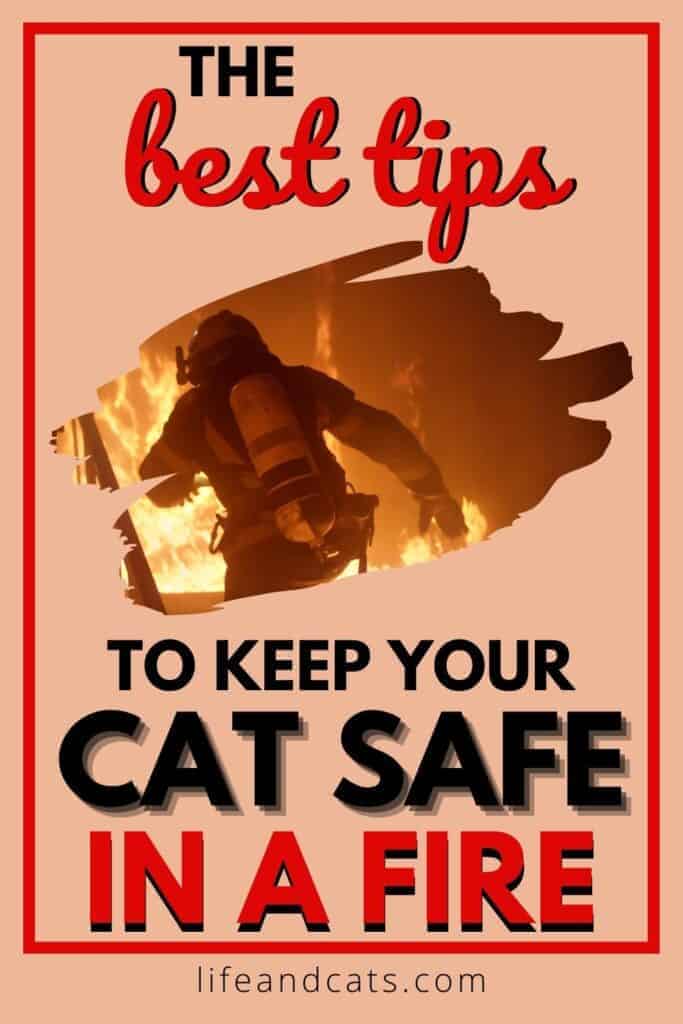
How to improve the chances of your cat surviving a house fire.
Besides catproofing your home to reduce the risk, the best thing we can do is to be prepared.
Consider installing monitored smoke and CO2 detectors to give you as much warning as possible. If you have an alarm monitoring service make sure they know how many cats you have. Have a fire extinguisher on every level of your home and test them regularly.
Put a Rescue My Pets window sticker on all your doors so the firefighters know to look for your cats.
Microchip your cats to give them the best chance of being reunited with you if they get lost during the chaos of fire.
Have a fire safety plan for you, your family, and your cats. Practice it. Like fire drills at school.
Create a Fire Safety Plan for Your Cats
- Keep your carriers open and accessible, preferably near an exit, and carrier train your cats.
- Train Kitty not to run away when the alarm goes off.
- Teach Kitty a solid recall inside and out.
- Know where your cats’ favorite hiding spots are; they’ll head there in danger. Training them to run *to* their carriers will be even more helpful.
- Have a designated meeting spot to make sure the cats aren’t out there before you tell the firefighters how many are missing.
Need more information on how to carrier train your cat? Click here for our tutorial.
How to Keep Your Cat Safe in a Wildfire
The Federal Emergency Management Agency and the Forest Service will keep you informed of the risk of forest fires in your area. Sign up for alerts on your phone. Have an emergency radio as a backup if you lose power or internet.
Be prepared. Keep your emergency kit up to date and ready to go. If you get a warning, bring outdoor cats in and don’t let them back out until the risk has passed. Make sure you charge all your devices and gas up your car.
Don’t wait until the authorities order you to evacuate. Leaving early gives you the best chance of finding a cat friendly place to go and not get stuck on the highway with a car full of yowling cats.
Read more in this post for more on how to handle an emergency with cats.
Don’t Risk Your Own Life in a Fire:
If your home is on fire, don’t risk your life. Never go back inside a burning building! If you know you can’t get all your cats out in time, throw open windows and doors on your way out to give them their best chance to survive. If you live in an apartment or condo, don’t leave the doors open. You risk the fire spreading to your neighbor’s homes and burning down the whole building.
Grab your leashes and carriers on the way out if you can do so without risking your own ability to get out safely. Call the cats when you get outside and hopefully they’ll follow you and come to your voice. Tell the firefighters they are in there, what they look like, and where they like to hide.
Looking for more cat safety tips? Check out our post on cat safety inside and out.