
The Power of Group Scent: Harmony in Your Multicat Family
Last Updated on January 4, 2026 by Holly Anne Dustin
Your cat has a much better sense of smell than you do. Kitty uses her nose to explore the world. Cats create a group scent to define a collective territory and maintain a harmonious home for your multicat family.
Cats have scent glands located on their cheeks, forehead, paws, and tail. They use these to deposit their unique signature scent around their environment. Each cat contributes to the group scent profile. This communal scent in your cats’ shared environment provides them with a sense of comfort, safety, and familiarity.
Related Post: Introducing a New Cat
Contents
Group Scent in a MultiCat Family
Cats engage in behaviors like grooming each other, head bunting, scratching a shared post, and body rubbing to spread their individual scents around their home and create that unified group scent. This shared scent structure provides a sense of familiarity and belonging among a group of cats.
Understanding Group Scent
A group scent reduces tension and conflicts within the feline community. It promotes bonding, helps prevent aggressive behavior, and encourages cooperation among your multicat family members. It is a powerful tool in the complex dynamics of multicat interactions and relationships.
A group scent also establishes a hierarchy and social order within the multicat environment. By sharing a common scent, cats can easily identify members of their social group. This reduces the chances of misunderstandings and conflicts among the cats.
This shared scent also acts as a form of communication, conveying messages about the cats’ social status, age, and general well-being to other group members.
When you introduce a new cat into the household, your resident cats will likely engage in grooming sessions with the new cat. This facilitates the integration of the newcomer into the group scent, promoting acceptance and harmony.

Scent Sharing Mechanisms
There are several key mechanisms cats use for scent sharing in a multicat environment:
- Allogrooming: Social grooming. One cat will groom another cat. This grooming behavior is not about cleanliness but a social activity that reinforces the bond between cats.
- Cheek rubbing: Cats rub their cheeks against objects, humans, and other cats to transfer their scent, which contains pheromones.
- Head bunting: A friendly behavior where cats press their heads against others to share scent and show affection and acceptance. This behavior is particularly important when introducing a new cat to the existing group.
- Rubbing: Cats their territory by rubbing against objects in their environment and against each other. This behavior is a way for cats to claim ownership of their surroundings and to communicate with other felines through scent. They will even rub on you!
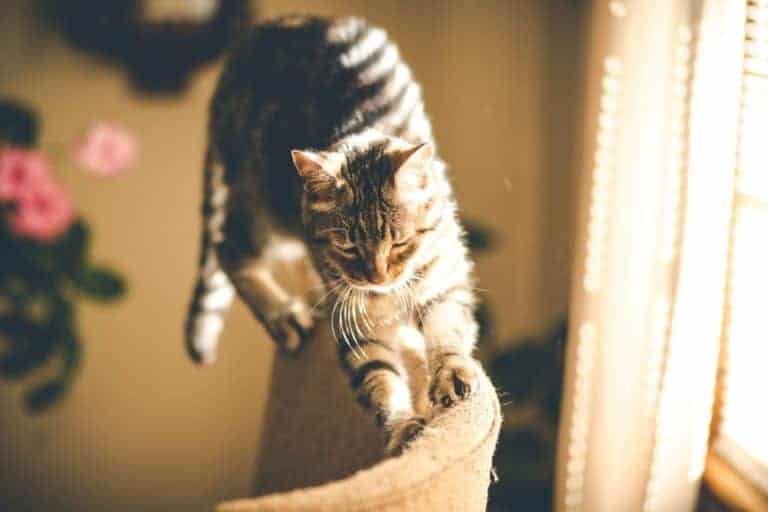
- Scratching: Cats scratch surfaces to leave both a visual mark and scent from glands in their paws.
By giving your cats opportunities to indulge these behaviors, you can support a harmonious atmosphere in your multicat household.
Behavioral Aspects of Group Scent in MultiCat Families
Group scent plays a crucial role in how cats interact with one another within a household. It affects territorial boundaries and social relationships.
Cats that have a strong and well-established group scent exhibit more cooperative behavior and reduced aggression towards their fellow housemates. This behavior underscores the vital role that scent plays in shaping social dynamics among cats.
Disruptions to the group scent, such as introducing a new cat’s scent abruptly, or removing familiar scents, can have adverse effects on the cats’ well-being. These type of disruptions lead to stress and territorial conflicts among the feline residents.
Maintaining a stable group scent environment is crucial for promoting a sense of security, comfort, and stability within the multicat family. Cat guardians can create a harmonious atmosphere for their furbabies by understanding group scent dynamics.
If your kitties don’t get along, and don’t rub against or groom one another, they won’t form the necessary group scent. The cats might learn to coexist without forming a bond, or they may prefer being solitary and keep to themselves. In the worst case scenario, your cats could become hostile towards each other. You could end up dealing with aggression, spraying, or destructive behavior.
Related Post: How to Fix a Bad Cat Introduction
Enhancing or Establishing a Group Scent for Your Cats
In any group, feline or human, someone will be the “social facilitator” to set up the group and make everyone comfortable. One cat in a multicat family has usually picked up that role. These cats groom and rub up against all the cats in the home to generate the group scent. If you think your cats are lacking a group scent and need help, you can become a social facilitator “cat” yourself.
Brushing Method
Brushing all your kitties with the same brush every day can spread scent markers among the cats. Brush 2-3 times a day. 4-10 strokes each will do. This is to scent swap, not maintain Kitty’s fur.
Brush their heads, necks, shoulders, and rib cage. Don’t pull the fur out of the brush between cats. Rotate the order of the cats that are brushed so that they all share their scents with each other. This creates the beginning of a unified group scent.

Scent Baiting Method
Some cat behaviorists, including Pam Johnson-Bennett, suggest that the brushing method is too strong a way to enforce a group scent because it doesn’t give Kitty a way to get away from the other cat’s scent. Instead, they suggest scent-baiting the area with a sock, a rag, or something similar. Clicker training combined with scent baiting can encourage the cats to interact. Rub the items on the cheeks of one cat and leave it where the other cats can interact with the item as they please.
Swapping bedding is another way of letting your cats get used to each other’s scent as part of the family. This is especially useful when introducing new cats into the household. If you can, leave a blanket that your new cat has used out for your resident cats to get used to his scent. Likewise, take a blanket your resident kitties use to the new kitty.
As you help your babies establish their group scent, they will begin to feel part of a collective group instead of feeling uncomfortable with other cats that smell different.
Summary
Without a group scent your cats will not ever form a bonded relationship. They won’t feel really comfortable in the home or each other’s company. Cat guardians can increase the harmony within their multicat family by engaging in activities that promote group scent. These efforts not only benefit the cats by reducing stress and aggression but also create a more enriching and fulfilling environment for both the felines and their human caregivers.