
Introducing The New Kitten: an Easy Step-by-Step Home Intro
Contents
Summary
Introducing the new kitten to a household of stranger kittens, cats, and humans can be a challenge, It is important to consider the needs of all when bringing home baby. Set up your kitten for success by giving her a sanctuary of her own to start with and go slow with introductions.
Last Updated on January 6, 2026 by Holly Anne Dustin
The day has arrived and you are bringing home the new kitten you chose. Everyone’s excited. Except perhaps the resident cats at home. If you have human children, introducing the new kitten is a little like bringing your new baby home to her big brother or sister. One minute you’re picturing snuggles, the next you’re watching a puffed tail and hearing a warning hiss that says, “Not in my house.”
Take a breath. Hissing, hiding, and slow progress can be normal at the start. Cats read change as risk, and a new kitten is change in a furry, fast-moving package.
This guide to introducing the new kitten gives you a simple step-by-step plan that keeps everyone safe and lowers stress. It is important to remember that the goal isn’t instant friendship, it’s calm, safe contact that builds trust over time.
So, how do we make this introduction of the new kitten successful? The keyword here is patience! Depending on the animals in question it can take weeks or even months. Keep in mind the 3-3-3 rules for cat adjustments to keep your expectations reasonable.
Consider Territorial Needs When Introducing the New Kitten
Cats are hyper-territorial creatures. Some are more so than others. Suddenly this little cat arrives in your resident cat’s territory and everyone makes a fuss over her. This is HIS space and he’s not interested in sharing. To your resident, the new kitten is seen as a hostile intruder, not a new friend.
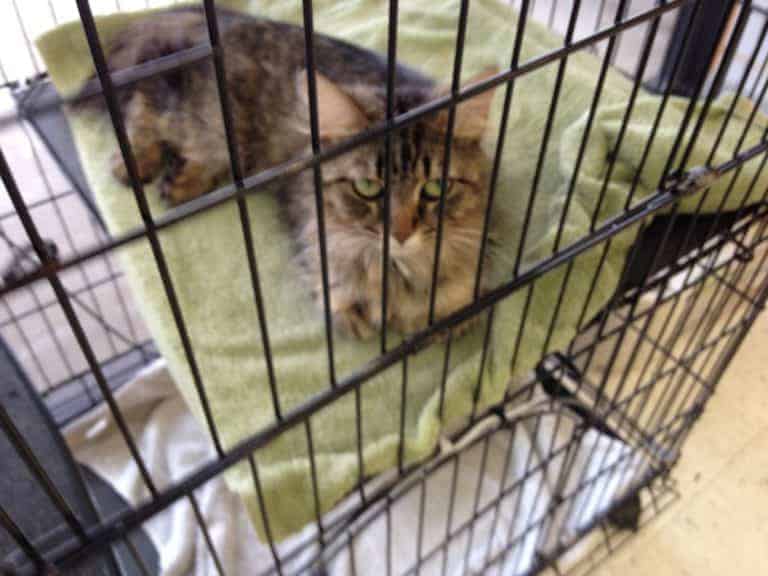
Consider the view of your kitten too. She has been taken away from her home and her siblings, or the familiar shelter setting to come to you, her forever home. She’s still young and she’s stressed and confused. It is important to set both of them up for success.

Give Baby a Sanctuary
Set up your kitten’s sanctuary room, with the items you have purchased for her. A small room, a den or guest room is ideal but a laundry room or even a bathroom can work.
You want a small room with limited places for your kitten to get into; with a door you can close. This space is your kitten’s “training wheels,” and it protects your resident cat from feeling invaded.
Stock the room with the essentials:
- Litter box (easy for the kitten to reach, low sides if they’re tiny)
- Food and water (placed away from the litter box)
- A soft bed plus a warm blanket
- A hiding spot (a cardboard box on its side works)
- A scratching post or scratch pad
- A few toys (wand toy for you, small toys for solo play)
Do a quick kitten-proofing sweep. Block access under furniture if your kitten could wedge into a risky spot, cover or bundle cords, and make sure windows are locked with secure screens. If the room has blinds, tie up dangling strings.
Plan ahead for controlled access later. A baby gate or a screen door insert can help you move to “they can see each other, but not touch” without chaos.
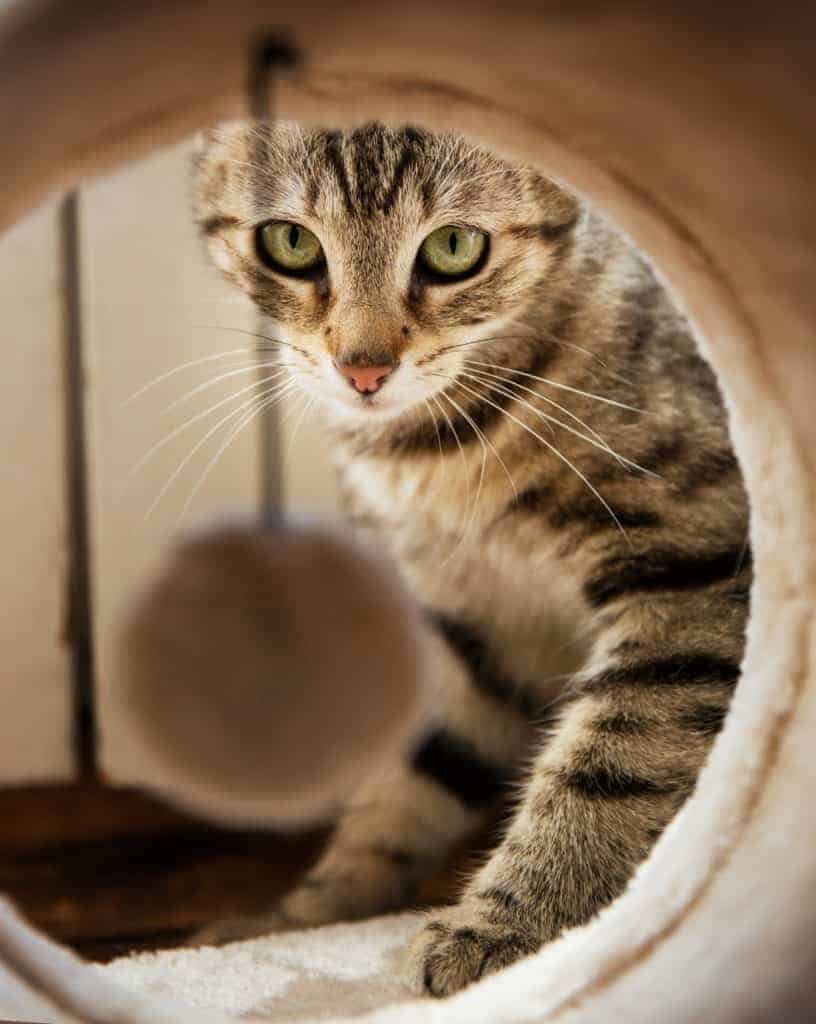
Provide a box or carrier with blankets or a cave style bed to give her a safe place to hide out. If you are able to bring home her bedding from the shelter it will give her a source of familiar scents. If you have a blanket or towel with your resident cat’s scent on it, put that in the kitten’s room too.
A Feliway diffuser can help with stress relief. As can calming music, such as that found on this YouTube channel.
Vet visit, quarantine, and scent collection
Even if your kitten came from a reputable rescue or breeder, a short separation is smart. Kittens can carry parasites, respiratory bugs, or ear mites without looking very sick. Your resident cat doesn’t need that exposure.
A vet check early on helps you confirm:
- Vaccines are on track
- Stool is parasite-free (or treated)
- Sneezing, eye discharge, or diarrhea isn’t brewing into a bigger problem
During this period, keep hygiene simple and consistent:
- Wash hands between handling cats
- Use separate litter scoops (and separate litter boxes, of course)
- Don’t share food bowls or water dishes yet
Now for the Resident Cats
Make sure there are a lot of enrichment opportunities, like cat trees, scratch posts, toys and hideouts, in their space too. A Feliway diffuser and calming music will help them too. Play with them, snuggle them, give them their favorite treats. Try and keep their routine as normal as possible. Don’t ignore them because the kitten is so cute and fun.
Let them sniff around the door. They are going to know the new kitten is there, but let them get used to the scent and the idea of it first before introducing them to the new kitten. If you have a blanket that has the kitten’s scent on it, leave it where the resident cats hang out. For the first few days just try to keep everything simple.
A Low Stress Introduction Plan That Works for Most Cats
A good introduction of the new kitten is less about the calendar and more about readiness. Some cats move quickly, others need a longer runway. Let your resident cat set the pace, since they’re the one protecting “their” territory. Keep your particular cats in mind when working through this. A shy kitten will do better with shorter visits, quieter play and a slower pace. A confident adult cat will probably need more boundary-setting at first, but will move faster once he lets his curiosity overcome his fear and anger.
Scent Swapping and Creating a Group Scent
A cat’s primary sense is scent not sight. They want to smell first, see second. Seeing the kitten first will trigger everyone’s fight or flight response. When everyone is comfortable with smelling each other under the door, use a facecloth, a glove or a natural bristle brush and rub your big cat’s cheeks and chin when your petting her. Then take the same item and rub the kitten’s face and chin and repeat the process. Each cat will get used to the other’s scent. The combining of the scents of all the cats will create the unique group scent that belongs to your cat family.
Swap bedding once or twice a day. If either cat seems tense, slow down and swap less often.
Switch Spaces
After creating a group scent, start introducing the new kitten to the other cat’s space and allow the resident cat to explore the kitten’s safe zone. If you have a large house I suggest limiting the kitten to a few rooms at a time, gradually expanding his territory. You don’t want the kitten to be overwhelmed or hide away. Don’t allow the cats to interact during the switching.
Put the kitten in a carrier and move him to the other cat’s space, letting him out after the resident cat is in the safe room. Hopefully, they will use each other’s litter box during these site swaps to further integrate the scents. Play with everybody in every space so they associate positive interaction with both spaces. Continue this for at least a couple days.

Barrier Viewing
Substitute a gate or screen door for the door to your new cat’s safe room to allow the cats to see each other but not directly interact. When we introduced our last set of cats putting up a screen door on the new cat’s safe room made it easy but a couple baby gates stacked in the door can work too. One of our resident cats was convinced he could fight through the screen so he had to have a gate and the screen for a few days.
What works well here:
Short sessions: 30 to 90 seconds can be enough at first.
End on a calm note: Stop before either cat gets worked up.
Parallel play: Play with the kitten on one side and engage your resident cat on the other with a wand toy.
If there’s hissing, don’t panic. Hissing is often “I’m uncomfortable” rather than “I’m going to fight.” Increase distance, shorten the next session, and go back to feeding near the barrier to rebuild good feelings.
Don’t rush your cats through this step. If your cats are sniffing the door and walking away calmly, showing relaxed body language, and taking treats in the presence of the new cat they are ready to meet. Growling, hissing, swatting at the door, or refusing the treats will tell you to go slow and stay at this step until the cats relax,
Supervised Visitation
When both cats can watch each other through a barrier without escalating, you can try supervised time in the same room. Choose a neutral space if you can, not your resident cat’s favorite nap spot.
Set the room up for success:
- Put treats in your pocket
- Have a wand toy ready to redirect energy
- Provide multiple “escape routes” (cat tree, chairs, open doorway back to safe room)
End the game with treats and put the kitten back in his room. Keep this up until they are fine in each other’s presence. They don’t need to be friends, they need to be able to ignore each other.
Start with very short visits, then slowly extend them. Only allow brief unsupervised time after you’ve seen several days of calm behavior, such as relaxed body language, no stalking, and no cornering near food, litter, or doorways.
Keep nails trimmed if possible. For safety, have a towel or a sturdy pillow nearby. If you need to separate cats, use the towel or object to block and guide them apart. Don’t grab with bare hands.
Call a vet if you see injuries, big appetite changes, urine marking, or sudden litter box problems. Pain and illness can make a normally calm cat act defensive. If health checks out and fear or fighting continues, a qualified cat behavior pro can help you adjust the plan to your specific home.
Conclusion
Slow steps, positive associations, and enough space set the stage for the best outcome. Don’t measure success by whether they cuddle, measure it by whether they can share a home with calm bodies and quiet choices.
Celebrate the small wins, a peaceful meal near the door, a curious sniff, a nap in the same room. Those moments stack up into trust.
Your cats will tell you what’s working, as long as you give them time to speak. Then you have achieved the happy cat family you planned.

More posts in this series you might enjoy:
- Choosing Your New Kitten
- Kittenproofing 101
- Bringing Home Your New Kitten
- Introducing Your New Kitten
- Bond with Your New Kitten
- The Best Way to Introduce a Dog to a Cat
- Can Cats and Kids Live Together