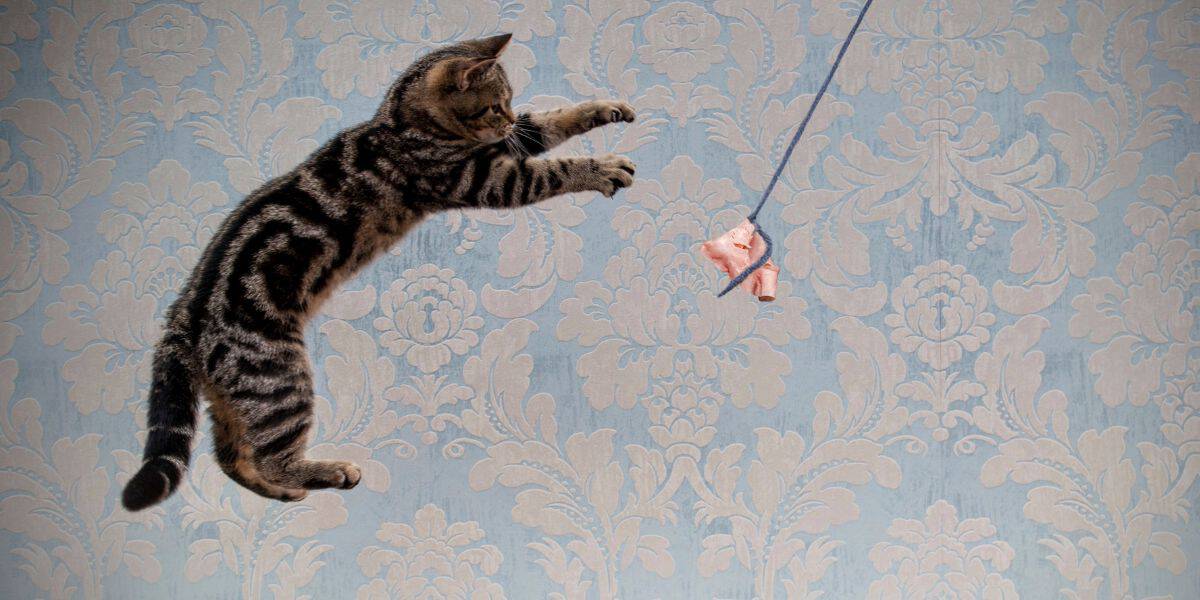
Training Your Cat for Feline Agility: Tips and Tricks
Last Updated on January 4, 2026 by Holly Anne Dustin
Training your cat for feline agility is a fun and exciting way to bond with your cat while providing them with physical and mental stimulation. It involves training Kitty to navigate through a series of obstacles, such as tunnels, jumps, and weave poles, in a timed course. Usually associated with dogs, cat agility has been gaining popularity in recent years, with more and more cat owners discovering the benefits of this sport.
Training your cat for feline agility can be a rewarding experience for both you and your furry friend. Not only does it provide them with physical exercise and mental stimulation, but it also helps build their confidence, and trust in you as their owner. It can also be a great way to socialize your cat and introduce them to other cats and people who share the same interest. With patience, practice, and positive reinforcement, almost any cat can learn to navigate an agility course.
Contents
- 1 Understanding Feline Agility
- 2 Benefits of Agility Training
- 3 Preparing Your Cat for Training
- 4 Basics of Cat Agility Training
- 5 Setting Up Your Agility Course
- 6 Training Techniques
- 7 Teaching Specific Agility Skills
- 8 Coping with Common Cat Agility Training Challenges
- 9 Preparing for a Cat Agility Competition
- 10 Summary: Patience, Consistency and Success
Understanding Feline Agility
Feline agility is a sport that involves training cats to navigate through an obstacle course. It is a fun way to provide mental stimulation and a workout for your furry friend. Agility courses consist of various obstacles such as tunnels, jumps, weave poles, and more.
Training your cat for feline agility requires patience, consistency, and positive reinforcement. Cats are intelligent animals and can quickly learn to navigate through an obstacle course. It is important to start with simple obstacles and gradually increase the difficulty level. With patience, consistency, and positive reinforcement, your cat can become an agility superstar!

Benefits of Agility Training
Agility training for cats offers numerous benefits that go beyond just physical fitness. Here are some of the top benefits of agility training for felines:
- Bonding: Training for feline agility can be a great way for cat owners to bond with their pets. Training sessions provide an opportunity for owners to spend quality time with their cats, which can strengthen the bond between them. When cats learn new skills and receive positive reinforcement, they feel more connected to their owners.
- Physical Conditioning: Feline agility training can help cats maintain a healthy weight and prevent obesity-related disease. This is especially important for indoor cats who may not have access to outdoor exercise.
- Mental Health: Agility training sessions require Kitty to use her brain to solve problems, focus and concentrate, and learn new skills. Training for feline agility keeps Kitty mentally sharp, builds her confidence which can help an anxious cat.
Training your cat for feline agility is a great way for cat owners to bond with their pets while promoting physical and mental health. With a little bit of patience and practice, cats of all ages and abilities can learn new skills and enjoy the benefits of agility training.
Related Post: Part one of our agility series
Preparing Your Cat for Training
Before beginning feline agility training, it is important to ensure that your cat is healthy. A visit to the veterinarian is recommended to make sure your cat is physically able to participate in the training.
Create a positive and comfortable environment to train your cat for feline agility. Choose a quiet and distraction-free area for training sessions, and make sure Kitty is relaxed and comfortable. Don’t force him to work if he’s not in the mood. Play is the motivator for cats. If it isn’t fun, he isn’t going to want to do it.

Use positive reinforcement techniques such as treats, praise, and toys to encourage your cat to participate. Avoid using punishment or negative reinforcement, as this can lead to fear and anxiety in your cat. It is time to stop the training session if either of you is getting frustrated.
It is important to start with simple exercises and gradually increase the difficulty as your cat becomes more comfortable and confident. Be patient and consistent with your training, and always end on a positive note.
By taking these steps to prepare your cat for training, you can help ensure a successful and enjoyable experience for both you and your feline companion.
Basics of Cat Agility Training
Training a cat for agility can be a fun and rewarding experience for both the cat and the owner. It requires patience, dedication, and a willingness to work with your feline friend. Here are some basic tips to get started with cat agility training:
Training
The first step in cat agility training is to teach your cat the desired behaviors. This can be done through clicker training, which involves using a clicker to mark the desired behavior and then rewarding the cat with a treat and praise. Consistency is key, so it’s important to have regular training sessions with your cat.
Click here to watch a Cat School video showing how to use clicker training for agility.
Treats and Toys
Treats and toys are important tools in cat agility training. Use treats to reward your cat for performing the desired behaviors, and use toys to encourage your cat to move through the course. Make sure to choose treats that your cat loves and toys that are safe and appropriate for your cat’s size and age. Keep in mind that you need to phase out the use of treats if you plan to compete officially. Treats aren’t allowed in the agility ring. Kitty can get a treat after she completes her run but not obstacle by obstacle.
Positive Reinforcement
Positive reinforcement is essential in cat agility training. Reward your cat for performing the desired behaviors, and avoid punishing your cat for mistakes. This will help to build a positive relationship between you and your cat, and will encourage your cat to continue learning and trying new things.
Find a high value treat that Kitty loves and save it just for her training sessions. Choose a selection of toys to see what gets her most excited. Save the best just for agility. The best reward is praise. Be sure Kitty knows how much fun you are having practicing with her and what a great job she’s doing. Let her “win” and catch the toy at the end of her practice session and the end of her runs in the ring. The successful “hunt” fulfills her emotional needs. Sometimes they’ll keep going and run the course carrying his prize.

Patience
Patience is key when training a cat for agility. It may take some time for your cat to learn the desired behaviors, and it’s important to be patient and consistent in your training. Take breaks if your cat becomes frustrated or tired, and always end training sessions on a positive note.
Sessions
Training sessions should be short and frequent, with a focus on positive reinforcement and fun. Start with simple obstacles and gradually increase the difficulty as your cat becomes more confident and skilled. Remember to always keep training sessions fun and enjoyable for both you and your cat.
By following these basic tips, you can begin to train your cat for feline agility and enjoy a fun and rewarding activity together.
Setting Up Your Agility Course
Before you can start training your cat for feline agility, you need to set up an agility course. The course should be designed to challenge your cat’s physical and mental abilities. Here are some tips to help you set up your agility course:
Choose your Obstacles
There are many types of obstacles that you can choose from when training your cat for feline agility. Some popular obstacles include weave poles, tunnels, hoops, A-frame, ramp, and more. You should choose obstacles that are appropriate for your cat’s age and physical abilities.
If you are making your own course, you can use whatever you want. Jumps can be made out of pool noodles, broomsticks, or tension rods in doorways. A cardboard box can be a tunnel. Weaving poles can be water bottles or your kid’s soccer cones. Get creative.
If you are training your cat for feline agility in an official CFA or ICAT competition, you will want to use something that approximates the obstacles Kitty will see in the ring.
Related Post: Are you looking to make your own agility ring? Look for part 3 of this series
Start Training
Start with a simple obstacle and move on, increasing the difficulty. It isn’t necessary to teach Kitty the obstacles in the order she will see it in the ring. In fact, in some ways it is better if you don’t. Problem solving is part of the game for your smart kitty. If she likes to jump, you could teach the hurdles in order and then set her a run of hurdles in the hall. Then add the hoops or arch jumps. Use positive reinforcement to encourage your cat and reward her for a job well done.
Practice Regularly
Regular practice is key to success in training for feline agility. Cats like routine. Make sure you set aside time each day to practice with your cat. This will help your cat to improve his or her skills and become more confident on the course.
You don’t have to set up jumps to have an official practice session. Grab your lure toy and practice having Kitty chase it. Up over a table, around some chair legs, back and forth around a roommates legs. Just give Kitty a chance to have fun that isn’t directly directed at training for feline agility but is still reinforcing the necessary skills. Leave him wanting more. Stop before boredom sets in. Always end with a treat.
Set Up the Course
Once you and Kitty have mastered a few obstacles, you can set up a course. You can use cones or markers to outline the course and place the obstacles in the correct order. You should make sure that there is enough space for your cat to move around freely.
Introduce Your Cat to the Course
Before you start training your cat, you need to introduce him or her to the course. Let your cat explore the course and get familiar with the obstacles. This will help your cat to feel comfortable and confident when he or she starts training.
By following these tips, you can set up a fun and challenging agility course for your cat. With regular practice and positive reinforcement, your cat can become a skilled feline athlete.

Training Techniques
Training a cat for feline agility requires patience and consistency. Here are some effective techniques that can help you train your cat:
Clicker Training
Clicker training is a popular method of training cats. It involves using a clicker to signal to the cat that they have performed a desired behavior. The clicker is paired with a treat to reinforce the behavior. This technique is effective in teaching cats new behaviors and tricks. You can also teach Kitty to respond to a hand gesture or a specific word like jump, weave, go.
The Cat School Youtube channel has helpful videos on clicker training and target training.
Target Sticks
Target sticks are used to guide the cat to perform a specific behavior. The stick is used to direct the cat to a specific location or to perform a specific action. This technique is effective in teaching cats to follow a specific path and to jump over obstacles.
Lure and Luring
Lure and luring is a technique that involves using a toy or treat to entice the cat to perform a desired behavior. For example, you can use a toy to lure the cat through an obstacle course. This technique is effective in teaching cats to follow a specific path and to jump over obstacles. This seems to be the most popular method of training for feline agility.
Patience and Consistency
Patience and consistency are crucial when training a cat for feline agility. It takes time for cats to learn new behaviors and tricks. It is important to be patient and consistent in training your cat. Consistency in training will help the cat to learn and remember the desired behavior.
Teaching Specific Agility Skills
Teaching specific agility skills is an essential part of training your cat for feline agility. It requires patience, consistency, and positive reinforcement. In this section, we will cover some of the specific agility skills that you can teach your cat.
Jumping and Hurdles
Jumping and hurdles are some of the most basic agility skills that you can teach your cat. Start with small hurdles and gradually increase the height as your cat becomes more comfortable with the activity. Here are some tips to help you teach your cat to jump and hurdle:
- Start with a low hurdle and place a treat on the other side to encourage your cat to jump over it.
- Use a clicker to mark the behavior and reward your cat with a treat.
- Gradually increase the height of the hurdle as your cat becomes more confident.
- When you reach the jumps that Kitty needs to actually jump, target your lure at the top of the hurdle. When you see he’s about to spring, move the target to the floor.
- Remove the treats and substitute the lure once Kitty gets the hang of it.

Weaving and Poles
Weaving and poles are another essential agility skill that you can teach your cat. It requires your cat to navigate through a series of poles or weave in and out of them. Here are some tips to help you teach your cat to weave and navigate through poles:
- Start with a few poles, you can use something as a few water bottles, and place a treat at the end to encourage your cat to navigate through them following a lure.
- Use a clicker to mark the behavior and reward your cat with a treat.
- Gradually increase the number of poles as your cat becomes more confident.
Tunnels and Ramps
Tunnels and ramps are more advanced agility skills that you can teach your cat. It requires your furbaby to navigate through a tunnel or climb up and down a ramp. Here are some tips to help you teach your cat to navigate through tunnels and climb ramps or stairs:
- Start with a short tunnel or a low ramp and place a treat on the other side to encourage your cat to navigate through it. Drag your lure toy or target stick across the top of the tunnel to lead Kitty through.
- Use a clicker to mark the behavior when he gets to the end and gets her reward.
- Gradually increase the length of the tunnel or the height of the ramp as your cat becomes more confident.
Overall, teaching specific agility skills requires patience, consistency, and positive reinforcement. By following these tips, you can help your cat develop the skills necessary to excel in feline agility.

Photo Credit: Larry Johnson
Coping with Common Cat Agility Training Challenges
Every cat is unique, and some may encounter obstacles that are more difficult for them to master. Here are some common challenges and how to address them:
Fear: Introduce your cat to each obstacle slowly, allowing them to sniff and explore it before attempting the challenge. You will be allowed to let Kitty explore the ring and obstacles at the show as well.
Not Motivated: Experiment with different types of toys to find what motivates your cat, and use that as a reward during training. You can use anything that Kitty responds too. Bells, shiny things, long ribbons or feathers, empty treat bags. We’ve even had Sunny run for a chicken bone on a string.
Difficulty with Specific Obstacles: Break down challenging obstacles into smaller steps, and reward your cat for any improvement towards obstacle completion. If Kitty doesn’t understand how to do an obstacle, pick him up and physically put him over the bar, through the hoop, around the weave poles. Sometimes all it takes is for Kitty to understand what it is you want him to do.
Remember, once Kitty gets that first completed run in the books he can collect points obstacle-by-obstacle. So if all he can manage on a given day is the stairs and the first two hurdles and he balks at the tunnel, he still gets 45 points.
Preparing for a Cat Agility Competition
Participating in a cat agility competition can be a fun and exciting experience for both you and your cat. However, before you can compete, you need to prepare your feline friend for the challenge ahead.
The first step is to ensure that your cat is in good health and physically fit. Take your cat to the veterinarian for a check-up to ensure that they are healthy enough to participate in the competition. Additionally, make sure that your cat is up-to-date on all necessary vaccinations.

As you train your cat, it’s important to keep in mind the rules of the competition. Most cat agility competitions require cats to complete the course in order in a counterclockwise direction.
When it comes to competing, it’s important to arrive early and allow your cat time to acclimate to the new environment. Keep your cat calm and relaxed by bringing familiar items such as their favorite toys or blanket. During the competition, remain calm and positive to help your cat stay focused and motivated.
Preparing for a cat agility competition requires time, patience, and dedication. By ensuring that your cat is healthy, training them properly, and following the rules of the competition, you and your feline friend can have a fun and rewarding experience at a cat agility tournament or cat show.
Summary: Patience, Consistency and Success
Training for feline agility requires patience and consistency. It is not an overnight process, and it may take weeks or even months for your cat to master all the obstacles. However, with patience and consistency, you can achieve success.
Remember to start with the basics and gradually increase the difficulty level. Use positive reinforcement such as treats and praise to encourage your cat. Avoid punishment or negative reinforcement as it can make your cat fearful and uncooperative.
Consistency is key in training your cat for feline agility. Practice regularly and keep the training sessions short and fun. Try to keep the training area distraction-free to help your cat focus on the obstacles.
Success in feline agility is not just about winning competitions, but more about the bond you create with your cat. Training your cat for agility can help improve their physical fitness, mental stimulation, and overall well-being while you have fun with your furry friend.

Thank you to agility competitor and certified CFA Agility Ringmaster Kim Dustin for contributing to this article.