
Why Enrichment is Important for Cats
Last Updated on December 30, 2025 by Holly Anne Dustin
Enrichment is important for cats because without it they can develop health problems, get depressed, or seriously bored. Bored, understimulated cats can display negative behaviors such as inappropriate scratching, aggression, excessive shyness, and litter box issues. While medical issues should be ruled out first, providing the necessary enrichment can turn negative behaviors into positive ones.
Cats are predatory by nature and need elements in their home environment to let them explore that aspect of themselves to prevent boredom. When these needs are not met, undesirable behaviors develop.
It’s important to remember to rule out medical issues first and consult a veterinarian if necessary. By understanding why a cat is displaying negative behavior, the first step in correcting the behavior can be taken.
This post may contain affiliate links. Life and Cats is a Chewy affiliate and a member of the Amazon Associates program and as such we earn a small commission when you shop through our our links and banners. It doesn’t change the amount you pay. You can read our full disclosure policy here.
Contents
Why Enrichment is Important to Cats
Enrichment is important for cats because it can prevent behavior problems and promote overall well-being. Enrichment activities let cats be cats, not couch potatoes.
Cats are natural hunters and explorers, and providing them with an enriched environment is crucial for their physical and mental well-being. Enrichment refers to the provision of a stimulating environment that encourages natural behaviors and activities, such as hunting, stalking, climbing, scratching, and playing.
Related Post: Prevent Boredom: Enrichment for Cats
Here are some reasons why enrichment is important to cats:
- Physical health: Enrichment activities help to keep cats physically active and fit. This can prevent obesity, which is a common health problem in cats and leads to diabetes and heart disease.
- Mental health: Enrichment activities also help to keep cats mentally stimulated and engaged. This can prevent boredom, depression, and reduce stress and anxiety.
- Behavioral problems: Cats that are not provided with enough stimulation and enrichment may develop behavioral problems, such as aggression, destructive behavior, and inappropriate elimination.
- Bonding: Enrichment activities can also be a great way for cats and their owners to bond and spend quality time together. Playing with toys, grooming, and training are all great ways to strengthen the bond between cats and their owners.
Enrichment Lets a Cat Be a Cat
Overall, providing cats with an enriched environment is essential for their physical and mental well-being. Guardians should aim to provide a variety of enrichment options to keep their cats happy and healthy.
Climbing
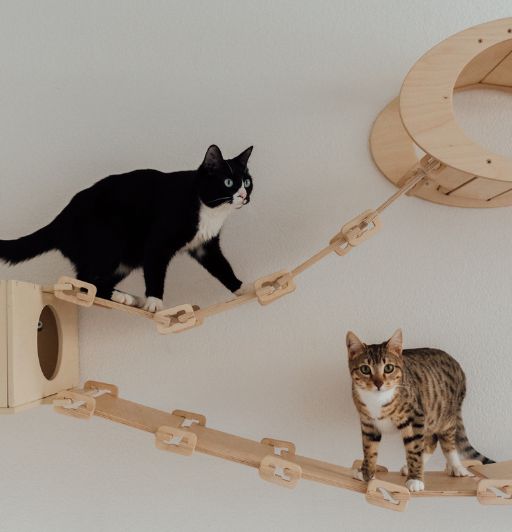
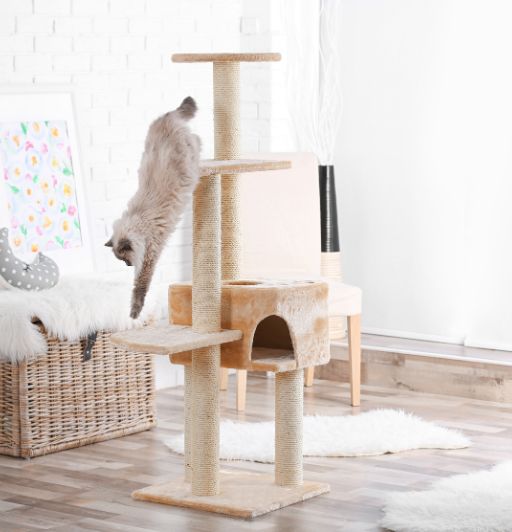
Cats love to climb and get up high. They can survey their territory and keep watch on the rest of the family – even if that means us humans. In the wild, climbing is a way to stay safe from predators. In the house, that might mean the dog or your toddlers. It is also a good workout and builds Kitty’s self-confidence. Add a few cat trees, shelves, arrange the furniture so Kitty can jump to higher places, or go big and build a cat wall.
Hiding
Cats like to hide away to keep safe while they’re resting or frightened. Hiding helps cats feel secure, and lets them watch what’s going on about them without feeling exposed or vulnerable. It can also be a chance to jump and pounce on his “prey.”
Scratching
Scratching lets Kitty stretch their entire body. The scratching post should be tall enough to allow your cat to stretch completely and sturdy enough to support him while he scratches. Scratching is a way for Kitty to relieve stress and aggression. He can “talk” to other animals with the pheromones in his paws. Offer a variety of surfaces and sizes. Sprinkle on some catnip and watch Kitty go for it.
Related Post: Scratching Behavior
Hunting and Seeking
In the wild, cats hunt for their food. Our cats eat from a bottomless bowl. All they have to do is wait for us to open the cans or pour out the kibbles. But we can fix this. By using food challenges, Kitty’s meals can simulate the natural scavenging and foraging behavior of cats. It can be as simple as placing bowls of food around the house for Kitty to find. This doesn’t really work for multiple cat families where you need to make sure everyone gets their share.
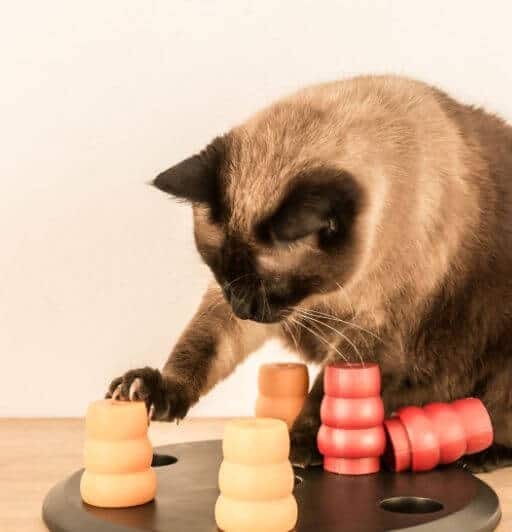
Food puzzles and slow feed gadgets is another way to turn mealtime into a chance to exercise the inner hunter and forager. Introduce easy food challenges first, ensuring your cat can successfully get his meal. A frustrated cat may stop trying, and go without food, which can cause health problems.
Play
Kittens learn their hunting skills through play. Watch them play with their littermates. They observe, stalk, chase, pounce, and manipulate their prey. They continue to use those skills as adults. Lacking enrichment and opportunity for play, indoor cats may use your feet and hands or feline roommates to meet the same needs. Knocking stationary objects from a table or stealing your pens and chasing them around are other ways Kitty will respond to a lack of enrichment.
Instead, offer your cat a wide variety of toys. Encourage your cat to practice her hunting and stalking behavior with toys like feather wands, fluffy mice, or motion-activated toys. Switch toys around to prevent your cat from losing interest. Solo play and interactive play are both important.
Related Post: Cognitive Enrichment for Your Smart Cat
Ways to Enrich Your Cat’s Environment
Cats need a stimulating and enriching environment to thrive. Here are some ways to enrich your cat’s environment:
- Provide plenty of toys: Cats love to play, and toys can keep them entertained for hours. Toys that mimic natural prey, such as mice or birds, are especially popular. Rotate the toys to keep them fresh and fun.
- Offer scratching posts: Scratching is a natural behavior for cats and helps them keep their claws healthy. Providing a scratching post can prevent your cat from scratching your furniture.
- Create hiding spots: Cats love to hide, so creating hiding spots in your home can provide them with a sense of security. This can be as simple as leaving a cardboard box out for them to hide in.
- Provide perches: Cats love to climb and perch up high. Providing a cat tree or shelves for them to climb on can give them a sense of security and a great view of their surroundings.
- Offer different textures: Cats love to explore different textures, so providing a variety of surfaces for them to walk on can be enriching. This can include carpet, tile, and even grass.
- Play with your cat: Spending time playing with your cat can provide them with mental and physical stimulation. This can be as simple as playing with a string or laser pointer.
- Use food puzzles: Food puzzles, lickimats, snufflemats and the like to simulate hunting.
- Training: Train your cat to do tricks. Clicker training or target training gives Kitty a chance to exercise his mind, keeps him sharp, and builds a strong bond between you and your feline friend.
- Access to the outside: Build a catio, leash and harness train Kitty, or use a backpack or stroller to take Kitty on an adventure. If you can’t give him access directly, put up bird feeders, or explore some nature videos.
- Keep it new and interesting: Change up the enrichment options you offer. Add a box, some crumpled paper or ball of foil, blow some bubbles, bring in a stick or leaves from outdoors, cat grass, catnip or silvervine.
Related Post: Sensory Enrichment for Cats
By providing cats with adequate environmental enrichment, cat guardians can help improve their overall health and well-being, reduce the risk of behavioral problems, and strengthen the bond between the cats and their people.
Rule Out Medical Issues First
Before implementing any environmental enrichment strategies for cats, it is important to rule out any underlying medical issues. Some medical conditions can cause behavioral changes in cats. Trying to solve a medical problem with enrichment activities is not helpful and leaves Kitty suffering.
Some of the Medical Conditions That Cause Behavioral Changes in Cats:
- Hyperthyroidism is a common condition in older cats. It can cause increased appetite, weight loss, restlessness, and other behavioral changes.
- Arthritis: Cats with arthritis may be less active and less interested in playing or exploring their environment. They can also get aggressive with other cats. They may not want to be touched.
- Dental problems: Cats with dental problems may have difficulty eating or grooming, which can lead to weight loss and other behavioral changes.
- Urinary tract infections: Cats with urinary tract infections may urinate outside the litter box or show other signs of discomfort while urinating.
If you suspect that your cat may have a medical issue, it is important to consult with a veterinarian before implementing any environmental enrichment strategies. Once any medical issues have been ruled out or treated, you can begin to focus on creating a stimulating and enriching environment for your cat.
Summary
Enrichment is crucial for the overall well-being of cats. Providing cats with a stimulating and engaging environment not only enhances their physical health but also their mental health. Environmental enrichment can reduce stress and anxiety, prevent boredom, and encourage natural behaviors.
By incorporating different types of toys, scratching posts, and perches, cat owners can create a more stimulating environment for their feline companions. Additionally, providing opportunities for play and social interaction can also improve a cat’s quality of life.
Overall, environmental enrichment is an essential aspect of cat care that should not be overlooked. By providing a stimulating and engaging environment, cat owners can ensure that their furry friends are happy, healthy, and thriving.