
Harmonious Homes: Cat Breeds Good With Dogs
Last Updated on April 17, 2024 by Holly Anne Dustin
If you want to adopt a cat but you already have a dog, you’ve probably got a lot of concerns. Cats are territorial animals. They can be difficult to blend with other cats, let alone a dog. But cats and dogs can live together successfully if they are introduced properly. There are some cat breeds that seems designed to be good with dogs, even described as dog-like.
Cats and dogs are often thought of as natural enemies, but this is not always the case. In fact, there are many cats that get along famously with dogs and can make great companions for families with both pets. While some cats may be more hesitant around dogs, there are certain breeds that tend to be more accepting and even friendly towards their canine counterparts.
Of course, breed is not the only factor that determines whether a cat will get along with a dog. Personality and socialization are also important factors to consider. A well-socialized cat that has been exposed to dogs from a young age is more likely to be comfortable around them and may even enjoy their company. With the right introductions and plenty of patience, many cats and dogs can learn to coexist peacefully and even form close bonds.
Contents
Understanding Cat and Dog Behavior
Cats and dogs approach the world very differently. A dog person without previous experience with cats needs to study cat behavior and communication before getting a cat. Likewise, a confirmed cat person that is going to be living with a dog needs to understand dog behavior.
Canine and Feline Body Language
Cats and dogs have different body language cues, which can sometimes lead to misunderstandings. For example, a wagging tail on a dog usually indicates happiness or excitement, while a wagging tail on a cat can indicate irritation or aggression. It’s important to understand these differences in body language to prevent conflicts between cats and dogs.
Dogs tend to be more vocal and expressive with their body language, while cats are more subtle. Dogs often communicate through barking, growling, and body postures such as standing tall or lowering their head. Cats communicate through body postures such as arching their back or puffing up their fur, as well as through vocalizations like meowing or hissing.
Related Post: Cat Communication
Signs of Compatibility
When introducing a cat and dog, it’s important to look for signs of compatibility. Choose a dog that has a low prey drive and is not overly aggressive. They are more likely to get along with cats. Similarly, cats that are confident and not easily intimidated are more likely to get along with dogs.

Younger animals are easier to blend. A puppy would be hard to mix with an older cat.
It’s also important to introduce the animals slowly and carefully. Start by allowing them to smell each other through a closed door, and gradually increase their exposure to each other. Always supervise their interactions and be prepared to separate them if necessary.
Related Post: Introduce a Cat to a Dog
Common Misunderstandings
One common misunderstanding is that cats and dogs are natural enemies. While they may have different instincts and behaviors, cats and dogs can actually form strong bonds and become great companions.
Another common misunderstanding is that cats are always afraid of dogs. While some cats may be fearful of dogs, others may be curious or even playful. It’s important to let the animals interact on their own terms and not force them to interact if they are uncomfortable.
By understanding the body language and behavior of cats and dogs, as well as looking for signs of compatibility and avoiding common misunderstandings, it’s possible to create a harmonious relationship between these two beloved pets.
Best Cat Breeds for Dog Households
Cats and dogs can be great friends if they are introduced properly and have the right temperament. Some cat breeds are more likely to get along with dogs than others. Here are some of the best cat breeds good with dogs:
Maine Coon
Maine Coons are often described as having dog-like qualities. They are outgoing, highly intelligent, and trainable.They play fetch, often enjoy playing with water, and walks on leash. Coons typically make great adventure cats. If you want a cat that will go hiking with your dog, a Maine Coon might be a good choice.
Maine Coons are known for their friendly, laid-back personalities. They are social cats that enjoy being around people and other animals, including dogs. They are also a large breed, they can run the size of a medium dog, which means they can hold their own against bigger dogs.

Ragdoll
Ragdolls are gentle giants that are known for their affectionate and docile personalities. They are not only good with dogs but also with children, making them a great choice for families with both dogs and kids. Ragdolls act a lot like dogs. They follow you around and want to be part of everything you do. They want to please you. Their interest in other species isn’t limited to humans. They tolerate even the most energetic of dogs. My ragdoll loves our ferrets too.
Siamese
Intelligent and curious, Siamese cats are known for their sociable and friendly, outgoing nature. They tend to enjoy the company of people and other animals, including dogs. Siamese cats are generally adaptable to different environments and changes. This adaptability extends to interacting with other pets, making it easier for them to adjust to the presence of a dog in the household. Siamese cats are playful and energetic, traits that can align well with the playful nature of many dog breeds. They are also vocal cats that are not afraid to let their presence be known.
American Shorthair
The original working cat, American Shorthairs are known for their easy-going personalities. They are a mellow breed that generally doesn’t mind being housemates with a dog. American Shorthairs are adaptable cats that can get along with just about anyone. American Shorthairs are very social, confident, and playful, and once boundaries are established in the house, they love to play with housemates whether they are other cats or dogs.
Abyssinian
Abyssinian is an extroverted breed that loves to explore and play, making the cats great companions to a young puppy or high-energy, playful dogs. They are also very intelligent and active cats that enjoy playing with toys and interacting with their owners and other animals, including dogs. They can be a little reserved at first, but their curiosity will overcome it and make friends in time.
Birman
Birmans are gentle cats that are known for their affectionate personalities. They are also very social cats that enjoy being around people and other animals, including dogs. Birmans love to chase, play tag, and even fetch balls. If you are looking for a cat that will keep your dog entertained while you are working, a Birman might be a good choice.
Norwegian Forest Cat
Often described as “dog-like,” Norwegian Forest Cats are known for their independent personalities. A very playful and active breed, well-known for its fun-loving spirit, the wegie has a gentle, mellow temperament.
They are also very intelligent cats that can get along with just about anyone, including dogs. Norwegians are also a large breed cat, able to hold their own against bigger dogs.
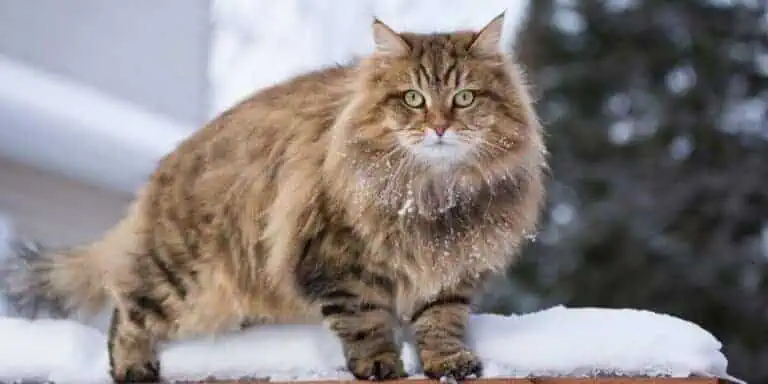
Siberian
The Siberian cat is a friend to everyone. Siberians are known for their friendly and outgoing personalities. They have a high need for attention. Siberian cats are affectionate and curious. They have great “leadership skills.” Your dog may find that he has a new feline overlord.
Siberians are active cats that enjoy playing with toys and interacting with their owners and other animals, including dogs. They are very agile, people-oriented, and are great jumpers despite their large size. Many enjoy playing with water.
Devon Rex
Devon Rex cats are known for their playful and mischievous personalities. They are also very social cats that enjoy being around people and other animals, including dogs. They are also a small breed, which means they can get along with smaller dogs.
Japanese Bobtail
Japanese Bobtails are known for their friendly, social, and outgoing personalities. Similar to dogs, the Japanese bobtail is highly trainable; they can learn commands, tricks, and even play a game of fetch. They are very active cats that enjoy playing with toys and interacting with their owners and other animals, including dogs.
Tonkinese
Tonkinese cats are very sociable and friendly. They are known for their attention-seeking, exceptionally affectionate and playful personalities. They are also very social cats that enjoy being around people and other animals, including dogs. Tonks could annoy a laid back dog. They will want a playmate with a similar activity level. Tonks despise being alone so if you have a dog that is lonely while you are out of the house, a Tonkinese could be a good friend.
British Shorthair
British Shorthair cats are a mellow breed that doesn’t mind being around other animals. The Brit is known for an affectionate, easy-to-get-along-with, personality. They are independent cats that can get along with just about anyone, including dogs. The heavily muscular physique of the British Shorthair is built for some physical play with your dogs. A British may be one of the few breeds that wouldn’t be annoyed by puppy antics.

Introducing Cats to Dogs
When introducing cats to dogs, it is important to take certain precautions to ensure the safety of both animals. Here are some tips to help make the introduction process go smoothly.
Preparation and Safety
Before introducing a cat to a dog, it is important to make sure that both animals are up-to-date on their vaccinations and are in good health.
A managed introduction is the key to any multiple pet family, whether you are adding a cat to a dog or a dog to cat. Start slow, supervise. Create a safe, separate space for the newcomer. Put together a safe space in a spare room, basement, bathroom, or anywhere your cat will be able to self-isolate. This space should have everything your cat needs: a litter box, food, water, toys etc.
Supervised Interactions
During the first few interactions, it is important to keep the dog on a leash and to closely monitor their behavior. If the dog shows any signs of aggression, such as growling or barking, it is best to separate the animals and try again later.
It is also important to give the cat safe places to retreat to, such as a high perch or a separate room behind a pet gate. This will help the cat feel more secure and prevent any potential conflicts.
Creating Positive Associations
To help the cat and dog get along, it is important to create positive associations between them. This can be done by giving them treats and praise when they are near each other and by playing with them together.
It is also important to give each animal individual attention and to avoid favoring one over the other. This will help prevent jealousy and ensure that both animals feel loved and valued.
By following these tips, you can help ensure a successful introduction between your cat and dog and create a happy and harmonious home for all.
Related: Looking for information on a breed of cat? Check out our glossary of breeds here.
Summary
Overall, it is important to remember that each cat is unique and may have different personalities and preferences. It is important to research and choose a cat breed that is known for their friendliness towards dogs, but also to properly introduce and monitor their interactions to ensure a happy and harmonious household.