Are My Cats Playing or Fighting? How to Tell the Difference
Cats are known for their playful nature, but sometimes it can be difficult to distinguish between play and aggression, especially if you have kittens. Cat guardians often ask themselves are my cats playing or fighting? Cats do play rough but it’s important to know the difference between play fighting and real fights to make sure both cats are safe and no one is being bullied. Understanding the difference between play and aggression can help you provide a safe and happy environment for both your furry friends.
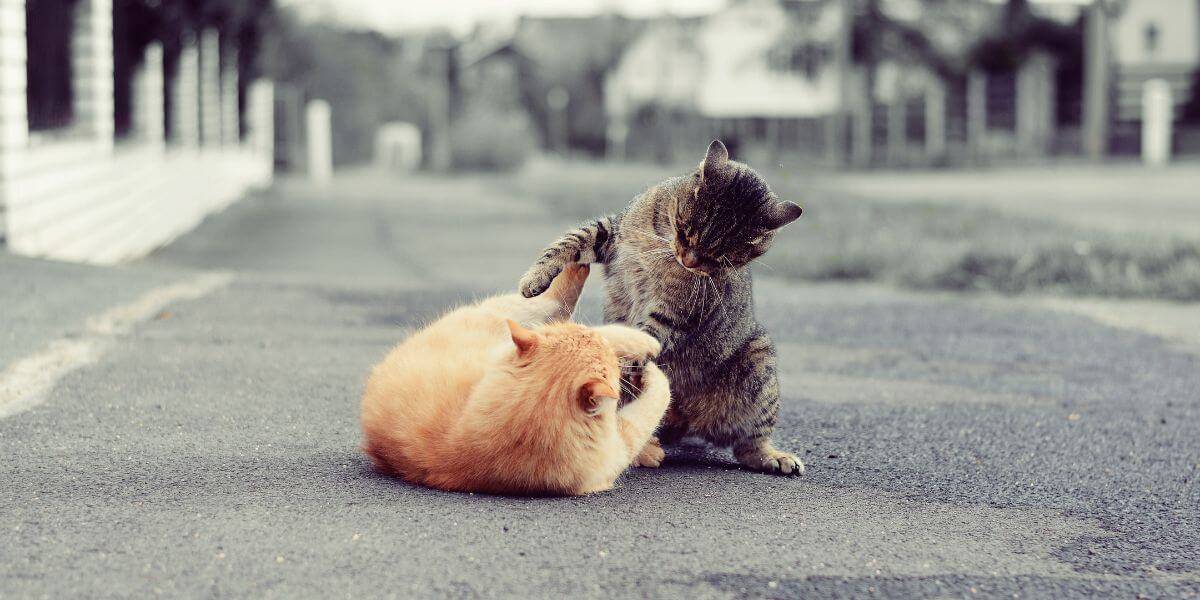
When cats play, they exhibit certain behaviors, such as chasing, pouncing, wrestling, and batting at each other. They may also make playful noises, such as chirping or trilling. When cats are fighting, the behavior is much more aggressive and may involve hissing, growling, and biting.
Contents
Distinguishing Between Playing and Fighting
A study published in January 2023 in Scientific Reports studied a series of videos of interactions between cats to determine what was a sign of play and what was real aggression. The study determined that there were three levels of interaction: Fun, social play; aggressive interactions; and an intermediate stage which they described as closer to play, that could become aggressive but didn’t indicate a breakdown of the cats’ social relationship but a short-term disagreement over social priorities.
So what does this mean to you and your cats when the fur starts flying? Cats, especially kittens, are known for rough play, and it can be difficult to distinguish between play fighting and actual fighting. Here are some take-a-ways to help you distinguish whether your cats are playing or fighting:
Body Language
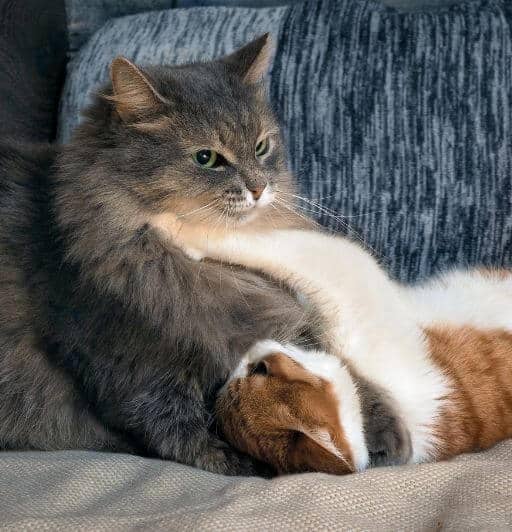
Cats use body language to communicate with each other, and it can be a good indicator of whether they are playing or fighting. When cats are playing, they will often have relaxed body language, with their ears forward and tails up. They may also take turns chasing each other, pouncing, and batting at each other with their paws.
There are usually breaks in the action when the cats can assess their opponents interest in continuing the game. If the one that was “losing” has an opportunity to walk away and instead comes back for more, it’s more likely to be play. Especially if the cats are normally besties.
On the other hand, cats that are fighting will often have tense body language, with their ears flattened against their head and their tails puffed up.
Vocalizations
Cats use different vocalizations to convey their emotions, and it can be helpful in determining whether they are playing or fighting. When cats are playing, they may make chirping or trilling sounds, which are friendly and playful. However, when cats are fighting, they will often make loud, aggressive sounds, such as hissing, growling, or yowling.
A hiss, especially among younger cats, doesn’t necessarily mean they are getting aggressive. It can be more like a “Hey dude, that hurt! What the heck?” attempt to set some boundaries for how rough the game can get. Growling and yowling though, are signs of aggression. It is time to try and redirect and separate growlers and howlers.
Play Behavior
It can be difficult to tell whether cats are playing or fighting, especially for those who are new to living with cats. However, there are several signs that can help distinguish between the two.
Pouncing
Play is loose and bouncy. When cats pounce on each other during playtime, it is usually a sign that they are playing. Playful pouncing is often accompanied by chasing, rolling, and other playful behaviors.
Wrestling
Wrestling is another common sign of play in cats. During play sessions, cats will often wrestle with each other, but it is usually not aggressive. Playful wrestling may involve biting, scratching, and other rough play, but it is not intended to cause harm.
Mock Fighting
Mock fighting is another sign of play in cats. During mock fights, cats will often take turns being the aggressor and the defender. However, it is important to note that mock fighting should never escalate into real fighting.
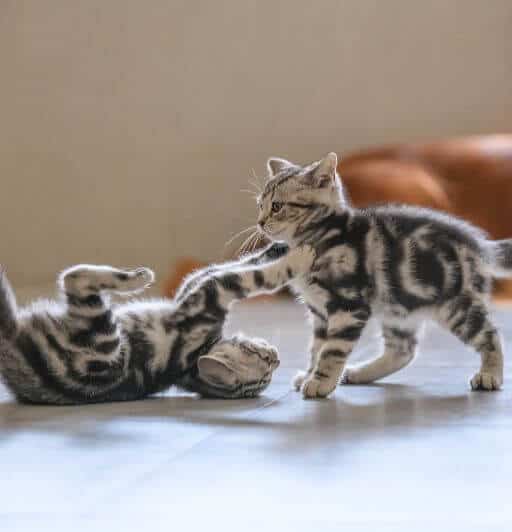
Overall, it is important to observe your cats’ behavior and body language to determine whether they are playing or fighting. If you are unsure, it is always best to err on the side of caution and separate them until you can determine whether their behavior is playful or aggressive.
Signs of Aggression
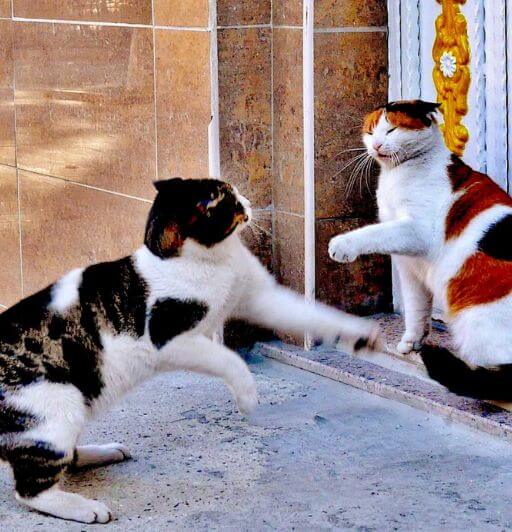
When cats are playing, they often exhibit behaviors that can resemble aggression. However, there are certain signs that indicate that the cats are not simply playing around, but are actually engaging in aggressive behavior. Here are some common signs of aggression to look out for:
Growling and Howling
When cats are playing, they may make playful sounds. However, when cats are on the aggressive, their growls, yowls, and screams are usually louder and more intense. They may also accompany these sounds with other aggressive behaviors, such as baring their teeth or flattening their ears against their head.
Biting
Playful cats may nip at each other during play, but aggressive cats will often bite with more force and intention. They may also target sensitive areas, such as the ears or tail.
Stalking and Chasing
Active aggression is easy to spot, as the cats will be fully engaged in a physical altercation. However, there are also more subtle signs of aggression to watch for. These may include stalking and chasing.
Hostility
If one of the cats is exhibiting hostility towards the other, it is a clear sign that they are not playing. Hostile cats may try to corner the other cat, or may lash out with aggression when the other cat comes near.
Reasons Cats Fight
Lack of Social Skills
A cat or kitten that doesn’t get properly socialized as a baby can develop behavior problems. These are the cats that don’t “know how to cat” because they don’t know how to read other cat’s body language. Cats that have been abused or neglected can be unwilling to share space or resources. Some cats just can’t live well with other animals.
Stress, Illness, and Aggression
Stress and illness can be significant factor in the development of aggression in cats. When a cat is stressed, they may become more irritable and more likely to lash out at other cats or humans. Some common causes of stress in cats include:
- Changes in the household, such as new pets or people
- Moving to a new home
- A lack of stimulation or playtime
Cats may also become aggressive due to pain or discomfort caused by an injury or illness. If your furbaby has suddenly turned on his buddy, it’s time for them both to see the vet to see if there are underlying medial causes for the fighting.
Inadequate Resources
When it comes to determining whether cats are playing or fighting, it’s important to consider the role of resources. Cats are territorial animals and can become possessive of their belongings, such as food, water, and toys. This possessiveness can lead to conflicts between cats.
You can help prevent fights between their cats by ensuring that each cat has access to food, water, litter boxes, cat trees, and hiding places,
The Influence of Age and Gender
Age and gender are two important factors that can influence whether cats are playing or fighting.
Kittens, for example, are more likely to play than adult cats as they are still developing their social skills and learning how to interact with other cats. On the other hand, older cats may be less interested in playing and more prone to fighting, especially if they have health issues or are experiencing pain.
Gender can also play a role in whether cats are playing or fighting. Male cats, especially those that have not been neutered, are more likely to engage in aggressive behavior than female cats. Neutered male cats are less likely to engage in aggressive behavior, while spayed female cats are less likely to go into heat and become aggressive towards other cats.
How to Break it Up if Your Cats are Fighting
You don’t want your cats to “fight it out” when they get angry. They could seriously hurt each other. Try to distract and redirect the brawlers to separate spaces to cool off. You can try a wand toy if it’s play gone wrong. If that doesn’t work, break up the fight by tossing a blanket over the cats. Work a broom in between them, or placing a barrier like a large piece of cardboard or a gate between the cats. Do not reach in to a cat fight and try to pick one up. You’ll end up getting bitten and scratched.
Promoting Harmonious Play
Creating a harmonious environment for cats to play in is essential for their social skills and overall well-being. Play aggression can quickly turn into real aggression if not monitored, so it’s important to promote healthy play habits. Here are some tips for creating a harmonious play environment:
Provide Enough Space
Cats need enough space to play without feeling cramped or overcrowded. They should have enough room to run, jump, and climb without knocking over objects or other cats. Providing vertical space, such as cat trees or shelves, can also help cats feel more comfortable and prevent territorial disputes.
Provide Adequate Enrichment
Cats need plenty of mental and physical stimulation to keep them engaged and happy. Providing toys, scratching posts, and hiding places can help keep cats entertained and prevent boredom. Rotating toys and introducing new ones can also help keep cats interested in playtime.
Related Post: Enrichment for Indoor Cats
Monitor Playtime
It’s important to monitor playtime to ensure that it doesn’t turn into aggression. If play becomes too rough or aggressive, it’s time to separate the cats and give them some space. It’s also important to supervise playtime between cats who may not get along to prevent any altercations.
Encourage Positive Interactions
Encouraging positive interactions between cats can help promote harmonious play. This can include playing games together, grooming each other, or simply sharing space without conflict. Providing treats or positive reinforcement can also help reinforce positive behavior.
By following these tips, cat guardians can promote harmonious play and prevent aggression between their feline friends.