
Tackling Cat Dandruff And Dry Skin: Symptoms, Causes, and Treatment Tips
If your cat has been shedding an unusual amount of fur or showing signs of dry skin, they might be dealing with cat dandruff and dry skin. It is important to understand the cause of the problem and potential treatment options in order to help keep your feline friend healthy and looking their best. In this blog post, we will discuss what cat dandruff is, symptoms to watch for, possible causes for it, and how to treat it.
Contents
What Is Cat Dandruff?
Cat dandruff is the most common skin issue that affects pet cats. It is characterized by the appearance of small, white flakes on your cat’s skin and coat. Though mostly harmless, it can be an indicator of more serious problems such as metabolic disorders, allergies, or poor diet.
It is normal for skin to renew itself. We just normally don’t notice. If you see flakes on your cat then you have a problem that is very common in all cats; regardless of breed or fur length.
If you suspect your cat has dandruff, make sure to contact your vet to determine the underlying cause and discuss possible treatment options.
Related Post: Skin and Coat Care Guide
What Are The Symptoms Of Cat Dandruff?
Cat dandruff is an uncomfortable skin condition for both cats and their owners. The most common symptom of cat dandruff is the presence of white or gray patches of dry, flaky skin that shed from Kitty’s coat. It is most obvious on your black cats.
If the flakes are accompanied by hair loss, excessive shedding, itching, overgrooming, red irritated skin, greasy fur, or overall poor coat condition, it means it is something more than just dandruff.
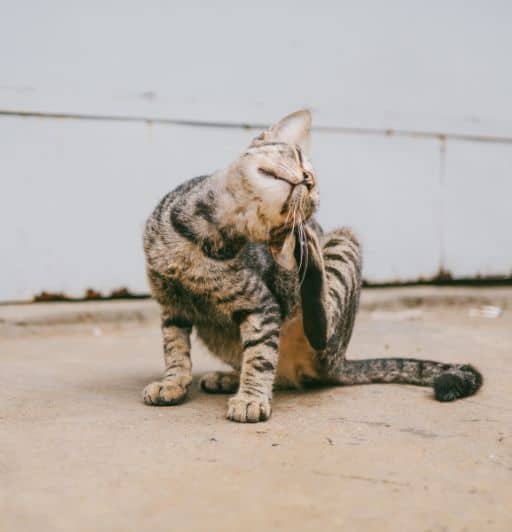
Kitty’s scratching at her irritated, flaking skin can lead to wounds that get infected.
What Causes Cat Dandruff And Dry Skin?
Cat dandruff and dry skin can have a variety of causes, ranging from environmental factors to underlying medical conditions such as allergies or parasitic skin infections.
- The number one cause of cat dandruff and dry skin is the lack of humidity in the air in winter when we all turn on our heat.
- Lack of essential fatty acids or nutrient deficiencies in your cat’s diet.
- Allergies and parasites such as fleas and ringworm are among common culprits for cat dandruff and dry skin.
- While dry skin is a symptom of cat dandruff, overly greasy skin is a common cause of dandruff. The natural skin oils designed to nourish and protect the skin overproduce and irritate Kitty’s skin causing shedding and flaking.
- Metabolic conditions like thyroid disease, kidney disease, and diabetes can contribute to cat dandruff and dry skin.
- Obesity and age-related inability to groom their coat properly. Kitty’s skin can’t breathe if she has a matted coat or a build up of undercoat.
- Using improper grooming products like dish soap, human shampoo, or dog shampoo. Use a product that is PH balanced for cats.
Related Post: Best Shampoos for Cat Grooming
How Do You Treat Cat Dandruff And Dry Skin?
This post may contain affiliate links. Life and Cats is a Chewy affiliate and a member of the Amazon Associates program and as such we earn a small commission when you shop through our our links and banners. It doesn’t change the amount you pay. You can read our full disclosure policy here.
Treating cat dandruff and dry skin can be done through a few simple steps. First, see your veterinarian to determine the cause of the problem. Eliminate any obvious causes of discomfort like fleas or mites. Address any allergies or medical conditions.
Next, improve your cat’s diet and increase your cat’s hydration. A high-protein diet can help. 30% of Kitty’s daily protein requirements goes to renewing their skin. Provide fresh, clean water and add moisture to their diet with wet foods and solutions like KittyRade or Purina HydraCare.
Add Omega-3 and Omega-6 essential fatty acid supplements to further moisturize their skin from the inside out. Treat from the outside in by adding humidity to the environment with a humidifier.
Finally, using a medicated shampoo designed for cats can calm Kitty’s itchy skin and relieve the flaking. Adding hydrating sprays or ointments after the bath will help too. I’ve had particularly good success with several products from the EQyss line. The Microtek spray was the neutralizer we needed for my black Persian when he was a show cat. The Premier Marigold hydrating spray comes to every show to add hydration to my cats’ coats.
Following these steps should help reduce your cat’s dandruff and soothe their dry skin.
Conclusion
In conclusion, cat dandruff and dry skin can be a common issue for cats of all ages. While the cause is not the same in all cases, contributing factors including diet deficiencies, allergies, parasites or infections, over-grooming, or environmental stressors.
Symptoms such as excessive shedding, flaking, irritation, and scaly patches can indicate your cat is suffering from this condition. Fortunately, there are treatment options available to help relieve the problem. Adding dietary supplements, providing additional hydration, and regular grooming support will help your kitty get on the path to a healthier skin and coat.