
Embrace the Unique Charm of Hairless Cat Breeds
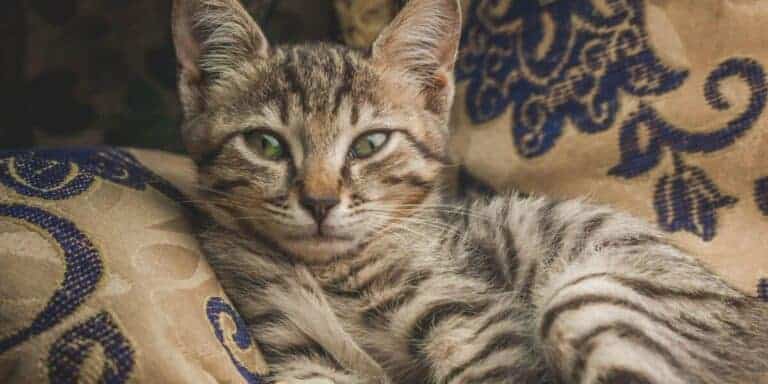
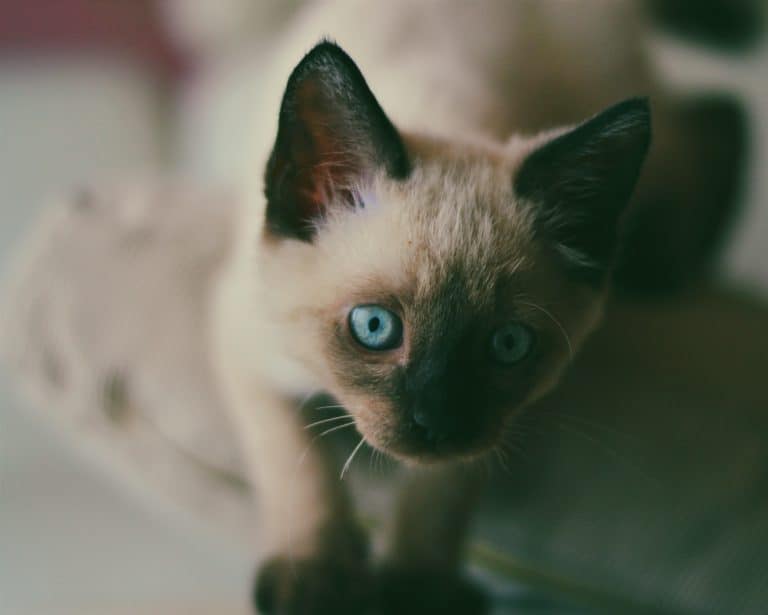
Our feline friends come in long haired, short haired, and all shapes, sizes, and colors, but have you ever considered owning an entirely hairless cat? These incredible cats not only look different than the average housecat but also require special care. Explore 9 of the most popular hairless cat breeds and prepare to embrace the unique charm of these hairless wonders!
Contents
- 1 Why are Hairless Cats Hairless?
- 2 Can Hairless Cats Grow Hair?
- 3 Do Hairless Cats Have Whiskers?
- 4 How Do You Groom a Hairless Cat?
- 5 Special Considerations for Hairless Cat Breeds.
- 6 Are Hairless Cat Breeds Hypoallergenic?
- 7 The Sphynx: Iconic Symbol of Hairlessness
- 8 The Donskoy: A Russian Delight
- 9 The Peterbald: Elegance in Motion
- 10 The Ukrainian Levkoy: A Gentle and Quirky Companion
- 11 The Bambino: a Charismatic But Controversial Breed
- 12 The Minskin: Mischievous Mini Cats
- 13 The Elf: a Magical Cat?
- 14 The Dwelf: a Multitude of Unique Features
- 15 The Lykoi: A Werewolf in Cat’s Clothing
- 16 New Attempts at Hybrids
- 17 Summary:
Why are Hairless Cats Hairless?
Hairless cats resulted from a genetic mutation. Some hairless cats are completely bald and smooth to touch. Others are downy or have a fine “peach fuzz” type coat. Many of the newer hairless cat breeds are a creation of hairless and short-haired breeds.
Can Hairless Cats Grow Hair?
Because some hairless breeds are created from breeding a hairless cat to a furred cat, some hairless cats can produce furry kittens.
Not all hairless cats are completely hairless. They can have peach fuzz or downy fur. The Donskoy, or “Don Sphynx,” actually has 4 different types of coat ranging from no fur at all to a “brush coat” of short, wiry fur.
Do Hairless Cats Have Whiskers?
This is another some-do, some-don’t question. Many hairless cats, including the popular Sphynx, do not have whiskers or eyelashes. Those that do may have short or broken whiskers. The mutation that causes hairlessness makes it so that whiskers that grow are fragile. They break easily or fall out before they can grow.
How Do You Groom a Hairless Cat?
Hairless kitties need regular baths every week or two to prevent oil buildup on the skin. Wipe downs with pet wipes in between baths helps too. Greasy kitties feel sticky to the touch, may develop acne or blackheads, and leave an oil stain on your furniture. Other than skin care, grooming a hairless cat is the same as grooming a furred cat: clip nails, clean ears, wipe eyes as needed.
Related Post: Caring for Hairless Cats
Special Considerations for Hairless Cat Breeds.
Our furless friends need to consider the weather where furred cats don’t. Bald cats have difficulties regulating their body temperature. Most cats object to clothing, but hairless cats really require sweaters and cold weather gear. Likewise, if your cat spends time lying out in the sun, even on a window sill, their skin needs sunscreen to protect them from sunburn and skin cancer. Even in warm weather, these cats might appreciate a little t-shirt or dress to protect their skin from rough textures.
Hairless cats also tend to be more active with a faster metabolism than their furry friends. They need more calories and protein than the average cat.
Are Hairless Cat Breeds Hypoallergenic?
Some people assume hairless cats are hypoallergenic, but that’s not necessarily true. People are allergic to cat dander, not the fur itself. Hairless cats still produce dander. They may actually be more allergenic without the fur to contain it. But because they are bathed regularly they might be easier to live with. .
Related Post: Learn More About Hypoallergenic Cats
The Sphynx: Iconic Symbol of Hairlessness
When one thinks of hairless cats, the Sphynx is most likely the cat that comes to mind. It is a hairless cat breed that originated in Canada in the 1960s as a result of a natural genetic mutation. The breed has been developed with judicious cross-breeding with some short haired breeds. The result is a hardy gene pool of hairless cats. The Sphynx is recognized by all the major cat fancy organizations.
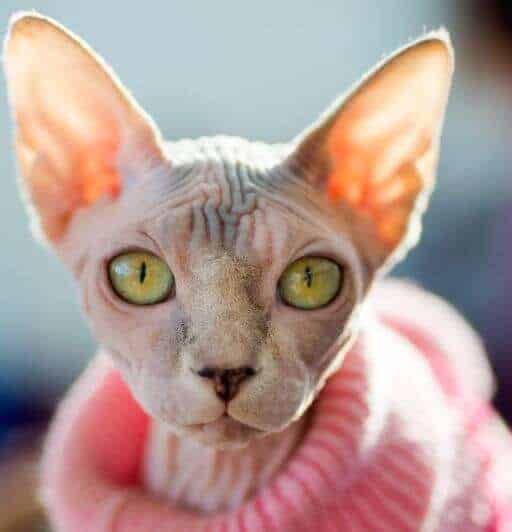
Sphynx cat may be completely hairless or may have a downy, peach fuzz, coat that feels like petting suede when stroked. The Sphynx is known for its affectionate, playful, and adaptable nature. Sphynxes are intelligent and outgoing cats that get along well with humans, other cats, and dogs. The Sphynx breed enjoys playing but do not require a lot of exercise.
Sphynxes make great pets. However, they hate being alone and require a lot of attention. If you have a busy lifestyle or do not have the time or desire to groom your cat regularly, a Sphynx may not be the right breed for you.
The Donskoy: A Russian Delight
Next, we venture to Russia to uncover the secrets of the Donskoy, a hairless breed discovered in the city Rostov-on-Don in Russia in 1987. Also known as the Don Sphynx, the Donskoy is uniquely different from the Sphynx, though they look somewhat similar. The Sphynx gets its hairlessness from a recessive genetic mutation. The mutation that gives the Donskoy its unique coat, or lack of it, from a dominant gene.
The Donskoy can have four different types of coats:
- Rubber Bald: These Donskoys are born completely bald and remain that way throughout their lives.
- Flock Coat: This variation of Donskoy is born with a peach-fuzz coat the texture of chamois cloth. These kittens typically lose their coats as they grow and become completely bald.
- Velour Coat: These kittens are born with a wavy, short coat. The kittens lose their hair within the first year. Some become completely bald, and others retain the fuzz on the face, legs and tail as if they were a pointed cat.
- Brush Coat: These kittens are born with a short coat of fur, which is usually bristly or wiry and do not lose the rest of their fur as they grow.
- Don Sphynx are unique in that it can grow a winter coat of fine wool on the chest and hairs on the end of the tail and will lose it when the weather get warm.
The Donskoy is an intelligent breed and easy to train. These cats enjoy spending time playing and cuddling with their people. They typically get along well with children, other cats, and cat savvy dogs. They have a “dog-like” personality, need a lot of attention, and do not do well if they are alone all day.
The Don Sphynx was accepted by TICA in 2016. They are also accepted by the Cat Fanciers Federation, FIFe, and WCF. GCCF and CFA do not accept them.
The Peterbald: Elegance in Motion
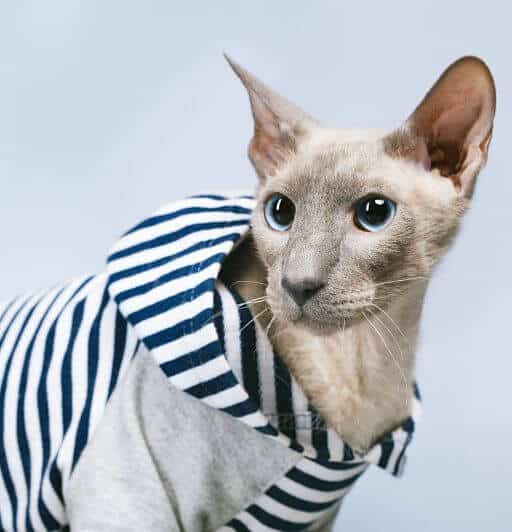
Get ready to be mesmerized by another hairless breed developed in Russia: the graceful Peterbald breed. The Peterbald was created in the 1980’s by crossing the Donskoy and the Oriental Shorthair. They have the slender, oriental style, body type and almond shaped eyes of the Oriental with the hairless coat of the Donskoy.
Peterbalds have the same 4 coat types as the Donskoy and may also have fully furred kittens.
This sweet and affectionate cat will form a strong bond with their guardians.They are intelligent, inquisitive, and energetic cats that want to be involved in any activities that might be happening around the house. This vocal, outgoing kitty will greet your guests at the door.
The Peterbald cat breed was accepted by The International Cat Association in 2005 and the World Cat Federation in 2003. CFA still doesn’t recognize the breed.
The Ukrainian Levkoy: A Gentle and Quirky Companion
The Ukrainian Levkoy has a very unique look. Some people say their head looks more like a dog than a cat. I have to say they do rather remind me of a pitbull, with their folded ears and hairless coat. It is a newer breed, it has only been around since the early 2000s. None of the major cat fancy registries recognize this hairless cat breed, but it is recognized by a registry dedicated to cats of Russian or Ukrainian origin.

The captivating Ukrainian Levkoy draws its name from the leaves of the Levkoy plant which the breed’s unique ears resemble. The Ukrainian Levkoy. is a cross between the Donskoy and the Scottish Fold. The breeding produces both folded- and straight-eared kittens. Combining two folded-eared cats can lead to the kittens suffering from skeletal problems. Best practices limit breeding to pairs with one straight-eared parent and one folded-eared parent.
The Levkoy, like most of the hairless cat breeds, is friendly, intelligent, and sweet. They are sociable and outgoing. They make great companions as they are loyal, docile, and affectionate. These cats will worship their guardians and follow them everywhere. The Ukrainian Levkoy doesn’t enjoy being alone.
The Bambino: a Charismatic But Controversial Breed
The Bambino is a controversial breed. It is a cross between the Sphynx and the Munchkin. There is a bit of a trend toward “Munchkin-izing” everything, and a newer trend to create a variety of hairless breeds by crossing with the Sphynx. Both breeds are results of genetic mutations. CFA and AFCA refused recognition to the breed in order to discourage breeding cats with multiple genetic mutations. TICA registered Bambinos as an experimental breed in 2006.
Bambinos are primarily hairless though some might have a little fur on face, ears, legs, and tails. They have the distinctly short legs typical of a munchkin and tall, pointy ears. Similar to their parent breeds, Bambinos love to be cuddled by their family members. Bambinos are friendly and affectionate, outgoing, and quite playful.
Like all hairless cat breeds. The Bambino needs weekly bathing and grooming. It has delicate skin that is vulnerable to sunburn. Your baby needs protection from scratches incurred playing with other cats.
The Minskin: Mischievous Mini Cats
The name “Minskin” comes from a combination of the words “miniature” and “skin.” These cute and curious kitties are another short-legged, hairless cat developed from a cross between a munchkin and a sphynx. The Devon Rex and Burmese cat breeds were added to produce the unique look of the Minskin.
They often have sparse, fine fur on their bodies, especially at the “points”. Minskins tend to be an even smaller breed than the other hairless breed.
Minskin cats are intelligent, playful, and entertaining. They love to climb, jump and run around.. Minskins are also easy to train. They are also lap cats, always looking for a snuggle.
While TICA recognizes the breed as experimental, the Cat Fanciers Association and most other registries do not.
The Elf: a Magical Cat?
If you’re a Harry Potter fan you might see why these cats are named the Elf. It was developed by breeding the Sphynx and the American Curl to produce a 4-9 pound, playful, extroverted cat with ears that curl backward. Like the parent breeds, Elf cats are sociable and intelligent and love to jump and play.
The Elf cat is so genetically close to its Sphynx parent that most of its physical traits, except the ears, are the same. The Elf isn’t recognized as a separate breed but rather a variation of the Sphynx. It is shown as a “new traits” cat, only by TICA. New Traits classification allows exhibitors to show their cats but as an exhibition only. They don’t gain points. But it is one step on the way to full recognition.

The Dwelf: a Multitude of Unique Features
The Dwelf takes the Elf cat one step further and adds the Munchkin to the mix. By breeding Sphynx cats to American Curls and Munchkins, people have created a hairless cat breed with curled ears and short legs. Only recognized as experimental. The personality is similar to the parent breeds.
The Lykoi: A Werewolf in Cat’s Clothing
Also known as the Werewolf Cat, the Lykoi has its roots in the feral cat population. The breed is still extremely rare. There are less than 100 show standard Lykoi world wide. They still have not achieved full championship status in CFA and were only recently accepted in TICA.
Does the Lykoi really belong on this list? This breed is more a semi-hairless than a hairless cat breed. Most of these cats don’t have hair around their faces, on the backs of their ears, and their legs and feet. Some are mostly hairless. Others are mostly furred with the typical hairless mask around his eyes, nose, muzzle, and ears.
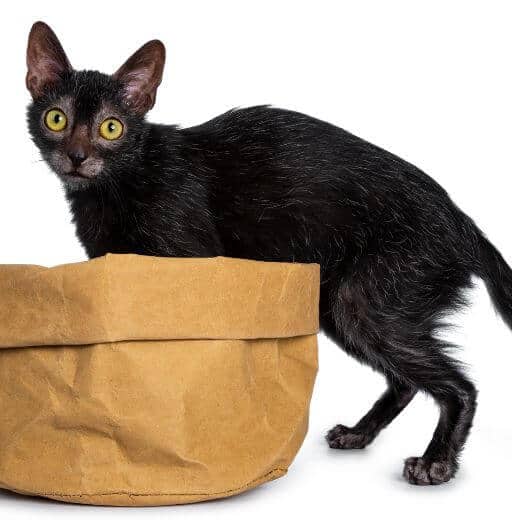
The Lykoi has no undercoat. His coat of thin guard hairs gives him a mangy look. Kittens are born with fur and lose it around one or two weeks of age. They can become completely bald, then their thin fur starts growing back.
They are sweet, affectionate cats. Lykoi are outgoing, intelligent, energetic and playful.They are not lap cats, preferring to play, fetch, and solve puzzles. Lykoi are very loyal and tend to bond well with people, making them a good choice for a family pet.
Related: Want to Learn More About Cat Breeds? Click Here for Our Index
New Attempts at Hybrids
Breeders continue to use the hairless mutation in Sphynx cats and other hairless cat breeds to produce new hybrids just as they do with the Munchkin. It continues to be a controversial practice. GCCF has a policy of refusing recognition to any breed based on a mutation. CFA and ACFA discourage breeding of cats with mutations, especially if it involves two breeds with genetic mutations.
Summary:
Whether you are looking for a pet that stands out from the crowd or are just fascinated by the unique look, there’s sure to be a hairless cat breed right for you. From the friendly and outgoing Sphynx cats to the curious and independent Peterbalds, there’s something for every kind of potential cat guardian.
Hairless cats may require a bit more maintenance than other varieties of cats but their charm and love is sure to make it worthwhile. If you’re looking for a pet that can bring joy and companionship, embrace the unique charm of hairless cat breeds today!