
The Burmese Cat: A Guide to Their Personality and Care
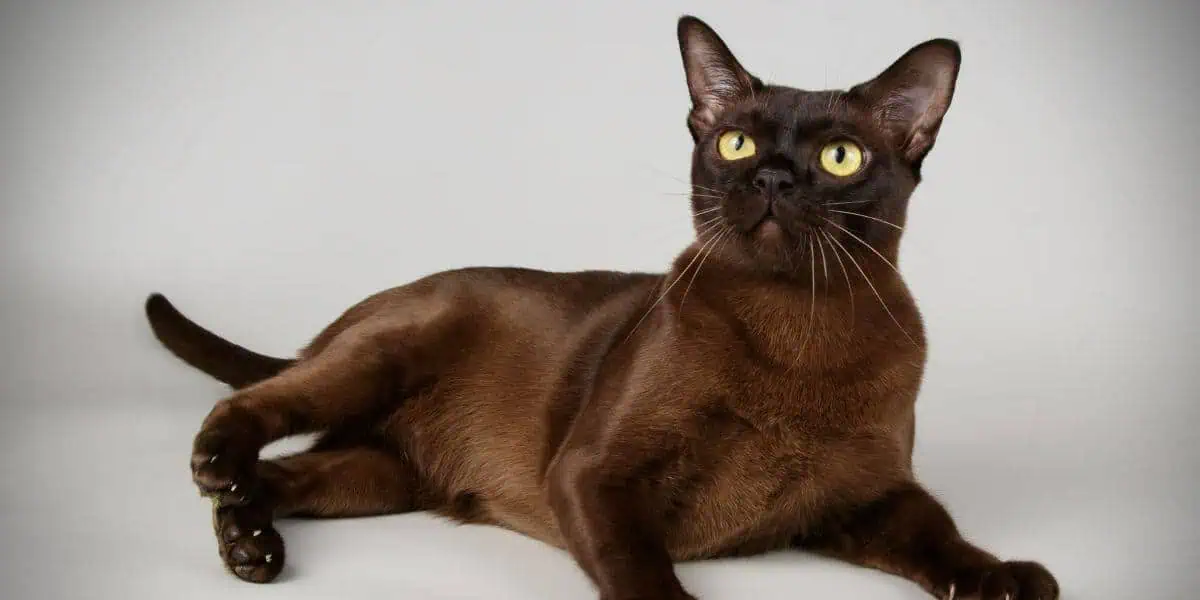
The Burmese cat is a popular breed of domesticated felines, known for their affectionate and playful personalities. These medium-sized cats have muscular bodies, rounded heads, and expressive gold eyes. Their social nature makes them friendly towards other cats, dogs, and humans. They have a rich history as temple cats. The ancient Burmese royalty kept the cats as pets.
Developed in the United States during the 1930s, the modern Burmese cat is now a favored pet choice due to their loving and outgoing personalities that make them an ideal companion for people of all ages.
If you’re considering adding a Burmese cat to your family, it’s important to understand their unique personality traits, grooming needs, and health concerns.
Contents
- 1 History of the Burmese Cat Breed
- 2 Burmese Cat Breed Standard
- 3 Personality, Traits, and Temperament of the Burmese Cat
- 4 Common Health Problems of the Burmese Cat
- 5 How Long Do Burmese Cats Live?
- 6 Care and Grooming of Burmese Cats
- 7 Do Burmese Cats Make Good Pets?
- 8 How Much Do Burmese Cats Cost?
- 9 Summary
History of the Burmese Cat Breed
The Burmese cat breed originated in Burma, now known as Myanmar, where they were considered sacred and often kept in temples and monasteries. British soldiers brought some of these cats back to England in the late 1800s. Breeders created the modern-day Burmese breed by breeding the cats from Myanmar with Siamese cats.
Related: Cat Breeds of Royalty
There are actually two versions of the Burmese Cat breed: the Burmese, sometimes called the American Burmese, and the European Burmese. The cat fancy accepts and recognizes them as two distinct breeds. This article will discuss the Burmese.
Wong Mau was the first female Burmese cat brought to the United States in 1930. At first, many fanciers believed that Wong Mau was simply a dark-colored Siamese cat, but breeders like Dr. Joseph C. Thompson recognized her as a distinct breed and began breeding her to establish the Burmese breed in America.
Early Burmese cats in the late 1930s and early 1940s gained considerable popularity in the show circuit, and a great demand for Burmese kittens developed. Breeders continued to use Siamese cats to increase the very limited breeding stock, thereby producing a large number of hybrids.
Breed Recognition
The Cat Fanciers’ Association recognized the breed in 1936 but suspended the breed’s recognition in 1946 due to the extensive outcrossing with Siamese in an effort to increase the breed’s numbers. After breeders were able to report three successive generations of pure Burmese litters, the breed’s recognition was restored to championship status in 1959. The International Cat Association recognized the breed in 1979.
Today, the Burmese cat breed is recognized by most major cat registries and is known for its short, glossy coat and affectionate personality. They are playful, curious, and intelligent, making them popular pets for families and individuals alike.

Burmese Cat Breed Standard
The Burmese cat breed is known for its distinctive appearance and charming personality. According to the CFA, the Burmese cat breed standard includes several key characteristics that set it apart from other feline breeds.
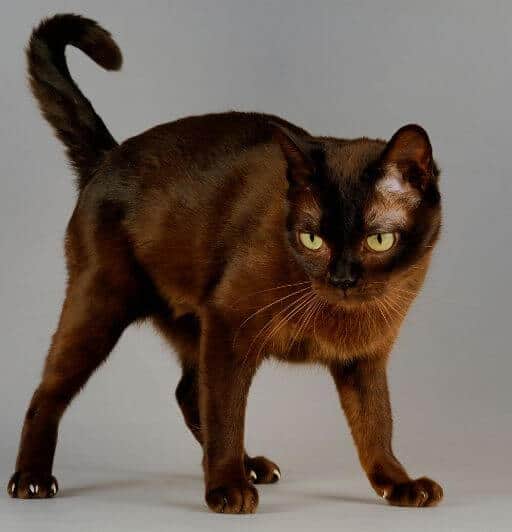
The ideal Burmese cat is a balanced, medium size, with a substantial bone structure and good muscular development. Despite its size, the Burmese cat is surprisingly heavy. They are often referred to as “bricks wrapped in silk.” They are a round, compact cat unlike the long, lean Siamese used in the breed’s creation.
The breed standard calls for a rounded, broad head with a short, blunt muzzle. The profile should show a distinct break, though not pronounced like a Persian. Large, round, yellow-to-gold, expressive eyes that are set wide apart, medium ears with rounded tips, and a sweet expression that is unique to the breed.
The Burmese cat’s coat is short, fine, and glossy. The four colors are sable, a rich dark brown; champagne, a warm beige; platinum, a pale gray with fawn undertones; and blue, a medium gray with fawn undertones. The breed is pointed. They have a darker face mask, paws, and tails.
Personality, Traits, and Temperament of the Burmese Cat
Burmese cats are known for their friendly and affectionate personalities. They are highly sociable and love to spend time playing and cuddling with their owners. Burmese get along with other animals, including dogs and other cats. They are also curious, highly intelligent, and easily trained. They can do tricks and respond to commands.
Burmese cats are also a vocal breed. They are not afraid to express themselves and will often meow to get attention or communicate with their owners.
Common Health Problems of the Burmese Cat
Burmese cats are generally healthy, but like all breeds, they can be prone to certain health issues. Here are some of the most common genetic health problems that Burmese cats may face:
Familial Episodic Hypokalemic Polymyopathy
Familial Episodic Hypokalemic Polymyopathy is an inherited disease that causes skeletal muscle weakness and can cause affected cats to have trouble walking and holding their heads correctly. A genetic mutation causes Familial Episodic Hypokalemic Polymyopathy and affects Burmese cats more than other breeds. Your breeder should be able to show you documentation showing that their cats do not carry the gene that causes this condition.
Orofacial Pain Syndrome
This is a distressing condition that occurs in Burmese cats. Affected cats show intense discomfort of the mouth and face and may self-mutilate. The syndrome causes pain due to an abnormal nervous system processing of pain messages. The pain is episodic. Kitty’s tongue triggers the episode during grooming, eating or drinking. Both parents of an affected cat either have or carry the condition.
Burmese Head Defect
This gene mutation affects how the head and facial area of cats develop while in the womb. The resulting kittens will be stillborn. If you plan to breed your cat, you need to be aware of the status of your foundation stock. BHD is recessive and both parents must carry the gene to produce the defect.
GM2 Gangliosidosis
GM2 Gangliosidosis is a degenerative, fatal neurological disease characterized by severe muscle tremors leading to difficulty eating and lack of coordination. Affected kittens show mild tremors and lack of coordination beginning at 6 to 8 weeks of age. The disease is caused by a recessive gene that requires both parents to be carriers. Breeding cats should be tested.
It’s important for Burmese cat owners to be aware of these potential health issues and to keep up with regular veterinary check-ups to catch any problems early. With proper care and attention, Burmese cats can lead long, healthy lives.
The breed is also prone to obesity and, because of their strong connection with their people, separation anxiety.
How Long Do Burmese Cats Live?
The lifespan of a Burmese cat depends on various factors, such as genetics, lifestyle, and the quality of care they receive. Burmese cats have one of the longest lifespan in the feline kingdom. On average, indoor Burmese cats live for 16 to 20 years.
Related Post: How Long Do Cats Live: Ages and Stages
Care and Grooming of Burmese Cats
Overall, Burmese cats are easy to care for and require minimal grooming. With regular dental care, coat care, nail care, eye care, and ear care, you can help keep your Burmese cat healthy and happy.
Burmese cats have short, fine coats that are easy to maintain. Brushing your cat’s coat once a week with a rubber brush can help remove dead hairs and keep the coat looking lustrous. Petting your Burmese will do a lot of your grooming for you. If you plan to show him, a wipe with a chamois cloth will keep him free of loose hair and give his coat a shine.
Burmese cats do not require frequent bathing. However, if you have a show cat, or Kitty gets into something gross, you can give him a bath using a shampoo formulated for cats. Make sure to rinse your cat thoroughly to remove all the shampoo.
Want to learn more about breeds of cats? Click here to visit our breeds page.
Do Burmese Cats Make Good Pets?
Burmese cats have a loving and affectionate nature. They love being around their owners and are not shy about showing their love. These cats enjoy cuddling and petting. They follow their owners around the house looking for attention.
Burmese enjoy playing with toys and will often entertain themselves for hours on end. They are also very active and enjoy climbing and jumping. This breed is a good choice for families with children who are looking for a fun and playful pet.

They are social cats that enjoy being the center of attention. Burmese cats are also good with other pets, including dogs, and will often form close bonds with them.
Burmese cats are adaptable and can adjust to new environments easily. They are a good choice for first-time cat owners who are looking for a low-maintenance pet.
How Much Do Burmese Cats Cost?
The initial cost of a Burmese cat can range from a few hundred to a few thousand dollars. If you plan to buy a purebred Burmese cat from a reputable breeder, you can expect to pay anywhere from $450 to $3,000 or more.
The price varies depending on the breeder’s reputation, the cat’s age, gender, color, and quality. A show quality cat will cost more than a pet. Some colors are more popular than others, and they can be more expensive. Breeding rights add significantly to the price.
Summary
Burmese cats are a popular breed with a round, sturdy build, and loving personalities. They make excellent pets for families and individuals alike, and their long lifespan means they can be a loyal companion for many years to come.


