
How to Help Your Grieving Cat
Last Updated on July 30, 2021 by Holly Anne Dustin
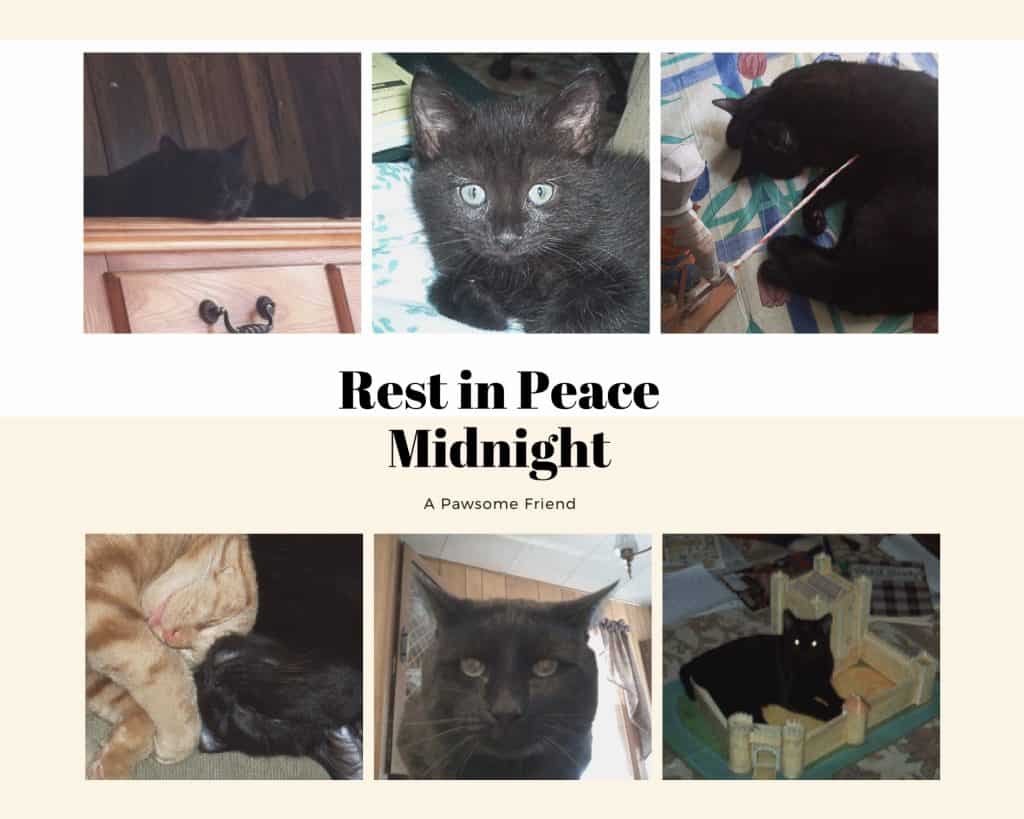
We recently lost our 15 year old mini-panther, Midnight. He was my son’s cat, his best friend. We really didn’t expect it. He had been fine at his last vet visit and hadn’t really seemed sick. He passed at home naturally. I woke up to Thunderbolt,13, crying and howling. I went to see what was wrong with him and found that it wasn’t him, it was Midnight.
It’s been hard. My son is missing his feline friend. I still wonder where Midnight is at dinner time and automatically reach out to rub his head when I come in the door. But the worst part about it is seeing how desperately Thunderbolt is grieving for his buddy. I’m trying to support him as he mourns. While we all mourn.
Contents
Do cats grieve?
I can assure you, they do. And it is the saddest thing ever. I’ve lived with cats all my life. I’ve had littermates a few times and best furry friends before. We even lost Midnight’s brother two years ago. But I’ve never seen this level of grief in a bonded pair before.
The stages of grief in humans include denial, anger, bargaining, depression and acceptance. It is unlikely that grieving cats go through exactly the same stages as humans, but there does seems to be 3 stages in cat mourning:
- The first is where we are now: the grieving cat searches and cries for his missing friend.
- In the second, the cat becomes listless and depressed.
- And finally, the cat version of acceptance where Kitty becomes herself without her buddy. If the cat that passed away was a bully, you might see the previous victim become more self assured, friendly, and loving.
What are the signs of a grieving cat?
A survey conducted by the ASPCA in 1996 found that 65% of cats experienced four or more changes after they have a loss of a family member, including the furry family members. The most common signs of mourning in a cat are:
- 70% of grieving cats changed the amount the vocalized. Some meowed more, while others got quiet. Thunderbolt is definitely more vocal. He’s been crying all night.
- 46% of cats lose their appetite and stop eating
- Become depressed and listless
- Lower energy, sleeping more, moving slowly
- No desire to play
- Hiding, choosing to be alone
- Excessive neediness or clingy-ness
- Overgrooming
- Inappropriate elimination
- Some cats changed where they slept. Some stay near where their companion passed away or the favorite spot that they enjoyed together. Others won’t go near the previously favored spot.
- Some cats hold it all in and don’t seem to be grieving at all.
- A cat that is mourning the loss of another cat may become ill.
When we think of a cat mourning for the loss of another cat, I think the typical scenario is the heartbreaking case where the surviving cat wanders around the house crying and searching for his lost friend. I have never experienced that before. But that is what Thunderbolt is doing. It is so incredibly sad. Treeno and Tiger visited the site where Midnight passed away repeatedly the first few days but seem to have gotten passed that.
The ASPCA Companion Animal Mourning Project focused on common signs associated with mourning following the loss of a family pet or feline companion. The study concluded that 65% of cats experienced four or more behavioral changes which indicated grief.
Grief is not always about the death of a sibling or bonded cat
Cats can grieve if you have always been at home and are now going out to work all day. Or if you travel. Cats mourn the loss of their humans. My childhood cat became depressed when I left for college.
They mourn when they are surrendered to a shelter or rehomed. Plush had a really rough time of it when he was abandoned, rescued, fostered and then rehomed to me. It took him awhile to believe we were going to be together forever.

How grief can affect your cat
Grief can cause illness.
If your kitty won’t eat for more than a day or two, he is at risk for hepatic lipidosis, a very serious liver disease.
Cats with inflammatory bowel disease or urinary tract disease are more likely to have a flare-up due to stress. There isn’t a much more stressful event than the loss of a family member or best friend. I’m watching Thunderbolt carefully, to make sure his urinary problems don’t flare up.
Stress
If you have multiple cats, the loss of one cat can be very stressful as the cats have to sort their places in the new normal. Especially if the cat that passed away was the leader of their little cat civilization. They need to figure out who eats where, who sleeps where, who gets the best spot in the premium sun puddle. Or in our case, who waits by the door for the first head rubs.
I haven’t seen that as much this time, but when we lost Midnight’s brother Flame it was very bad. Apparently, he was the glue holding things together. I thought Midnight was the leader, but perhaps not. I notice that no one is eating in his spot. But Jeremy is now my very enthusiastic greeter cat.
Separation Anxiety
A cat that is grieving may experience separation anxiety, especially a kitty that has always lived with other cats and is now alone. Cats in a rehoming situation can also experience separation anxiety when their new person goes to work.
Depression
The cat just seems “off” after the death of a sibling or bonded friend might be depressed. A depressed cat is unusually withdrawn, lethargic, staring into space, sleeping excessively or not eating.
Cats thrive on the familiar and routine. The death of a littermate is a major loss. There’s no way to tell how long it will take your grieving kitty to recover. We need to be gentle with her, just like we do with ourselves.
Our own emotional state affects our furbabies. You shouldn’t ignore your own grief, but pay attention to how you might be affecting your kitty.
There are resources you can access if you need help handling your own depression and grief over the loss of a special cat. We talk about that in this post. For Kitty, the first step in finding her help is her veterinarian.
This post may contain affiliate links. Life and Cats is a Chewy affiliate and a member of the Amazon Associates program and as such we earn a small commission when you shop through our our links and banners. It doesn’t change the amount you pay. You can read our full disclosure policy here.
How can you help your grieving cat?
- Keep things as consistent as possible. Stick to your normal household routine.
- Spend time with her. Talk to her, pet her, brush her, play with her.
- Try calming remedies or pheromone sprays/diffusers to take the edge off Kitty’s stress.
- Think about the things that she likes best. Toys, treats, adventures outside, whatever enrichment your cat favors. Try offering her favorite activities a little more often. Focus on the bond between you so she knows she’s not alone.
- Acknowledge her loss. Tell her you’re sad too. She may not understand your words but she’ll understand the love and care you’re offering.
- Watch how Kitty is reacting to the spaces she shared with her bff. You probably don’t have to put away beds, cat trees, etc. unless her friend passed away from something contagious. Kitty may find some comfort in her friend’s familiar scent. Just let it fade naturally. If she’s avoiding those spaces though, it might be kinder to clean it up.
- Play calming music for her while you are at work. RelaxMyCat has a YouTube Channel. If you have an Amazon Music Subscription you can get MusicForCats. Or you can purchase the Through a Cat’s Ear player and music.
- See the Vet for medical treatment if your furbaby is having a flare-up of any health condition, or if her grief and depression isn’t lifting.
Be careful you aren’t reinforcing problematic behaviors. It is important that Kitty eats, but you don’t want to create a picky eater but giving her something new over and over. Overdoing it on the affection can create a separation anxiety problem.
Related Post: Living with Multiple Cats
Will getting another kitten help my grieving cat?
It seems like getting a new cat would prevent your cat from feeling lonely, especially if you only had the two cats. But adding a new cat to the family is generally stressful for the resident cats. Adding more stress to your furbaby’s life while she’s grieving is probably not the best choice. At minimum, let your cats resettle themselves before adding a new furry family member.
What has your experience been?
How have your cats reacted to the loss of a furry family member? It’s been about a month since Midnight went over the Rainbow Bridge. I’m seeing my cats starting to bounce back a bit. Thunderbolt even slept in the space he and Midnight used to share for the first time this week. What have you done to help your grieving cat?