
Everything You Want to Know About the Munchkin Cat Breed
For cat lovers looking for something a little unusual, the Munchkin cat breed is sure to catch your eye. With their short build and unique personality traits, these cats are adorable companions. Learn all about this fascinating breed, from their history and care requirements to reasons why they might be the perfect pet for you.
Contents
- 1 Meet the Munchkin Cat Breed
- 2 History and Origin of the Munchkin Cat
- 3 Munchkin Cat’s Breed Standard Appearance
- 4 Personality, Traits, and Temperament of the Munchkin
- 5 Are Munchkin Cats a Healthy Breed?
- 6 Care and Grooming Tips for Your Munchkin
- 7 Do Munchkin Cats Make Good Pets?
- 8 Munchkin Cat Cost
- 9 Conclusion
Meet the Munchkin Cat Breed
The Munchkin cat is a relatively new breed of cat that first appeared in the 1990s. This unusual breed of cat is characterized by its short, stubby legs and playful personality. These “sausage cats” have since become popular family pets all over the world. Due to their affectionate nature and small size, they are particularly good with children, making them ideal companions for families.
The ferret-like breed is frequently dubbed the magpies of the cat species. If you’re a Harry Potter fan like me, these guys are like Nifflers. They have a serious attraction to shiny objects. Don’t leave your jewelry or keys on your nightstand. Your Munchkin will borrow them and hide them away to play with later.
Munchkins are not “tea-cup” cats.They do not remain kitten-sized over their lifetime. Their legs remain short, but the body size is considered average as an adult cat.
History and Origin of the Munchkin Cat
Short-legged cats have appeared throughout history. There were so-called “Kangaroo Cats” in the UK in pre-war years. Russia had short-legged cats in the 50’s. They appeared in the US in New England in 1970. In 1983, a woman in Louisiana found two short-legged cats that are the foundation of the Munchkin cat breed as we know it today.
The International Cat Association TICA) accepted the Munchkin into its New Breed development program in September 1994. The Munchkins were developed under the guidance and oversight of the TICA Genetics committee. Munchkin were accepted into full championship status in TICA in May 2003. They are not recognized by the Cat Fanciers’ Association or any other of the major cat fancy organizations.
The short-legged Munchkin Breed is a Result of a Genetic Mutation
The Munchkin breed’s short legs are a result of an “oops” on the part of nature. They are not a created breed. Their short legs are caused by a gene which results in chondrodysplasia, a form of dwarfism, that causes the long bones in a cat’s legs to develop at a shorter length.The kittens only need to inherit one copy of the gene to have short legs and to potentially pass the trait along to its kittens.
Munchkins litters are smaller than most because any kitten that receives the Munchkin gene from both parents will not develop. Litters can contain both short-legged standard cats, and non-standard cats with normal length legs.There is a diagnostic test available now that allows breeders to test the cats they want to breed together to make sure they do not both have the mutation.
Munchkin Cat’s Breed Standard Appearance
The Munchkin should never resemble another breed on short legs. The only allowable outcross is an unregistered, random-bred, domestic cat.
A Munchkin cat is a small to medium-sized cat that weighs 5-9 pounds at adulthood, with a modified wedge head. Their head should be proportionate to their body. Their eyes are walnut shaped and wide apart to give an open, alert expression.
The Munchkin Cat breed comes in both short-haired and long-haired varieties. The short-haired cat has a plush, soft coat. The fur on the long-hair version is semi-long and silky. Lynx tips on the ears are allowable in long-haired Munchkins. Every color and pattern is allowable.
Now for their most notable feature: a Munchkin cat’s legs should be short, set evenly apart, with the upper and lower forelegs equal length. Their hind legs are often slightly longer than their front legs, giving them a rise from the shoulder to the rump. The back legs may be the same length as the front legs. Their paws should be round and compact. Feet should be pointed straightforward, not pronated inward or outward.
A Munchkin’s tail should be of medium length, about the same length as the cat’s body.tapered, and with a rounded end.
Personality, Traits, and Temperament of the Munchkin
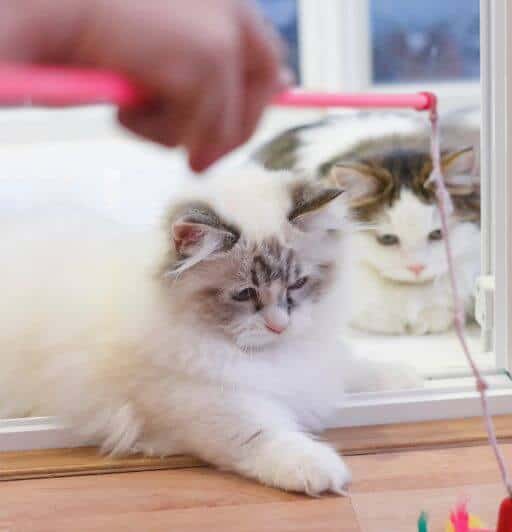
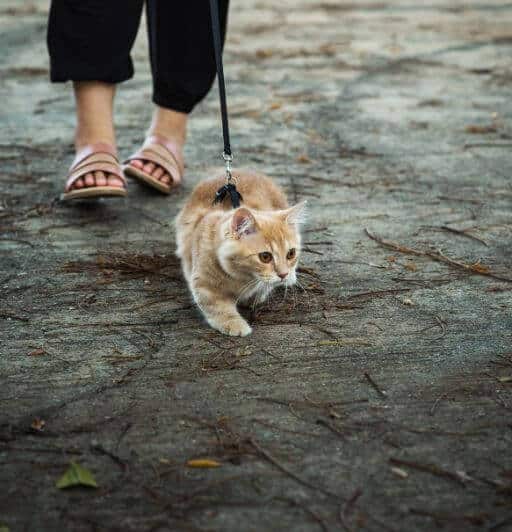
Munchkin cats are smart, social and affectionate. They typically get along great with other cats, dogs, and children. In addition to their outgoing personalities, they are also very intelligent and have a natural curiosity that often leads them into mischief. To keep their active minds engaged, it’s important to provide them with plenty of enrichment and mental stimulation. They are masters of the game of fetch.
They are active cats that enjoy playing and exploring, but are also cuddly lap cats at the same time. The Munchkin cat breed is curious and intelligent. They are great puzzle solvers; which is great if you are offering them food puzzles but also leads them into greater mischief.
Are Munchkin Cats a Healthy Breed?
The long-term health of the Munchkin cat hasn’t been firmly determined since it is a newer breed. But it appears that Munchkins are a generally healthy breed that doesn’t suffer from any difficulties from the mutation that gives them their short-legs.
Originally, there were concerns about whether or not Munchkins suffered from the spinal difficulties as short-legged dog breeds like corgis and dachshunds. But the structure of cat spines and dog spines are different and the short-legged Munchkin doesn’t have the same complications. The short-legged Munchkin is not prone to the conditions of other cats with dwarfism either.
Arthritis is another concern for Munchkins. Evidence to date is that the breed is not any more prone to arthritis than other cats. Well-bred Munchkins don’t struggle with mobility challenges. They jump the same 5 times their height as every other breed. That’s just not as high as long-legged cats. They can run fast and make tighter corners than most cats. Some describe them as the race cars of the cat world.
A study identified two possible conditions that occur more predominantly in the Munchkin breed than in the general cat population. Lordosis (a curvature of the spine that gives a swayback appearance), and Pectus Excavatum (a congenital condition causing the sternum and rib cage to be misshapen and sunken into the chest).
Controversy over Munchkin Cat Health Problems
There are two controversies surrounding the Munchkin cat breed and are the reasons that most of the major cat fancy organizations do not accept the breed. The first is the ethical question of whether or not it is appropriate to breed for a mutation resulting in traits that don’t do the cat any good. I’m not sure how I feel about this. The Manx is registered and has similar issues. The Scottish Fold is recognized and has serious health challenges from the mutation that is the foundation of the breed. Much more than the Munchkin Cat breed.
Derivative Breeds
The other serious issue around this little, short-legged breed, is the question of derivative breeds. There’s a desire out there to “munchkinize” any breed. The biggest concern is that most of these experimental breeds are crossing one mutation-based breed with another which just compounds the risks of health issues.
- Minuet breed, a Persian/Munchkin creation, has made it to Championship status in TICA.
- Skookum: a curly-coated cat bred from crossing the LaPerm breed and a Munchkin Cat. It is classified as an experimental breed.
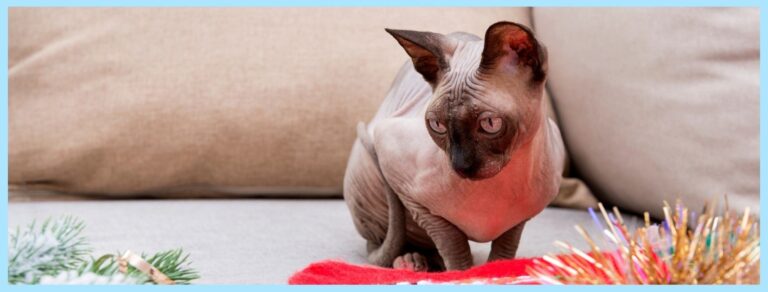
- Bambino: a Sphynx/Munchkin breeding to create a hairless breed with the short stature of the Munchkin. It is also experimental.
- Minskin: another hairless version of the Munchkin. This is a Sphynx, Devon Rex, Burmese, and Munchkin creation. This breed has advanced to the Provisional New Breed status in TICA.
- Lambkin: another curly-coated cross between a Selkirk Rex and a Munchkin Cat that stays very small and kittenlike. Needs more extensive grooming than Munchkins. Also experimental.
- Kinkalow: cross between the American Curl and Munchkin Cats. Experimental breed established in the 1990s.
- Scottish Kilt: Crosses the Scottish Fold and a Munchkin in order to get the shorter legs of the Munchkin and the folded ears of the Scottish Fold. Experimental breed.
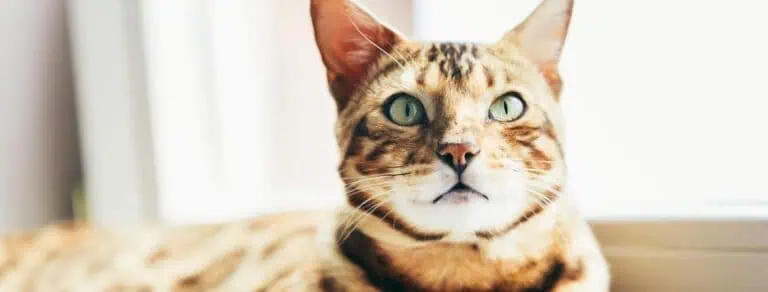
- Genetta: Bengal/Munchkin cross. Not yet recognized by the fancy.
What is the Lifespan of the Munchkin Cat?
Munchkins live 12-18 and average 15 years. This is the same as cats of any breed or random-bred cats.
Care and Grooming Tips for Your Munchkin
To keep your Munchkin cat happy and healthy, it is important to provide them with proper care and grooming. They do not have any special care needs. Feed your cat a good, healthy, balanced diet. Provide them with exercise to prevent obesity. Keep them well-groomed. Brush their teeth. And get them regular vet care just as you should for all cats regardless of breed.
Munchkins do not require a lot of grooming. Brush out your Munchkin once a week to remove excess coat and reduce shedding. The long-haired varieties need combing every other day or so to prevent tangles and mats from forming. Keeping their nails trimmed and the occasional bath will keep your furbaby in good order.
Looking for more breed profiles? Click here for our Breeds page
Do Munchkin Cats Make Good Pets?
Munchkin cats make wonderful pets due to their playful, friendly nature and small size.They fit into any lifestyle, being both energetic and affectionate. This low-rider, short-legged, breed can also form strong connections with their humans. They are a good choice for families with children and other pets. They blend fairly easily with other cats and dogs. If you’re looking for a kitty who will provide you with lots of love and entertainment, then the Munchkin breed is definitely worth considering.
Munchkin Cat Cost
The Munchkin cat is an adorable and unique breed of cat that has become increasingly popular in recent years. Despite their small size, however, the cost of taking a munchkin cat home can be quite large. Prices vary greatly depending on the breeder, the quality of the kitten, and any breeding rights you acquire. The average cost for a munchkin kitten is around $1,000 and can go up to $2,000 or more. Regardless of the cost, if you are looking for an unusual and loving furry friend, a Munchkin cat could be a perfect fit.
Conclusion
In conclusion, the Munchkin cat breed is a wonderful addition to any family. With its short legs and outgoing personality, they can provide hours of entertainment and companionship. They are highly intelligent, loyal, and affectionate cats that thrive in homes with plenty of attention, love and affection. If you’re looking for a loving and loyal pet who also happens to be small and easy to care for, then look no further than the Munchkin cat.