
Why Cats Bite Their Owners and How to Stop it
Contrary to popular belief, cats biting their owners isn’t typically due to aggression or a lack of affection. Biting is normal behavior for cats. It is part of their predatory nature. In our home, our furry companions use biting as a way to communicate with their people, to play, and to defend themselves. Cats bite their owners when they are bored, frustrated, scared or in pain.
“Cats bite for lots of reasons naturally—to kill prey, to play with littermates, and to protect themselves or fight,” –Dr. Mikel Maria Delgado, PhD. Certified Cat Behavior Consultant
Contents
Play Is The #1 Reason Why Cats Bite Their Owners
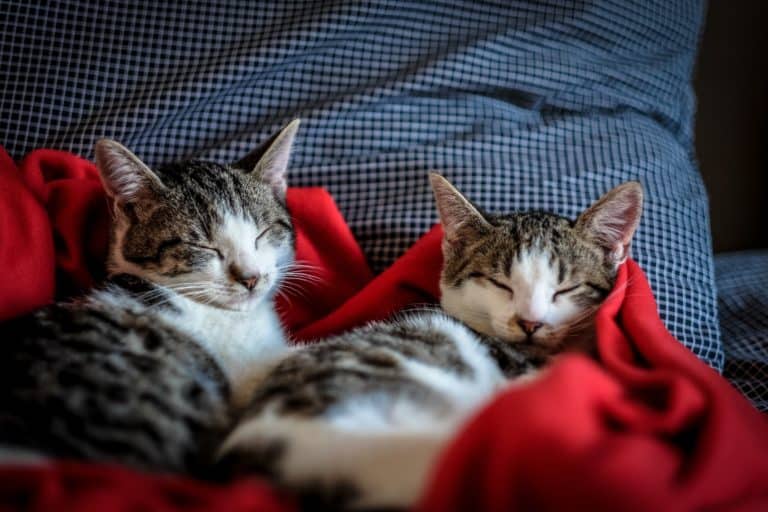
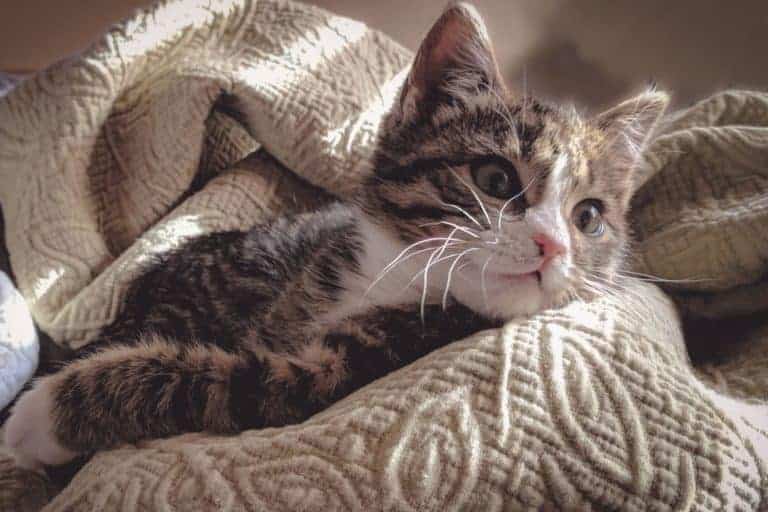
Play is the number one reason cats bite their owners. Kittens are rough customers. Fighting and biting are what play looks like in a litter of kittens. It’s how they learn their hunting behaviors, play, and explore their environment. But it’s not fun when our furbabies try it on us.
Kittens that are raised with their siblings learn boundaries. They learn how not to bite and how much is too much. Solo kittens don’t have that skill so we have to teach them. And it is important that we do. What is cute in a little kitten is not so cute in a big grown cat.
I adopted a three year old cat that had not been properly socialized as a kitten. He was a biter. Not an aggressive, angry, biter; but a crazy play biter. It took a long time to train him out of it. He loved me but his way of communicating that fact was to bite me.
Related Post: Benefits of Play for You and Your Cat
Play biting is a sign you need to step up playtime. Intentional playtime with wand toys is a good solution. It puts you at a distance from those sharp little fangs and claws. Give him chew toys and things he can bite on to get his energy out. Keep Kitty busy with opportunities to exercise his inner predator. Solo toys to hunt, food puzzles, and interactive toys.
Do not give in to the desire to respond to Kitty’s rough play. It can be fun to tease him and let him hunt your toes under the blankets. But he needs to know that you are not a toy and biting your hands and feet is not okay.
Overstimulation is a Frequent Cause of Cat Biting
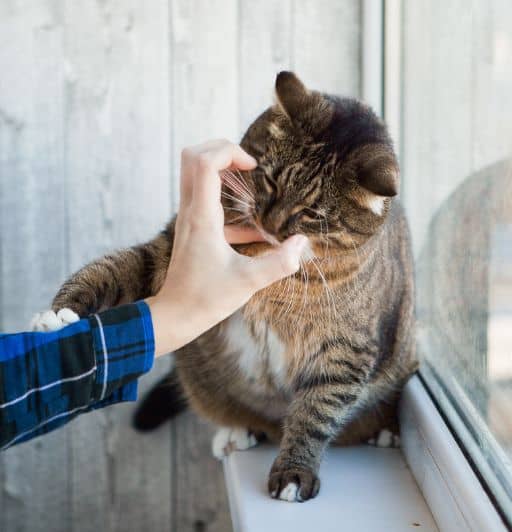
If a cat has been petted or played with too long, they may become overwhelmed and snap at whoever is handling them. It’s important to learn to read your cat and stop while Kitty is still enjoying the experience. Or at least tolerating it. Give Kitty a chance to consent, and to get out of a situation he’s had enough of. Pay attention to how your cat likes to be petted and held. Always end on a positive note rather than push her to her limit.

Don’t assume that all cats like the same thing when it comes to handling. My Plush hates having his tail base scratched. I saw him getting overstimulated by a judge in a show ring. I tried to warn her, but she didn’t listen. He finally told her what he thought about it all by snapping at her.
To prevent your cat from becoming overly stimulated, avoid petting them for too long and give them plenty of space to relax away from loud noises and chaos. Creating a safe and comfortable environment where your cat can rest without feeling overwhelmed will help reduce the risk of incidents that result in cats biting their owners.
Frustration, Fear, or Pain are Common Reasons Cats Bite
This behavior is typically self-protective rather than aggressive. and the cat may feel threatened in some way. Frustration can occur when a cat does not get what it wants or feels its territory is being invaded.
Cats bite when they perceive a threat or have a high level of fear and are unable to flee. Don’t corner a cat. Consider his position when you approach him. Leave him a way out. When you pick up your cat, hold him securely, don’t put him in a vulnerable position.
Pain can cause biting in response to petting or handling that has become uncomfortable due to sickness or injury. Sometimes Kitty will react to the memory of something. Treeno hates it when anyone handles his face because he associates it with all his dental treatments even though he’s fine now.
Understanding why cats bite and addressing any underlying emotional needs can help you effectively curb this behavior and keep your pet calm and content.
Cats Bite Their Owners When They Are Bored Or Need Attention
Despite cats’ reputation for being independent and low-maintenance, they still need plenty of engagement and attention from their guardians. Unfortunately, when this isn’t provided, cats are known to bite as a way to get what they want. If your kitten jumps at your ankles when you come around the corner or pounces on you when you’re trying to sleep, it is likely he needs more stimulation in an acceptable way.
Providing your furbaby with toys and interactive games to satisfy their need for entertainment and mental stimulation will help him learn alternative ways of expressing himself instead of biting.
How To Stop Cats From Biting Their Owners
Meet Your Cats’ Needs
Cats need a lot of environmental enrichment to prevent him from developing behavior problems.. In addition to offering him places to hide and places to climb, think of ways to use all your cat’s five senses to meet their needs.
Food puzzles, CatTV, catnip and other herbal blends, a bird feeder outside Kitty’s favorite window are just some of the ways to engage his senses and his brain to reduce boredom and the risk of biting the owner.
Related Post: Sensory Enrichment for Cats
Give Kitty Lots of Toys and Active Play
Make sure you provide plenty of stimulation such as interactive toys and solo toys. Make sure you play with Kitty a few times a day with toys like the cat dancer or cat charmer. Simple things like throwing a few ping pong balls in the bathtub can really up her engagement. Fetching with springs or small catnip toys is a fun way to play without taking a risk of being bitten.

Don’t Play Rough with Kitty
When you play with Kitty you want to send him the message that hands are for petting and not for biting. If your cat is biting your hands, moving your fingers and pulling to get away will only trigger his prey drive. Instead, push your hand gently toward Kitty’s mouth. This will make him let you go. Tell him no firmly and walk away, ending your play time. In addition to never using your fingers as toys, never tease or wrestle your cat with your hands.
Don’t Punish Your Cat for Biting
Don’t punish your furbaby if she bites you. Punishing a cat is ineffective and can ruin the bond between the two of you. Instead, you want to ignore her bad choices and use distraction to stop the behavior.
Related Post: Can You Discipline a Cat?
Cats tend to give warning signals before they start biting, such as growling, hissing, or swatting with their paws.If Kitty is ramped up and behaving that way, redirect him by tossing a toy or treat to prevent him biting.
If he does bite you, immediately stop your interaction. Don’t give him any feedback. Just ignore him. You want him to get no payoff for the bad behavior.
Reward Positive Behavior
You really want to prevent the bite in the first place. Learn the signs that indicate Kitty is working up to the bite. End your play session before Kitty gets to that point. Praise Kitty when he doesn’t bite. Give treats to end any play session that doesn’t involve him biting you.
Train replacement behavior. Track situations where Kitty bites. Is he jumping at your feet when you come into a room or does she dash out from under the bed when you walk by her hideout? That’s my Mocha’s favorite. When you know what to expect, try clicker training Kitty to sit. The idea is that you give her something else to think about instead of biting.
Distract. Carrying a toy or treat is another way to prevent those sneak attacks. Throw a toy around the corner before you come through the doorway. Kitty will chase the toy instead of coming after your feet. Mocha won’t come after me from under the bed if I acknowledge that she’s there. I guess it takes away the surprise fun for her. She gets a treat if she doesn’t bounce at me.
Conclusion
In conclusion, it’s important to understand why your Kitty is biting, what potential triggers and situations cause him to do so, and how to address the messages he’s sending us. Teaching cats how to play appropriately and providing him with necessary enrichment can help prevent biting. Understanding your furbaby’s behavior and addressing it positively will eventually eliminate, or at least reduce, his need to bite. Training cats not to bite their owners takes patience, but will create a more positive bond with them over time.