
Tonkinese Cat: Personality, Care, Health, and How to Choose the Right One
Picture a cat that wants to be where you are, not across the room. The Tonkinese cat often greets you at the door, “helps” with chores, and turns playtime into a daily ritual. Many are chatty too, although their voice usually lands between the loud Siamese and the softer Burmese.
That mix is no accident. The Tonkinese blends Siamese and Burmese traits to create a breed with its own look and temperament goals. Tonkinese cats exhibit the traits that were bred out of Siamese and Burmese cats. Many in the cat fancy opposed recognition of the Tonkinese cat because they saw the breed as pet-quality versions of the Siamese or Burmese. The Tonkinese breed have had sustained steady growth in popularity over time with no big dips or peaks.
This guide covers what life with a “Tonk” is really like, including Tonkinese cat breed standards, temperament, care and grooming, health topics to discuss with your vet, and how to pick a kitten with confidence if a Tonkinese is the cat for you.
Contents
History of the Tonkinese Cat
Wong Mau is the foundation cat of both the Tonkinese and the Burmese breed. She was imported to the United States by a Navy surgeon in 1930. She produced three distinctly different types of kittens. Some looked like her, some had Siamese markings, and some solid brown. The solid brown kittens are the foundation of the Burmese breed. In the 1960’s, some Siamese breeders decided to develop a more moderate type of cat. They used the cats that looked like Wong Mau, Siamese cats, and Burmese cats and called them Tonkinese.
The combination of Siamese and Burmese cats created a people-focused cat with Siamese curiosity and Burmese steadiness. Tonkinese cats are affectionate and bold. They commonly choose a “favorite person,” then keep tabs on them from room to room. If you want a cat that feels like a small roommate, this breed often fits. They don’t love being ignored. If your home runs on interaction, they usually thrive.
What makes a Tonkinese a Tonkinese Cat?
Think of the Tonkinese as a middle path cat. Many have the social drive of a Siamese, but with a softer edge that can make them easier for first-time owners. Families often choose them because they like contact, play, and routine, without needing constant chaos.
Most Tonks are medium in size with a solid, athletic feel. Adults usually weigh around 6 to 12 pounds, depending on body type and gender.
The Tonkinese breed standard
A breed standard is basically a blueprint for what a cat should look like. Registries describe the ideal Tonkinese as a medium, balanced, muscular cat, neither cobby like a Persian nor long and leggy like a Siamese, not extreme in any feature. The body should look athletic, the short coat should lie close to the skin, and the overall impression should be smooth and moderate.
A balanced, “in-between,” look
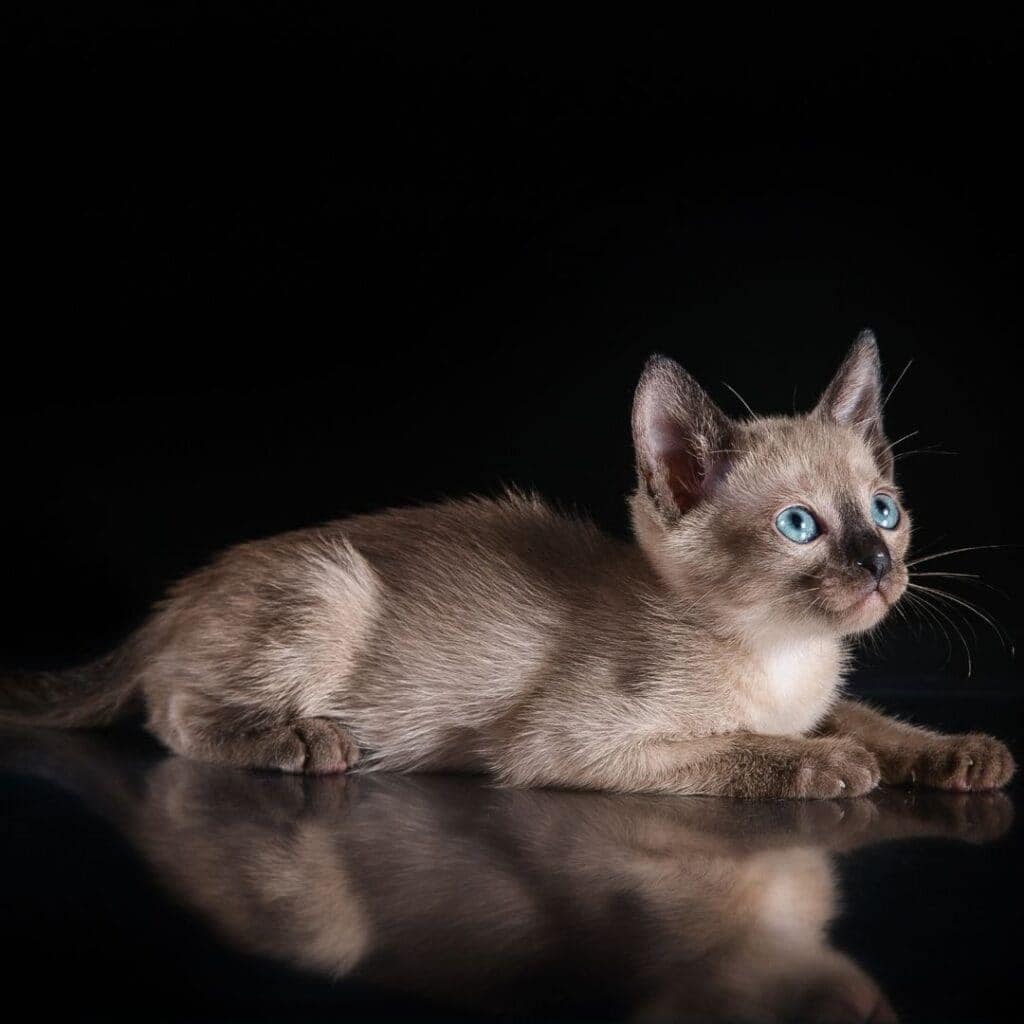
The Tonkinese cat has a dense, muscular body that feels surprisingly heavy when you pick him up. They are a well-balanced and proportional breed. The body is medium length. The Tonkinese back legs are slightly higher in back than front. The paws are more oval than round. The tail is proportionate in length and tapering. A Tonk’s head is considered a modified wedge; slightly longer than wide. They have high cheekbones and a blunt muzzle with a slight whisker break. The broad-based ears have oval tips and are set as much on the sides as on the top of the head. A Tonk’s eyes are an open, almond shape.
Tonkinese cat coats and colors
The signature look is a big part of the appeal of a Tonkinese cat. Their coat is fine, soft and silky. The color pattern often looks “in-between” Siamese points and Burmese solids. Tonkinese coats fall into three pattern groups: solid, mink, and pointed. Mink is the pattern many people picture first because it blends contrast with softness. Pointed looks more Siamese-like, while solid looks closer to Burmese.
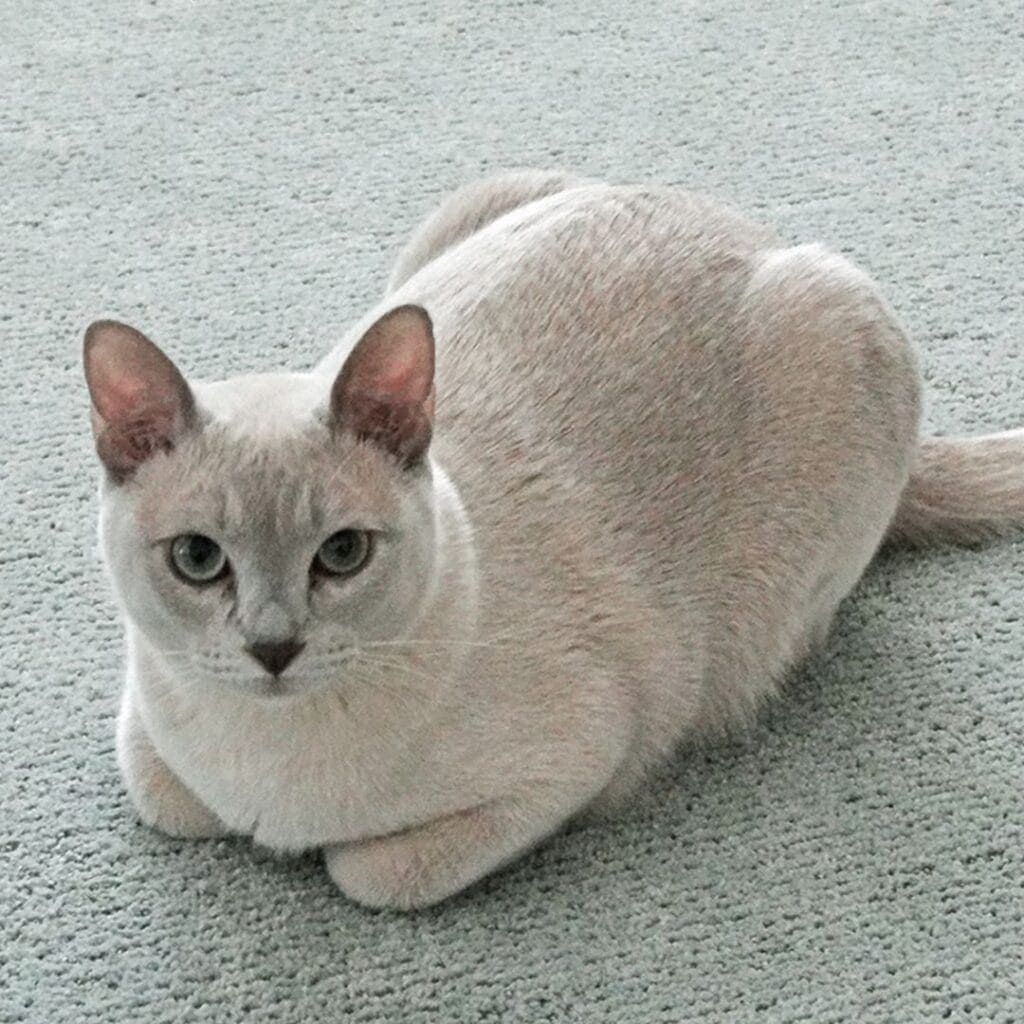
The Tonkinese cat is a pointed cat like the Ragdoll or the Siamese. Their ears, feet, tail and face are darker merging gently into body color. There must be a distinct contrast between body color and points. Development of full body color may take up to 16 months. Like all pointed cats, Tonkinese cats do darken with age.
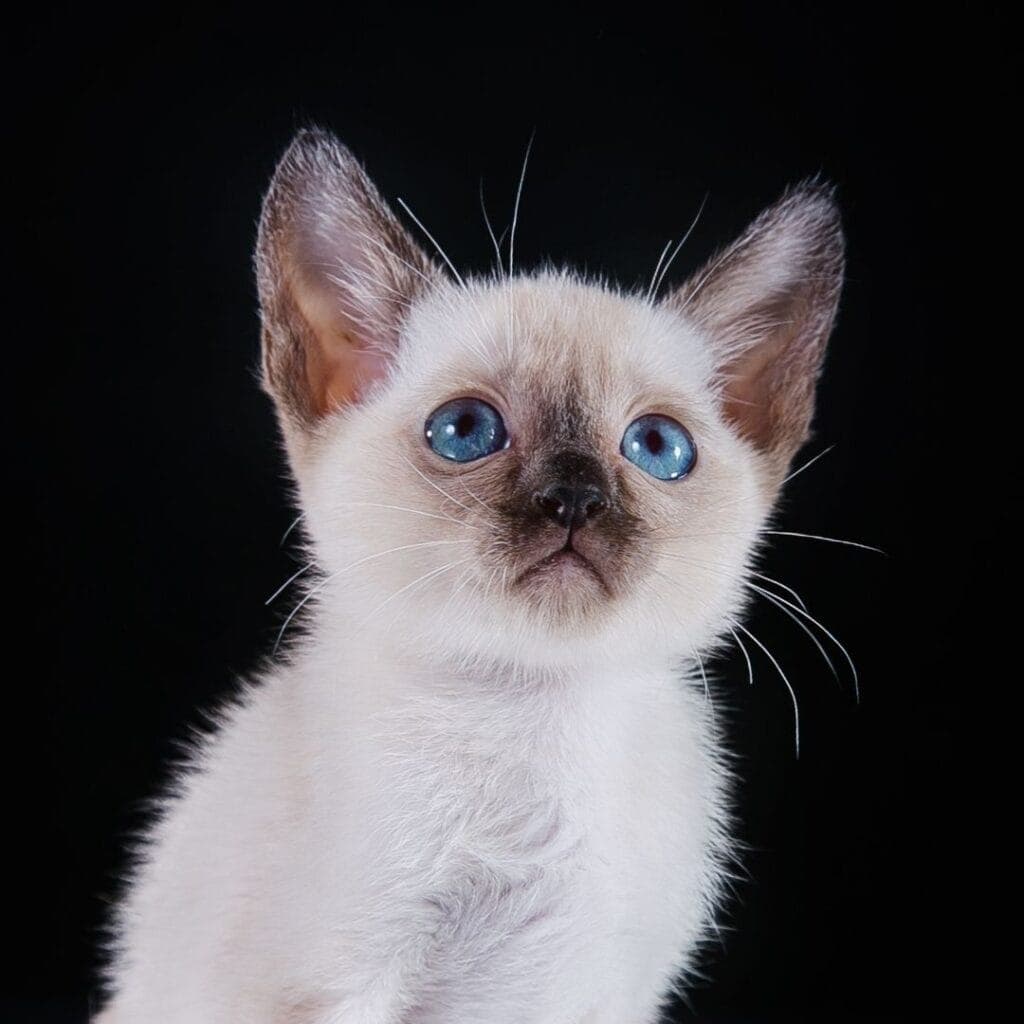
Tonk’s come in four colors and three patterns.
Colors:
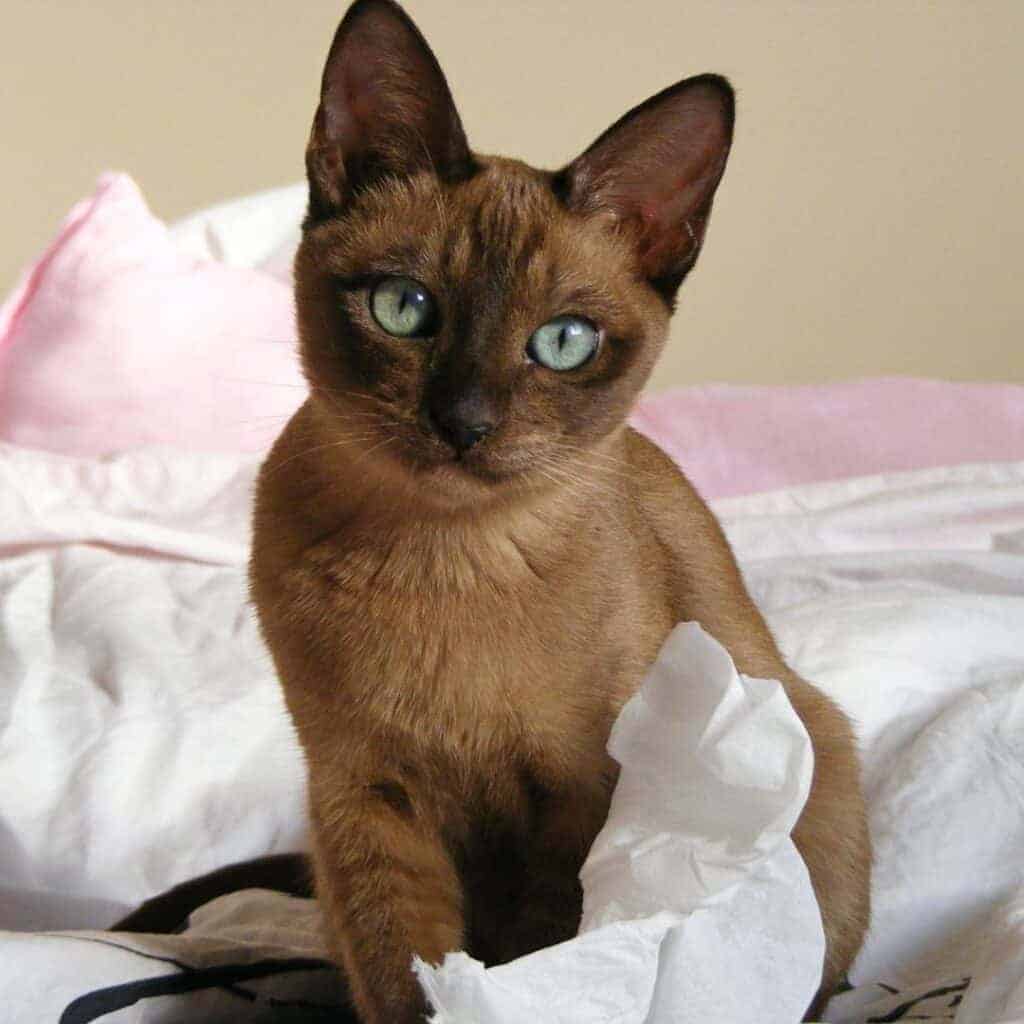
- Natural: Medium brown with dark brown points
- Champagne: Cream to beige with medium brown points
- Blue: Soft blue-gray with slate blue points
- Platinum: pale, silver gray with frosty gray.
Patterns:
- Mink colors: rich, even color with a distinct contrast between body color and points.
- Solid colors: body color is slightly lighter shade of the point color with very little contrast.
- Pointed colors: off-white shading to the point color.
Eye color depends on pattern. Mink Tonkinese have aqua eyes. Like all pointed cat, the pointed version have blue eyes. Solid cats eyes are green to yellow-green tones.
Mink-patterned Tonkinese were accepted for championship in 1984 and the standard was expanded to accept the pointed and solid colors in 2002.
What is daily life with a Tonkinese like?
The Tonkinese cat is a forthright, demanding and intelligent cat who will not stand for being ignored. They are inclined to have chatty conversations with their people, active but not hyper. They love toys, high places, riding on shoulders, sitting on monitors, socks, and playing fetch. If you meet their play needs early, you’ll often prevent common issues like nighttime zoomies, attention-seeking yowling, and creative furniture scratching.
Activity and Energy Levels
A Tonkinese is a high energy breed, especially when young. They play fetch, climb cat trees and fly through the house at warp speed.
A Tonk usually wants a job, even if that “job” is chasing a toy mouse you throw down the hall. Some Tonkinese also enjoy fetch, especially with soft balls, but let the cat set the rules. We’ve run a few Tonks in feline agility. They are very capable and fun; but not always motivated.
The Tonkinese is a talkative, cuddly and loving cat. They are not aloof or independent. Tonkinese cats commonly crave interaction. They are dog-like in that they require and demand attention. That doesn’t mean they need nonstop cuddling, but they usually want to be included in your activities.
If your schedule keeps you out all day, loneliness can build. Boredom can show up as knocking items down, over-grooming, or constant demands for attention. If you have a full work schedule or are in school all day consider adopting a sibling pair rather than a single kitten unless you have other young cats at home.
A good rule: if your Tonkinese cat starts “inventing” mischief, add play, puzzle feeding, and climbing space before you label it a behavior problem.
Watch for signs of stress or boredom: clinginess that suddenly spikes, reduced appetite, hiding more than usual, or grooming that seems intense. When that happens, increase enrichment and check in with your vet, since stress and health issues can look similar.
Play, enrichment, and simple training that actually works
Tonkinese cats require quite a time commitment. They need high-level enrichment including simulated hunting games and interactive play. Wand toys mimic prey, so they’re great for controlled workouts.
Start with structure. Short play sessions, morning and evening, work well for many homes. Add a predictable feeding routine, and you’ve got a calmer cat because they know what comes next.
Trick training is an enrichment activity that can be surprisingly easy with a Tonk because many are food-motivated and curious. Clicker training often works with short sessions and tiny treats. Start with “touch” (nose to your finger), then build to sit or go-to-mat. Cat School is a great resource for clicker training.
Harness training is possible too, but go slow. First, let them sniff the harness, then wear it indoors for seconds, then minutes. Pair each step with treats so the harness predicts good things.
Vertical space also matters. A sturdy cat tree or simple wall shelves and window perches can reduce conflict in multi-pet homes because your Tonkinese cat can move up and away when they want.
Do Tonkinese cats make good pets?
Tonkinese cats make great family pets. Their irrepressible, people-loving personality makes them a good choice for families with young children who need a tolerant and playful cat. They do well with respectful kids and other friendly pets, especially when introductions stay slow.
They love people and usually get along with other cats, and even cat savvy dogs. They are a best fit for people who are home often and want a lap cat.
Tonkinese cat care, grooming, feeding, and common health concerns
Tonkinese grooming is usually low effort, but low effort isn’t the same as no effort. Their short coat benefits from weekly brushing with a rubber brush like the Kong Zoom Groom. Regular ear cleaning, nail trims, and tooth brushing round out their care.
Feeding needs vary by age and activity. Weight can creep up when activity drops but calories don’t. Measure food, limit high-calorie treats, and keep daily movement part of the management plan.
No breed is “health-proof,” so steady vet care matters. Reputable breeders screen for known issues and track lines carefully.
Health topics to discuss with your vet (and what to watch for at home)
The Tonkinese breed is generally a sturdy, healthy breed; but can be prone to:
- Burmese head defect which is a condition where the face and skull do not form correctly. This is of more concern to breeders than buyers. You are unlikely to encounter this as an adopter.
- Progressive retinal atrophy which is an inherited disorder where part of the eye degenerates and wastes away which can result in blindness.
- Pyruvate kinase deficiency (PKD) which is a disease that causes anemia (death or red blood cells).
- Amyloidosis is caused by the deposition of amyloid protein outside the cells in organs and tissues. Symptoms include weight loss, oral ulcers, and excessive thirst and urination, among others.
- Hypertrophic Cardimyopathy (HCM): This causes the left ventricle of the heart to thicken and inadequately pump blood. Symptoms include weakness, pale gums, and labored breathing.
Testing available:
- DNA testing for progressive retinal atrophy and pyruvate kinase deficiency which tests whether or not a cat has the potential to be affected by these conditions.
- Echocardiograms screen for HCM, which is especially important in breeding cats.
How long do Tonkinese cats live?
Tonks live an average of 10 – 16 years, like most cats.
How to choose the right Tonkinese, breeder questions, and real costs
Choosing a Tonkinese should feel calm, not rushed. Ethical preservation breeders will ask you questions about you, your family, and your lifestyle because they care where the cat lands. They should also be clear with you about the necessary health care, socialization, your kitten will need, and what support they offer after you bring the cat home. Be wary of sellers who always have kittens available, won’t show living conditions, or won’t talk about vet care.
If someone won’t take a cat back when life changes, that’s a red flag. Responsible sources plan for the cat’s whole life.
A well-raised Tonkinese kitten should look confident, bright-eyed, and be comfortable being handled. An adult Tonkinese can be a great fit, especially if you want a known personality. Retired breeding cats and owner surrenders often adjust well in the right home, and you may skip the sharpest kitten phase.
Finding a healthy kitten, what to ask, what to avoid
Here are a few questions that quickly separate careful breeders from casual sellers:
- Health screening: What tests do you do, and can you share results or vet records?
- Early care: What vaccines and deworming schedule do you use?
- Socialization: How do kittens experience handling, noise, and visitors?
- Paperwork: Do you provide registration or pedigree documents?
- Spay or neuter: What’s your policy and timeline?
- Contract and support: Do you have a return policy, and will you advise after adoption?
If possible, meet at least the mother cat and see how the kittens live. Clean spaces and relaxed cats speak loudly about the quality of the breeder and the well-being of the kittens.
Most of the major registries and the Tonkinese Breed Association have lists of breeders. You can find reputable breeders at cat shows.
How much do Tonkinese cats cost?
Prices vary based on where you live, demand, and whether the cat is pet-quality, a show prospect, or sold with breeding rights. Generally speaking, a well-bred Tonkinese kitten will run you 1,500-3000. Breeding rights might double that. Sometimes a retiree might be available for the cost of the spay or neuter.
Conclusion
The Tonkinese cat fits homes that want a social, playful companion and can offer daily interaction. If you’re away long hours and prefer a hands-off pet, this breed can feel like too much. Start with a home checklist, talk with your vet about a care plan, and choose an ethical breeder. With the right match, a Tonkinese cat turns ordinary days into something a lot more fun.