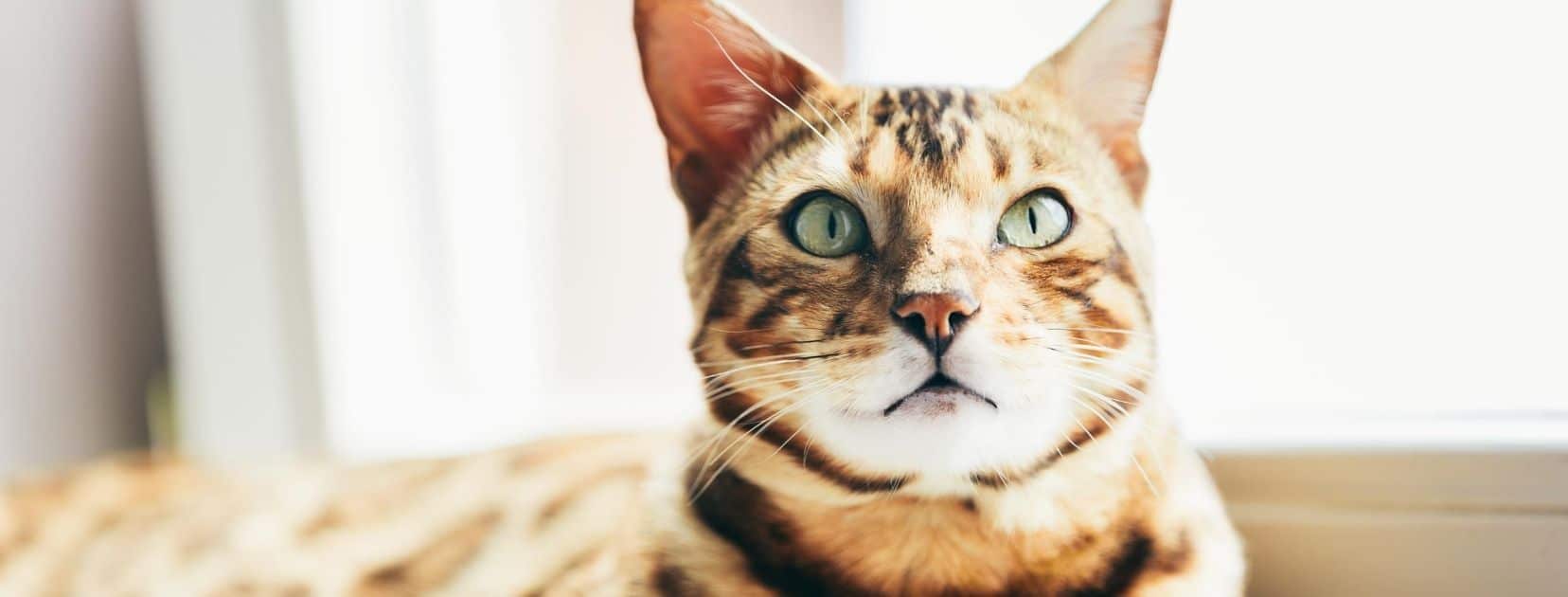
The Bengal Cat: Wild or Mild?
Last Updated on March 18, 2022 by Holly Anne Dustin
The Bengal cat is a domestic breed of cat created by crossing an Asian Leopard Cat with a Domestic Shorthair, producing a cat that looks like its wild ancestors but has the gentle temperament of a pet cat. A Bengal cat might be the perfect match for you if you are looking for a feline friend to share your adventures.
Bengals are confident cats with forceful personalities. Active, intelligent, and beautiful, these cats are one of the most popular breeds in any show hall. They are just as at home in your living room.
Development of the Bengal Cat Breed
The modern Bengal cat was first bred by Jean Mill in the early 1980s. An experienced conservationist and cat breeder, Jean Mills developed the Himalayan breed in 1948. She began her experiments in the early 1960s to conserve the Asian Leopard Cat, but it is her breedings in the 1980s that produce the cat we know today as the Bengal.
The original cross was an Asian Leopard Cat and a black domestic cat. Breeders out-crossed to other breeds, including Abyssinians, Ocicats, and the Egyptian Mau, to create the unique type and look of the Bengal cat. The Snow Bengal’s pale coloring show the influence of out-crossing to the Siamese.
Today there are no allowable out-crosses. Bengals today breed purely. A purebred Bengal kitten has two Bengal parents. A Bengal must be 4 generations away from an Asian Leopard Cat, to exhibit in any of the major cat groups.
The International Cat Association (TICA) accepted Bengals in championship for the first time in 1991. CFA did not recognize them until 2016. TICA accepted the long-haired “Cashmere” Bengal in 2017. They are still provisional in CFA. All the major associations around the world now recognize the Bengal breed.
Bengal Breed Standards
“The Bengal is a medium to large cat with a sleek, muscular build. Boning is substantial. Hindquarters slightly higher than shoulders. The tail is thick, with a rounded tip, and carried lower than the back. The Bengal’s head, expressive nocturnal look, and stunning markings give the breed a wild appearance. The coat is like no other: short, soft, silky to the touch, luxurious, and preferably glittered. Bengals are alert and active, with inquisitive, dependable dispositions. Males are generally larger than females.”
Cat Fanciers’ Association Bengal Breed Standard
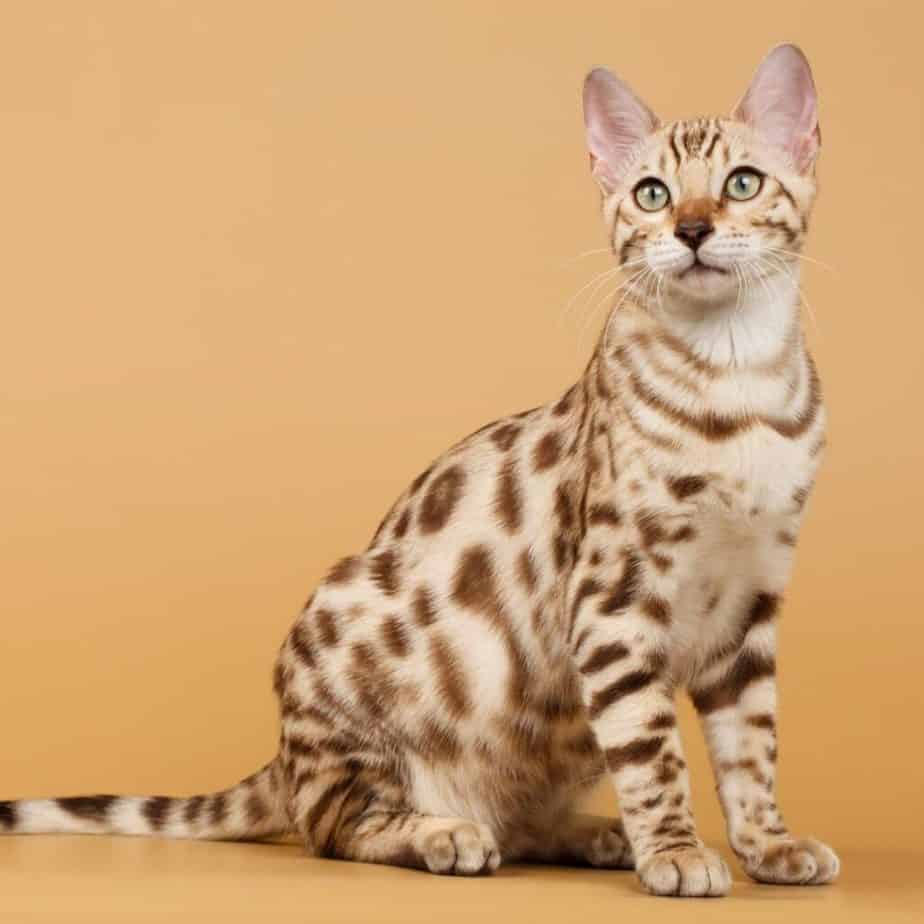
Colors:
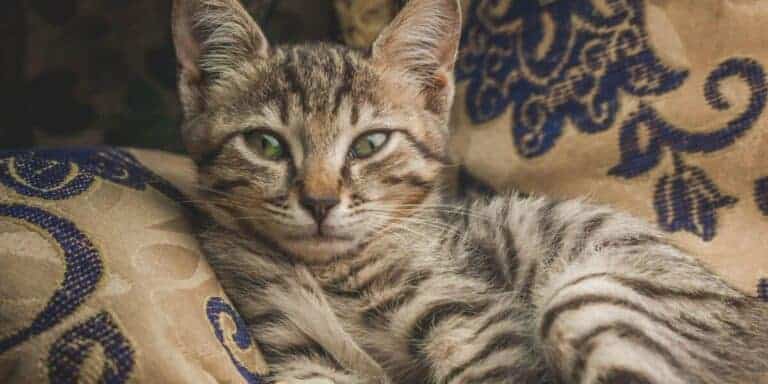
Brown: While the warm brown is the typical color of a brown Bengal, they can be anything from gray to orange. As long as it has a black tail tip, it’s considered a brown.
Blue: The dilute of the brown patterns, the blue Bengal cat can range from pale blue to dark slate gray.
Snow: The Snow Leopards of the Bengal world. Outcrossing to the Siamese and Burmese creates the Snow Bengal. Snow is actually three colors – Snow Lynx, Snow Mink, Snow Sepia (also called the seal sepia). The Lynx is the lightest, a white and cream, the Sepia almost a chocolate brown, and the Mink results when a cat has one Lynx gene and one Sepia gene.
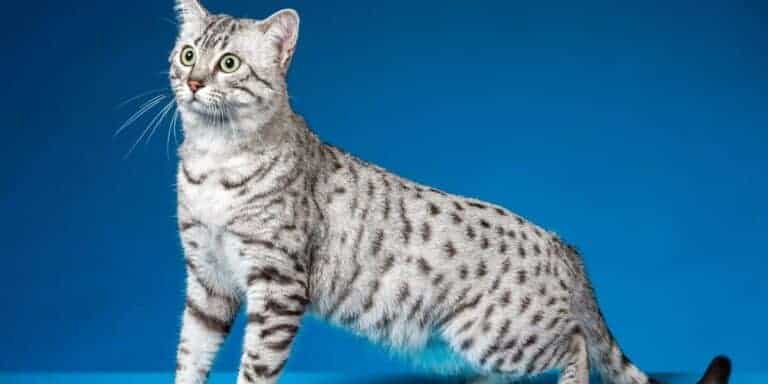
Silver: Outcrossing Bengals with the American Shorthair introduced the silver gene. The Silver Bengal has a silver to almost white base coat with black markings. You can also have Blue Silver, Silver Charcoal, Snow Silver (silver variant of all three Snow colors), and Silver Smoke (Silver and Melanistic combination).
Looking for a different breed? Check our list of breed profiles here.