
What Should You Do if You Find an Orphaned Kitten?
Last Updated on June 24, 2024 by Holly Anne Dustin
You’re taking a walk, and you hear it. The unexpected sound of a kitten meowing. You look around and there it is. You’ve found a kitten or a litter of kittens. You don’t see Mama Cat anywhere.
The most natural reaction to finding a kitten or kittens alone is to pick them up, rescue them, and take them to a shelter. Anything to get them out of the wild. The thing is, rescuing stray or feral kittens can be the worst thing you can do.
Kitten season is in full swing. Depending on where you live, kitten season runs from March to September. It can last year round if you live in a warm area.
Litters of kittens, with and without their Mama cats, overrun shelters and rescues. Some of those are brought in by well-meaning people who find a kitten or litter of kittens and turn them in. The area I live in has great placement statistics, but in some parts of the country shelters put down stray kittens because they lack the resources to care for them properly.

Contents
So What Do We Do If We Find a Kitten in Our Yard?
That depends. Following these considerations can help you decide what to do.
Assess the Situation:
First, try to determine if they are really orphans. If you find kittens in a box, someone has probably dumped them. A single kitten, past the newborn stage, wandering on its own, is also likely dumped or abandoned.
A litter of kittens in a nest under your deck or in the bushes probably has a Mama cat out there. She may have abandoned them – or she might just be out hunting for dinner and will return.

What condition are the kittens in? Are they clean and healthy looking? If so, Mama is most likely coming back. But if the babies are dirty, thin, pale, cold, and crying, the mother cannot return or has abandoned the kittens.
Observe and Leave the Kittens Alone:
Give the mother cat plenty of time to return before you decide she has left the kittens behind.
Mama must return every three hours to feed those babies. Her instinct will drive her home. But if she’s a feral cat, she might be unwilling to approach if you’re around. Sprinkle some flour or food grade Diatomaceous Earth around the kitten’s nest. Mama will track the powder and leave prints when she comes back. A feral cat will sneak past your observing eye.
The best chance of survival for kittens born outside is to keep them with their mother. If the mother is caring for them, and they are in a safe space, they are better off with her, especially if the mother is feral. The stress of being trapped and moved could cause her to reject her kittens.
The babies are not only receiving nutrition from nursing but important antibodies and immune system support from their mom. Fifteen – twenty-five percentage of kittens in foster care won’t survive. The younger we separate them from mom, the worse their outcome. Mama cat is at risk of illness too when separated from her kittens before she weans them.
If they are somewhere unsafe, like near the road or in an area frequented by dogs or predators, set up a shelter and feeding station somewhere safe. Give Mama a chance to move the kittens herself unless the danger is imminent (flooding or fire, etc.) Trap her and move her and the kittens to safety in an emergency. Monitor them to make sure she doesn’t abandon them or move them somewhere else dangerous.

Give Mama essentials to do her job of raising her babies easier.
This post may contain affiliate links. Life and Cats is a Chewy affiliate and a member of the Amazon Associates program and as such we earn a small commission when you shop through our our links and banners. It doesn’t change the amount you pay. You can read our full disclosure policy here.
If the mother cat is friendly, she is probably either someone’s outdoor pet or a stray displaced from her home. Before you take on caring for the furry family, make sure they don’t belong to a neighbor. Check with people living nearby, check for lost cat posts on social media, ask your animal control officer if there have been any reports of missing cats fitting the description of the cat you found.
- Food and water. Giving mama cats a steady source of wet food will make it easier for her to provide necessary nutrients to her kittens without ranging as far. Don’t put the food right by their nests, though. You don’t want to encourage other animals like dogs, foxes, or raccoons to come around the babies and harm them. Leave the food across the yard.
- Shelter. Cats like to raise their kittens in nests, where they feel hidden and protected. Provide her with a place to do that.
- Privacy. Monitor mama and babies. If the mother is feral, don’t approach when she’s at home. You might stress her into moving. When the kittens are 4 weeks old and weaning, you can try to handle the kittens as long as she doesn’t show signs of stress. Kittens prime socialization period is short, up to 14-16 weeks with the best time up to 7-8 weeks. It will be easiest to acclimate the kittens to living with humans when they are young.
Collect Orphan Kittens
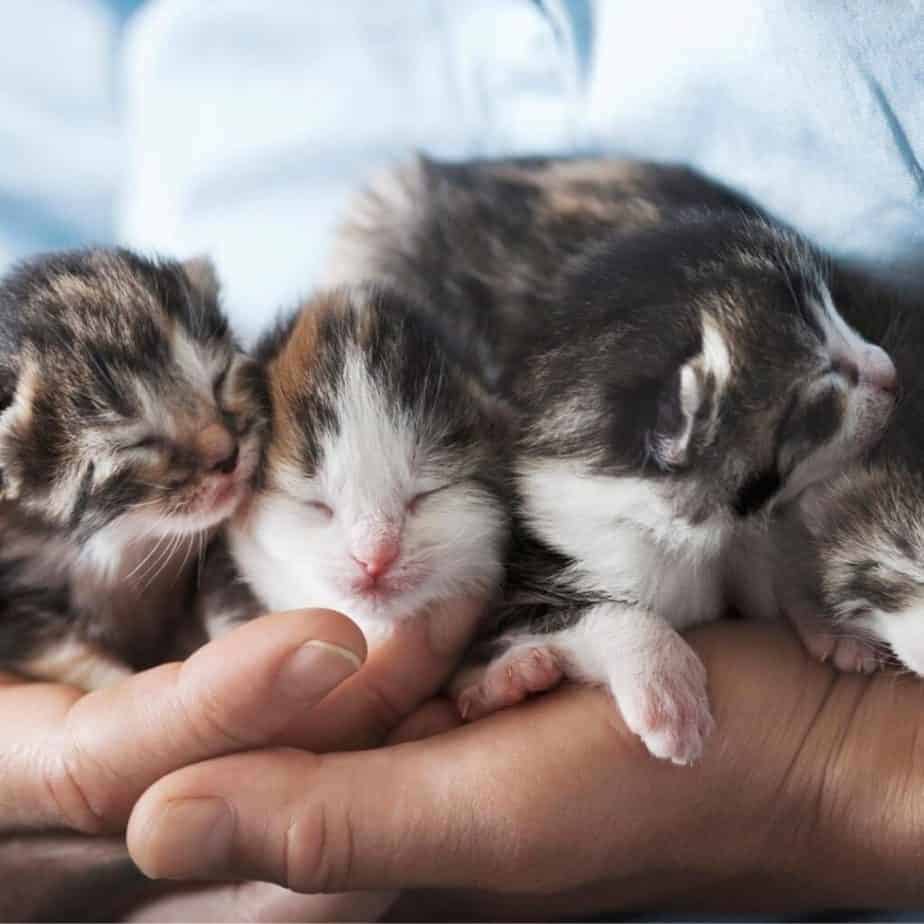
If you’ve determined that the kittens you found aren’t with their mother, take them in. Be sure to keep the kittens warm. Hypothermia and dehydration are actually more of worrisome than starvation. Baby kittens can’t control their own body temperature until they are at least three weeks old and get cold easily, which can be life-threatening.
How to Take Care of an Orphan Kitten
Keep them warm.
Keep them in a playpen, crate, or box in a small room. Put a Snugglesafe Disc in the box with them to help them keep warm. Leave room for the kittens to get off it when they want so they don’t get overheated.
Feed them with Kitten Formula Until They Can Eat Kitten Food.
Newborn kittens need care every 2 hours. You need to bottle feed baby kittens under 4-5 weeks old. Bottle feed every 2-3 hours with a kitten formula under 4 weeks of age. At 4-5 weeks you can wean them onto kitten canned food.
Keep Them Clean
They need help to pee and poop too. Tiny kittens can’t go to the bathroom unless you rub under their tails with a warm washcloth.
Alleycat Allies has a helpful, detailed guide to caring for young orphaned kittens if you find a kitten and decided to raise it.
Get Them All Altered
Take kittens in if the kittens are 8 weeks old. Get them spayed or neutered, vetted, vaccinated and find them homes. Trap Mama Cat and get her spayed. You can adopt her out alongside her babies if she’s friendly. A feral cat is best off returning to her home in the community.
Summary
What should you do if you find a kitten? As we have seen, baby kittens under 4-5 weeks do best left with their mother. Their prospects in the shelter system are not good.
- It is important to be observant and make sure that the kittens you found are truly orphans before you intervene.
- Even in the most loving home situation, neonatal orphan kittens will struggle to thrive.
- Take care of a feral mother cat and her kittens in a safe space outside until the little ones are weaned.
- Take orphan kittens in to your care if the mama cat doesn’t appear.
- Get the kittens and the mother cat altered as soon as the kittens are weaned and big enough. They can be returned to their community outside as part of a TNR program, or adopted out if they are friendly.