The Fascinating World of Tabby Cat Patterns
Last Updated on April 17, 2024 by Holly Anne Dustin
The original cat that crept out of the desert and domesticated us humans was probably a tabby cat. The tabby patterns are great for camouflage and we see the tabby patterns expand as cats spread across the world into different biomes.
Tabby cats are still one of the most popular types of cats today, and for good reason. They are intelligent, affectionate, and their distinctive coat patterns make them stand out from the crowd, and each tabby cat has a unique pattern that is as individual as they are. Whether you are a lifelong cat lover or just starting to explore the world of felines, tabby cat patterns is a fascinating topic to explore.
Contents
What is a Tabby Cat?
Tabby cats are one of the most common and beloved types of cats. A tabby cat is a domestic cat with distinctive coat patterns. The tabby cat is not a specific breed of cat, but rather a coat pattern resulting from a genetic trait that can be found in many different breeds.
Tabby cats are friendly and affectionate cats. They are social animals that enjoy spending time with their owners and are good with children and other pets. The name “tabby” comes from a type of silk fabric with a similar striped pattern.
The Five Main Tabby Cat Coat Patterns
There are five main tabby coat patterns: classic, mackerel, spotted, ticked, and patched. Each of these patterns has its own unique characteristics and can be found in many breeds of cats.
There are other, breed specific, tabby patterns that have appeared as we breed wild and domestic cats to produce hybrid breeds. The Bengal breed presents a marbled and a rosetted pattern while the Toyger has a braided or candle flame pattern.
The Classic Tabby Pattern
The classic tabby cat pattern, referred to by some as the blotched tabby pattern, features bold, swirling stripes that form a distinctive “bullseye” pattern on the cat’s side. Classic tabby cats have a marbled or tye-dyed appearance. The classic tabby has dark bars on the legs, tail, and cheeks, along with the telltale “M” shape on the forehead.

The Mackerel Tabby Pattern
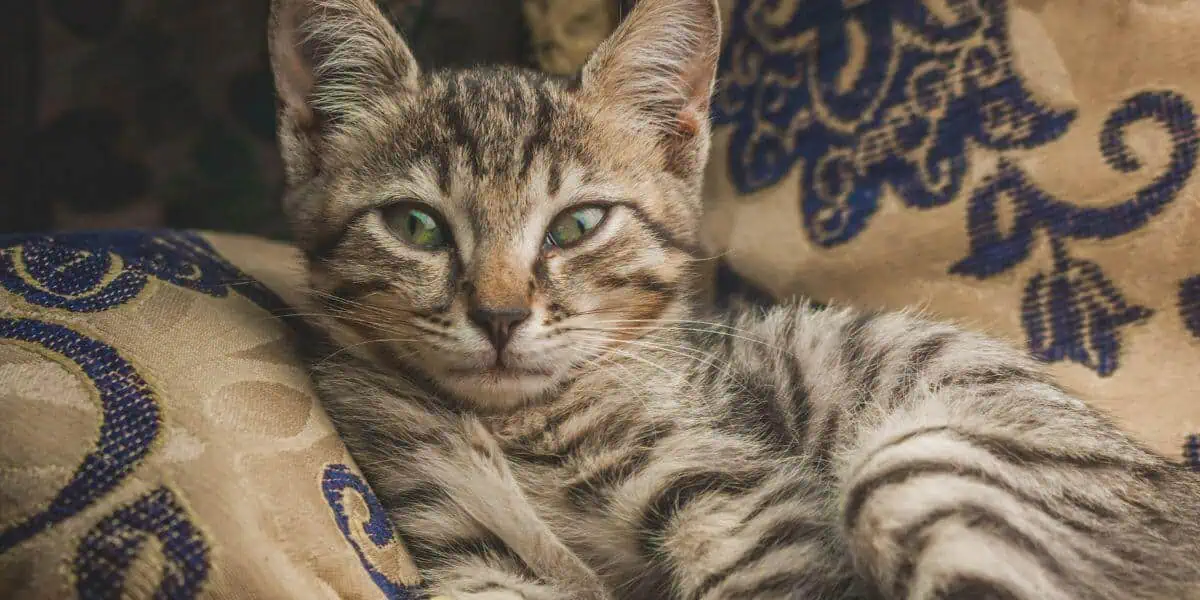
The mackerel tabby pattern is the most common pattern. It resembles the bones of a fish with narrow stripes that run vertically down the cat’s body. The stripes on the mackerel tabby are usually more prominent on the cat’s back and tail, and they may also have a dark stripe running down their spine. A mackerel tabby cat also features an “M” shape on the center of the forehead and the “bracelets and necklaces” common to most tabby patterns.
The Spotted Tabby Pattern
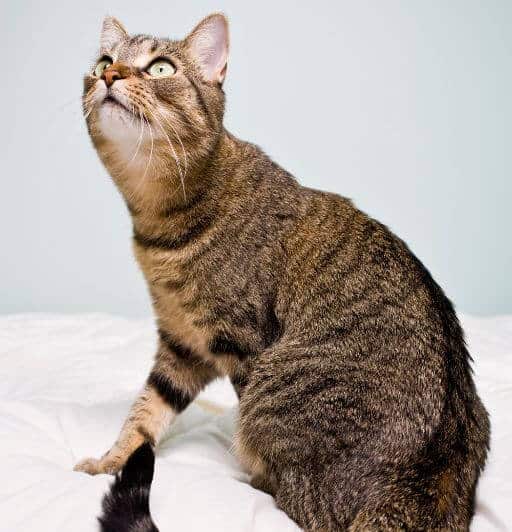
The spotted tabby features a mackerel or classic pattern with round or oval spots instead of stripes. The spots can be large or small, and are almost always darker than the background fur. It can be challenging to tell the difference between a true spotted tabby cat pattern and a “bad” or broken mackerel pattern. A spotted breed, like an Egyptian Mau or Ocicat, will have the true spotted look.

The Ticked Tabby Pattern
The ticked tabby is stripeless. Instead, the ticked tabby pattern has an Abyssinian look. Each hair is “agouti” or striped with alternating bands of light and dark color. Kitty will have very thin strips on the legs, tail and face.This is due to another gene which masks any other tabby pattern. The ticked tabby also has a distinctive “necklace” marking around their neck, made up of a series of dark spots.

The Patched Tabby Pattern
The patched tabby pattern, also known as a torbie, features a mix of the classic tortoiseshell red and black coloration with tabby patterns. The patched tabby typically features patches of black, brown, orange, and cream with the tabby markings of stripes and spots. The markings are more obvious on the legs and head.

Related Post: Tortoiseshell Cats
The Genetics Behind Tabby Cat Patterns
What Forms a Tabby Pattern?
Researchers have discovered that the gene Dkk4 actually “maps” a pattern of thick and thin skin during fetal cat development. Thick patches with more Dkk4 expression are later covered with darker fur, while thin patches with less Dkk4 expression are later covered with lighter fur. This thick-thin skin variation can be detected even before embryos develop hair follicles. The patterning is muted in cats that will develop a ticked tabby pattern.
The Agouti (A) gene is responsible for patterns in cats. The dominant version, A, creates a ticking or band of colors on a hair. The recessive version, a, or non-agouti, creates a solid-colored hair. The tabby pattern is masked if the cat is solid.
How the Agouti Gene Affects a Tabby Pattern
The Agouti is a dominant gene, which means that if a cat inherits even one copy of the gene from either parent, they will have a tabby pattern. However, that can be influenced by other genes and factors, such as the presence of white spotting or dilution genes.
Since the A is dominant and a cat needs to inherit it from only one parent to get the tabby pattern, most cats are tabbies. No matter how faint, you’ll likely be able to make out stripes on black, gray, and orange cats’ tail, legs, or head when they’re laying in the sun. These are called ghost tabby markings.
An agouti hair is composed of several bands of colors: a dark one with the base color of the cat, alternating with lighter and more reddish ones. The dark markings of a tabby pattern are solid hairs of the base color while the fur between the markings are agouti hairs.
Breeding Considerations
Understanding the genetics behind tabby cat patterns can help breeders and cat enthusiasts predict and create specific coat patterns in their cats. If the cat is A/A or A/a, it will be agouti. If the cat is a/a, it will be solid. This also means that if you breed two solid cats, all their kittens will be solid. However, if you breed two agouti cats, it’s possible to get solid kittens.
Tabby Cat Colors And Variations
Tabby cats can come in any existing cat color. They can also have variations such as a white belly or paws, or even a tabby and white pattern. You can find long and short haired tabby cats.

The most prevalent nose color for tabby cats is pink with a ring of black. All eye colors are found except blue. Tabby cats typically have an “eye liner” pattern around the eye.
Each tabby cat is unique and their coat pattern and color can add to their individual personality and charm.
The Tabby Cat Personality
Since many, many breeds come in tabby cat patterns, a tabby cat can have any personality type out there. Generally, tabby cats are playful, intelligent, and affectionate. They are outgoing and friendly, easy to get along with, and social, making them a popular choice for pet owners.
Related: Want to Learn More About Cat Breeds? Click Here for Our Breed Directory Page
Conclusion
Tabby cats are one of the most iconic and beloved cats in the world. From the classic tiger stripes of the mackerel tabby cat pattern to the unique swirls of the classic, there is no shortage of eye-catching patterns in these gorgeous felines. It’s no wonder they are adored by cat owners around the world. No matter where you come across a tabby cat or what pattern he has, Kitty is sure to captivate your attention with his charm and personality
If you want to learn more about cats, give us a follow.