
Benefits of Play for Your Cat
Last Updated on December 30, 2025 by Holly Anne Dustin
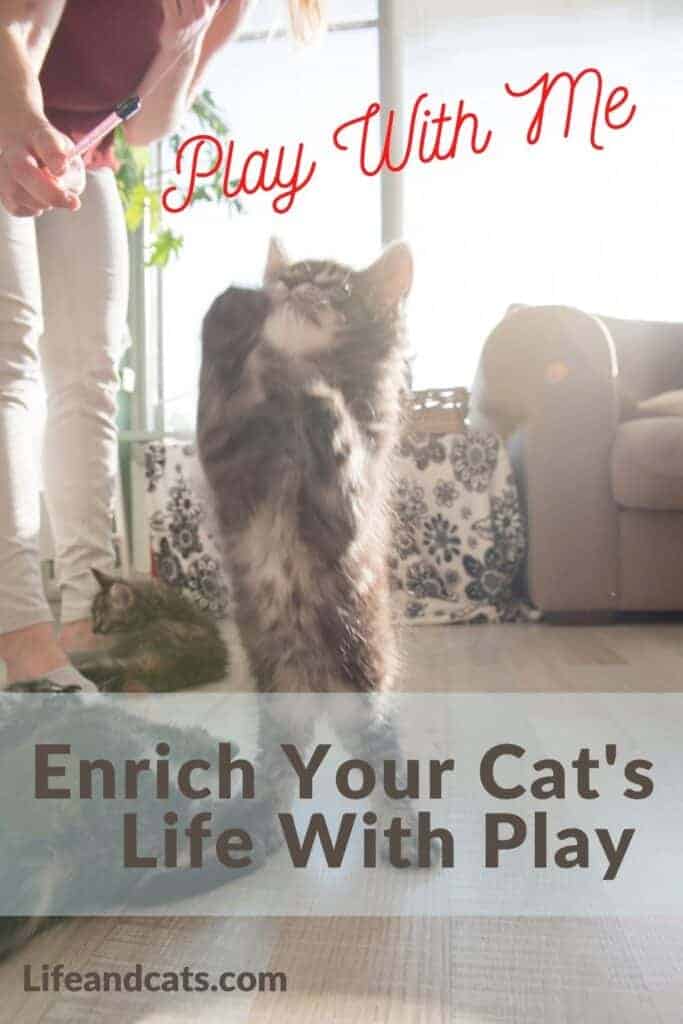
Interactive play with your cat is important for feline health and happiness. Play keep cats mentally and physically healthy. It allows them to engage in normal “cat” behaviors. Play is a fundamental part of an enriched life for our indoor cats.
Contents
Why is it Important to Play with Your Cat?
Cats in the wild spend 6 hours a day hunting. Most of us in the US keep our cats inside. Our indoor cats need us to enrich their lives to replace their hunting activities. Play is one way we can do that.
If your furbaby goes outside, it is still important to play with her. A study done at the University of Exeter found that increased play alongside a meat-based diet reduces hunting in cats. Outside cats that played with their humans 10-15 minutes a day brought home 25% less prey than cats that didn’t get regular playtime.
Play improves your furbaby’s life, health, and relationships with the other pets and humans in the household.
Benefits of Play for Cat
Play lets cats be cats. When we play with our kitties we let them exercise their inner predator, which increases their physical and mental health. Play prevents the aggression and behavior problems of bored cats. It also increases the bond between you and your feline friends.
This post may contain affiliate links. Life and Cats is a Chewy affiliate and a member of the Amazon Associates program and as such we earn a small commission when you shop through our our links and banners. It doesn’t change the amount you pay. You can read our full disclosure policy here.
Playtime Prevents Boredom
Cats are curious critters. They need a challenge to keep them from getting bored. A bored cat gets depressed, lethargic, or destructive. Boredom can lead to stress and anxiety.
Stressed or anxious cats develop behavioral problems and illness. Stress causes over grooming or lack of grooming, excessive scratching, house soiling, and aggression. Urinary tract issues, flare-ups of respiratory problems, digestive problems and vomiting can all result from stress, anxiety, and boredom.
Regular playtime is a way for Kitty to get rid of that stress and negative energy.
Play Provides Exercise
Play helps Kitty manage her weight. Obesity is the number one health problem in cats. According to a recent survey, 55% of America’s cats are overweight. Just like us, our obese furbabies develop serious health conditions like heart disease and diabetes. Interactive play sessions keep our furbabies active and prevent obesity.
Play Increases Kitty’s Confidence.
A shy, nervous cat benefits from regular play sessions. Prey style play that ends in a satisfying “kill bite” releases hormones in their brain that makes our cats feel in control and successful.
Play is Vital for Socializing Kittens.
Kittens use play to develop coordination, social and communication skills. This is one reason to adopt kittens in pairs and let them stay with their mom for a longer time.
The solo kitten, especially one raised alone, is much more likely to develop aggressive behaviors because their mom and siblings aren’t there to teach manners.
Interactive Play Improves Relationships
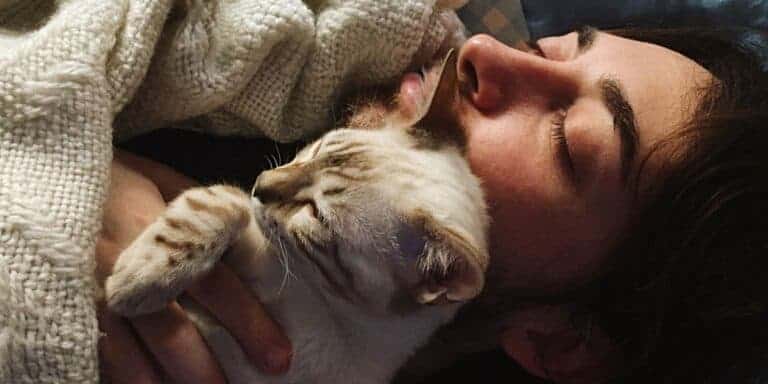
Interactive play cements the bond we have with our cats. It’s fun! Kitty will associate us with the positive feelings that his “hunting” activities create. You learn more about your cat’s personality by learning and respecting his play style.
Play can also help cats in a multiple cat household get along.
How to Play With Your Cat
Just getting Kitty toys and leaving them out isn’t as enriching as interactive play because the toys don’t move or change. Consider adding some of the new smart electronic toys if your cat likes them.
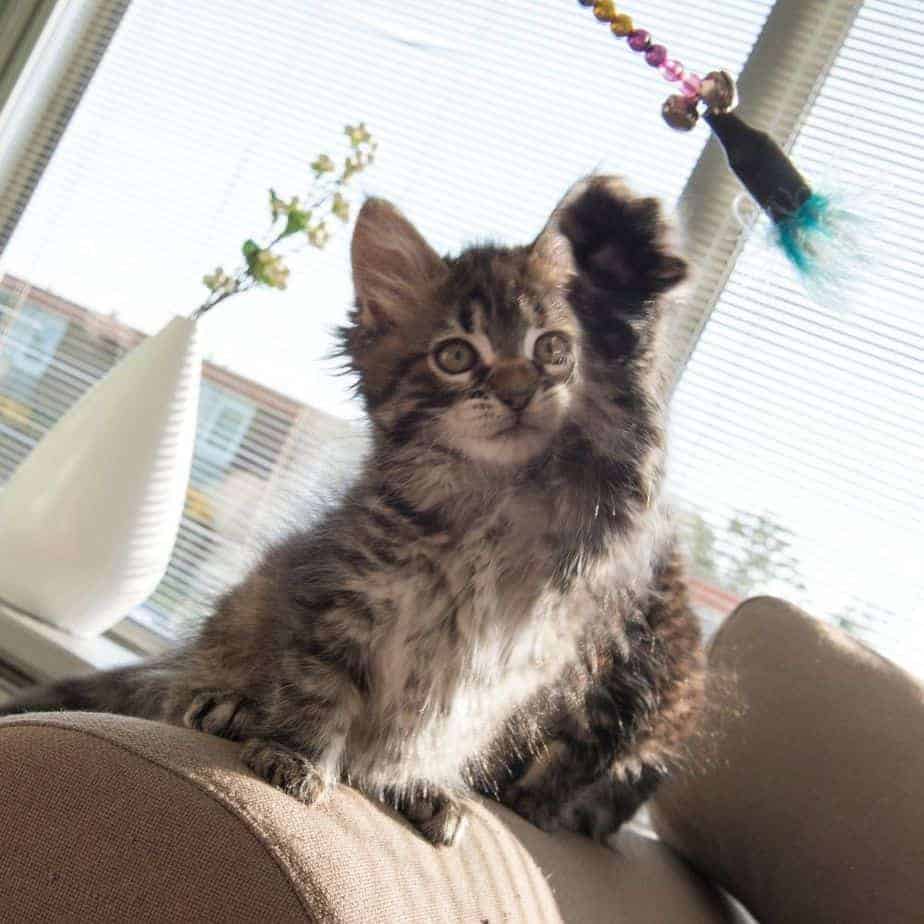
Kitty needs you to let him exercise his inner tiger with prey-style play. Successful interactive play respects the prey sequence: staring, stalking and chasing, pouncing and grabbing, and performing a “kill” bite.
Make time for one or two 10-15 minute play sessions a day. Never use your hands or feet as toys. Kitty won’t understand why it is fun during the day, but definitely NOT fun at 3 am.
Mimic Your Cat’s Prey
Think about how a mouse or butterfly would behave. A mouse won’t run into Kitty’s face, right? It will scurry away and hide. Make your ground play style toy mimic that. Air play is a chase game, not an aerobic workout.
Use Your Cat’s Senses
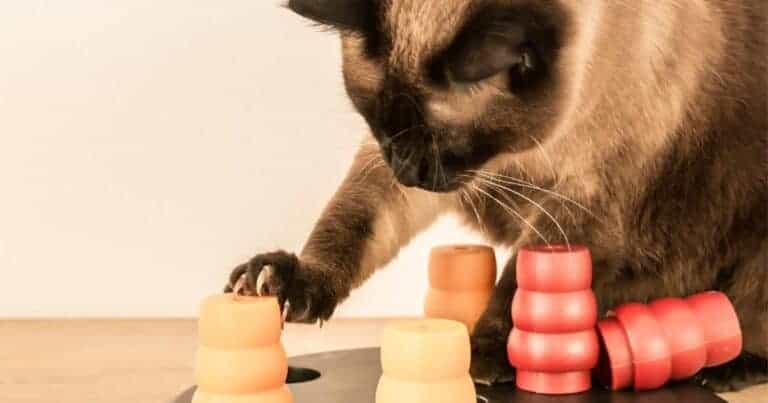
The more senses you can use in a game, the better. Puzzle toys that challenge Kitty to think are fantastic for her brain chemistry, and might keep her from puzzling out how to get into the treat drawer.
Let Your Cat Set the Pace
Don’t force your cat into a play or training session if he isn’t in the mood. You can offer the opportunity by getting out a wand toy or rolling Kitty’s favorite spring toy and see what happens. If you set a routine around play time, she will look forward to it and expect it.
When your cat walks away from you, she is done playing. Let her have her catch and kill moment with the toy at the end of your play session. If you’re using a laser, land it on a real toy or treat that she can get a real bite into when you end your play session.
What Happens if You Don’t Play With Your Cat?
A kitty living in an under-enriched environment can develop behavior problems. Especially in a multi-cat home. I know that if I slack on the fun and games here, Jeremy and Plush are going to fight with each other just because they’re bored.
Cats can become depressed if they are used to a lot of interaction, and it stops. You see it when cats are re-homed to a shelter. You may see separation anxiety if you have recently traveled, gone out to work or back to school.
What Do Cats Like to Play With?
Establishing what type of toys your kitties like is a matter of trial and error. The more a toy looks like real prey, the more your cat will like it. Movement and noise help too.
Related post: Choosing Safe Toys
Cats are naturally excited by novelty and will get bored quickly with toys available to them all the time. Rotate toys in and out. Marinating them in catnip or silvervine can help too.
Summary
Play lets Kitty exercise her natural predatory instincts. It also relieves boredom, keeps her from developing problem behaviors, and prevents obesity. Play enrichment is especially important for cats that don’t go outside.